
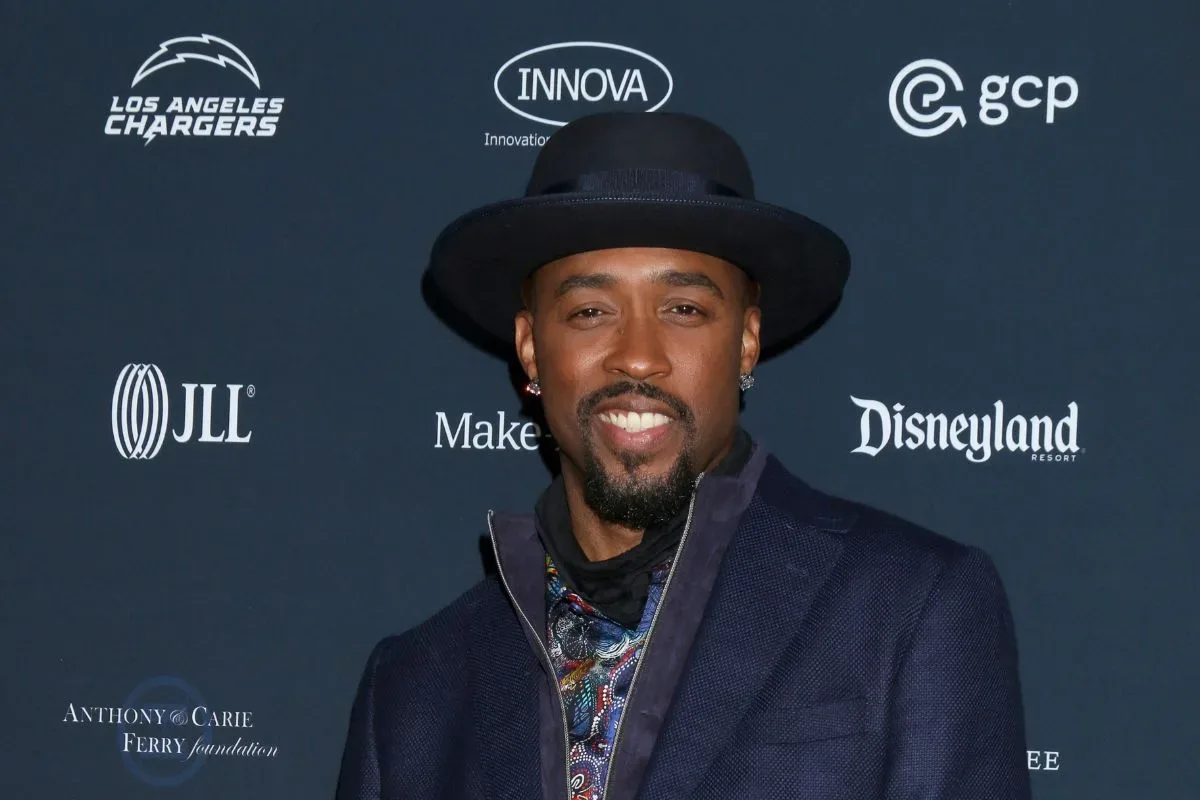
Montell Jordan has shared a moving account of the practical, repeated support he received from fellow singer Q Parker while undergoing a second course of cancer treatment. Rather than a one-time hospital visit or a message from afar, Jordan described Parker as an almost constant presence at his proton therapy appointments in Atlanta.
Speaking on R&B Money with Tank and J. Valentine, Jordan estimated that Parker attended 32 or 33 of his 37 appointments. The treatment schedule ran five days each week for seven and a half weeks, turning Parker’s commitment into a sustained part of Jordan’s routine during an exceptionally demanding stretch.
Jordan said Parker would leave at around 5 or 6 a.m. to make the trip across town and meet Jordan and his wife, Kristin, at the hospital. Parker was there for the first appointment, Jordan recalled, and then chose to keep returning. “I want to be here,” Jordan said Parker told him.
“That man didn’t have to do that, man,” Jordan said of Parker’s support.
A treatment schedule measured in dozens of visits
The number is what gives Jordan’s story its weight. Thirty-seven appointments across seven and a half weeks is not a single milestone; it is a sequence of early mornings, travel, waiting and repeat hospital visits. Jordan’s estimate that Parker joined 32 or 33 of them suggests the singer was present for nearly the entire course.
Jordan specifically identified the treatment as proton therapy. In the context of his account, that term describes the radiation-treatment component of the plan he received after cancer was found again following his earlier surgery. The available details do not establish the technical specifics of Jordan’s regimen beyond what he has shared: a course of proton therapy alongside hormone therapy after follow-up testing identified cancer in the prostate bed and lymph nodes on his left side.
That distinction matters. Jordan’s experience is personal, and the report does not present it as medical guidance, a comparison of treatments, or a recommendation for someone else facing a diagnosis. What it does make clear is the logistical reality behind a multiweek care plan: consistent treatment can require a dependable network around the patient as well as the patient themselves.
Kristin helped build that network. Jordan said his wife asked friends to pitch in and also brought together relatives and prayer partners to support them. Parker’s repeated attendance became one highly visible example of that larger circle. Jordan has been married to Kristin since 1994, and he has repeatedly credited her for carrying and supporting him through both diagnoses.
Related coverage includes Montell Jordan Shares How Q Parker Supported Him During Cancer Treatment.
Jordan’s path from diagnosis to recurrence
Jordan’s first prostate cancer diagnosis came after a routine test in early 2024. He subsequently underwent surgery to remove his prostate and said before the end of that year that he was cancer-free.
Later follow-up testing brought difficult news: cancer had been found again. In 2025, tests located it in the prostate bed and lymph nodes on Jordan’s left side. A recurrence means cancer has returned after an earlier period in which it was no longer detected or was thought to have been addressed; it does not, by itself, explain every clinical detail of an individual case. Jordan publicly described the resulting next phase as including radiation and hormone therapy.
He did not step entirely away from public life during that period. Jordan continued making appearances and was documenting the experience for a project called Sustain. At an October 2025 appearance, he told an audience that he had traveled after completing a week of treatments and still had six weeks left in the course he was then taking.
That update places the scale of Parker’s involvement in sharper focus. The early-morning trips were happening within a period when Jordan was still showing up publicly, working through a regular appointment calendar, and navigating treatment with Kristin at his side. Support in this setting was not framed as an abstract sentiment. It involved being physically available at the beginning of the day, over and over.
Why the story resonates beyond the appointment count
Celebrity health stories can sometimes be reduced to a final status update. Jordan’s account instead emphasizes the people and routines surrounding the treatment itself. His description of Parker does not dwell on dramatic gestures; it highlights consistency. Parker showed up at the first appointment, said he wanted to be there, and made the drive for almost all the visits that followed.
There is also a difference between celebrating a recovery update and pretending the preceding path was simple. Jordan’s comments recognize the work of his wife, friends, family members and prayer partners alongside the medical process. His gratitude toward Parker is rooted in the fact that the help was voluntary, repeated and offered during a time when the appointments started early and continued for weeks.
For audiences familiar with performers primarily through records and stage appearances, Jordan’s reflection also gives a more human shape to relationships formed around music. He said the experience changed how he regarded his connections to that world: “So music may have loved me in ways that I didn’t know.”
That observation does not turn a serious health experience into an entertainment-industry anecdote. Instead, it identifies something Jordan discovered through hardship: professional ties can become personal care, and a community can reveal itself through its actions rather than its public profile. Music has often supplied the setting for unexpected moments of shared humanity, including artists connecting around live performance and community, but Jordan’s story is about a quieter form of presence.
Jordan’s latest update
By February 2026, Jordan shared that he had received encouraging news on Christmas Day 2025. He said he and Kristin learned that he was “undetected, cancer-free.” Those are Jordan’s own words about the update he received; the account does not provide further clinical information about follow-up care or future monitoring.
His public comments have consistently placed Kristin at the center of his support system. In discussing what they endured through the two diagnoses, he said she supported him and carried him. Parker’s contribution, as Jordan tells it, became part of that broader effort: a friend deciding that showing up once was not enough, then converting that decision into dozens of pre-dawn drives and hospital mornings.
Jordan’s story is ultimately one of gratitude, not just recovery. It preserves the details that are easy to overlook when treatment is summarized in a headline: the weekly cadence, the 37 scheduled visits, the people asked to help, and one friend who appeared for nearly all of them. For Jordan, that constancy seems to have made a lasting impression.