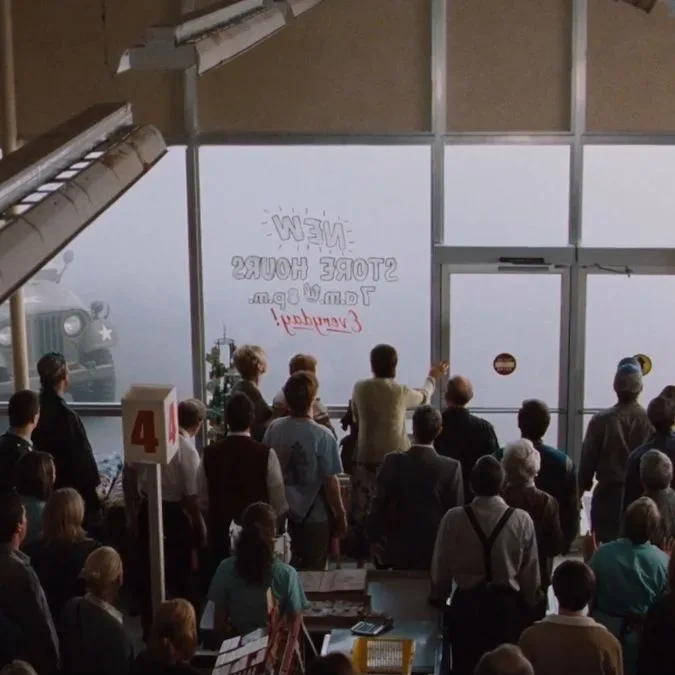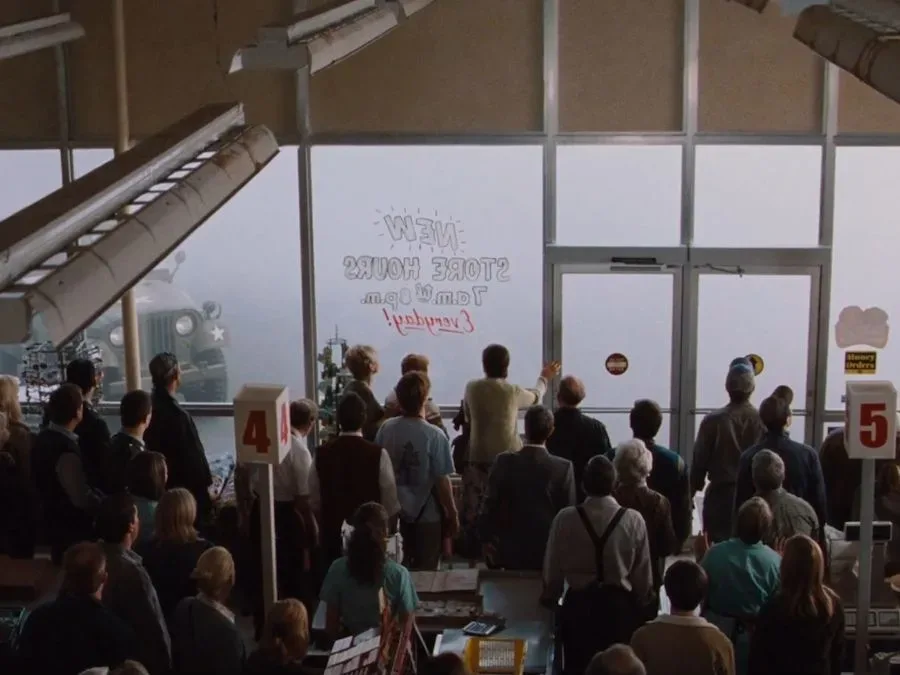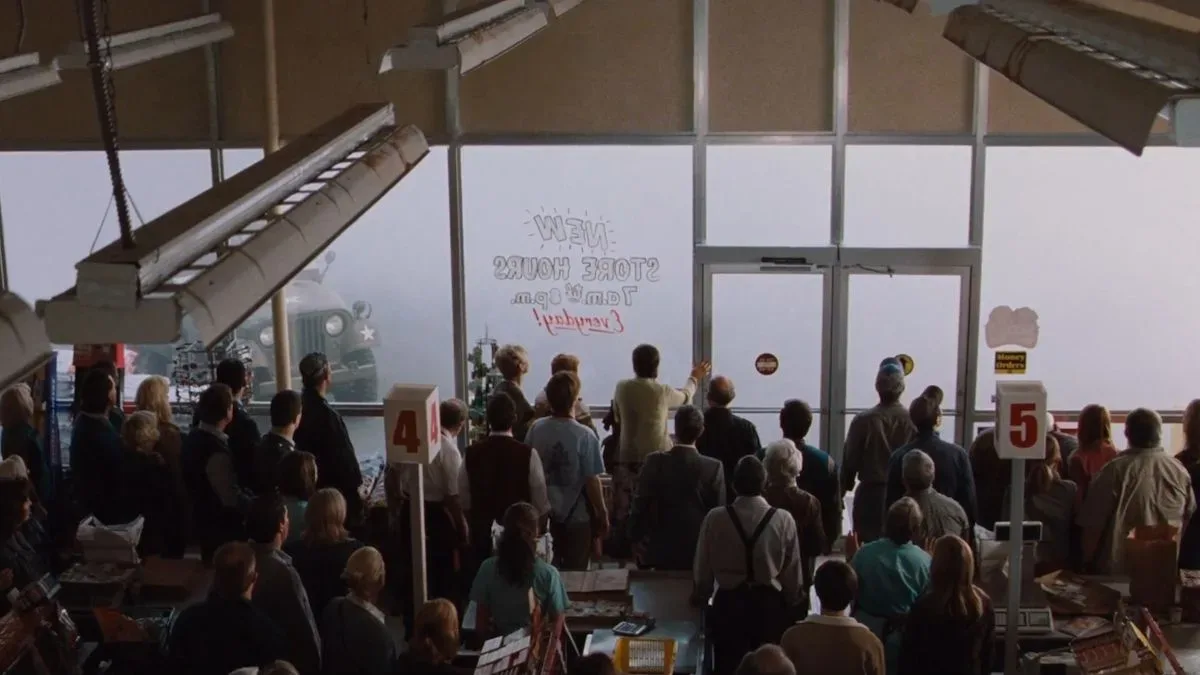
Mike Flanagan is writing a new adaptation of Stephen King’s The Mist, and he is setting expectations early: this is not intended as a rerun of Frank Darabont’s 2007 film. In remarks about the project, Flanagan said the separation begins at the script’s opening: “The differences start page 1. I’m writing it now.”
That is a deliberately broad promise, but it is also the most important concrete update currently attached to the project. Flanagan has not publicly detailed its plot, cast, release window, format, or how far its changes will extend. What he has made clear is the creative rationale. He loves Darabont’s film, he said, and sees no value in remaking it directly. His answer is to pursue another direction rather than compete with an existing adaptation on the same terrain.
For viewers, that distinction matters. “Remake” can describe several very different things: a close reconstruction of an earlier movie, a new adaptation of the same underlying book, or a project that retains a premise while changing its emphasis and construction. Flanagan’s comments point toward the second definition. The shared foundation is Stephen King’s work; the 2007 film is not being treated as a shot-by-shot template.
What Flanagan has actually confirmed
The confirmed status is modest but meaningful. Flanagan says he is actively writing The Mist. He has said the script departs sharply from the 2007 adaptation from its first page, and he has argued that he would not undertake the project without a persuasive answer to the basic question of why it should exist.
“If there wasn’t an excellent answer to ‘why’, I wouldn’t do it.”
He has also been unambiguous about his regard for Darabont’s version.
“I love Darabont’s film, and there’s zero point in remaking it. Which is why I’m going in a different direction.”
Those statements provide an intent, not a plot outline. It would be premature to infer new characters, a different setting, an altered ending, a new creature design, or any particular connection to other King adaptations. None of those details have been supplied. The most accurate reading is simply that Flanagan believes the material still has an unexplored screen route.
Why the 2007 film will remain part of the conversation
Darabont’s 2007 The Mist is the unavoidable reference point because it already gave audiences a complete, memorable film adaptation. Darabont had previously directed adaptations of King material including The Green Mile and The Shawshank Redemption. That history makes Flanagan’s choice of language especially notable: he is not dismissing the earlier interpretation to make room for his own. He is explicitly recognizing it as a strong work and framing his project as an alternate approach.
That does not make comparisons disappear. It probably makes them sharper. Whenever a filmmaker returns to a story that has already been translated for the screen, audiences tend to measure the new version against what they remember most clearly from the old one: its mood, character choices, pacing, imagery, and resolution. Flanagan has acknowledged that fan reaction is impossible to forecast, and said he no longer tries to predict every argument before it happens.
His response also arrives in a climate where film discussion can be easily derailed by material that is not part of a real project. Flanagan recently pointed to online anger over fan-made AI posters connected to The Exorcist as an example of why he does not try to map every future dispute. The practical takeaway is simple: viewers should separate confirmed information from speculative art, rumored details, and imagined versions of films that have not been released.
Adaptation versus retread: the useful difference
A retread is an informal term for repeating something already done, usually with too little new purpose. In this case, Flanagan is rejecting the idea of reproducing Darabont’s movie merely because The Mist is recognizable. His statements instead describe a fresh adaptation: another creative interpretation of the same literary source.
That is not an automatic guarantee of quality, nor is it a promise that audiences will prefer the new take. It does, however, establish a clearer standard by which the eventual project can be judged. The question will not just be whether it matches the 2007 film. It will be whether its differences reveal something worthwhile that a direct redo could not.
The distinction is familiar across entertainment, including games. A productive remake does not necessarily have to duplicate every prior choice; it needs to understand what made the original matter while giving its own form a reason to exist. That tension is at the heart of the discussion around remakes that change the feel rather than merely repeat the journey. Flanagan’s stated approach to The Mist fits that broader principle, though the precise form of his changes remains unknown.
A crowded slate makes patience essential
The Mist is only one project in Flanagan’s current workload. His Carrie series is set to arrive on Prime Video on October 9, and he is also in production on a new Exorcist movie. Both facts help explain why this new The Mist is best considered an early-stage project rather than an imminent release.
The Carrie series will be the next readily available chance to see how Flanagan approaches another major King property. That does not mean it can serve as a blueprint for The Mist; each adaptation has its own demands, and there are no disclosed creative details tying the two projects together. But its October 9 arrival gives interested audiences a nearer landmark while the new The Mist script is still being written.
Meanwhile, the new Exorcist film adds another high-profile horror obligation to the director’s schedule. The available information does not establish a production timeline for The Mist, so it would be inaccurate to turn “writing it now” into a prediction about filming or release. The project may still be some distance away.
What not to assume yet
Because Flanagan has been emphatic about change, there may be a temptation to fill the information gap with theories. At this stage, several basic points remain unconfirmed:
- There is no announced cast.
- There is no stated release date or release window.
- There is no disclosed platform or theatrical plan.
- There is no public plot synopsis.
- There is no confirmation of which characters, scenes, or themes from the novel will be emphasized.
- There is no detailed explanation of what “different direction” means on screen.
That uncertainty is not a flaw in the announcement; it is simply the current state of the project. The useful news is creative rather than logistical. Flanagan is not presenting the film as an effort to replace Darabont’s adaptation. He is presenting it as a separate answer to the same source material, one he believes earns its place by departing from the first page onward.
For now, the promise is intriguing precisely because it is limited. The Mist has a writer with a clear stated reason for returning to it, a celebrated prior adaptation that he openly respects, and no revealed roadmap beyond that. The next meaningful update will need to turn that guiding idea into specifics: what direction Flanagan has found, and why it could make this return through the mist feel like more than a repeat visit.