Mike Flanagan’s proposed television version of The Dark Tower has a deceptively simple guiding principle: begin where Stephen King began, then follow the story in order.
That may sound like the sort of obvious note scribbled on a whiteboard before anyone has even found the good coffee, but it is meaningful for a property with an enormous setting, a formidable mythology and a prior film adaptation that did not win over critics. Flanagan says his approach would be “remarkably faithful” to the books, with limited changes made only to serve television as a format.
The prospect is still just that: a prospect. Flanagan has said that getting The Dark Tower moving is the difficult part, describing it as one of the most complicated properties he has attempted to start. The project is not part of his larger Amazon agreement, and no production start, cast, release date or confirmed platform has been provided. Prime Video remains a possible eventual home rather than a confirmed destination.
But Flanagan’s latest comments do give fans a much clearer picture of the adaptation he wants to make—and of why he believes a patient, book-first structure is the right answer.
Start with the gunslinger, not the encyclopedia
Flanagan’s central argument is about audience entry point: the point at which a new viewer is invited into a fictional world. In a sprawling fantasy story, an entry point can determine whether the scale feels intriguing or simply confusing. Rather than opening by explaining every corner of King’s universe, Flanagan wants to begin with the elemental setup of the first book.
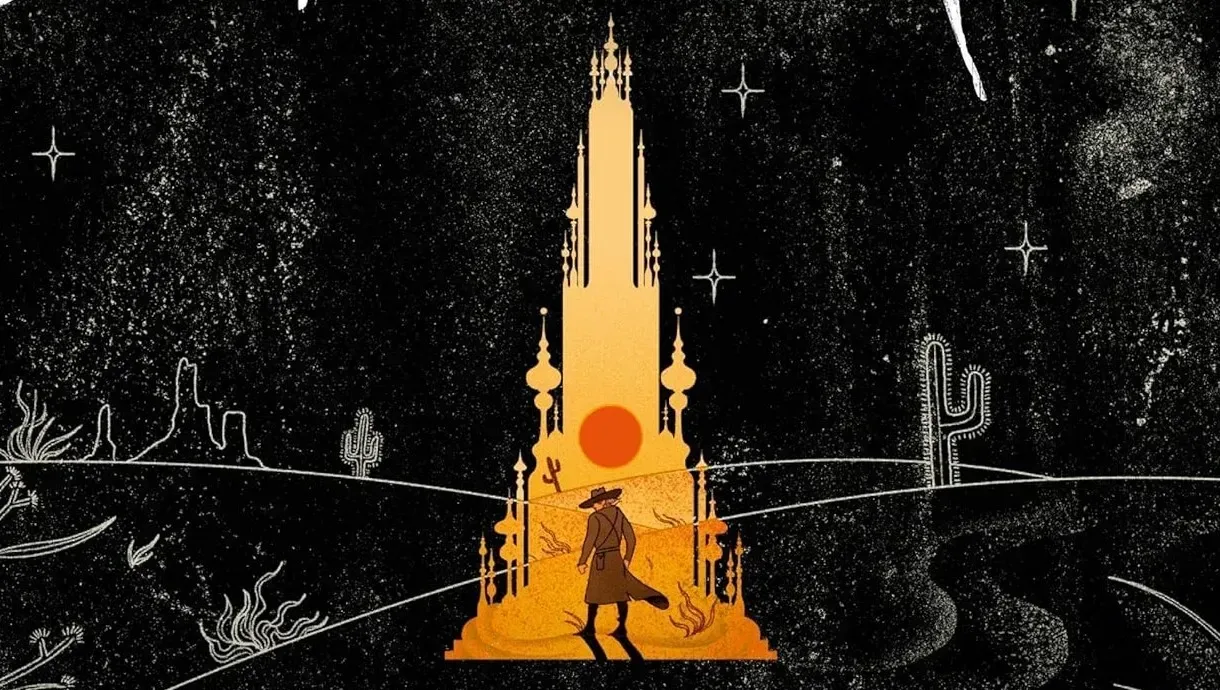
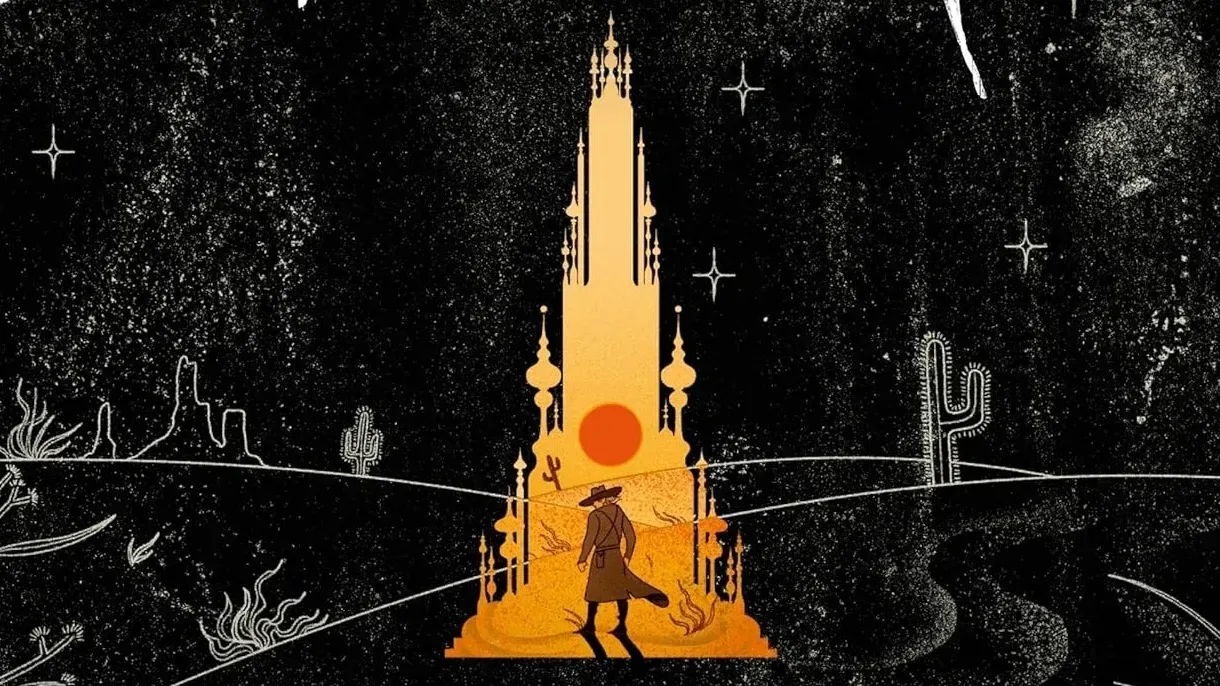
“The man in black fled across the desert and the gunslinger followed.”
Flanagan highlights that famous opening as a model of clarity. It establishes two people, a pursuit, an objective and a bare landscape. Before the story asks viewers to process a much wider fictional universe, it asks them to understand one immediate question: can the gunslinger catch the man he is chasing?
That is what Flanagan means when he praises the books for building their world “one brick at a time.” Worldbuilding is the process by which a story establishes its setting, rules, history and larger context. It does not have to mean a barrage of maps, factions, lore terms and prophecies in the opening act. King’s structure, as Flanagan describes it, uses a much narrower beginning and gradually expands the frame.
For a television adaptation, that distinction matters. A series has room to let viewers learn through characters and situations over time. Flanagan’s stated plan treats the early, uncluttered pursuit as the foundation rather than as material to be skipped in the rush toward bigger mythology.
“Do the books” is the creative thesis
Flanagan has reduced his proposed strategy to a bluntly practical phrase: “You do the books.” He has also said the plan is to do them in order. That does not mean a literal, word-for-word transfer from page to screen. He acknowledges that changes are necessary to fit the medium. Television has its own needs involving episode structure, pacing, scene construction and the division of a continuing narrative into seasons.
Still, his emphasis is unmistakable. The adaptation would preserve the books’ overall route rather than treat their starting point as optional setup for a later section of the saga. In Flanagan’s view, beginning elsewhere risks dropping newcomers directly into a universe too large to absorb. His proposed solution is not to simplify the eventual scope by discarding it; it is to earn that scope gradually.
That is also a useful distinction between faithfulness and mere reproduction. A faithful adaptation can alter individual details to work on screen while retaining the source material’s narrative shape, priorities and method of revelation. Flanagan’s comments suggest he sees King’s sequencing as one of the essential things to retain. The stories should not only arrive at the same broad destinations; viewers should be led there in the same deliberate order.
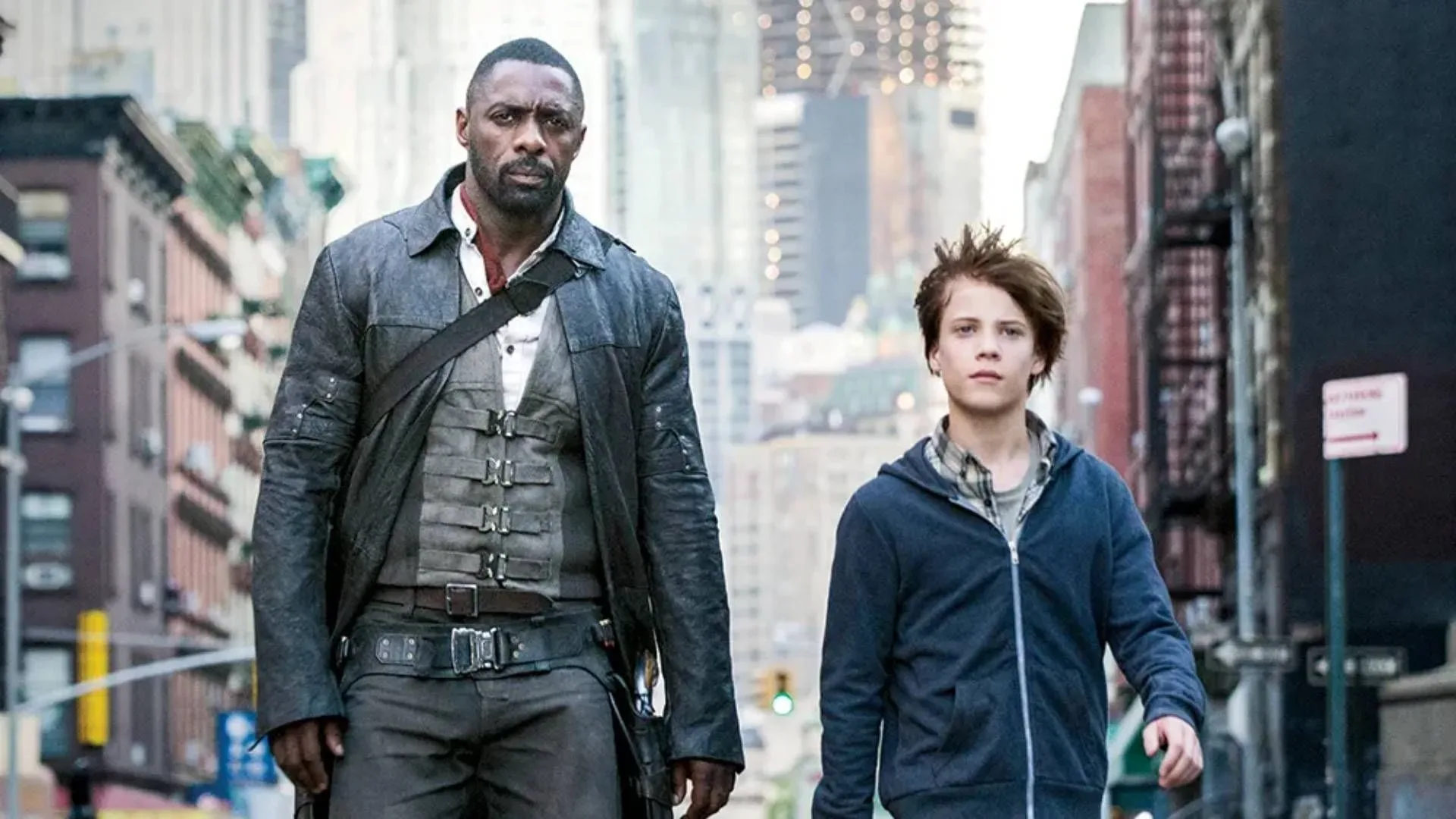
It is a particularly important promise because a previous attempt took a different route. The 2017 The Dark Tower film starred Idris Elba as Roland Deschain and Matthew McConaughey as Walter Padick. It was poorly received by critics, and Flanagan has argued that it should not be the property’s final statement on screen.
He does not frame the answer as trying to overwhelm the earlier film with even more mythology. Instead, he points back to the books’ clean opening. Two figures crossing a desert may not sound like the maximalist start some fantasy adaptations chase, but it gives an audience a stable human scale before the larger material arrives.
A long-form plan, if the project gets a green light
Flanagan has previously outlined an ambitious shape for the adaptation: five seasons followed by two standalone films. In the more recent explanation of his method, he presented the same aim more simply as following the books in sequence.
It is worth separating that vision from a locked production plan. A green light is the formal approval that allows a project to advance into production. Flanagan’s comments make clear that this is the outstanding hurdle. Stephen King has approved Flanagan’s first-season script, but approval from the author is not the same as a commitment to make the series. There is currently no indication that cameras are rolling or that the proposed seasons and films have been commissioned.
That uncertainty has practical implications for anyone excited by the format. Five seasons and two films describe Flanagan’s creative architecture, not a release roadmap. It would be premature to infer a timetable, casting choices, episode counts, budget, distribution arrangement or whether every part of the long-term plan would ultimately be made. Flanagan himself has indicated that, even if the series does happen, it would be years away.
That makes the approach notable in another sense: it is designed around patience both inside and outside the story. On screen, the audience would enter through the books’ focused beginning and move forward step by step. Off screen, the project still needs the far less romantic work of becoming viable to produce.
Why the adaptation format fits Flanagan’s stated goal
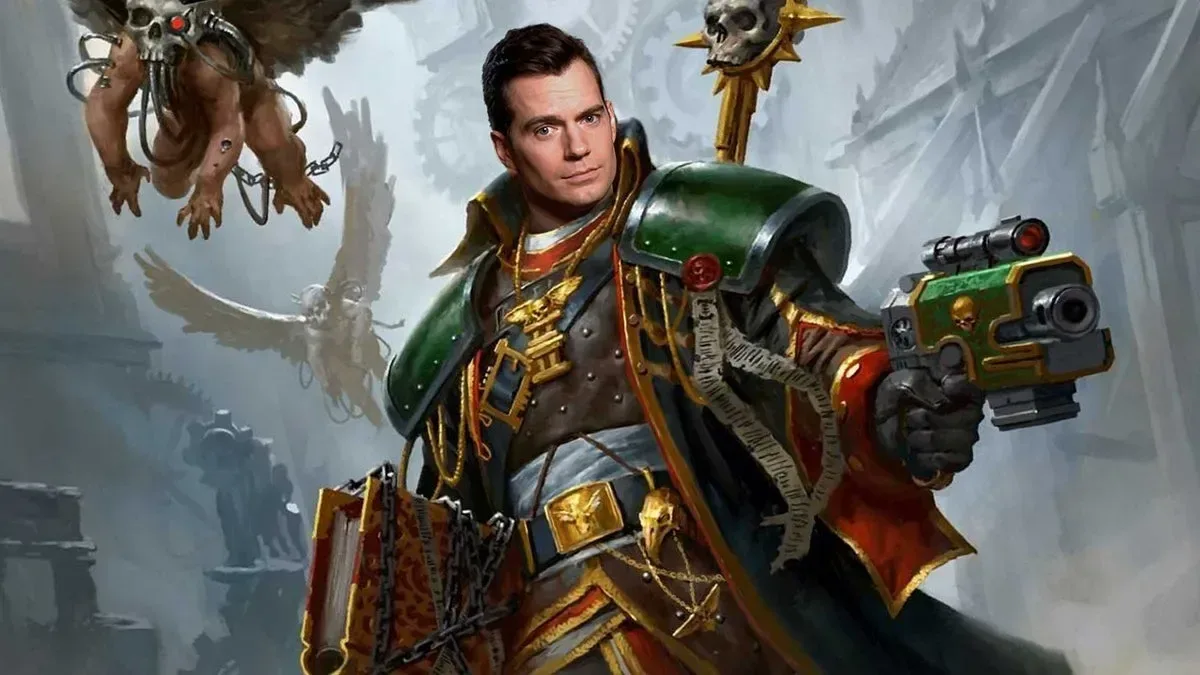
Flanagan is best known for horror television including The Haunting of Hill House and The Haunting of Bly Manor, and his next confirmed major adaptation effort is an Amazon television series based on Warhammer 40,000. He has said that Warhammer 40,000 is harder to adapt than The Dark Tower.
His explanation for why The Dark Tower is comparatively straightforward is not that it lacks complexity. Quite the opposite: he repeatedly describes its world as potentially overwhelming. The advantage, in his view, is that King already solved the storytelling problem on the page. The books provide an opening that is accessible without giving away the scale of everything to come.
That is an adaptable principle rather than a claim that television will be easy. A screen version still has to translate prose into performances, images, dialogue and episodes. It still has to decide what can be shown, what needs to be dramatized differently and how to make each installment satisfying while serving a much larger story. Yet Flanagan believes the source narrative has already done much of the foundational work.
The approach also stands in contrast to adaptations that treat a recognizable property primarily as a collection of famous landmarks to visit as quickly as possible. Flanagan’s account favors progression over shortcutting: first establish the chase, then widen the world as the story earns it. For viewers unfamiliar with King’s books, that could offer a cleaner on-ramp. For longtime readers, it signals that the order and construction of the saga are being treated as strengths rather than obstacles.
There is a broader adaptation lesson here as well. A dense fictional universe can tempt filmmakers and studios to introduce its grandest ideas immediately, especially when they want to advertise scale. But scale is more effective when the audience has a reason to care about the people moving through it. Flanagan’s description of the opening reduces the premise to pursuit and purpose before allowing the universe to become vast.
That same question sits at the center of many game-to-screen and book-to-screen projects: should an adaptation repeat a known story, build something entirely new, or take a middle path? The stated plan for Cyberpunk 2077’s live-action film, for example, is to tell a new story rather than retell V’s plot. Flanagan’s proposed Dark Tower strategy is plainly closer to the other end of that spectrum: preserve the books’ route, then make the format-specific adjustments needed for television.
The important caveat: the tower is not yet on the horizon
Flanagan has a defined creative answer for The Dark Tower, but a defined answer is not the same thing as a finished series. The key confirmed detail is the approach: a highly faithful adaptation beginning with the books’ initial pursuit and unfolding in order. The key unresolved detail is whether the necessary approval and production path will materialize.
For now, there is no reason to treat the five-season-and-two-films idea as a guarantee or to assume that a television version is imminent. What the comments do establish is a clear philosophy for a potential return to Roland Deschain’s story. Rather than begin in the middle of an intimidating multiverse, Flanagan wants to start with a man in black fleeing across the desert, a gunslinger following, and a world that grows only when the audience is ready to see more of it.