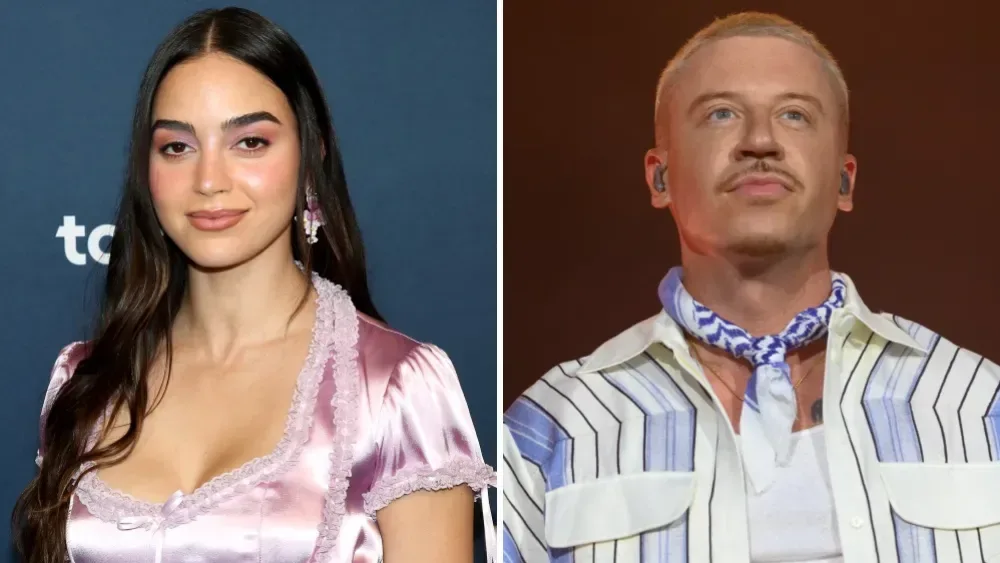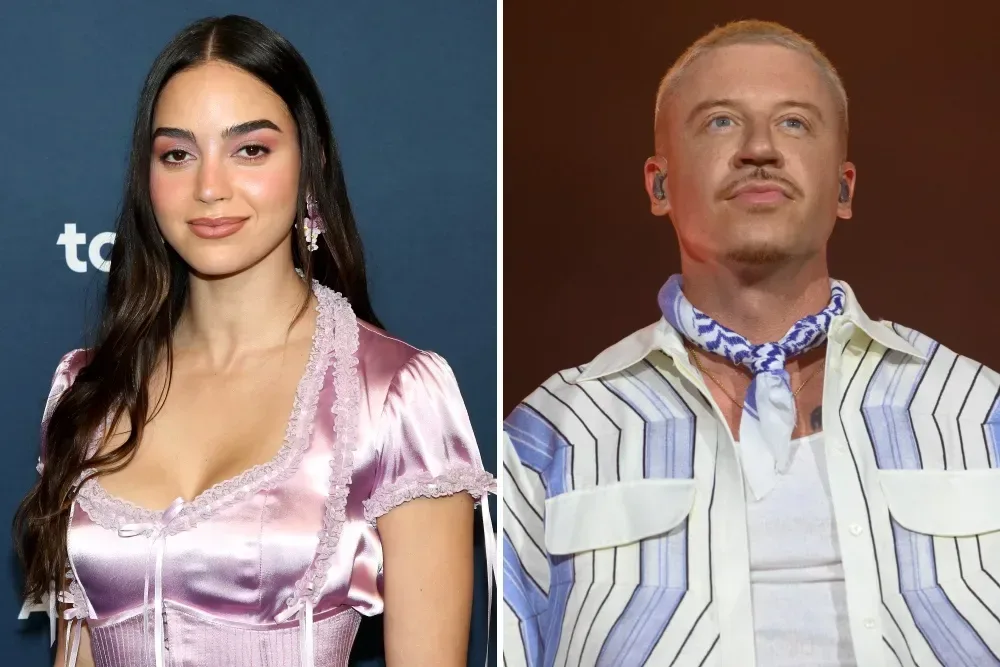
Melissa Barrera has welcomed the visible support shown by musicians who withdrew from Ed Sheeran’s U.S. Loop Tour after Macklemore was removed from the lineup. In remarks reflecting on the dispute, Barrera described the response from Finneas, Aaron Rowe and other opening acts as “beautiful,” connecting it to her own experience of losing her role in the Scream franchise following social-media posts about Israel and Gaza in 2023.
The actor’s point was not simply that prominent artists spoke up. It was that they accepted a practical consequence for doing so: leaving a major tour in support of another performer. For Barrera, that collective action marked a contrast with the response she felt was missing when she was dismissed from the horror series.
“It was so beautiful to see Finneas and the band and all the opening acts pulling out in support of Macklemore,” Barrera said. “It made me emotional.” She added that she did not receive comparable public backing at the time, but felt encouraged that the climate may have shifted in the intervening years.
What happened on the Loop Tour
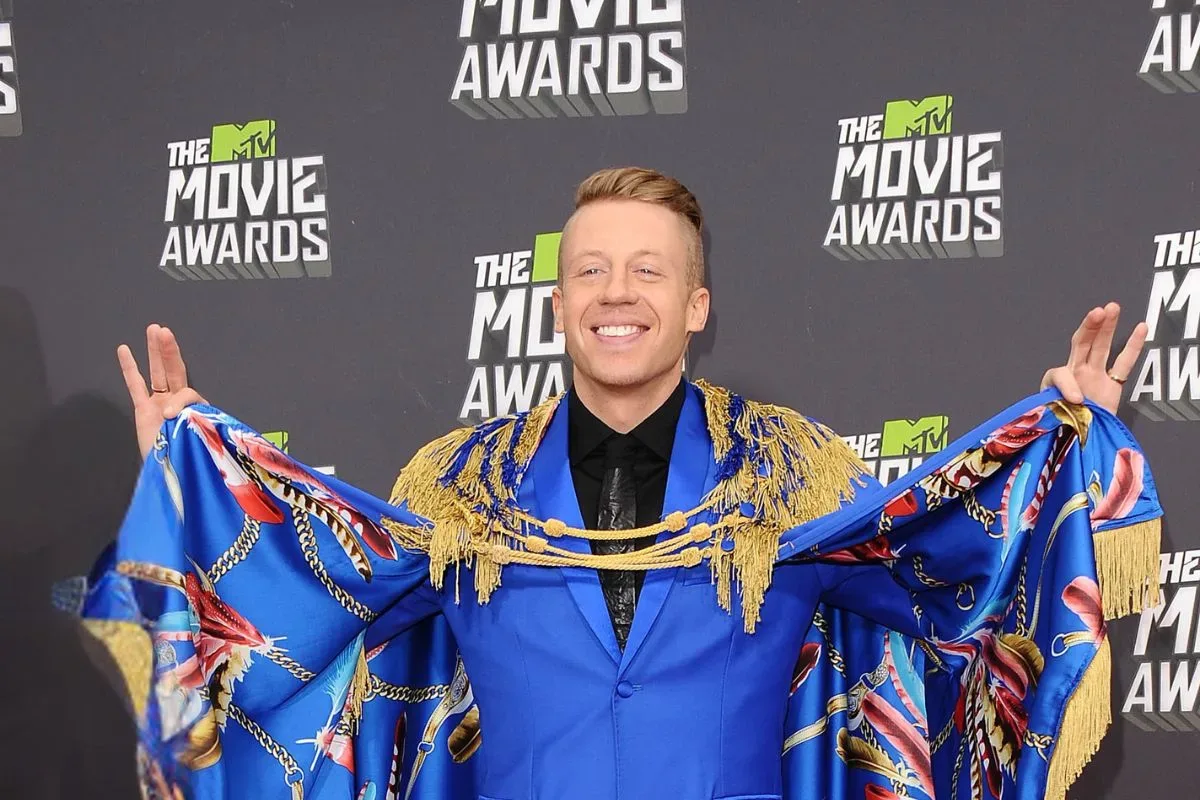
Macklemore appeared at the September 4 concert at MetLife Stadium in New Jersey, part of Ed Sheeran’s U.S. Loop Tour. During his set, he made a political speech, said “Free Palestine,” and told the crowd that people in Gaza and the occupied West Bank had not been forgotten.
He was subsequently removed from the tour on September 14. In the period after his departure, openers including Finneas and Aaron Rowe pulled out, explicitly citing support for the “Thrift Shop” performer.
That sequence matters because it separates several related but distinct decisions. Macklemore’s onstage statement was his own expression. His removal was a tour-level programming decision. The withdrawals by other acts were individual decisions by artists and their teams. Barrera’s comments focus on the final stage: performers choosing to align themselves publicly with a colleague after that colleague lost an opportunity.
In entertainment, that kind of backing is often described as solidarity. The term means more than sympathetic words. In this case, it refers to artists signaling shared principles through action that can carry professional costs, including surrendering an opening slot, exposure to a large audience and association with a high-profile tour.
Barrera’s connection to the issue
Barrera’s reaction is shaped by events surrounding her exit from Scream. She starred in 2022’s Scream and Scream VI, released the following year. Franchise producer Spyglass dismissed her after posts in which she criticized Israel amid the war in Gaza.
At the time, the company said it had “zero tolerance for antisemitism or the incitement of hate in any form,” specifically including false references to genocide, ethnic cleansing and Holocaust distortion, as well as material it considered to cross into hate speech. Those were the stated grounds offered by the producer; Barrera’s new comments instead concentrate on what happened around the dismissal, particularly the perceived absence of broad public support from her peers.
Her former castmates were largely quiet on her firing at the time. Jenna Ortega and director Christopher Landon later departed Scream 7, which was released earlier in 2026. More recently, co-star Matthew Lillard said he felt “ashamed” for appearing in that installment.
The story has therefore become larger than one casting dispute or one concert-tour booking. It is also about how people in a collaborative industry respond when a colleague’s public speech results in a lost job or platform. Barrera sees the Macklemore situation as evidence that artists may now be more willing to respond in public and to do so together.
Why collective withdrawal carries a different message
An opening act is not merely a name on a poster. It helps establish the tone of a show, reaches an audience that may not otherwise seek out its music and participates in the logistical ecosystem of a tour. Choosing to leave such a slot makes a position visible to ticket holders, industry colleagues and promoters, even when the departing artist’s remarks are relatively brief.
It can also change the character of a controversy. A performer removed from an event can be framed as an isolated dispute between an artist and organizers. When multiple other artists then opt out, the conversation necessarily expands to encompass their choices and their reasons. That does not settle the underlying political disagreement, nor does it erase the varied risks involved for everyone concerned. It does, however, turn private calculations into a public display of alignment.
Barrera argued that such displays can affect the willingness of powerful people to attempt censorship. “When someone is attacked, and there are people behind [them] being like, ‘We’re not gonna allow this,’” she said, the growing support can make censorship less effective.
Her use of the word “censor” is her own characterization of the situation. At a practical level, the events described involve employment, booking and artistic association: a performer was taken off a tour, while other artists chose not to remain on it. Those choices are not identical, but they are linked by the broader question Barrera raises—how much leverage artists, organizers and colleagues possess when speech is contested.
Her challenge to people with influence
Barrera also wondered what might have happened had Sheeran rejected the decision to remove Macklemore. She acknowledged the uncertainty: shows could still have been canceled. But she suggested that an artist at Sheeran’s scale might have been able to rebook elsewhere and retain public support.
That is a hypothetical, not a claim about what Sheeran could definitely have done. It is central to Barrera’s broader argument, however. She believes many people with meaningful influence underestimate their own capacity to absorb pressure, mobilize audiences or back colleagues. In her view, fear rather than a lack of power can shape institutional decisions.
There is no simple formula for that calculation. A tour involves venues, contracts, staff, local scheduling, ticket holders and multiple performers, and the available information here does not establish the terms governing any of those arrangements. It would be inaccurate to treat Barrera’s speculation as proof that a different response would have been easy or consequence-free. Her remarks are better understood as a call for people with significant platforms to recognize that they may have options beyond compliance.
That perspective also explains why the actions of Finneas, Rowe and the other openers resonated so strongly with her. Their withdrawals were a concrete answer to a question that entertainers often face in the abstract: whether to remain attached to a major project after a colleague is penalized for politically charged expression.
The entertainment-industry backdrop
The dispute arrives in a cultural environment where films, tours and franchises depend on networks of individuals rather than a single star. Actors depend on producers and studios; musicians depend on tours, promoters, venues and audiences; directors and crew work within projects controlled by companies and rights-holders. Public disagreement can therefore carry real professional stakes even when it happens outside the work itself.
That is why Barrera’s comparison between the two moments is notable. She is not presenting the circumstances as identical. Her departure from Scream involved a producer’s statement alleging antisemitism and hate speech in connection with her posts. Macklemore’s removal followed his political speech at a concert. The work settings, decision-makers and public explanations differ.
What Barrera recognizes across both cases is the aftermath: whether fellow artists visibly stand beside a person who loses a role, slot or affiliation. The lesson she draws is that support can make professional retaliation harder to isolate. Her claim is not that collective action guarantees an outcome, but that it changes the conditions in which an outcome is contested.
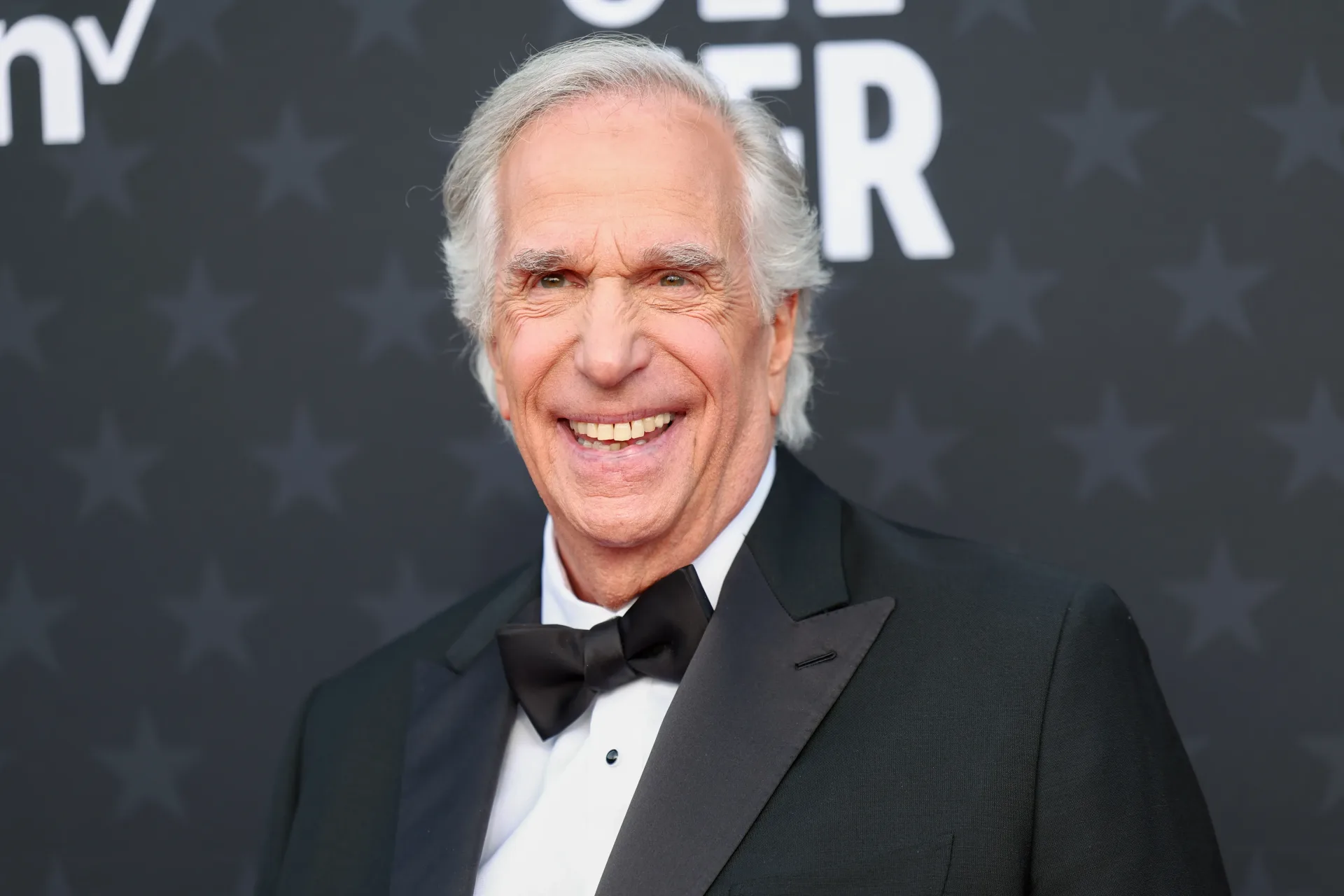
For readers following the wider Scream conversation, the franchise has long carried a distinctive relationship to celebrity and public image; a separate look at Henry Winkler’s recollection of the original film’s marketing illustrates how decisions around the series have historically been shaped by perceptions of performers as much as by the screen itself. Barrera’s experience concerns a far more serious and contemporary question: the relationship between public speech, employment and peer support.
What Barrera says has changed
Barrera’s response was ultimately hopeful. She said the support that coalesced around Macklemore felt like “a big step” and said she believed what people were witnessing could inspire real change.
That optimism rests on visibility. Support that remains private may matter personally, but it does not necessarily alter the public perception that an affected artist stands alone. The musicians who withdrew made their position legible to a much wider audience. For Barrera, that visibility is precisely what gives the action force.
The immediate facts remain clear: Macklemore was removed from the U.S. Loop Tour following his September 4 remarks; Finneas, Aaron Rowe and other openers then left in support; and Barrera regards that response as a meaningful development compared with her own experience after leaving Scream. The larger consequences—on future tours, franchises or industry decision-making—cannot yet be known.
But Barrera’s comments put a sharp question to artists with established audiences and institutional access: when professional pressure arrives, is influence only something to protect, or can it be used to protect someone else? In this instance, she sees the openers’ answer as a sign that the balance may be changing.