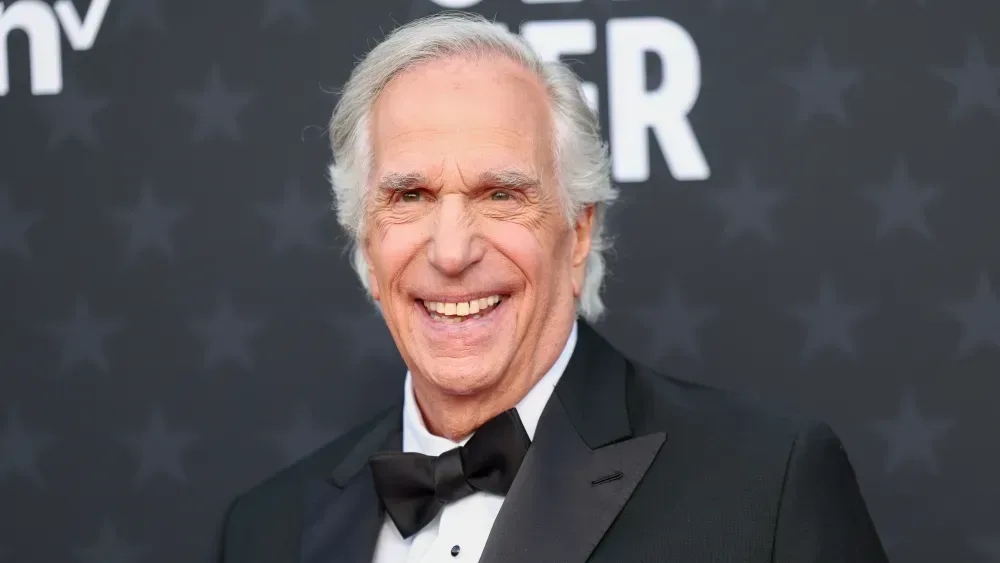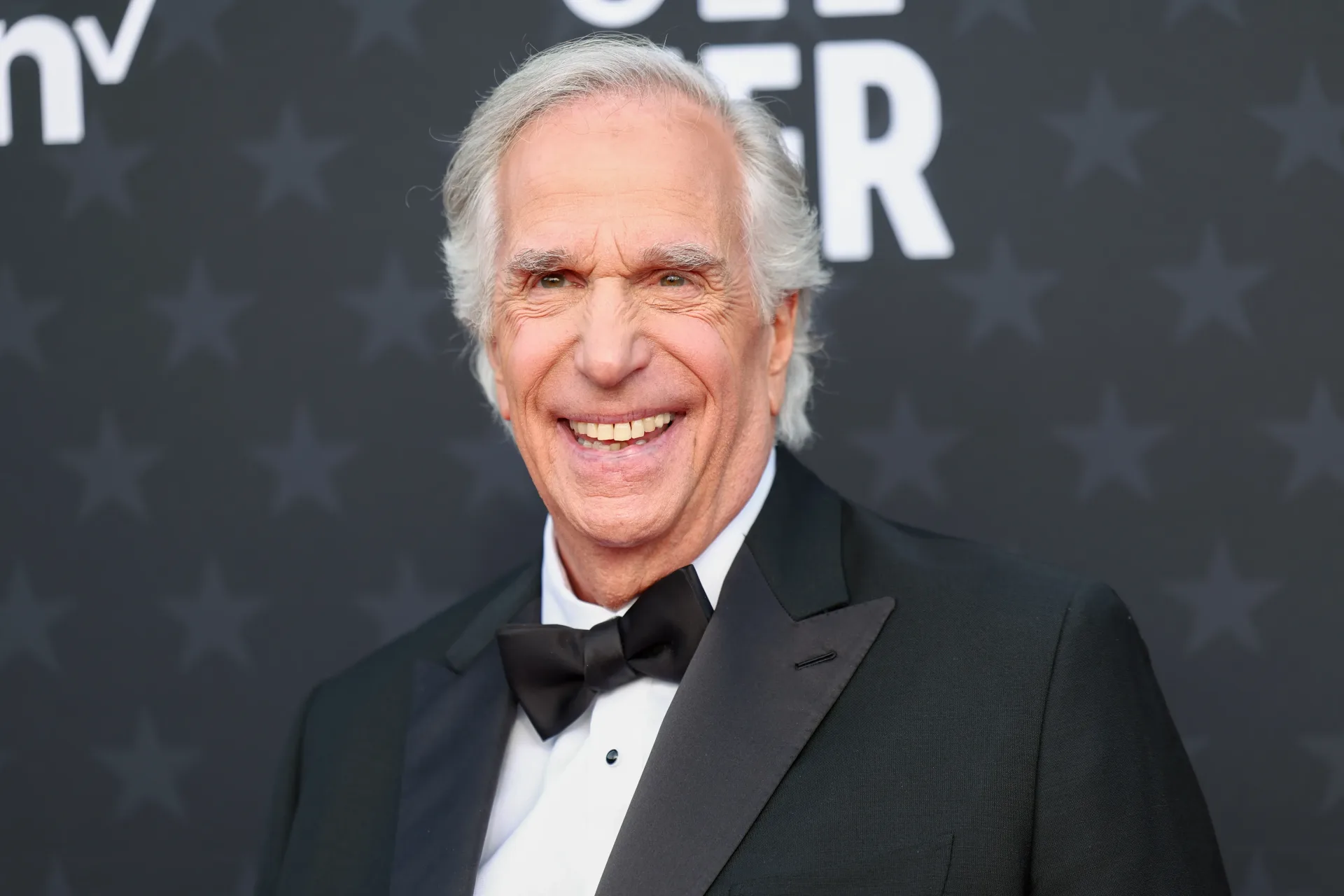
Henry Winkler has described an unexpectedly awkward piece of the original Scream rollout: the decision not to put his name on the film’s poster. Winkler played Principal Arthur Himbry in Wes Craven’s 1996 horror hit, but says the studio believed his long-running association with Arthur “Fonzie” Fonzarelli could change how audiences read the movie before they even entered a theater.
In an interview on In Depth With Graham Besinger, Winkler recalled being told that he could not be featured on the poster or have his name placed near it. The stated concern, he said, was that audiences identifying him first and foremost with the beloved Happy Days character would disturb the carefully managed balance of horror. Winkler said he found the decision insulting and bewildering, though he did not openly fight it.
It is a revealing reminder that a movie poster is not simply a list of everyone involved. It is a piece of marketing designed to establish a mood, signal a genre and set expectations in seconds. In this case, the film’s marketers apparently saw Winkler’s public image as potentially so powerful that it could pull attention away from the unease they wanted the campaign to create.
Why a recognizable face could be seen as a problem
Winkler’s complaint is not that he was omitted from the film itself. His part as Principal Himbry remained in Scream, and he said the character’s entrance drew applause during screen tests. The issue was promotional visibility: his name was withheld from the central piece of advertising associated with the release.
That distinction matters. A poster’s job is different from a credit list’s job. Film credits formally identify cast and crew; a poster has far less room and uses its limited space to communicate the movie’s commercial pitch. Name placement, the size of lettering and which performers are absent can all reflect a campaign’s intended tone rather than the scope or quality of a performer’s work.
For the studio, as Winkler recounts it, the worry was not that viewers would fail to recognize him. It was precisely the reverse. His connection to the Fonz was so immediate that it could introduce a comic or nostalgic association into an advertisement for a horror film. That logic may feel harsh to the actor on the receiving end, but it demonstrates how narrowly a campaign can try to control first impressions.
There is an irony in that concern. Scream became one of horror’s most successful franchises, and its cast included Neve Campbell, Courteney Cox, David Arquette, Drew Barrymore and Matthew Lillard. The film’s cultural footprint has proved broad enough to accommodate a large ensemble and many memorable supporting turns. Yet at the campaign stage, the marketing decision was apparently driven by an anxiety that a single familiar name could shift the emotional temperature of the poster.
Winkler still agreed to promote the movie
The part of Winkler’s story that makes the episode especially striking is what happened afterward. He said the same people who told him his name would not be used on the poster later asked him to take part in promotion for the movie. He agreed, explaining that he did it for himself, for Craven and for the film.
Related coverage includes Henry Winkler Says ‘Scream’ Kept His Name Off Its Poster.
That choice did not erase his disappointment. Winkler said he went home upset after the poster conversation. But it separates an understandable personal reaction from his professional commitment to a project in which he had participated. Rather than turn the disagreement into a public battle at the time, he supported the release.
For viewers, that is also a useful way to understand movie marketing: the public campaign is collaborative, but it is not necessarily experienced the same way by every contributor. A director, actor, studio and marketing team can all be invested in a film while disagreeing sharply about how it should be presented. The poster is the final product of that process, not a complete record of everyone’s expectations or frustrations.
Poster billing is marketing, not a full measure of importance
It would be easy to read an actor’s absence from a poster as a verdict on their role. Winkler’s account is a good reason not to. In this instance, the reason he was given was about brand association and genre management, not an assertion that his character had no impact. The reported applause during screen tests adds another wrinkle: the audience response to his appearance was positive, while the campaign’s concern focused on the assumptions people might make before seeing the film.
That gap between promotion and the finished work appears across entertainment. Marketing often operates on shorthand. A familiar actor can suggest a particular style, past role or audience demographic even if their performance in the new project is very different. Campaigns may embrace that shorthand, or—as Winkler says happened here—try to avoid it.
Audience expectations remain an important part of how performers and projects are presented in public. The relationship between a screen or stage event and the people watching it is also at the center of Cate Blanchett’s request for audiences to stop recording performances of Electra/Persona. The circumstances are quite different, but both cases underline that a work’s experience can be shaped by factors beyond the performance itself.
The lesson Winkler took from it
Looking back roughly three decades later, Winkler framed the experience less as a lasting grievance than as a lesson in accepting uncertainty. His takeaway was simple: show up, do the work and recognize that much of what follows is outside an actor’s control.
“You just show up,” Winkler said, adding that people cannot know exactly what will happen next—and that much of it is beyond their control.
That perspective does not make the initial decision any less pointed. Being asked to promote a movie after being told one’s name should not appear on its poster would understandably feel contradictory. Still, Winkler’s decision to participate in the press campaign reflects the distinction he drew between a marketing slight and the work of the people who made the film.
It also offers a more grounded reading of celebrity image. An actor’s best-known role can be a tremendous asset, but it may also become a lens through which every later appearance is judged. The studio’s reported concern was rooted in the endurance of the Fonz as a cultural association. Winkler’s account suggests that association remained commercially potent enough in 1996 for marketers to fear it would alter the reception of a horror movie.
A franchise still growing beyond its original campaign
The original Scream ultimately became the foundation of a major horror franchise. Its latest entry, Scream 7, has become the series’ highest-grossing installment, with $176.9 million. That result places the poster dispute in a much larger history: a moment of promotional caution surrounding one actor during the launch of a property that went on to sustain an audience for decades.
Winkler’s recollection does not change the movie’s place in horror, nor does it turn a poster credit into the defining measure of his contribution. What it does provide is a candid look at the calculations behind a familiar image. The original Scream campaign apparently wanted a specific kind of tension, and the studio believed invoking the Fonz could weaken it. Winkler disagreed with the outcome, felt hurt by it and nevertheless showed up for the film.
For anyone revisiting the 1996 movie, Principal Himbry’s appearance is a reminder that the people audiences remember are not always the people a campaign chooses to foreground. Posters sell an opening impression. Performances, and the long afterlife of a franchise, tend to tell the fuller story.