Melanie Lynskey has pushed back on a particularly stubborn bit of television-money mythology: the claim that her work as Rose on Two and a Half Men made her millions of dollars.
Responding to an Instagram comment that placed her pay between $200,000 and $300,000 for every episode, Lynskey said the number was wildly inaccurate. She appeared in 63 of the sitcom’s 262 episodes, a distinction that matters before any per-episode figure is turned into a headline-friendly career total.
“I made literally one tenth of that stated number per episode,” Lynskey wrote, explaining that she started at $20,000 per episode and believes her salary rose by 5% each season.
That correction places the early rate at $20,000, rather than the six-figure estimates spreading online. Lynskey also noted that more than half of her appearances came during the first two seasons, when her compensation would have been closer to the starting figure than to the higher amount she earned later.
Her biggest single paycheck from the series, she said, was about $43,000 for one episode in its final season. Even that figure, she emphasized, is not the same as money deposited into an actor’s personal account.
Gross pay is not take-home pay
The central misunderstanding in these discussions is the gap between gross compensation and net income. Gross compensation is the amount listed on a payment before representation, business and tax obligations are accounted for. Net income is what remains after those deductions.
Lynskey said her stated pay was subject to cuts for agents, managers and business managers, followed by taxes. Her rough shorthand was that she took home around half of the amount she was paid. That does not mean every performer has an identical deduction structure, but it does explain why treating a listed per-episode fee as disposable personal income produces a distorted picture.
It is also important not to turn her correction into a claim that the job was insignificant. Lynskey described herself as extremely grateful for both the role and its earnings. The money, she said, enabled her to cover a small mortgage and bills while continuing to take independent-film work and develop a career.
Related coverage includes Melanie Lynskey Corrects ‘Two and a Half Men’ Salary Claims.
That is a much more grounded account of what a long-running supporting role can provide: meaningful financial stability and flexibility, without automatically creating the kind of vast wealth often assumed when a show becomes a massive network hit.
Rose was memorable, but Lynskey was not in every episode
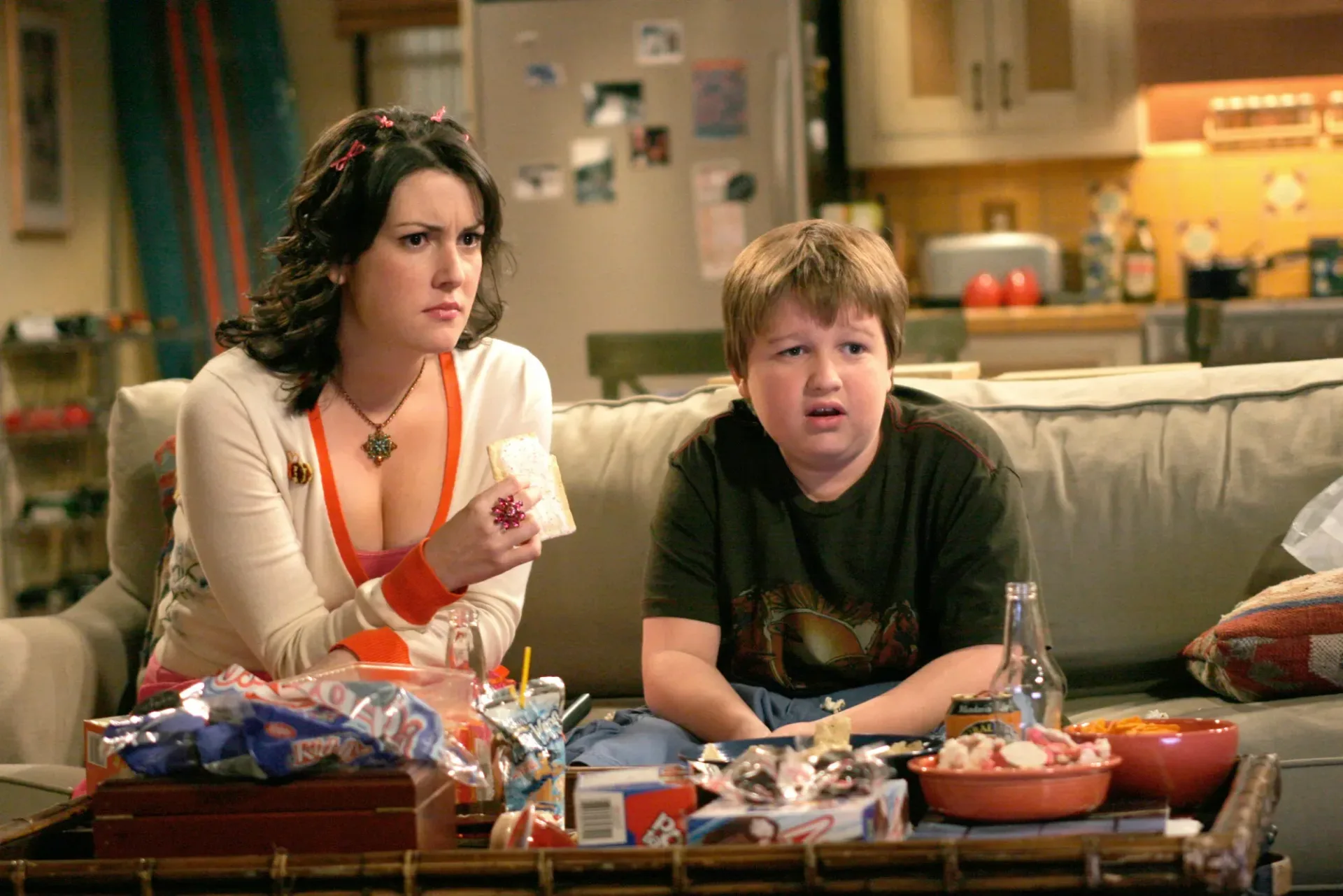
Lynskey played Rose, the neighbor of Charlie Harper, played by Charlie Sheen, whose storyline developed into an eventual stalking dynamic. The character was a memorable part of the series, but memorable is not interchangeable with appearing weekly across a show’s full run.
She was a series regular from Seasons 1 through 3 and then continued as a guest star from Season 3 onward. Across a 12-season sitcom, 63 appearances are substantial, yet they remain a fraction of 262 total episodes. Online salary speculation often skips that denominator and assumes that a recognizable character had a full-series, lead-performer deal.
Those are separate questions. A performer’s visibility in reruns, clips and fan recollections does not establish their episode count, contract status, per-episode rate or post-deduction income. Lynskey’s response usefully puts all four variables back into the conversation.
Why a simple multiplication can still mislead
A quick multiplication is tempting: take a quoted rate and multiply it by an episode total. But the available details show why that approach needs care.
- Lynskey said her pay began at $20,000 per episode rather than remaining fixed at a single rate.
- She believes there was a 5% increase each season.
- More than half of her episodes were in the first two seasons, making later-season pay a poor proxy for the entire run.
- The $43,000 figure was her highest paycheck, not her standard rate for all 63 appearances.
- Representation, business-management fees and taxes reduced the amount she ultimately retained.
In other words, multiplying 63 by the final-season high point would overstate what she earned. Multiplying every episode by an invented $200,000-to-$300,000 figure would do so by far more. Her remarks are not a complete accounting of every contract term, and they do not need to be: they directly address the specific claim that she was paid hundreds of thousands per installment.
The broader cast-pay conversation
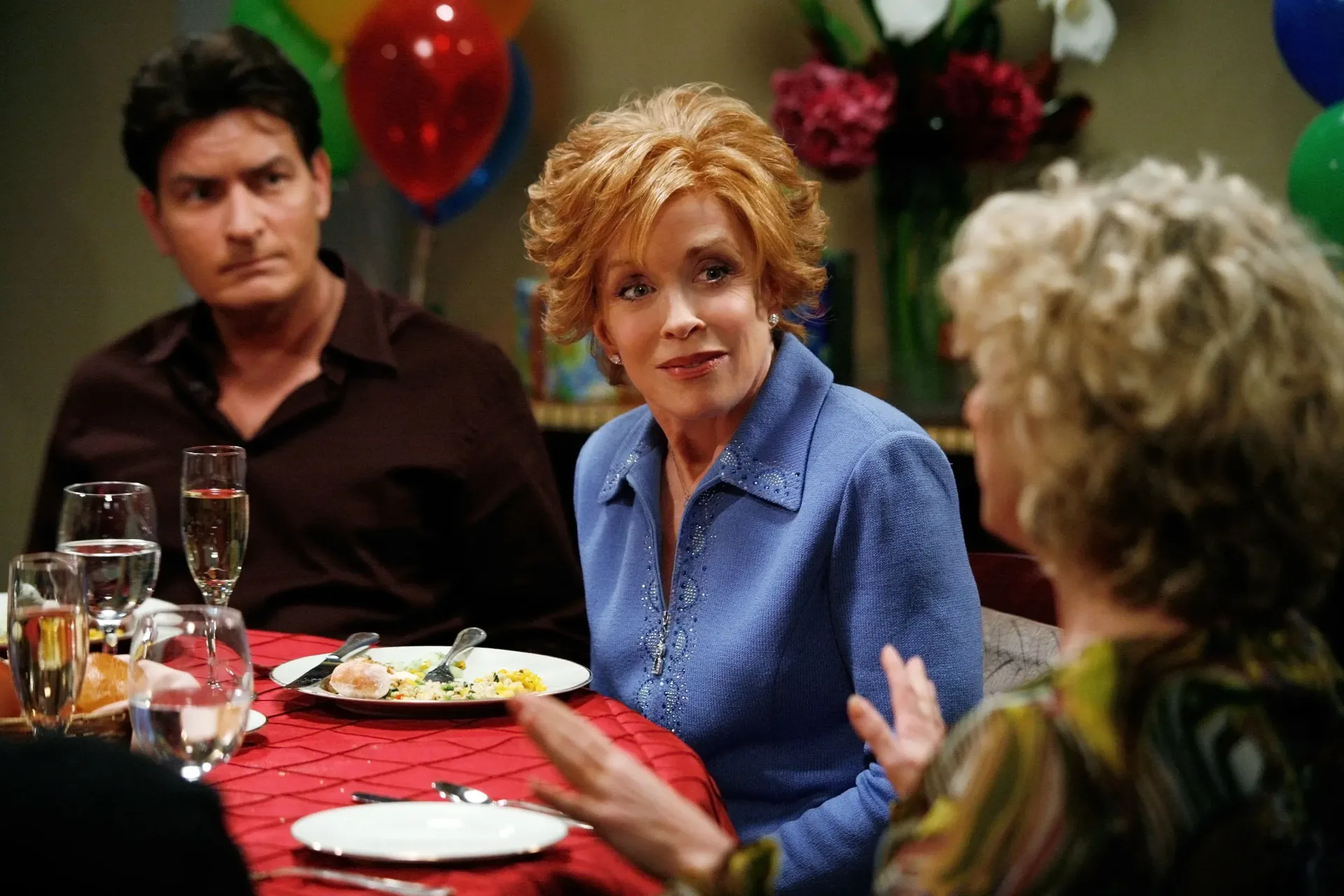
Lynskey’s comments arrived amid separate public reflections from other members of the sitcom’s cast. Holland Taylor, who played Evelyn Harper, recently said the show did not pay her particularly well. Taylor said she was paid at a level comparable to a series she had done years earlier and that, despite receiving four Emmy nominations, she did not get the raise she expected.
Jon Cryer, who played Alan Harper, also discussed the show’s internal pay disparity in September 2025. Cryer said he was paid roughly a third of what Sheen made. A 2011 Forbes report put Sheen’s compensation at $1.9 million per episode.
These accounts should not be flattened into one universal salary story. They instead illustrate how a single show can contain sharply different compensation outcomes depending on a performer’s role, bargaining position and the terms reached at particular moments. A lead star’s exceptional deal does not explain a supporting player’s rate; nor does an Emmy-nominated co-star’s experience necessarily map onto either.
Sheen’s reported $1.9 million per episode is especially likely to warp public expectations because it is such an extraordinary figure. It was reported in 2011 and concerned the show’s central star, not its entire ensemble. Using it as an informal benchmark for every recognizable cast member makes the wrong comparison from the start.
What Lynskey’s clarification actually establishes
Lynskey did not deny that Two and a Half Men was financially valuable work. Quite the opposite: she credited it with giving her room to pay bills, maintain her home and pursue independent movies. What she rejected was the leap from “valuable and career-supporting” to “paid $200,000 to $300,000 for each appearance” or “made millions” from the show.
The distinction is worth preserving, particularly as entertainment discussion increasingly turns isolated figures into viral narratives. An actor can benefit deeply from a successful series while still having compensation that is modest beside the eye-catching deals earned by the program’s biggest stars.
For viewers revisiting the series, the clarification is a reminder that character prominence is not a payroll category. Rose remains a familiar and lasting piece of the sitcom’s identity, but Lynskey’s account supplies the practical details often absent from the conversation: 63 episodes, a $20,000 starting rate with seasonal increases, and a final-season high of about $43,000 before professional fees and taxes.
That kind of specificity is more useful than a viral estimate. It identifies what was actually claimed, explains why a headline number can be misleading, and leaves room for the simple truth Lynskey herself stressed: the role mattered to her career and finances without delivering the enormous windfall that internet rumor assigned to it.
For more television-industry discussion, see our coverage of Cynthia Nixon’s comments on Miranda Hobbes’ arc in And Just Like That.