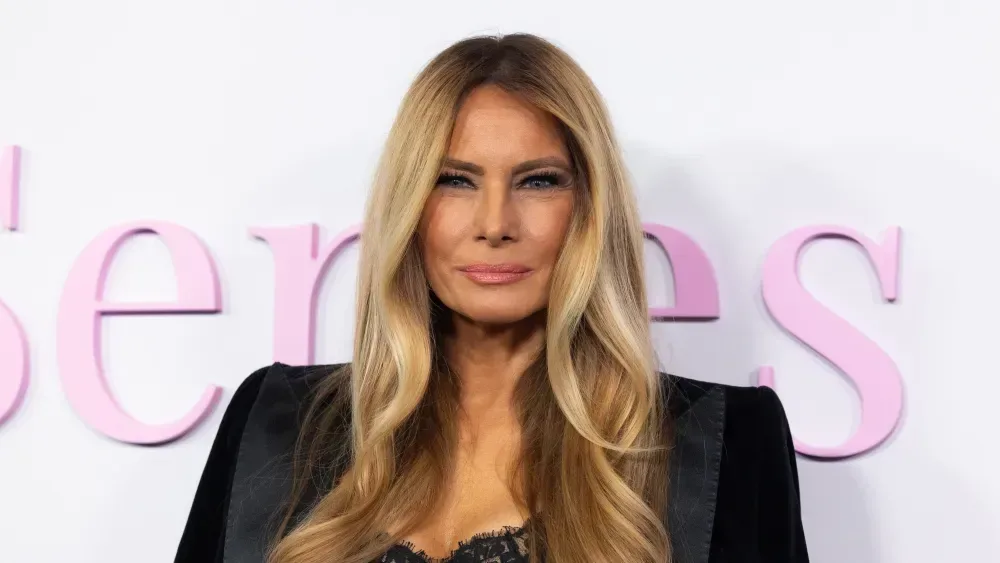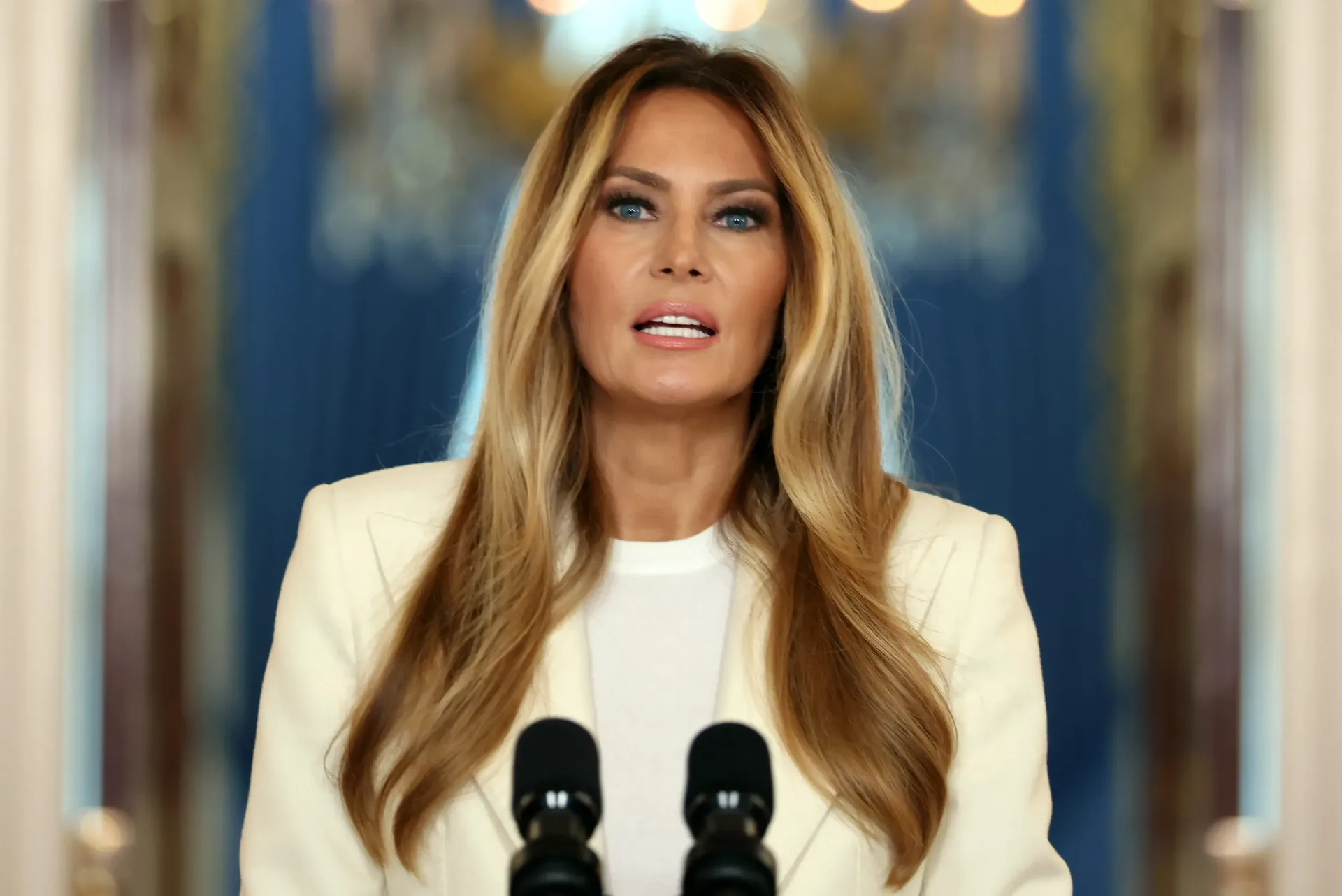
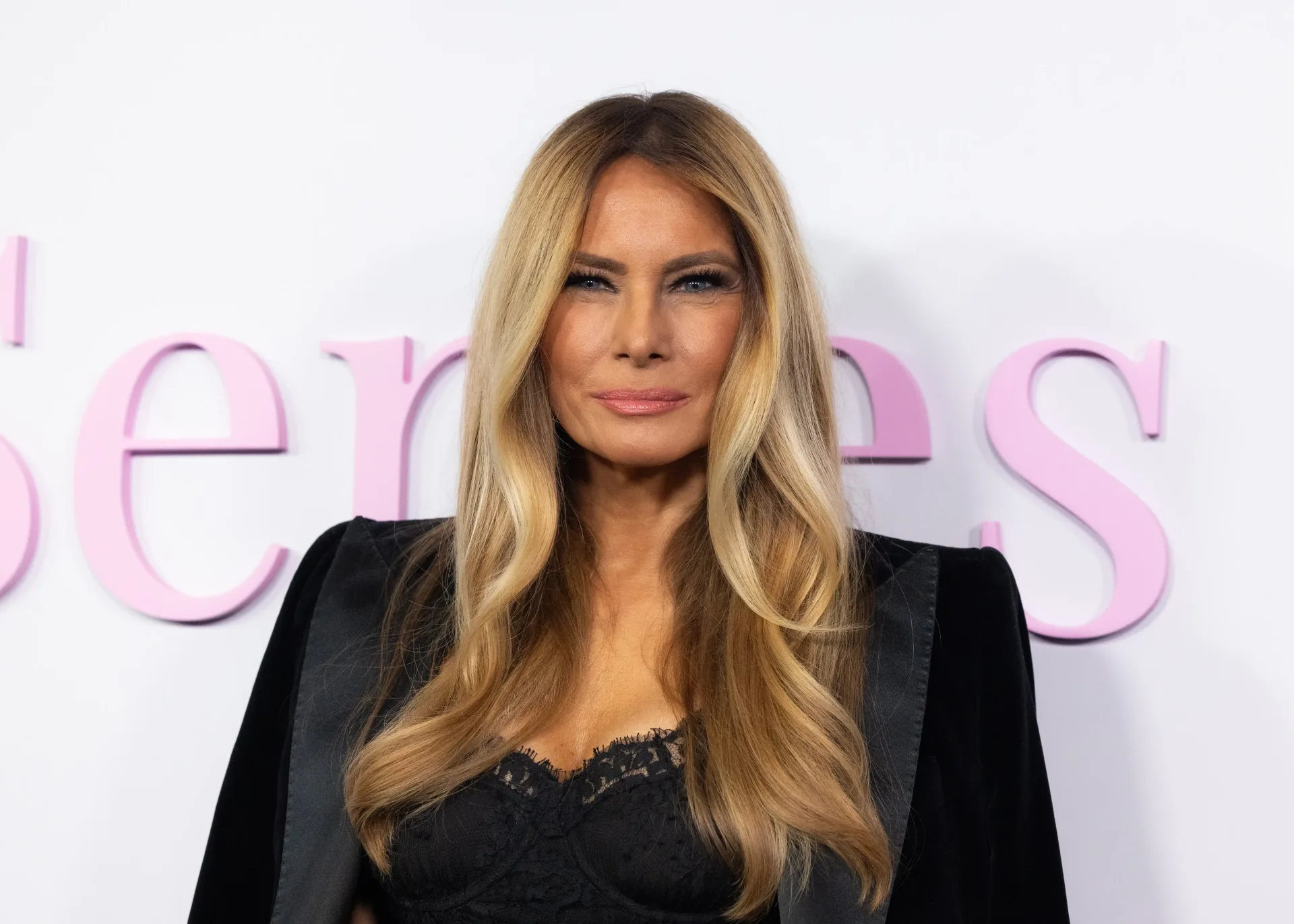
Melania Trump’s new two-part Prime Video program, Melania: The Series, arrived with an answer that was considerably broader than the question that prompted it. Asked at the New York premiere about children in Gaza, Israel and other places affected by war, the first lady said she wants “peace all around the world,” adding that people should live “in harmony and peace.”
She did not outline a policy position, propose a specific humanitarian initiative, or address the conflicts named in the question individually. Her brief suggestion for achieving peace was that people need “to get together.” That makes the moment less a substantive diplomatic statement than a public expression of a universal goal—one that nevertheless takes on more weight because it came from a sitting first lady and during the launch of a major streaming project centered on her public role.
A series about public and private roles
Melania: The Series is described as offering viewers a look at Melania Trump’s personal life and her role in the White House. Its stated focus includes work intended to create educational and career opportunities for children in foster care. That is a more defined subject than the international question raised at the premiere: foster-care support concerns children within a particular social-services setting, while children living through armed conflict face a vastly broader set of humanitarian and political conditions.
The distinction matters. A call for peace can communicate a moral priority, but it is not the same thing as an explanation of how governments, aid organizations or negotiating parties might respond to a specific war. The exchange did not supply that missing detail. For viewers, then, the useful way to read the comments is narrowly: they establish that peace is the first lady’s stated aspiration, not a roadmap for resolving Gaza, Ukraine, Iran or any other conflict.
That gap between a simple message and a difficult reality is also part of the strange territory occupied by political documentary programming. A streaming series can humanize a public figure, highlight charitable interests, and build a narrative around a high-profile office. It cannot, by itself, turn broad language at a premiere into a diplomatic outcome. Promotion, personal storytelling and statecraft may overlap in the public imagination, but they remain different activities with different measures of success.
Why the remarks drew attention
The premiere took place amid an effort by President Donald Trump to present himself as a global peacemaker following a difficult midterm result. The supplied account also describes Vice President JD Vance as identifying ending war and changing the United States’ relationship with Israel among issues that could help Republicans win back voters who had switched sides.
Only hours before the series event, Trump, Xi Jinping and Vladimir Putin reportedly met at a trilateral summit in China. Their joint declaration emphasized peace, commitments to the United Nations, and the principle that nuclear war cannot be won and must never be fought. Those phrases are significant as statements of intent, particularly because the prospect of nuclear escalation is one of the gravest risks in international politics.
But a joint declaration is a shared public statement, not necessarily a binding settlement or proof that a conflict has been resolved. The account notes that the declaration did not directly address the wars in Gaza or Iran. It also notes criticism from some foreign-policy analysts, who viewed the meeting as potentially more theatrical than substantive and questioned whether it legitimized Putin without winning concessions on Ukraine.
Related coverage includes Melania Trump Calls for Peace at New York Premiere of Prime Video Series.
That is the context in which Melania Trump’s few sentences landed. They were not an official summit communiqué, nor were they presented as new negotiations. Yet the timing made a generic appeal for harmony part of a much larger argument over how leaders should define and demonstrate “peace.”
Peace rhetoric versus peace process
It is worth separating two terms often bundled together in coverage of international affairs:
- Peace rhetoric is the language leaders use to express an ambition, such as ending violence or encouraging cooperation.
- A peace process is the practical, usually lengthy work of negotiation, commitments, verification and implementation intended to reduce or stop conflict.
The premiere comments plainly fit the first category. There is no evidence in the available material that they were connected to a defined process concerning Gaza or Israel. The same caution applies to descriptions of political figures as peacemakers: an image, a declaration and a negotiated outcome are separate things, even when one is meant to support the others.
For entertainment audiences, this is a useful lens for approaching political nonfiction and personality-driven programming. Such projects do not have to be policy briefings to be meaningful, but audiences should be clear about what is being offered: a perspective on a person, not necessarily an independently complete account of the policy stakes surrounding them.
The Amazon deal remains part of the conversation
The series is the second release tied to Amazon’s reported $40 million licensing agreement for the Brett Ratner-directed documentary Melania, which debuted in January. Marc Beckman, who oversaw the bidding process, characterized the documentary as an unusually significant project and said multiple major streaming and entertainment companies had expressed interest.
Beckman also said Amazon’s leadership understood the importance of telling the story and denied that Jeff Bezos participated in the negotiations. Bezos’ involvement has been a focal point because Democratic lawmakers, including Sen. Elizabeth Warren, alleged the deal represented an improper attempt to gain favor with the Trump administration. Bezos defended the transaction as a sound business decision.
Those are competing interpretations of the same acquisition, not a dispute settled by the series itself. The reported license fee is a concrete part of the deal; the motivations behind it are contested. That distinction is especially important whenever a company buys a project involving an active political figure. Commercial value, audience interest, access, corporate strategy and political perception can all become part of the public debate, even if no single explanation is established.
The documentary’s theatrical performance has also become part of the debate over scale. It earned $16.6 million worldwide, a result described as exceeding box-office expectations but falling short of the all-time documentary record. Promotional claims that call any release the “biggest” or most important of its kind should therefore be read as advocacy from the people behind the project rather than as a neutral ranking.
What viewers can reasonably expect
For people deciding whether to watch Melania: The Series, the available information points to a two-part, personality-focused program about the first lady’s life, White House role and work involving foster-care opportunities. The premiere exchange adds a small but telling indication of its wider environment: the series is arriving while the Trump administration’s international positioning is under intense scrutiny.
That does not mean viewers should expect a full assessment of diplomacy or an answer to humanitarian questions raised by ongoing wars. Nothing in the available description establishes the show as an investigative account of those topics. Instead, it appears positioned as a close view of its central subject, with the politics around her inevitably shaping how the program is received.
The result is a release with two parallel narratives. On screen, the focus is Melania Trump’s personal and official-facing life, including foster-care-related advocacy. Off screen, the project carries the visible baggage of a costly Amazon agreement, arguments over corporate motives, and a political moment in which the word “peace” is being used by multiple figures with very different degrees of specificity.
For another example of how entertainment stories can be shaped by the communities and media surrounding them, see how fan edits influenced the emotional preparation of two Percy Jackson performers.
Melania: The Series is streaming on Prime Video.