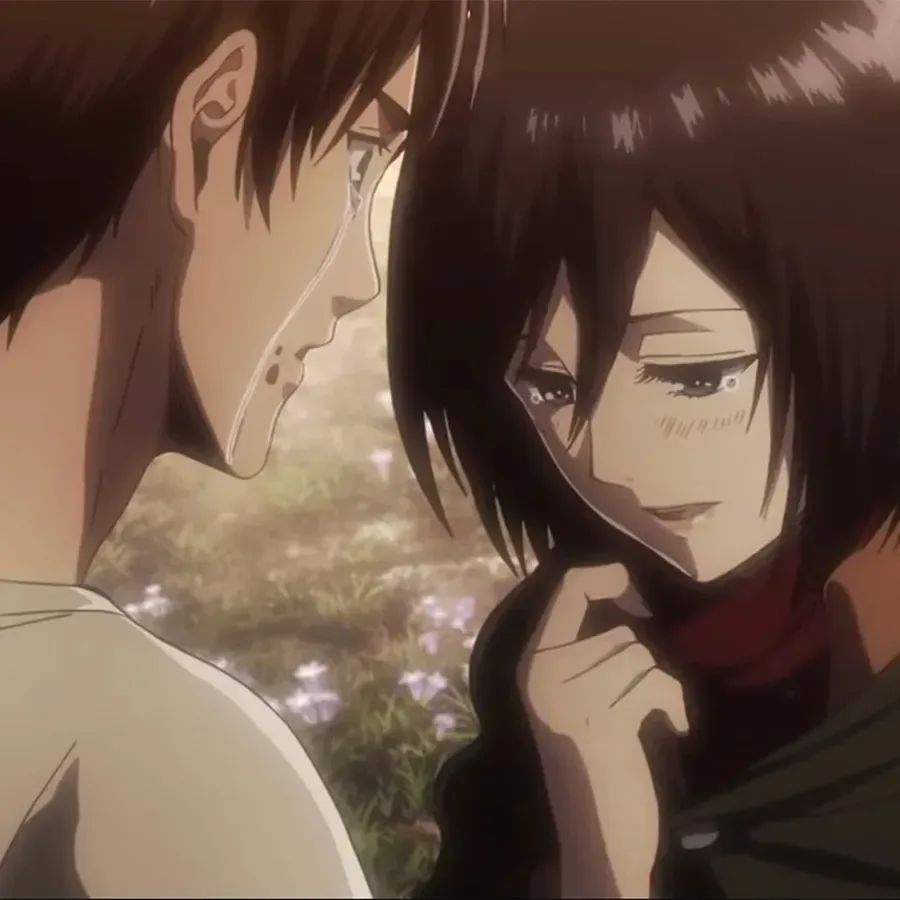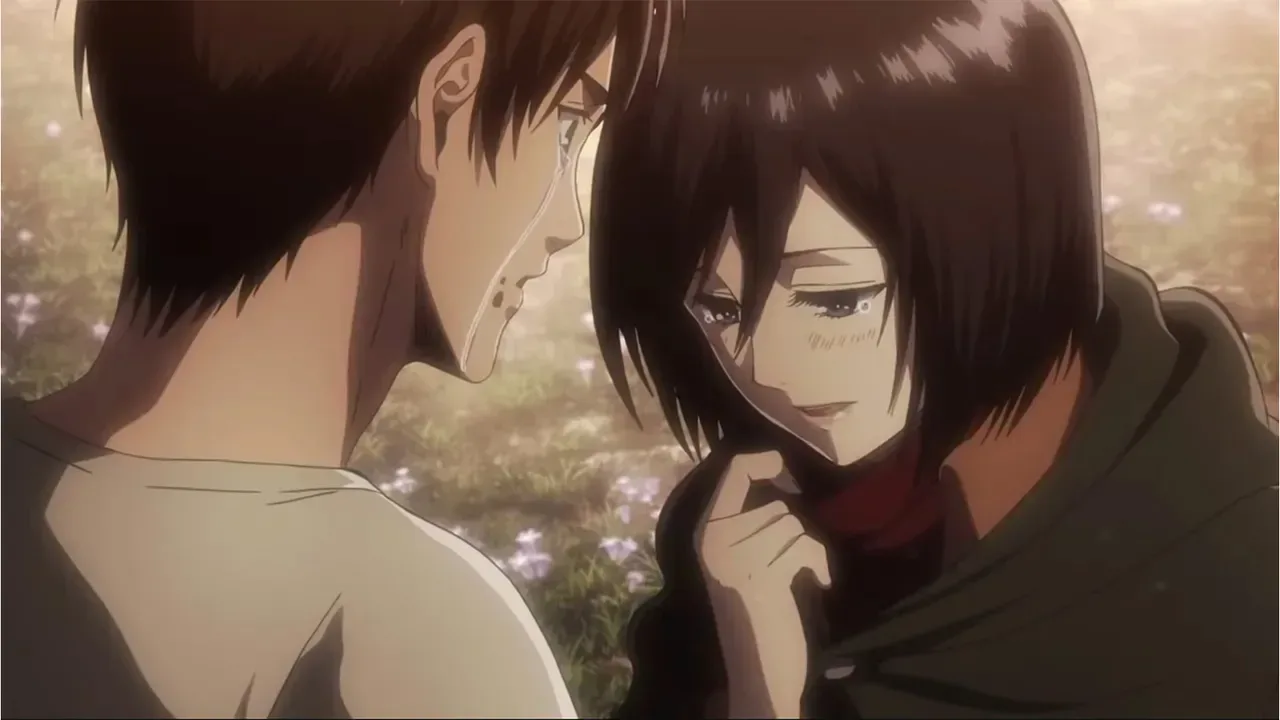
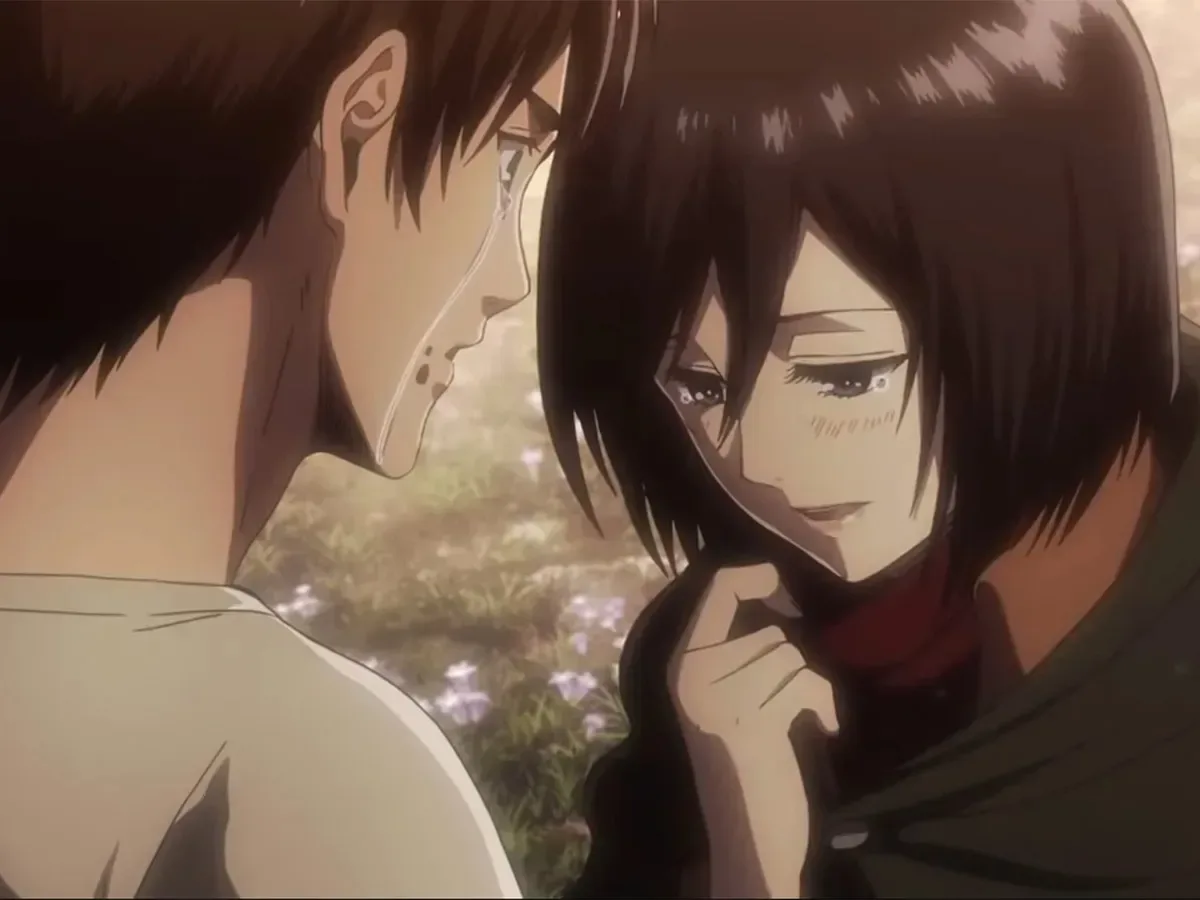
Fan edits are usually made for other fans: compact, music-driven celebrations of a character pairing, a devastating plot turn, or a story that still has people staring at the ceiling long after the credits. For Walker Scobell and Aryan Simhadri, though, Attack on Titan edits became something unexpectedly practical. The Percy Jackson and the Olympians co-stars said they separately used emotional videos focused on Eren and Mikasa to try to reach the right headspace for sad scenes.
The revelation came during a live podcast appearance at 92NY, where Scobell described searching for a way to make himself cry ahead of filming. He landed on fan-made Attack on Titan clips featuring Eren and Mikasa, set to “Red Swan,” the opening theme associated with the anime’s third season. Simhadri confirmed that he had done essentially the same thing, despite the pair never discussing the method beforehand.
It is an unusually candid example of how online fan culture can bleed into an actor’s preparation process—not as a replacement for performance craft, but as a personal emotional prompt. It also makes perfect sense that this particular anime, character dynamic, and song would be the combination that stuck.
Why Eren and Mikasa edits can hit so hard
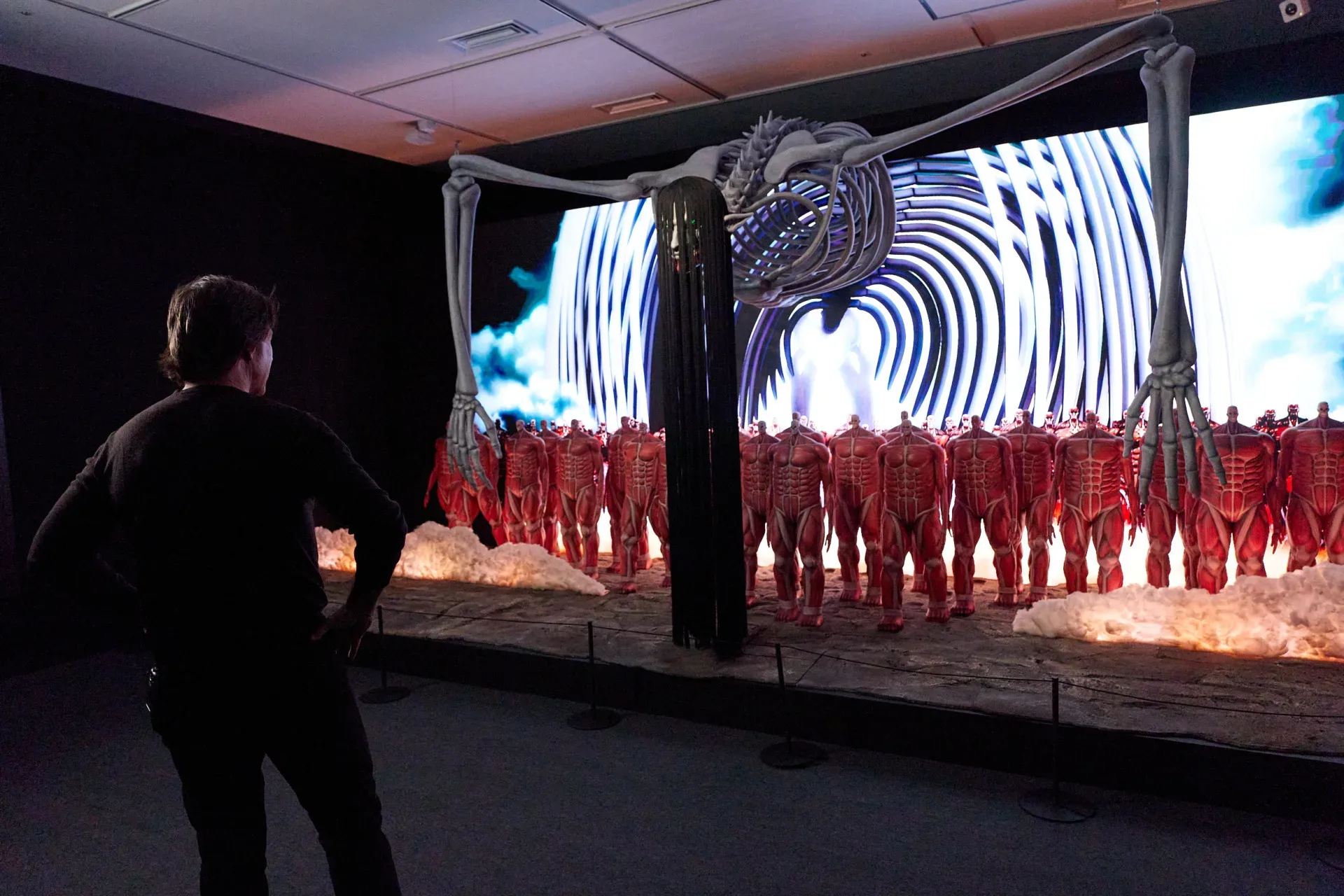
Attack on Titan has been an anime fixture since its 2013 debut, known for a story that combines enormous, violent battles with intensely personal losses. Its stakes are colossal, but much of its emotional charge comes from the relationships inside that conflict. Eren and Mikasa are central figures in that story, and edits built around them often distill a large, complicated narrative into a few minutes of looks, memories, peril, and music.
That compression is the defining feature of a fan edit. The editor selects moments from a longer work and rearranges or emphasizes them around a track. In anime spaces, these are often called AMVs, short for anime music videos. A well-made edit does not need to explain every plot point to create a feeling; it relies on visual association, pacing, and a song’s emotional momentum.
“Red Swan” is especially suited to that kind of treatment. Rather than merely functioning as a quick burst of energy before an episode begins, the opening has become closely linked with the series’ more reflective and tragic side for many viewers. Put that alongside footage of two characters whose connection carries enormous emotional weight, and the result can become a very efficient shortcut to melancholy.
Scobell said he had looked for the saddest thing he could think of, watched the edits while at school, and found himself crying there. He also noted the key complication: getting emotional at one moment did not automatically mean he could reproduce that feeling once he reached the set. That distinction matters. A moving video can unlock an emotion, but acting still requires bringing a usable version of that emotion to a specific scene, take, and working environment.
An emotional cue, not a magic button
There is a useful difference between feeling emotion and performing emotion. The first can be immediate and private: a song, image, or memory sparks tears. The second is controlled work performed amid technical demands, other actors, cameras, direction, timing, and repetition. Scobell’s story is funny partly because it undercuts the fantasy that an actor can simply press play on a sad edit and arrive on set already prepared.
Related coverage includes Percy Jackson Stars Used Attack on Titan Edits to Prepare for Emotional Scenes.
Still, the approach reveals why fan edits endure. They are emotional cues built by people who know exactly which moments mean the most to a community. An editor may spend hours pairing a lyric with a glance, cutting from a happier moment to a loss, or holding a shot just long enough for the audience to feel the connection. The end product is often designed to summon a very specific response quickly.
For actors, musicians, writers, and other creatives, a piece of media can serve as a reference point for tone. In this case, Scobell and Simhadri were not claiming that Attack on Titan supplied a blueprint for Percy Jackson scenes. Their anecdote instead suggests that they found a private way to access sadness before doing their own work in a separate story and role.
That makes the overlap more interesting than a simple crossover gag. Two performers working in a live-action fantasy series found common ground in fan-made anime videos, then discovered only later that they had arrived at the same emotional tool independently.
The distinctly online life of an anime opening
Openings are a major part of anime fandom, but their influence extends well beyond the episodes they introduce. A theme song can become a shorthand for a season, a character arc, or an entire emotional era of a show. Fans circulate the tracks in playlists, remix them, use them in clips, and build edits around the feelings they associate with the music.
That is part of why Scobell naming “Red Swan” prompted such an enthusiastic reaction. For fans, it was not just a reference to any Attack on Titan song. It was recognition of a familiar emotional trigger—one that has been repeatedly reinforced through years of edits and discussion.
Online reactions also highlighted how naturally Eren and Mikasa’s tragedy lends itself to romantic and dramatic comparisons. That response speaks to a central strength of fandom editing: it gives viewers a way to frame a sprawling narrative through the relationship or theme they care about most. The edit may be short, but it can carry the accumulated feeling of a much longer story.
There is a practical lesson here for anyone making or sharing edits, too. The material people create for fellow fans can have a life outside its original circle. A video assembled from favorite scenes and a beloved opening may become a powerful emotional artifact for viewers who were never part of the editor’s intended audience. That does not make every edit universally effective, but it shows why the format has stayed relevant for so long.
Attack on Titan’s performances have long embraced extremes
The idea of performers drawing on Attack on Titan’s emotional intensity is also fitting because its acting has demanded extremes of its own. Bryce Papenbrook, Eren’s English-language voice actor, previously described physically unhinging his jaw while recording a major screaming scene in an attempt to convey the character’s pain and confusion.
Voice acting and on-camera acting involve different physical circumstances, but the underlying challenge is familiar: a performer has to make an internal feeling legible to an audience. Sometimes that calls for restraint. Sometimes it calls for a scream so intense that the actor’s body has to keep up with the sound. And sometimes, apparently, it begins with an Eren and Mikasa fan edit on a phone.
That blend of sincerity and internet-era specificity is why the anecdote has traveled so readily. It is easy to recognize the experience of using art to unlock a feeling, even if the precise emotional emergency is not “I need to prepare for a scene in a major fantasy series.” It is also a reminder that fandom is not passive consumption. Fans recut, reinterpret, and preserve the moments that matter to them—and those creations can resonate in places their makers may never expect.
What it means for Percy Jackson fans
Scobell and Simhadri’s shared anime-edit habit does not reveal plot details or confirm which Percy Jackson and the Olympians scenes prompted their preparation. It does, however, offer a small window into how young performers can use the media they love as part of their creative routine.
The series’ third season, The Titan’s Curse, is currently streaming on Disney+ and Hulu, with new episodes arriving Fridays through December 11, 2026. For viewers keeping an eye on the wider Disney pop-culture orbit, the company has also been expanding its character-focused apparel efforts through its team-specific Disney and Champion collection.
As for Attack on Titan fans, the takeaway is wonderfully simple: those dramatic edits may be doing more than devastating fellow viewers. At least two actors found them memorable enough to use as an emotional jumping-off point—proof that a precisely chosen song and a carefully cut character montage can carry serious dramatic force.