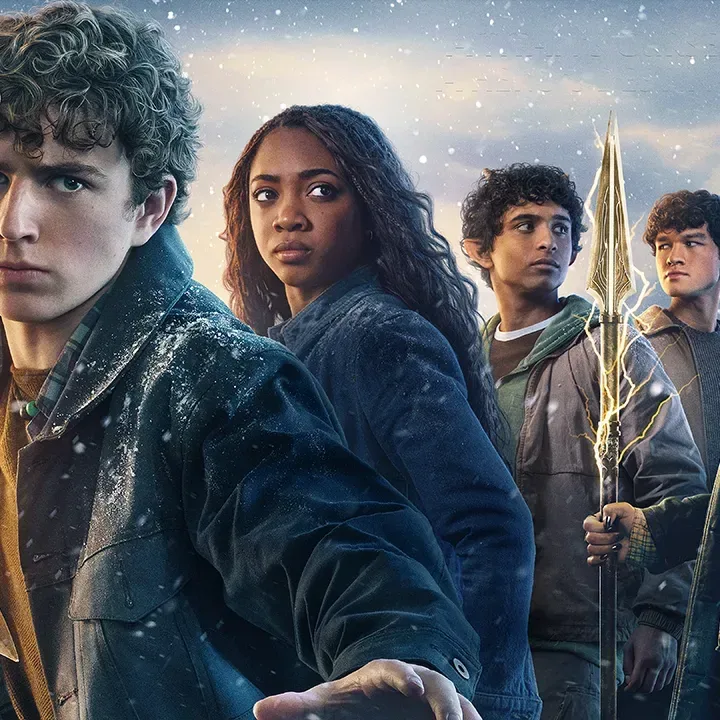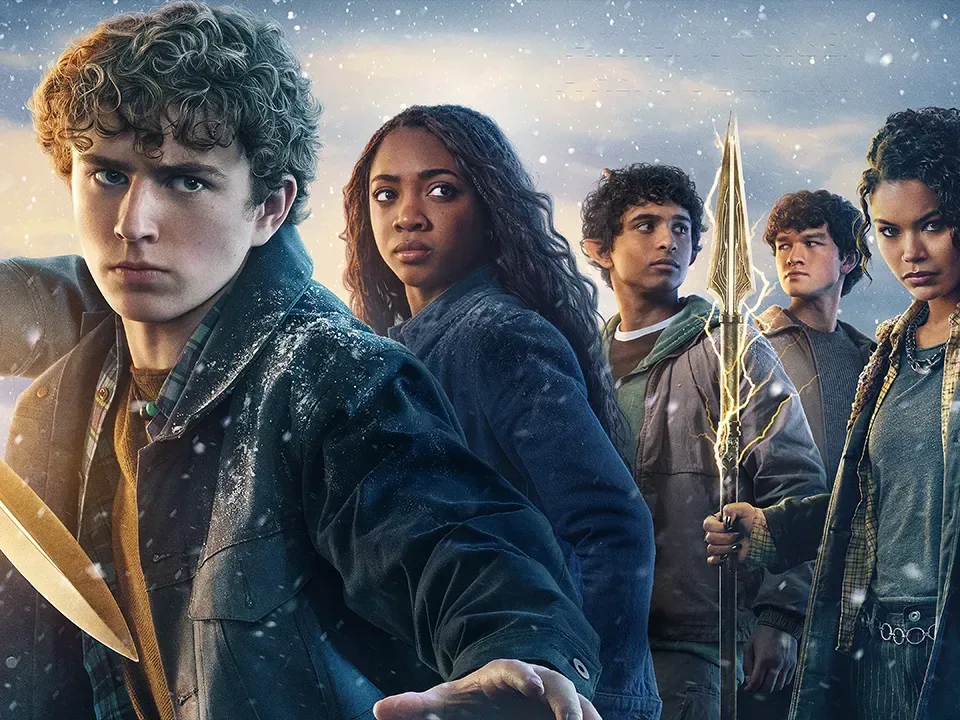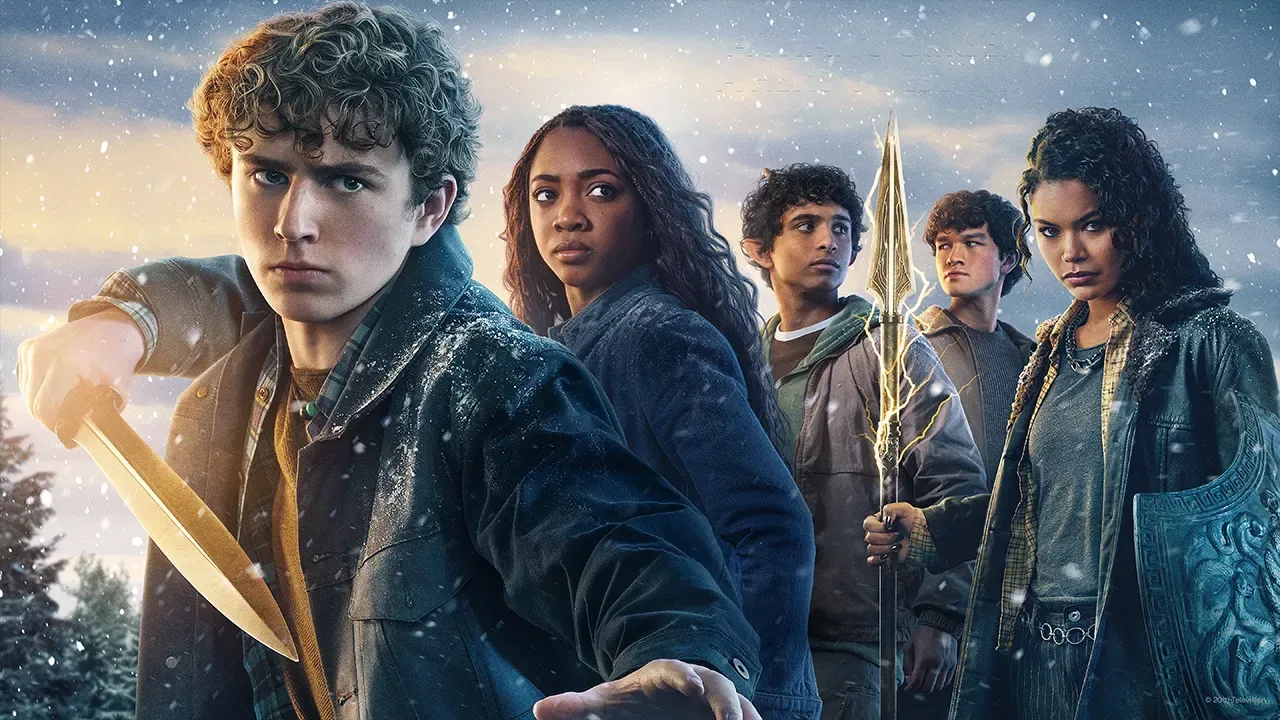
Percy Jackson and the Olympians may have benefited from an unexpected bit of mythological cross-traffic. Executive producer and co-showrunner Dan Shotz says the team heard of a substantial increase in viewers over the summer, potentially because people searching for Christopher Nolan’s The Odyssey found their way to Percy Jackson and, specifically, its Sea of Monsters material.
It is an intriguing overlap rather than a confirmed causal measurement. Shotz framed the bump as something the production had heard about, not as a detailed set of platform figures. Still, the connection makes intuitive sense within the facts at hand: both stories engage directly with images, monsters and voyage-driven storytelling associated with Homer’s Odyssey, even if they approach that material from very different perspectives.
The timing matters for Disney+ viewers, too. Percy Jackson and the Olympians Season 3 premieres November 20, adapting Rick Riordan’s The Titan’s Curse. That gives the reported discovery effect a potentially useful role for the series: renewed attention on the prior Sea of Monsters arc could mean more viewers arrive at the new season with recent context for Percy’s world and its changing relationships.
Why The Odyssey and Sea of Monsters sit so close together
The second season of Percy Jackson and the Olympians draws from The Sea of Monsters, the second Percy Jackson novel. Its premise puts the teenage demigod on a sea-bound route through hazards and figures that are immediately recognizable to anyone encountering adaptations of Homeric mythology.
Those shared touchstones include Polyphemus, the cyclops; Scylla and Charybdis, the paired dangers that force sailors into an impossible-looking passage; Circe, the witch; and the sirens. In simple terms, these are not merely broad “ancient Greece” references. They are a particular cluster of voyage obstacles and mythical characters deeply associated with Odysseus’s journey.
That is why a search-driven audience crossover is plausible. A viewer does not need to be looking for the exact same adaptation to land near related titles. Someone newly curious about Polyphemus, Circe or the voyage structure of the Odyssey can encounter a younger-skewing modern fantasy that uses the same mythic building blocks. The result is less a direct competition between the stories than a kind of cultural echo: a major adaptation puts Homeric imagery in front of a large audience, while another series offers a different route through some of that imagery.
Shotz described the experience as surreal, particularly because the productions were working with several of the same iconic elements. He also pointed to online jokes comparing the scale of the two heroes’ travels, with Percy’s seven-day journey being held up against Odysseus’s famously prolonged voyage. The meme format is silly, but it captures the central distinction. Percy’s story repurposes epic material into the pace and viewpoint of a modern teen adventure, while Odysseus remains the legendary adult traveler at the heart of Homer’s poem.
“It took Odysseus however many hundreds of years to do this and it took Percy seven days,” Shotz said of the memes’ basic gag.
A shared mythology does not mean a shared story
It would be easy to reduce the connection to a checklist of monsters, but that misses the more useful comparison. Mythology often functions as a flexible story language: audiences recognize a cyclops or a siren before any individual adaptation explains every historical and literary association. Creators can then shape those recognizable ingredients around a different protagonist, tone and set of stakes.
For Percy Jackson, the important angle is that Percy is a teen hero whose identity is still developing inside a world crowded with gods, monsters and older legends. The series can borrow the atmosphere of a dangerous maritime quest while keeping the emotional lens on a young person learning where he belongs. Its Homeric references therefore operate as both adventure machinery and a bridge for viewers who know the classical material only in fragments.
That accessibility has practical value. Mythological names can seem intimidating when they arrive as a long list, especially for an audience entering an ongoing fantasy adaptation. But a season built around a voyage gives the references a clear function: every island, creature or supernatural encounter is part of the route. Viewers do not necessarily need a classical studies primer to understand that a cyclops is a major threat, that sirens are dangerous temptations, or that navigating between Scylla and Charybdis is meant to feel like a no-win choice.
At the same time, the reported interest boost should not be overstated. No specific viewing totals, dates, search figures or platform data were provided. The available account supports a producer’s observation that the attention surrounding The Odyssey may have encouraged discovery of Percy Jackson; it does not establish exactly how many people watched, why each viewer clicked, or how much of any increase was solely caused by Nolan’s film.
That distinction is worth keeping. Entertainment traffic is usually influenced by several things at once: the visibility of a franchise, audience recommendations, release timing and the pull of familiar characters can all matter. In this case, the overlap in mythology is the clearest explanation offered, but it remains an informed read of audience behavior rather than a comprehensive accounting.
Season 3 shifts the challenge from the voyage to the ensemble
While the Sea of Monsters connection may have made the second season easier to discover, the next chapter has a different creative challenge. Jonathan E. Steinberg, also an executive producer and co-showrunner, said Season 3 has to accommodate new and returning characters while treating their emotional changes as meaningful.
Season 3 is based on The Titan’s Curse. Steinberg’s comments indicate that the creative focus is not simply on adding faces to an established cast. The task is to make each arrival and each altered relationship matter within the larger story. That is a familiar pressure point for fantasy series: as a fictional world grows, it can gain exciting new possibilities but risk scattering its attention too widely.
For Percy, played by Walker Scobell, Steinberg highlighted a notable progression. Percy was the new kid relatively recently, but the upcoming season lets viewers watch him begin to act as something closer to an authority figure in this world. That does not necessarily mean he has everything figured out. Rather, it signals a shift in his position within the group: experience brings responsibility, and being more established changes how a character relates to newcomers.
That evolution is especially important in an adaptation centered on a young hero. A long-running coming-of-age fantasy needs its protagonist to change in ways the audience can feel, not merely gather more lore or confront bigger monsters. Percy moving from newcomer toward a more confident, responsible presence gives Season 3 an emotional throughline that can connect its expanding ensemble.
What viewers may want to revisit first
For anyone arriving after the recent burst of Odyssey-related interest, the most relevant earlier material is the second-season Sea of Monsters arc. It is the part of the show most directly tied to the maritime myths being discussed, and it provides the immediate foundation before the story turns toward The Titan’s Curse.
- Know the premise: Percy’s second-season journey uses a voyage structure and confronts famous mythological dangers.
- Watch for the contrasts: Shared figures such as Polyphemus, Circe and the sirens do not require the same treatment across adaptations.
- Focus on Percy’s growth: Season 3 is positioned to explore how a character once new to the world starts taking on more authority.
- Expect a broader character mix: Steinberg identifies balancing old and new faces, plus their evolving relationships, as a central challenge.
The broader lesson is a pleasantly strange one for modern franchise viewing: a famous ancient poem can still create a discovery path between wildly different screen projects. One audience may seek an epic voyage and find a teen demigod. Another may come for Percy’s adventure and recognize that his sea monsters belong to a much older storytelling tradition. In both directions, the mythology remains the connective tissue.
Disney’s broader streaming slate is also continuing to fill out this November; for another upcoming animated entry, Family Guy’s “The Peter Clause” is set for a November 30 Hulu premiere.
For Percy Jackson and the Olympians, though, the immediate destination is clear. Season 3 reaches Disney+ on November 20, carrying the story beyond the Sea of Monsters and into a chapter where Percy’s changing role may be just as important as the latest mythical threat.