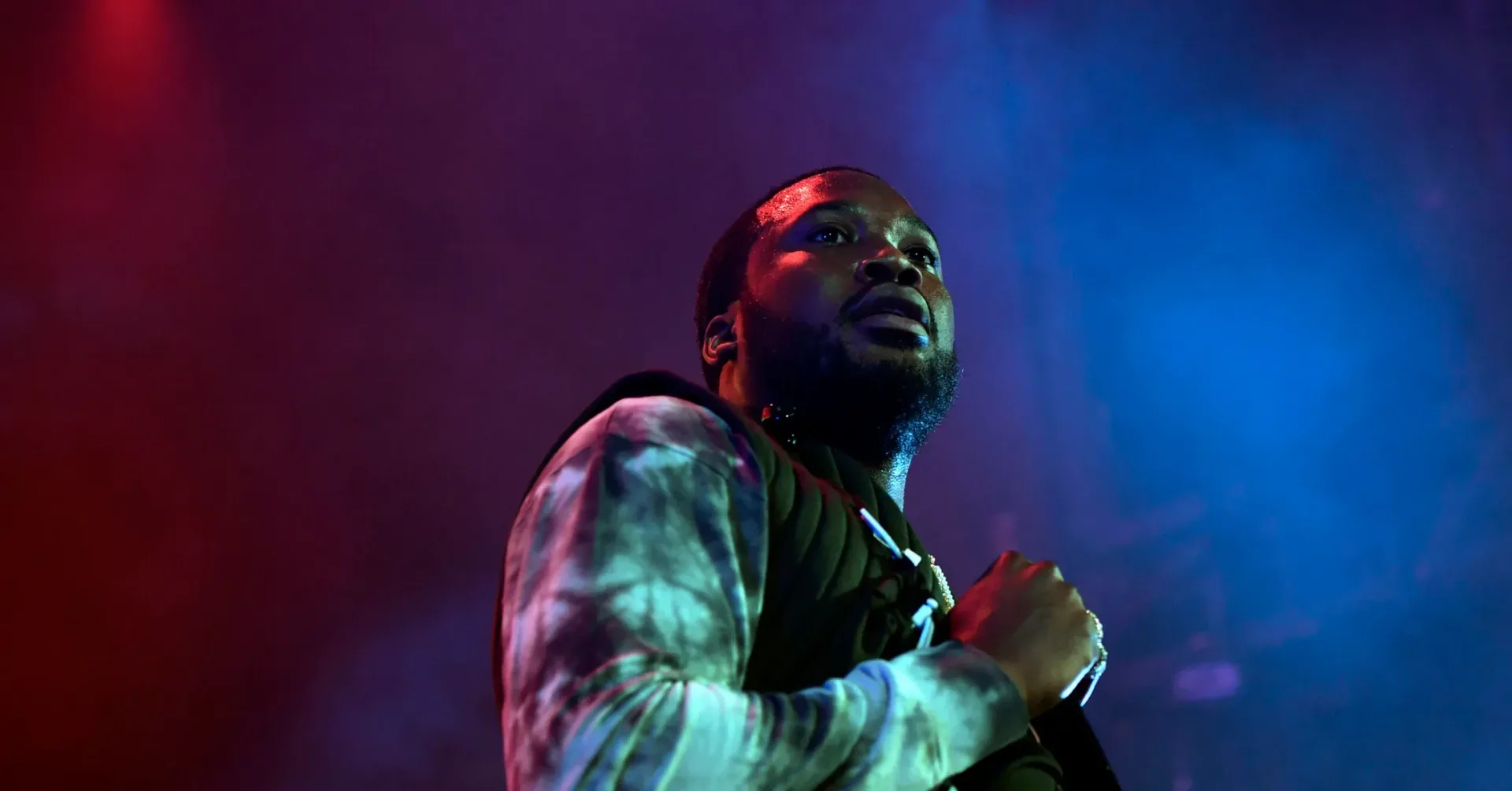

Meek Mill and Joe Budden have turned a dispute over concert demand into a proposed $1 million wager, with New York venue capacity at the center of the argument.
The exchange began after Budden discussed five canceled Meek Mill tour dates on The Joe Budden Podcast. Budden questioned whether Meek could currently sell out Madison Square Garden, saying people he contacted had put a potential ticket figure between 1,500 and 3,000. He argued that a live edition of his podcast could operate in a similar range.
Meek responded publicly by proposing a far larger, public test: a $1 million bet and a show at Barclays Center. The challenge was framed as a direct comparison of who could move more tickets, although neither post established the exact rules that would govern such a bet.
“Let’s be a million on it … let’s do it in front of the world,” Meek wrote while calling for someone to connect the two.
Budden answered by rejecting Meek’s assessment of his own career and firing back that Meek is “a failed rapper right now.” The conversation has therefore been about more than a hypothetical event. It is also an argument over what present-day success means for artists whose work now reaches audiences through several different businesses and formats.
What is actually being challenged?
Despite the headline-sized dollar amount, the available details leave major questions unanswered. A ticket-sales bet can sound simple, but a meaningful comparison depends on the terms: the building, the number of seats made available, ticket prices, the timing of the events, guests, promotion and whether the target is tickets sold, gross revenue or a sellout.
Those distinctions matter especially because the two sides referenced different possible New York venues and different event formats. Madison Square Garden was the building Budden used in his criticism. Meek then raised Barclays Center. A live podcast and a concert can also be marketed differently, with distinct production needs and different reasons for people to attend. Without a shared venue configuration, date and measurement, the wager remains a challenge rather than a finalized contest.
In ticketing language, a sellout generally means every ticket made available for a particular configuration has been sold. It does not automatically answer how many seats were offered in the first place. A venue can use different layouts depending on the event, which is why raw claims about a building’s capacity are not, by themselves, a complete attendance comparison.
Related coverage includes Meek Mill Challenges Joe Budden to a $1 Million Ticket-Sales Bet.
Likewise, gross refers to total ticket revenue before the many costs associated with an event. A larger gross does not necessarily show which event was more profitable, while a larger attendance number does not necessarily mean that event produced more ticket revenue. Neither Meek nor Budden publicly set out which of those measures would decide their proposed bet.
Meek points to a previous Garden date
Meek countered Budden’s Madison Square Garden skepticism by invoking his 2021 Expensive Pain concert there. The venue’s promotion for that show listed Lil Uzi Vert and other guests.
That earlier event is relevant context, but it does not settle the current question on its own. Past performance can demonstrate that an artist has previously headlined a major room; it does not automatically establish how a future event will sell under a new set of circumstances. Guests, routing, promotion, timing and the broader package all shape a particular show’s demand.
Meek also shared posts about his earnings and assets while objecting to the way critics were judging his career. His point was broader than ticket totals: he argued that success should not be reduced to another person’s definition of wealth or stature. Budden’s argument, meanwhile, focused tightly on what he believes Meek could sell at this moment.
That makes the disagreement unusually narrow and unusually wide at the same time. Narrow, because both men keep circling a concrete question about ticket demand. Wide, because the responses treat the question as a referendum on financial success, relevance and the transition from music to media.
The canceled dates and the Live Nation claim
The dispute came while Meek’s canceled tour dates were being discussed, but Meek has offered his own explanation for the situation. He said a Live Nation deal prevented other promoters from booking him.
That claim is important to distinguish from an independently verified explanation for the cancellations. The available information records Meek’s assertion, but does not provide deal terms, a response from Live Nation, or documentation explaining the bookings. As a result, it should be read as Meek’s account of the business circumstances, not as a settled finding about why the dates were canceled.
Meek further said New York was not on the itinerary and that he would finance a New York show himself before January 1. That statement potentially shifts the dispute from social-media sparring to something that could be measured in public. Still, no event date, venue confirmation, on-sale information, ticket count or agreed bet conditions were provided in the exchange.
If such a show is announced, the practical details will be the real scoreboard. Fans looking to understand the claim should separate an announced event from a completed show, and a completed show from a clearly defined ticket-sales comparison. A public post can create a challenge in minutes; producing an apples-to-apples result requires the basics to be set first.
Why the format comparison is part of the story
Budden’s side of the argument rests on an unusual cross-format comparison: a rapper’s live concert against a live podcast recording. They may overlap as entertainment events, but they do not promise the same experience. A concert can be centered on music, a setlist and special guests. A live podcast can be built around discussion, personalities, audience interaction and the value of seeing a familiar recurring show in person.
That does not make a comparison impossible. It does mean that claiming one format can match another requires a defined standard. Is the goal to sell the same number of tickets? Generate the same amount of revenue? Fill the same size room? Each answer could produce a different winner.
It also explains why the venue question became so prominent. Large New York arenas carry obvious symbolic weight, but symbolism is not a rulebook. The proposed $1 million stake has attracted attention precisely because it is so large, yet the public exchange has not shown that either party has accepted the same terms.
For now, the confirmed development is the challenge itself: Meek has publicly offered a seven-figure ticket-sales bet, Budden has publicly responded, and both have used the argument to make competing claims about their careers. Meek’s posts, including the original challenge, remain available on X.
The next meaningful update would not be another insult. It would be a mutually confirmed event plan that answers the questions the social posts leave open: where it will happen, what exactly is being counted, and whether $1 million is genuinely committed under terms both sides recognize. Until then, the dispute is best understood as a high-profile proposed wager, not a completed ticket-sales contest.
For a different recent music-and-community event story, see our coverage of Lizzo’s Houston marching-band honor at the Thanksgiving parade.