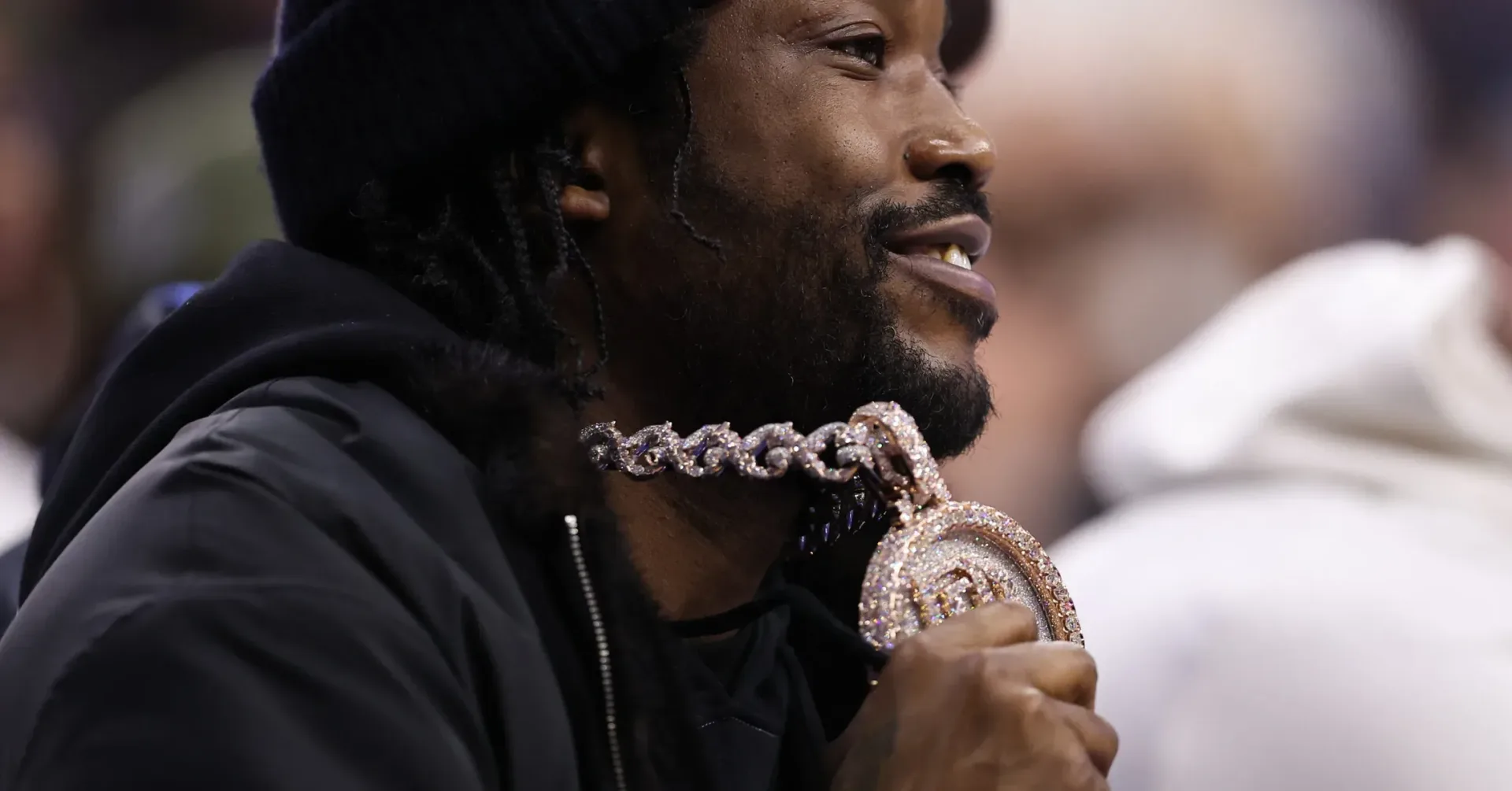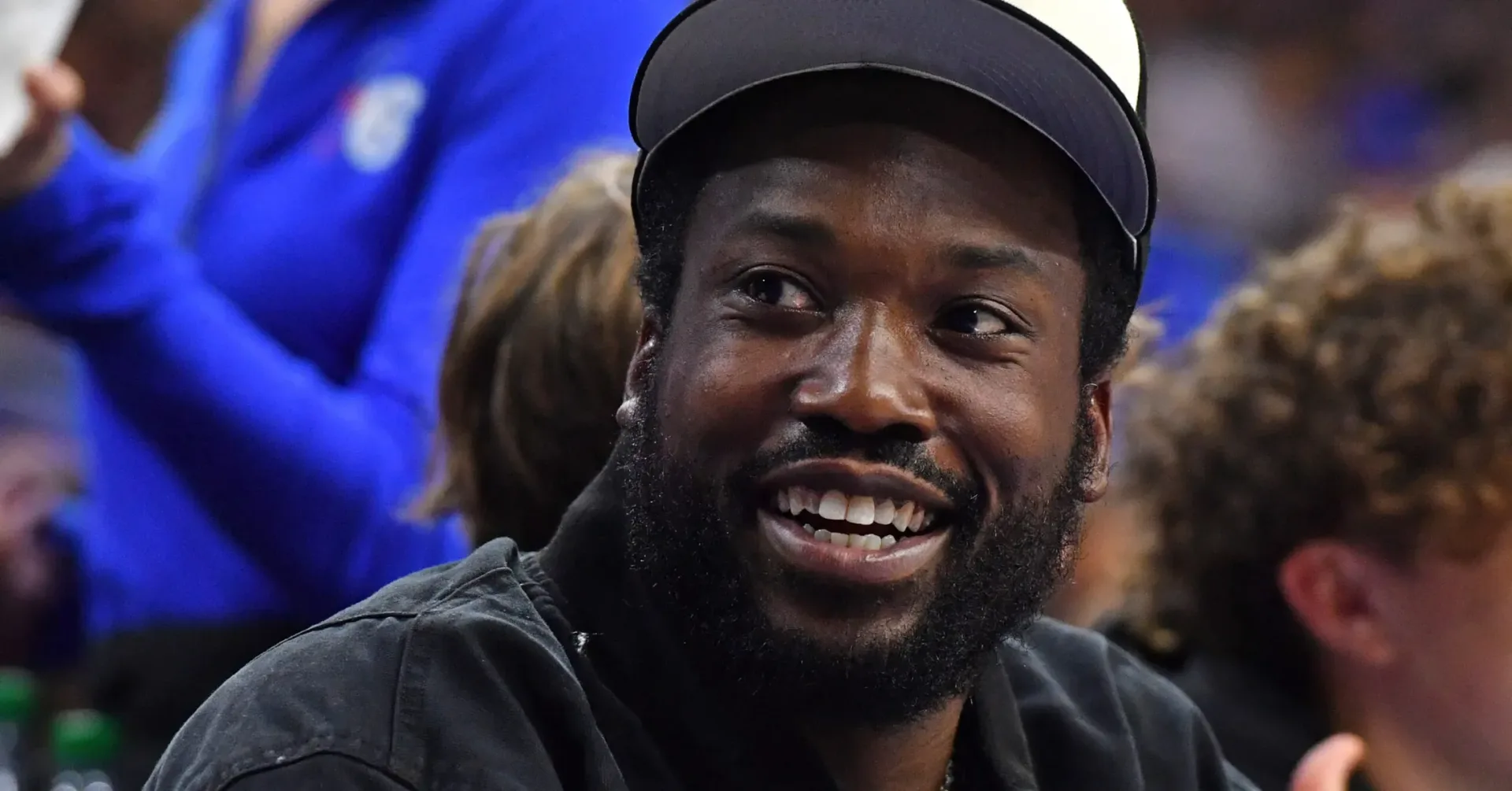
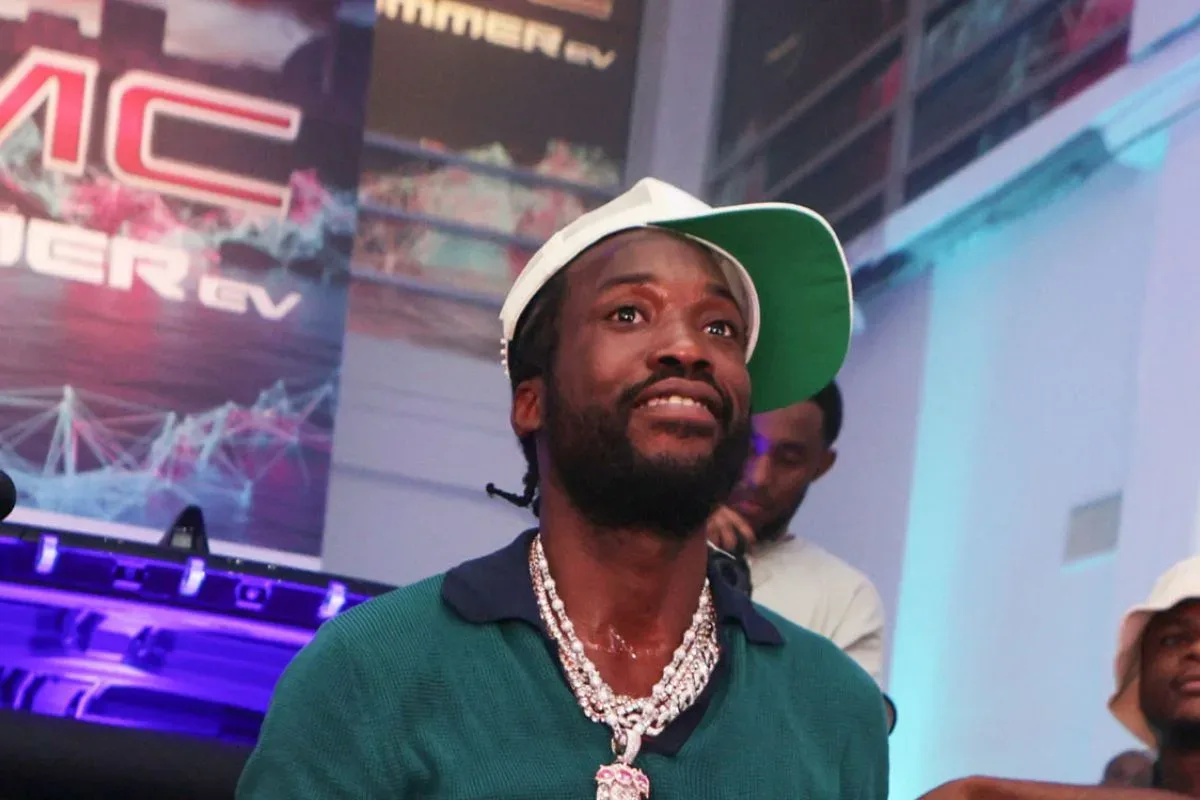
Meek Mill has put unusually high stakes on a proposed New York concert he says he will book and run himself. In posts on X, the rapper said the show will serve as a test of his claims about the way his live dates have been handled, going so far as to say he would quit rap and step away from REFORM Alliance if the experiment proves him wrong.
The planned New York date has not been presented with a venue, date, ticketing link or other event details. What Meek has committed to publicly is a deadline: he says he intends to use his own money and production to stage it before January 1, 2027. For now, the event is a proposed demonstration rather than a confirmed concert listing.
“Nyc will be my next show ima book and run it let’s see the difference if im wrong i will quit rap and step down from reform,” Meek wrote, describing the plan as a wager on his legacy.
A New York stop becomes the center of the dispute
The challenge follows the abrupt collapse of most of Meek’s Dream Chasers Nights itinerary. The run began in Philadelphia on November 24, while New York was not included on the original schedule. Ticketmaster currently lists the five remaining shows as canceled: Los Angeles at the Hollywood Palladium on November 29; Boston at MGM Music Hall at Fenway on December 5; Baltimore at CFG Bank Arena on December 11; Chicago at the Aragon Ballroom on December 18; and Atlanta at the Coca-Cola Roxy on December 20.
No explanation for those cancellations appears in the ticketing notice. That absence matters. A cancellation notice establishes that the listed dates will not proceed as scheduled, but it does not itself establish why they were canceled, who initiated the decision, or whether ticket sales, logistics, promotion, contractual issues or another factor was responsible.
Meek’s own account centers on Live Nation, which he says controlled the routing of his dates under an exclusive arrangement. Routing is the sequence of cities on a tour. It can affect travel, production moves, venue availability and the momentum of a regional run. Meek argued that a Philadelphia-to-New York progression made more sense than going to Los Angeles first, even accounting for production.
He also says the exclusivity of the deal prevented him from considering offers from other promoters. An exclusive booking or promotion arrangement, as the term is used in this dispute, means an artist may be limited in working with other promoters for covered performances. The precise terms of Meek’s agreement have not been made public in the material available, so the scope and operation of that claimed restriction cannot be independently determined here.
His essential argument is straightforward: if an independently funded and produced New York event performs differently from the dates he says were routed and promoted under the existing system, he believes that result will illustrate what has been holding him back. That is why he has presented the show as more than a replacement date. In his framing, it is evidence.
Related coverage includes Meek Mill Puts His Rap Career on the Line With a New York Show Plan.
Promotion is another unanswered part of the argument
Meek also questioned the marketing behind the Los Angeles show. He said he had been told it was advertised and asked people to show him a billboard. That is a challenge to the visibility of the campaign, not proof by itself that no promotion occurred. Marketing can take many forms, including digital advertising, social promotion, email, radio, partnerships and physical placements. Conversely, the presence of one billboard would not settle whether a broader campaign was sufficient.
The distinction is important because promotion is difficult to assess from the outside without a campaign plan, spend information, targeting details, placement records, ticket-sales timing or the parties’ contractual commitments. None of those materials are included here. Meek’s public comments make his dissatisfaction clear, but they do not provide a complete record from which to measure promotional activity or determine its effect.
That uncertainty will remain even if a New York show is announced. A one-off event can produce a meaningful public signal, but it would not automatically isolate a single cause for success or failure. Venue capacity, ticket pricing, on-sale timing, the date selected, local demand, the show’s production scale, available marketing and the publicity around the dispute could all shape the outcome. Meek’s proposed test is therefore most accurately understood as his own practical comparison—not a controlled study of live-event promotion.
What an independently run date would and would not show
If Meek follows through, the New York event could clarify a few public questions. It could show whether he can secure a venue and mount the production on the timetable he laid out. It could reveal the kind of local rollout he prefers and provide a visible example of how he wants a post-Philadelphia route to look. It may also give fans a concrete alternative to the canceled dates, although no replacement arrangements have been confirmed.
But the proposed concert would not, by itself, resolve every issue Meek has raised. Success in New York would not necessarily prove why another city’s date was canceled. Nor would a difficult outcome, on its own, disprove his broader complaints about control, routing or promotion. Different markets and different venues carry different circumstances, and the public does not have the underlying contractual or operational information needed to make a definitive comparison.
The immediate practical implication for prospective attendees is simple: treat the New York performance as unconfirmed until there is an official announcement with a venue, date and authorized ticketing information. The canceled Dream Chasers Nights stops should likewise be checked through the original ticket provider or point of purchase for the applicable cancellation and refund information, rather than relying on reposted social-media claims.
The dispute is aimed at a system, Meek says
Although Live Nation is central to Meek’s complaints, he has said he is not personally feuding with its CEO, Michael Rapino. He described his objection instead as being directed at a system that he says has impeded him.
There is also a notable institutional overlap around REFORM Alliance. Meek helped establish the probation- and parole-advocacy organization in 2019 after his imprisonment, and the group lists him as a co-chair. Rapino sits on REFORM Alliance’s board. Meek’s effort to distinguish the business dispute from a personal conflict is especially relevant in light of that shared connection.
REFORM Alliance is separate from Meek’s concert business, and his statement about potentially stepping down should not be mistaken for an announced departure. He framed it as a consequence he would accept if his New York plan fails to validate his position. Until the concert is organized and its results can be observed, it remains a conditional promise rather than a change in his role.
Why the canceled schedule changes the stakes
The original Dream Chasers Nights plan had already put Philadelphia at the front of the run, but the removal of every remaining listed date has made Meek’s proposed New York performance the focal point of the situation. Rather than simply adding a city that was missing from the itinerary, he is now talking about building a standalone date after the scheduled Los Angeles, Boston, Baltimore, Chicago and Atlanta stops were marked canceled.
That makes the choice of New York meaningful in Meek’s public argument. He has repeatedly said it was the logical next market after Philadelphia. In geographical and audience terms, he is presenting the city as an obvious continuation of that opening show—not an afterthought following a cross-country move to Los Angeles. Whether that is operationally feasible depends on details that are not public, including venue and production arrangements.
It also puts attention on the less visible mechanics of putting on a concert. A performance is not only an artist and a room: it requires a venue agreement, technical production, staffing, ticketing, promotion and coordination. Meek’s pledge to use his own money and production is significant because he is saying he wants responsibility for those elements rather than merely a different date on an existing itinerary. He has not yet specified who, if anyone, will partner with him on booking or promotion.
For the moment, the most concrete developments are the canceled listings and Meek’s stated intent to mount a New York show before 2027. His larger allegations regarding exclusivity, route selection and marketing remain his characterization of the dispute. Live Nation’s explanation is not included in the available information, and the ticketing notices provide no reason for the cancellations.
The coming New York plan may become a high-profile test of Meek’s claims, but it has not yet reached the stage where fans can evaluate a finished event. Until a formal announcement arrives, it is best viewed as a public challenge with exceptionally personal consequences attached to it. For a broader look at how music platforms and access models can differ, see this guide to the limits attached to free music streaming services.