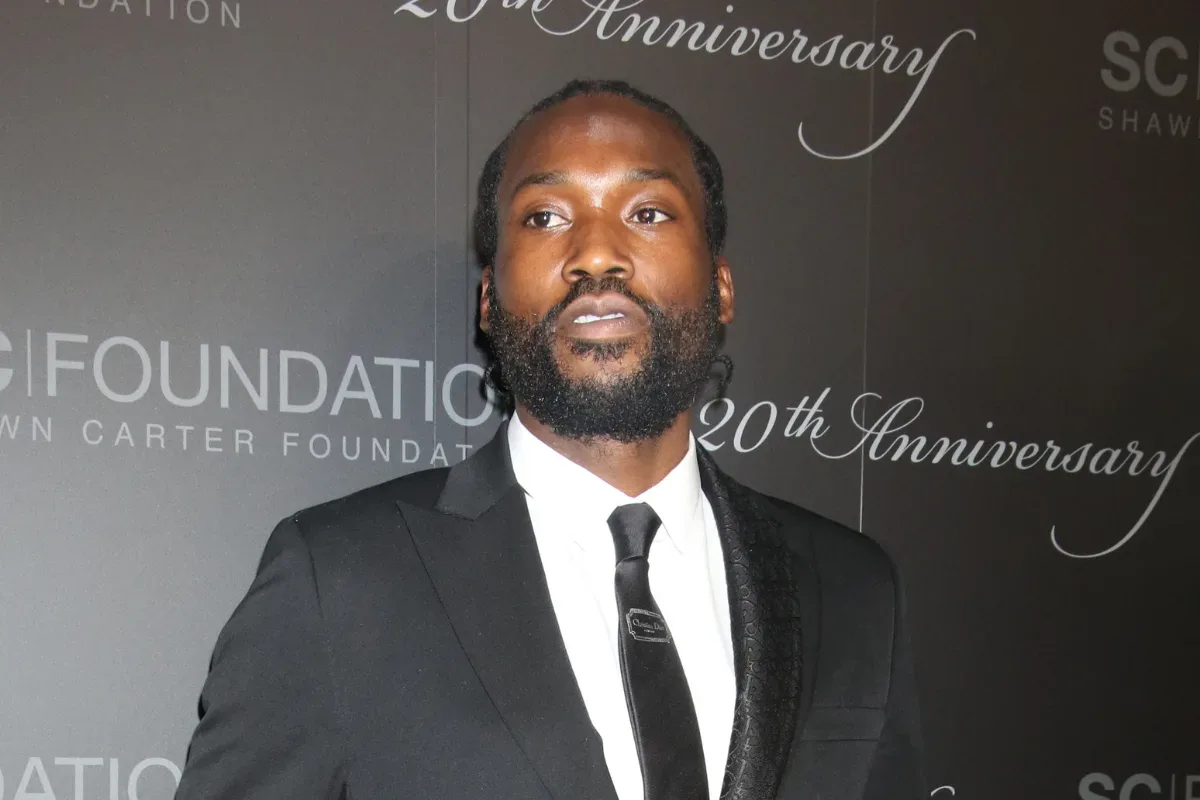
Meek Mill has publicly alleged that a contract with Live Nation has left him unable to pursue touring opportunities on his own terms. In posts on X published Wednesday night, the rapper said he wants to exit the agreement and accused the concert company of insufficiently promoting his dates and preventing performances in certain major markets, including New York City.
The accusations are Meek Mill’s account of an ongoing business dispute, not established findings. Live Nation had not publicly responded to the claims at the time of publication, and the available information does not include the contract’s terms, its duration, the obligations of either party, or any explanation from the company about booking and promotion decisions.
What Meek Mill is alleging
Meek Mill framed the arrangement as one in which he feels “trapped and shelved,” saying that he has tried to reach people involved in the deal without a satisfactory result. He indicated that he would rather leave the contract even if it meant stepping away from rap, arguing that he can build wealth through other ventures.
His complaints center on two practical parts of a live-performance career:
- Promotion: Meek Mill questioned whether his Los Angeles dates were receiving the advertising he had been told was in place. He specifically asked fans whether they had seen a billboard for one of his LA shows.
- Market access: He alleged that the deal kept him from performing in cities such as New York. A market, in concert-industry terms, is a city or regional area where an artist can sell tickets, schedule a venue and promote a date.
- Financial return: He said he believes he earns more touring outside the Live Nation arrangement than under it.
Those points matter because a concert does not simply consist of an artist appearing on stage. It is a chain of decisions involving venue availability, routing, local promotion, ticketing, staffing and the division of revenue and costs. Without the underlying agreement, however, it is not possible to determine what rights Live Nation holds, what commitments it made, or whether any alleged restrictions arise from the contract, ordinary scheduling constraints, separate business arrangements, or another cause.
Why the billboard question became part of the dispute
Meek Mill’s request for screenshots of a Los Angeles billboard reflects his larger concern over visibility. Traditional outdoor advertising is only one possible part of a show’s promotional campaign, but it is easy for fans to recognize and share. His point was not merely that a particular billboard may have been absent; it was that he did not trust the representation that promotional work had been done.
That is a meaningful distinction. An artist can judge the public-facing effects of marketing—whether fans see ads, whether ticket sales move, whether a date feels culturally visible—without necessarily seeing every behind-the-scenes expenditure or placement. Conversely, a company may use promotional channels that are less visible to a specific audience. Neither possibility resolves this dispute. Meek Mill’s posts describe a lack of confidence in how his shows are being represented and marketed, rather than supplying a complete accounting of a campaign.
Ghana performance challenges a local-only narrative
Meek Mill also pushed back against what he called a narrative that his appeal is limited to Philadelphia. He pointed to a recent Ghana performance that he said drew 80,000 people, describing the scale as something he had not realized he could reach.
Related coverage includes Meek Mill Says He Wants Out of His Live Nation Deal.
The claim is central to his argument: if an artist can attract a crowd of that size outside the United States, that artist may reasonably see more potential in international or independently arranged appearances than a narrower domestic touring strategy appears to offer. It does not, by itself, establish how ticket demand would translate from one territory to another, or prove that any company deliberately held back his opportunities. But it explains why Meek Mill views the disagreement as bigger than a single date or a local advertising placement.
He alleged that business considerations were being used to suppress his influence and said the situation was affecting his relationship with the REFORM Alliance. No additional details were provided about that asserted impact, so its specific nature remains unclear.
Direct-to-fan ambitions sit behind the criticism
The posts arrive as Meek Mill seeks more direct control over his relationship with fans. He has been promoting the DC Club app, which is intended to offer a route for connecting with fans and sharing exclusive music. That effort helps clarify the broader business perspective behind his criticism: he is openly questioning conventional music-industry structures while seeking channels that he can manage more directly.
A direct-to-fan platform and a touring agreement address different things. An app can provide a controlled audience connection and a place for exclusive material; it does not automatically solve venue access, tour routing or local concert promotion. Still, both involve the same underlying concern—who controls the connection between an artist and the audience, and who benefits from it.
For fans, the immediate practical issue is uncertainty. Meek Mill has said he wants out of the deal, but he has not laid out whether dates are being cancelled, what process he is pursuing, or whether a resolution is underway. There is also no public response from Live Nation to weigh against his version of events.
What remains unconfirmed
There are several important limits to the current story. The full agreement has not been made public. There is no publicly detailed list of the shows or markets Meek Mill believes he was denied, no disclosed promotion plan for his Los Angeles appearances, and no public explanation from Live Nation. His statements should therefore be understood as serious allegations from the artist, not as verified conclusions about the company’s conduct.
The dispute nevertheless highlights a recurring tension in entertainment: success onstage, fan reach and business control do not always move in lockstep. An artist may command attention in one setting, including a major overseas show, while still being dissatisfied with the structure governing other opportunities. Meek Mill’s stated goal is clear—he wants to leave the Live Nation contract—but the route to that outcome, and whether the allegations will receive a formal response, are not yet known.
Hip-hop’s relationship with large entertainment systems has also long extended into games and other media; for a separate example of that crossover, see the reported GTA VI casting of Miami rappers Hood Brat and Krissy Celess.