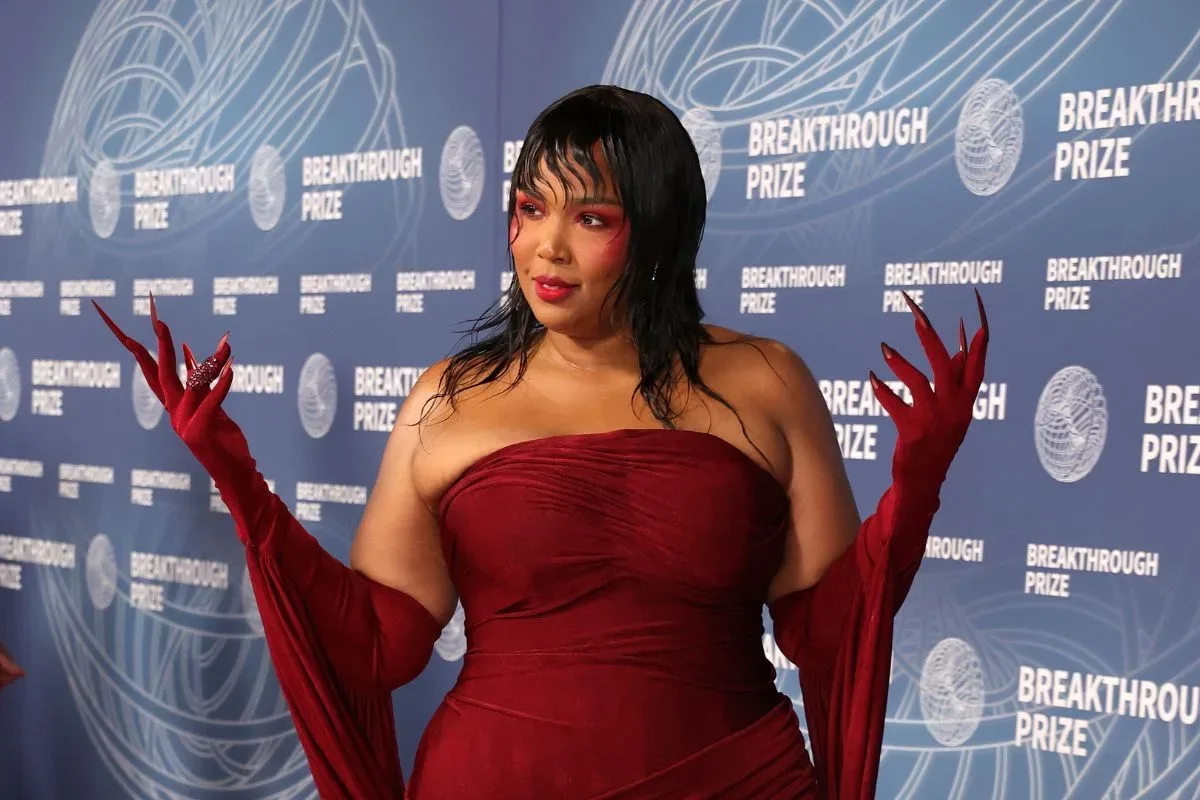
Lizzo’s Thanksgiving appearance in Houston turned a parade honor into a return to the musical spaces that helped shape her. Before the city’s November 26 Thanksgiving Day parade, Mayor John Whitmire presented the performer with a key to the city and a proclamation recognizing “Lizzo Day.” She then took her place as grand marshal, but the defining detail of the occasion was more personal: Lizzo brought out her flute and joined the kickoff of an event that also featured the marching band where she once played.
The Alief Elsik High School Mighty Ram Marching Band performed Lizzo’s “Water Me” along the parade route. Its place in the lineup made the moment especially fitting. The band marched directly ahead of Lizzo’s grand marshal float, letting current students perform the work of a former member as she followed them through downtown Houston.
“Thank you, Houston for giving me the 🗝️ to the city. I am a h-town girl thru & thru and I bring yall everywhere I go!” Lizzo said before the float appearance.
A homecoming built around the flute
The flute was not merely a prop for the parade kickoff. It connects the ceremony to Lizzo’s time in Houston school music programs. She played the instrument with the Mighty Ram Marching Band at Alief Elsik High School, later played flute in the University of Houston marching band, and also performed around the city with the rock band Ellypseas.
That background gives the parade performance a different meaning from a standard celebrity guest spot. Lizzo was not simply appearing beside a school ensemble; she was returning to an activity and an instrument that were part of her own route through Houston. The students, meanwhile, were playing a song by someone who once occupied a comparable place in their band program.
Marching bands are built around coordinated movement and musical performance in public settings, which makes a parade a natural stage for this kind of reunion. Here, the musical connection was unusually direct: the group performed “Water Me,” while Lizzo played flute at the kickoff and served as the event’s grand marshal.
A grand marshal is a ceremonial lead participant in a parade, generally given a visible position in the procession rather than a competitive or operational role. In this case, Lizzo’s place on the float positioned her behind her former school’s band, with Tyler’s Apache Belles drill team listed after her in the parade order.
What the city recognition represents
A key to the city is a symbolic civic distinction rather than a literal key granting access to municipal property. It is a public gesture of welcome, appreciation or recognition. A proclamation similarly records a city’s formal recognition of a person, occasion or cause. Together, they put Lizzo’s parade role in a civic context: Houston was honoring an artist with roots in its schools, music programs and neighborhoods.
Related coverage includes Lizzo Gets Houston’s Key to the City and Reunites With Her High School Band.
The Thanksgiving event followed an earlier City Hall presentation. During that earlier visit, Mayor Pro Tem Martha Castex-Tatum said the city had proclaimed September 15 as Lizzo Day. Entertainment Tonight also filmed Lizzo receiving a key during that visit. The events point to an extended series of Houston appearances rather than a one-off parade booking, with the September civic recognition preceding the Thanksgiving procession.
The precise ceremonial details matter because the reports describe honors at both the City Hall visit and ahead of the parade. What is clear is that Houston’s recognition included a key to the city, a Lizzo Day proclamation, and a grand marshal role in the 77th annual Thanksgiving Day parade.
Visits to Alief put educators and students at the center
The return to Houston also included time in Alief, where Lizzo spoke with students about the people who influenced her development. She credited the educators and community members who helped shape her.
“There were so many incredible educators here, and so many incredible people that shaped me to be the person that I am,” Lizzo told students.
That acknowledgement adds another layer to the marching-band reunion. School music programs are often discussed through performances, uniforms or halftime appearances, but the Houston events foregrounded the people and institutions behind them: teachers, students, elementary schools, a high school band, a university program and a regional library.
At the Alief-David M. Henington Regional Library, Lizzo signed 50 copies of her children’s book, Lil Lizzo Meets Sasha B. Flootin’. Students from Rees Elementary Performing & Visual Arts Academy performed her song “Special” during the visit. The library stop also connected with Lizzo’s own elementary-school history. She attended Hicks Elementary in the same part of Houston where she later returned to meet the Rees students.
The sequence is notable for how it linked different age groups and forms of creative participation. Rees students sang “Special,” high school marchers played “Water Me,” and Lizzo herself played flute. The activities were distinct, but they all revolved around students engaging with music made by an artist whose early training took place in the same city.
“Water Me” becomes a band-program moment
The Mighty Ram Marching Band’s performance of “Water Me” was more than a playlist selection. For current Elsik students, it offered a chance to perform music from a former bandmate while that musician was present as the parade’s top honoree. That kind of full-circle setup is rare because it requires the artist’s past and present to meet in the same public event.
It also turns the idea of local representation into something concrete. Lizzo’s statement that she brings Houston with her wherever she goes was reflected in the day’s details: the instrument she played, the high school band in front of her float, the students singing her music, and the return to schools and community institutions connected to her early life.
The city’s recognition was therefore not limited to a formal presentation. It was staged through participation. Lizzo was honored by Houston, but Houston students also had central roles in the celebration. The parade route gave the Mighty Ram band a prominent place, while the library and school visits created smaller settings for young performers and readers.
That local focus distinguishes this occasion from a typical celebrity parade appearance. The grand marshal float was the visible centerpiece, yet the story around it was anchored in the flute, the educators Lizzo remembered, and the students carrying on the same kind of musical work that once formed part of her own life.
A Houston celebration with a wider pop-culture connection
Lizzo’s appearance joins a broader stream of artist stories where personal milestones, family, schools and local communities overlap with public careers. For another recent music-world update centered on a personal life event, see coverage of Queen Naija and Clarence White’s family announcement.
In Houston, though, the focus remained firmly on the city’s own institutions. From the September Lizzo Day proclamation to the November 26 parade, the recognition traced a line from elementary-school and high-school experiences to a citywide Thanksgiving event. The Mighty Ram Marching Band playing “Water Me” immediately ahead of Lizzo’s float made that line visible—and audible—to the parade crowd.