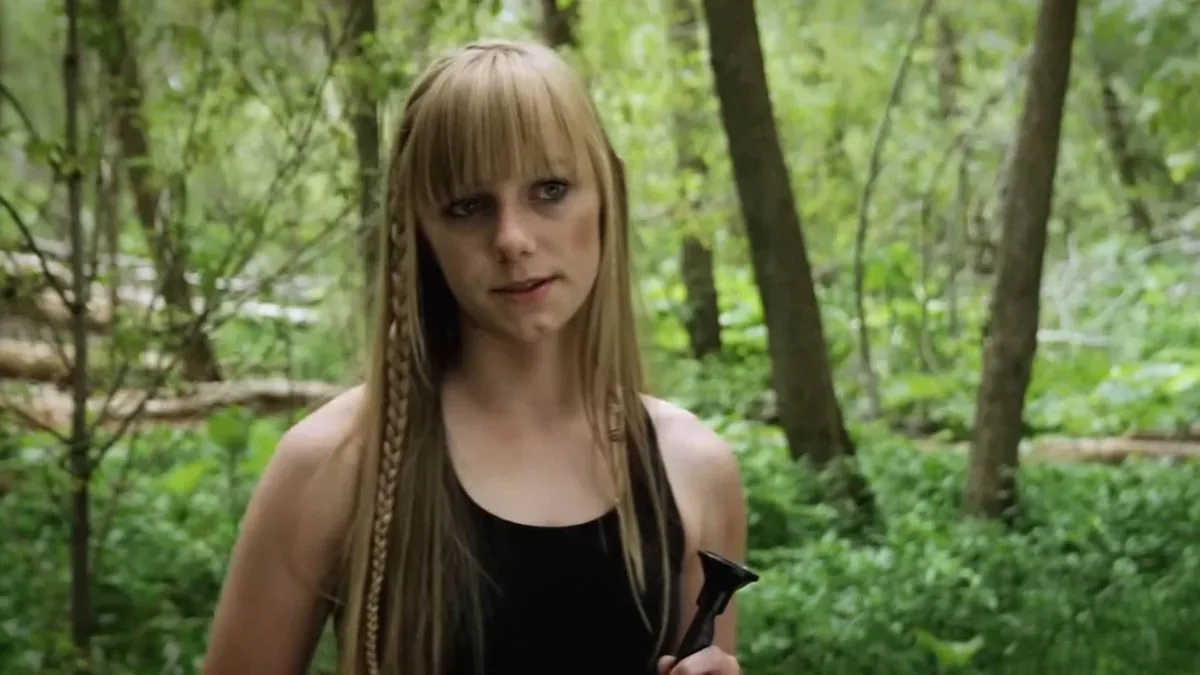
Mckenna Grace’s approach to Maysilee Donner began with a piece of Hunger Games fandom history. While auditioning for The Hunger Games: Sunrise on the Reaping, Grace says she repeatedly watched Hunger Games: The Second Quarter Quell, a 12-minute fan-made short released online in 2011. The film had given many viewers an early visual idea of Maysilee long before Suzanne Collins’ Sunrise on the Reaping novel arrived in 2025.
Grace plays Maysilee in the forthcoming film adaptation, which returns to Haymitch Abernathy’s time as a tribute. Her comments make clear that the fan production was more than a curiosity during preparation: its interpretation of Maysilee shaped how she thought about the character’s hair and overall look from the outset.
“Whenever the auditions started coming around, I watched the fan-made film. I would watch it over and over,” Grace said in a featurette shared through the franchise’s social channels.
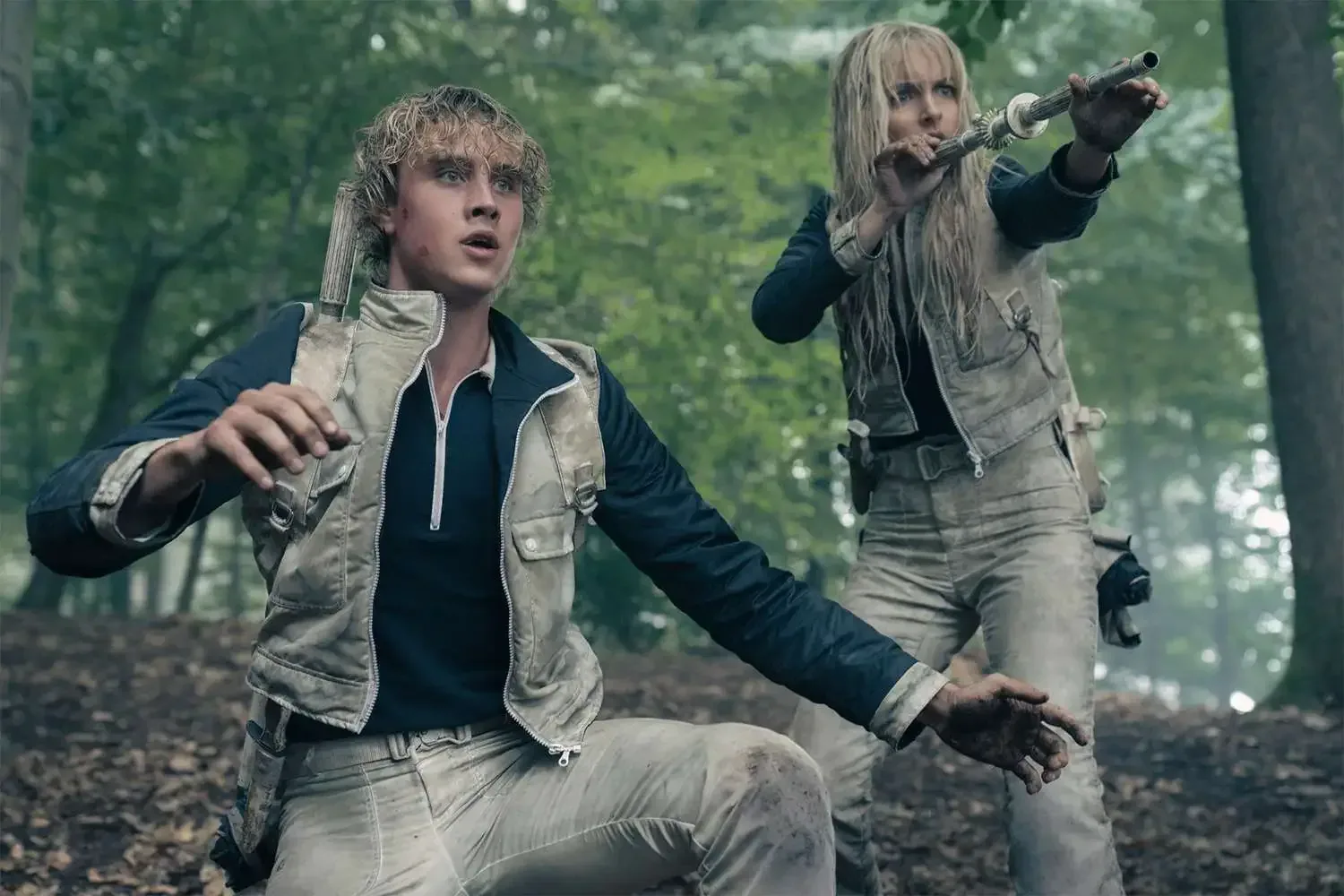
Her practical pitch for that connection was direct. Grace said she arrived at pre-production each day with a braid in her hair, hoping the repeated visual cue would make the case for incorporating it into Maysilee’s screen appearance. She also pushed for bangs arranged in a particular way and for straight hair. It is a small costume-and-hair detail, but it speaks to an unusual thread of continuity: not continuity mandated by the original films, but a fan-created image that had endured for years.
A fan film filled a long-standing gap
The timing explains why the 2011 short could become meaningful to audiences. At that point, Haymitch’s Games had not been explored in a published novel. Readers had information from the first three Hunger Games books, including the fact that Haymitch had survived the Second Quarter Quell, but they did not have a full, official account of the event on the page or screen.
MainstayPro’s Hunger Games: The Second Quarter Quell used what could be drawn from those earlier books to imagine the 50th Hunger Games. Stefania Barr played Maysilee in that short. The project was not an official adaptation, and it was necessarily working with an incomplete picture of the Games. Yet for a portion of the fanbase, it became a durable visual reference point for a character who had remained largely off-screen.
That distinction matters. A fan film is an unofficial work made by fans rather than the rights-holding studio or the author’s official adaptation team. It may interpret established material, but it does not set the franchise’s canon. Canon, in this context, means the official body of story material recognized by the franchise. Collins’ 2025 novel provides the official fuller account of the 50th Hunger Games, while the new feature film is adapting that novel.
Grace is not suggesting the earlier short somehow replaces the new novel or dictates the new film. Instead, she is acknowledging its cultural role. In her words to Barr, the earlier performer was “what shaped so many people’s, including my own, perception of Maysilee Donner” because that was the version fans had available to imagine for so long.
That is a more specific kind of fan engagement than simply saying an actor knows the series. Grace identified a particular creative interpretation, recognized that it had mattered to viewers, and tried to carry one visible piece of that interpretation—the braid—into her own process. Whether every aspect of that effort appears in the finished film will be for audiences to see, but the origin of the impulse is unusually transparent.
Why Maysilee’s appearance has become part of the conversation
Hair and wardrobe are not merely decorative in a film production. They are part of character design: the collection of visual choices that helps an audience identify a person, read their place in a setting, and distinguish them from other characters. A braid can be especially memorable because it is easy to recognize in still images, clips, fan art, and costumes. When a visual idea persists over many years, it can become closely tied to a character in fan memory even if it did not originate in an official production.
Grace’s pre-production routine also illustrates how performers can advocate for character choices. Pre-production is the phase before principal filming when a project is planned and prepared. For performers, it can include discussions and decisions around hair, makeup, wardrobe, character movement, and other elements that will affect what reaches the screen. Showing up with the braid was Grace’s way of making a visual argument rather than treating the idea as an abstract note.
There is an important limit to that argument: an adaptation has its own creative team and its own responsibility to the material being adapted. The eventual look of Maysilee belongs to the film’s overall design, not to any one performer or earlier fan work. Still, Grace’s comments suggest that the fan film was part of the conversation she wanted to start, not something she left behind once official casting entered the picture.
The new prequel’s place in the Hunger Games timeline
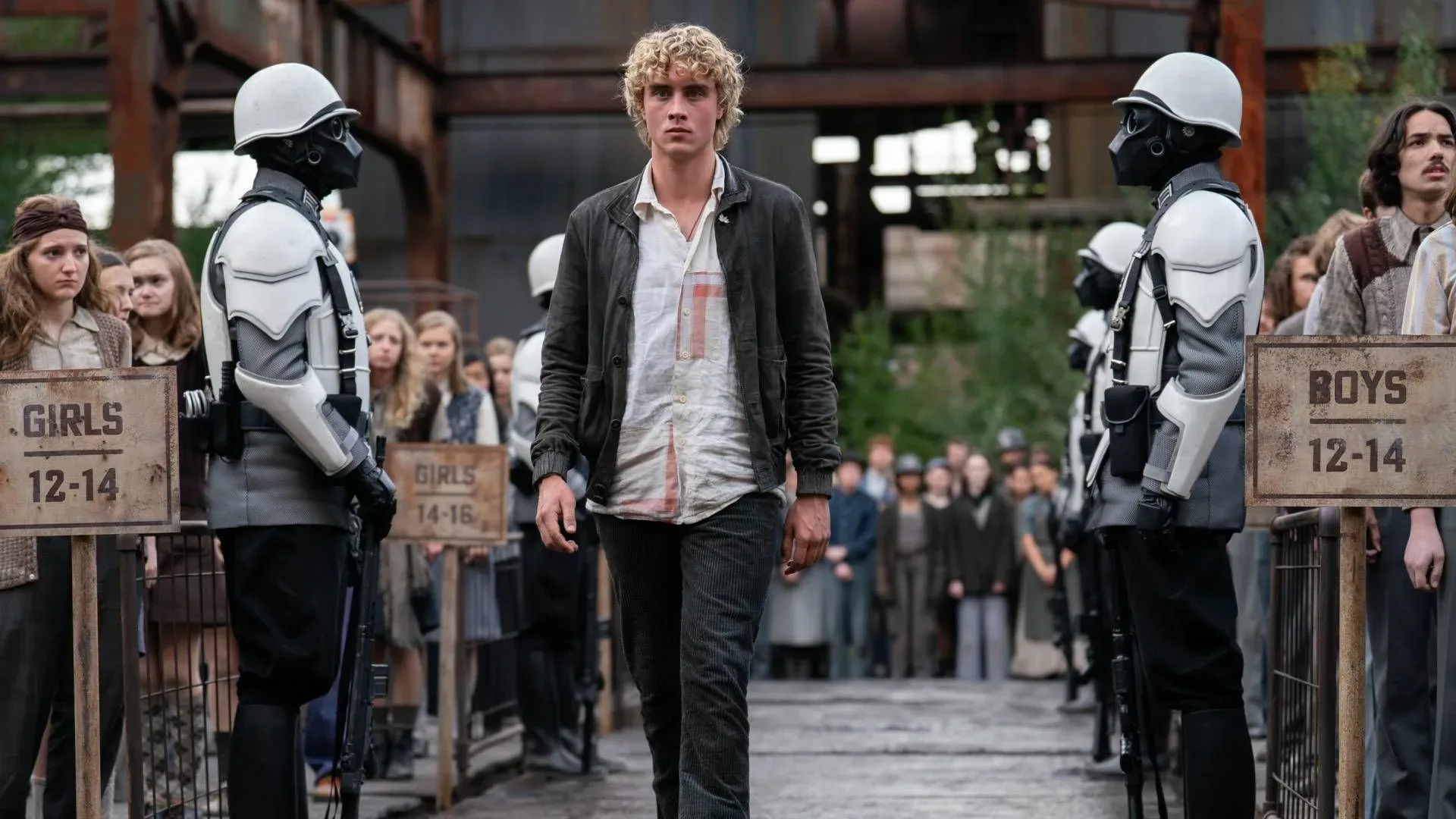
The Hunger Games: Sunrise on the Reaping is set 24 years before the first Hunger Games film. Its central figure is a 16-year-old Haymitch Abernathy, played by Joseph Zada. Woody Harrelson previously played the older Haymitch in the original film saga.
The story follows Haymitch after he is selected for the 50th Hunger Games, also known as the Second Quarter Quell. A Quarter Quell is a special Hunger Games anniversary edition with an added rule intended to intensify the spectacle. For the 50th Games, the number of players is doubled. That escalation is the defining premise of Haymitch’s Games and makes this chapter especially significant within the larger series timeline.
Maysilee is therefore positioned in a story that revisits a formative event for Haymitch, rather than simply offering a detached historical detour. The character’s prominence in fan discussion makes sense: viewers familiar with the earlier films know Haymitch as the mentor played by Harrelson, while this prequel goes back to the moment that shaped him decades earlier.
The cast also includes Ralph Fiennes as President Snow, Elle Fanning as Effie Trinket, Jesse Plemons as Plutarch Heavensbee, Kieran Culkin as Caesar Flickerman, Glenn Close as Drusilla Sickle, Lili Taylor as Mags, Maya Hawke as Wiress, and Ben Wang as Wyatt Callow. Jennifer Lawrence and Josh Hutcherson are set to make cameo appearances as Katniss Everdeen and Peeta Mellark.
Several of those roles connect the new story to characters audiences know from other points in Panem’s history. That is one of the practical challenges of a prequel: it needs to establish its own cast and stakes while fitting around events and people audiences already recognize. The film’s setting, 24 years before the first movie, gives it room to tell Haymitch’s story while retaining those broader franchise connections.
An unofficial performance with a visible legacy
Grace’s acknowledgement of Stefania Barr is notable because it gives credit to an earlier fan performer rather than treating the official production as the first meaningful screen interpretation of Maysilee. Barr’s role in the 2011 short did not establish official continuity, but it evidently helped establish an emotional and visual baseline for viewers, including Grace herself.
For fans of the short, the braid is likely to read as a gesture of recognition rather than a claim that the two productions are identical. The new film adapts a novel that did not exist when the earlier project was made, and its version of the 50th Games has a far broader official story foundation. The interesting part is not that a fan film became canon—it did not—but that its interpretation remained memorable enough to inform the thinking of an actor cast in the official feature.
It is also a reminder that franchise communities often preserve details that studios do not initially create. A short, independently made interpretation can fill an imaginative gap; years later, an official production can arrive with a different mandate and a much larger canvas. Grace’s comments connect those two moments without blurring the line between them.
The Hunger Games: Sunrise on the Reaping is scheduled to reach theaters on November 20. For another look at a forthcoming continuation built around an established screen world, see the announced plans for Blue Eye Samurai season 2.