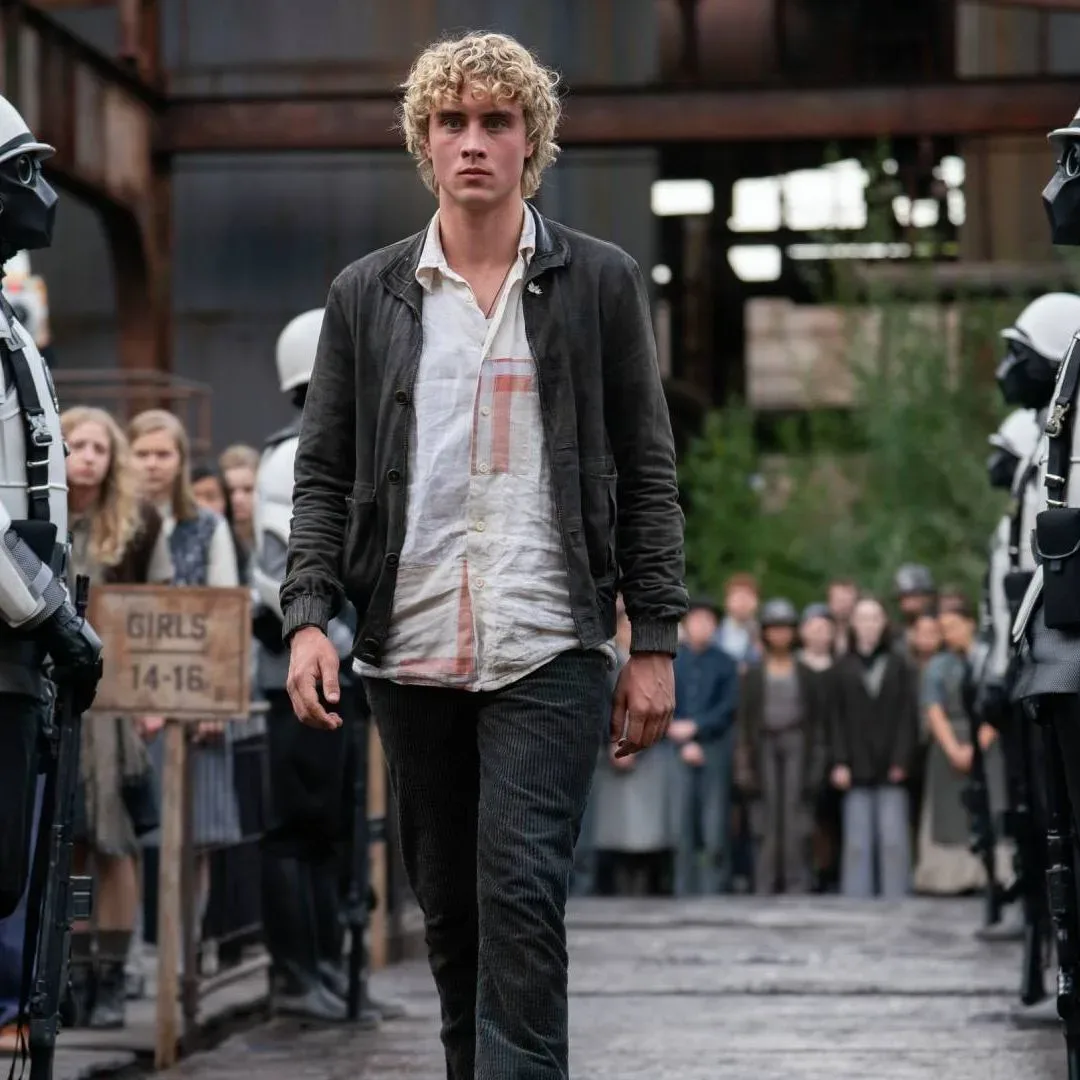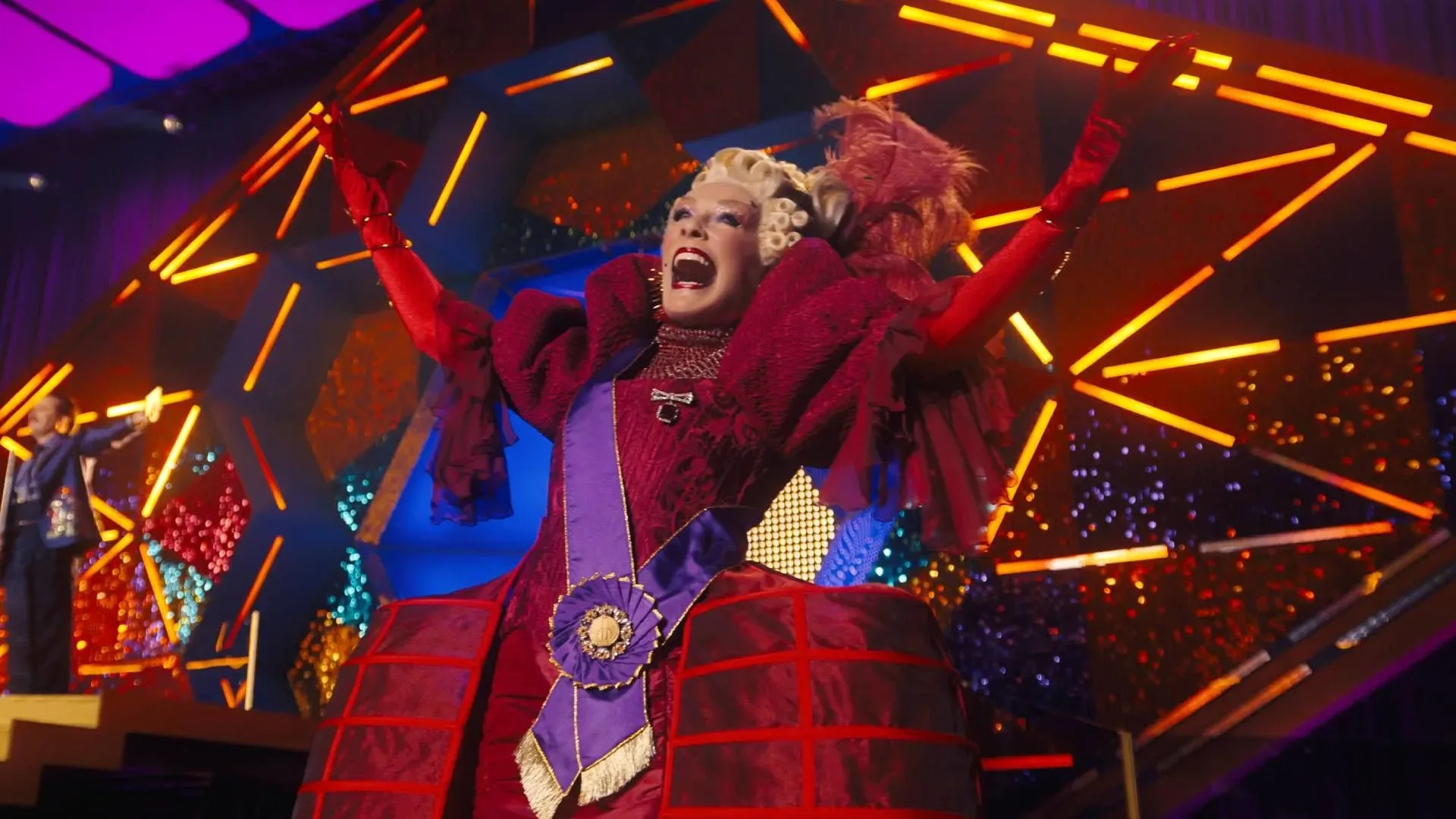
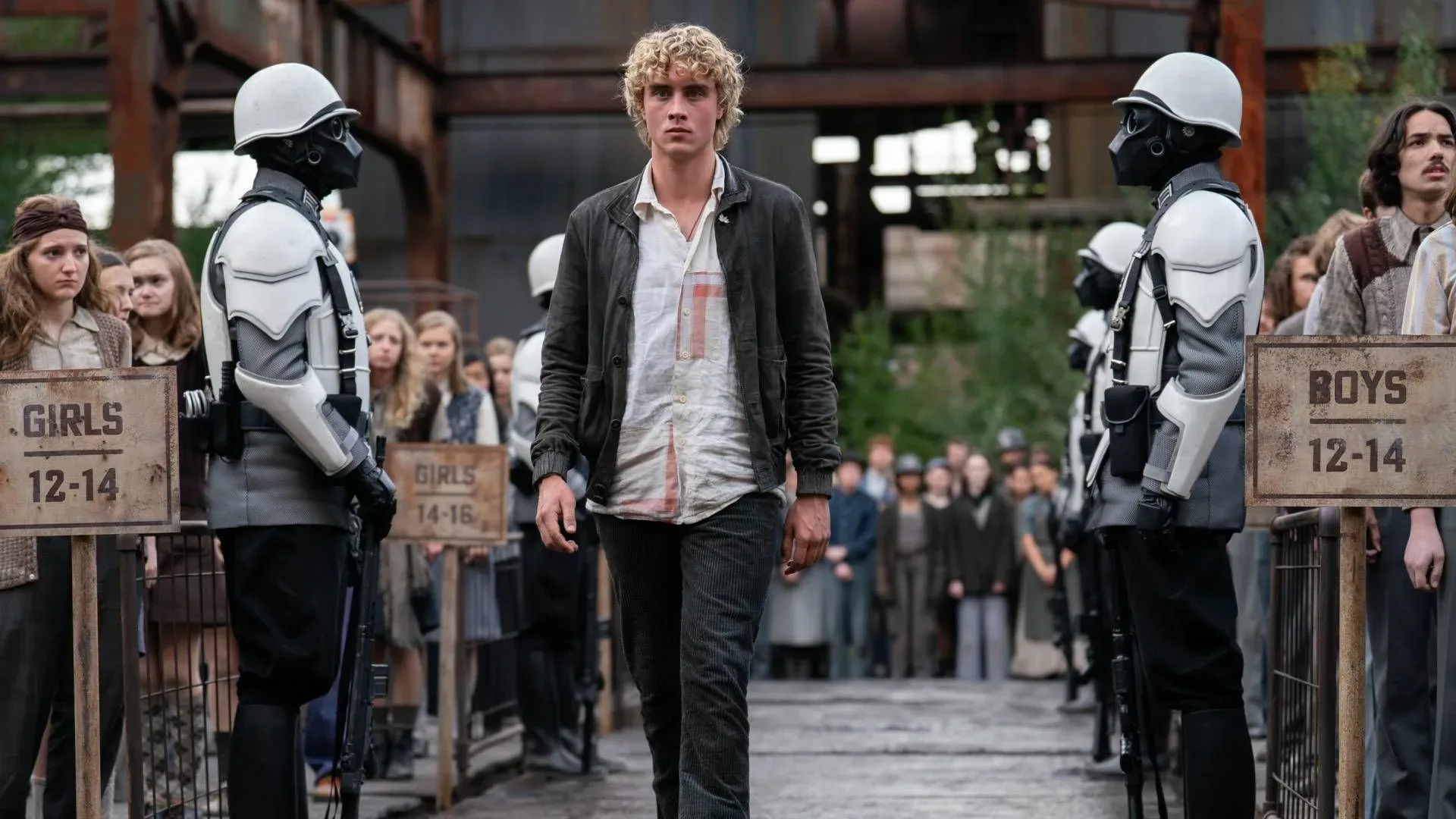
The Hunger Games: Sunrise on the Reaping is prompting an unusually specific pre-release question: will a standard cinema presentation show every story detail visible in IMAX?
That concern follows a social-media preview from an IMAX theater account illustrating the film’s expanded frame. Much of the extra image area appears to be tied to the arena material, which makes the format choice feel particularly consequential for a story centered on the 50th Hunger Games. Fans examining the preview have pointed to one potentially pivotal event positioned near the boundary of the regular-screen crop.
The detail has not been identified here, because it concerns a death and could spoil the story for people who have not read the book. The larger takeaway is simpler: viewers are now looking at Sunrise on the Reaping not only as a new Hunger Games film, but as a release where the composition may differ meaningfully between premium and conventional screenings.
What the expanded aspect ratio means
IMAX says the film contains more than 45 minutes shot in a 1.90:1 expanded aspect ratio. Aspect ratio is the proportional relationship between an image’s width and height. A 1.90:1 frame is wider than it is tall, but it is also taller than the very wide images commonly used for regular theatrical presentations.
In practical terms, an expanded IMAX sequence can reveal more of the filmed image above and below the area used in a standard presentation. It does not necessarily mean that a normal screening has removed an entire scene. The same action may still be on screen, while peripheral visual information, background staging, or environmental scale sits outside the shorter frame.
That distinction matters here. The online comparison has led to understandable concern that non-IMAX audiences could “miss” a plot point. Based on the material available, it is more accurate to say that an important background detail may be less visible—or potentially absent from the cropped composition—than to assume standard screenings will be narratively incomplete. Until audiences can see the finished film in both formats, the exact effect of the alternate framing remains uncertain.
Still, framing is storytelling. If a character, action, or outcome is deliberately placed at the edge of the standard boundary, audiences can receive the same sequence with a different degree of visual clarity. A wide frame directs attention differently; a taller expanded frame can provide more geography around the action. In a Hunger Games arena, where danger can emerge from anywhere and a crowd of tributes may be active at once, that extra geography has obvious dramatic value.
A first for the Hunger Games films
Sunrise on the Reaping is the first entry in the franchise filmed for IMAX. That makes its use of 1.90:1 imagery more than a routine premium-format upgrade. The format becomes part of the film’s visual design, particularly during the arena footage where the expanded scenes reportedly concentrate.
The franchise has played with changing screen dimensions before. The Hunger Games: Catching Fire, released in 2013, widened slightly when the tributes entered its arena. The reported plan for Sunrise on the Reaping appears to build on that kind of transition: a change in the image can signal the characters moving into a different, controlled, and threatening space.
For viewers, that change can be felt even without knowing the technical terminology. When the image opens up, the arena can appear larger and more enveloping. More of the set, landscape, or surrounding competitors can fit into a shot. That is useful for spectacle, but it can also serve the underlying tension of the series: the tributes are watched, exposed, and surrounded.
The online response also highlights a less glamorous reality of format-specific filmmaking: access. Not every town has an IMAX theater, and not every viewer can reasonably travel to one. Some fans have already expressed frustration at the possibility that geography could determine how much of a key image they can see. The concern is not merely about getting a bigger screen; it is about whether the intended visual information is equally available in every theatrical option.
Why one background moment has become the flashpoint
Moviegoers are accustomed to hearing that IMAX offers a more immersive experience. The Sunrise on the Reaping discussion is sharper because the comparison apparently places a major story event below the regular frame line. That turns a general claim about immersion into a potential question of legibility.
There are two reasons not to overstate what that means. First, a single promotional comparison cannot explain how the final edit guides attention through the sequence. Editing, sound, performance, and the larger setup of a scene can all communicate an event even when it is not centered in the frame. Second, “under the boundary” does not automatically establish that all regular screenings erase the moment completely. Presentation choices can vary, and the available information does not describe every theatrical version in detail.
But the concern is reasonable on its own terms. If the background event is presented as a visual discovery in IMAX, it could alter how immediately some viewers understand what happened. Readers familiar with the source novel may recognize the significance more readily than newcomers, while audiences encountering the story for the first time could be more dependent on the movie’s visual cues.
That makes the conversation a spoiler-sensitive one. The responsible way to approach it before release is to know that an arena sequence has become a focus of format debate, without circulating the identity of the character involved or treating an out-of-context frame as the whole scene.
The arena is a natural home for the taller image
Setting most of the expanded footage in the arena is a logical creative choice. The arena is where the games’ spectacle, surveillance, violence, and engineered obstacles converge. A larger visible field can establish the physical scale of the space while leaving room for threats that may not be at the center of a shot.
It can also emphasize the imbalance at the heart of the premise. The tributes occupy the arena, but the game makers control it. An expanded view can make the contestants look small within an environment designed to contain them. Conversely, the frame can expose more of the wider action, making the audience scan the image as the characters themselves must scan their surroundings.
That is analysis rather than confirmation of a particular scene’s intent. The confirmed point is that the film has more than 45 minutes in the 1.90:1 format and that the wider material appears concentrated around the arena. Whether the production uses that space chiefly for spectacle, hidden details, character geography, or all three will only become clear with the finished movie.
Haymitch’s earlier Games take center stage
Sunrise on the Reaping is set 24 years before the first Hunger Games film. It follows 16-year-old Haymitch Abernathy, played here by Joseph Zada, after he is drafted into the 50th Hunger Games.
The event is the second Quarter Quell, a special edition of the Games in which the game makers send twice the usual number of players into the contest. That premise puts a younger version of the eventual mentor from the original films directly into the arena rather than at its sidelines.
Woody Harrelson played Haymitch in the earlier film saga, where he served as mentor to Katniss Everdeen and Peeta Mellark. Jennifer Lawrence and Josh Hutcherson, who played Katniss and Peeta, are also set to appear in cameo roles in the new film. The prequel therefore connects an earlier generation of Panem’s Games to characters audiences know from the original story.
For viewers deciding where to watch, the key fact is straightforward: an IMAX ticket is positioned as the fullest version of the image for the film’s expanded sequences. That does not establish that standard presentations are the wrong way to see the movie, nor that they will fail to tell its story. It does mean that viewers especially interested in arena composition, background detail, and changing frame dimensions have a concrete reason to seek out the IMAX presentation if it is accessible.
The recent attention around large-format exhibition has made that decision feel more significant to audiences. Earlier this year, The Odyssey became the first film released as having been shot entirely for IMAX, while IMAX 70mm screenings sold out for months and drew travelers to cities with capable theaters. Sunrise on the Reaping is not described as being entirely filmed in the format, but its 45-plus minutes of expanded footage place it within the same broader push toward format-specific moviegoing.
The Hunger Games: Sunrise on the Reaping is scheduled to reach theaters on November 20. For now, the safest expectation is not that regular-screen audiences will receive a different plot, but that IMAX audiences may have more image to examine when the Games begin.
For a very different example of how screen-focused hardware is being folded into entertainment and play, see our coverage of the GameSir Nova Vision’s built-in display and Switch 2 features.