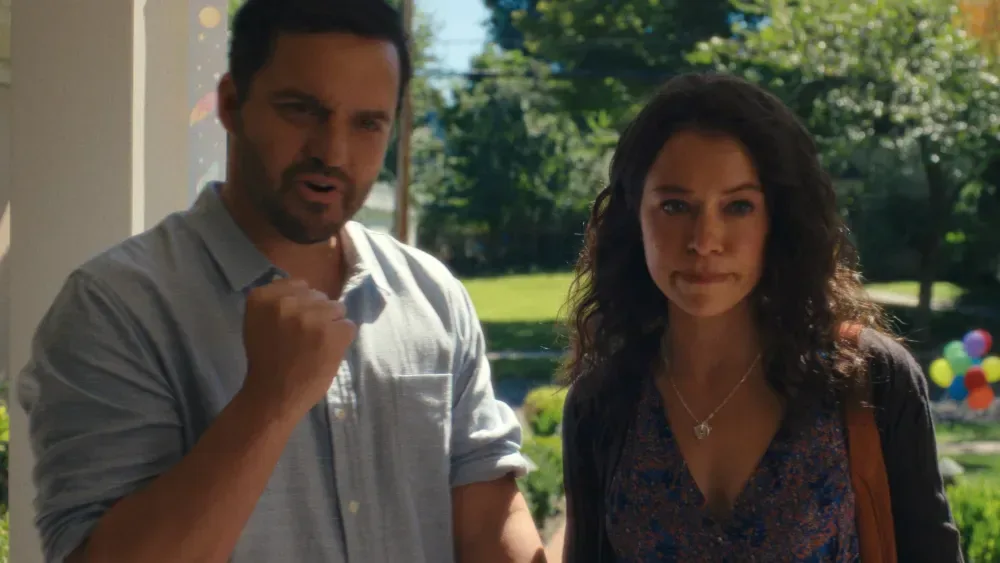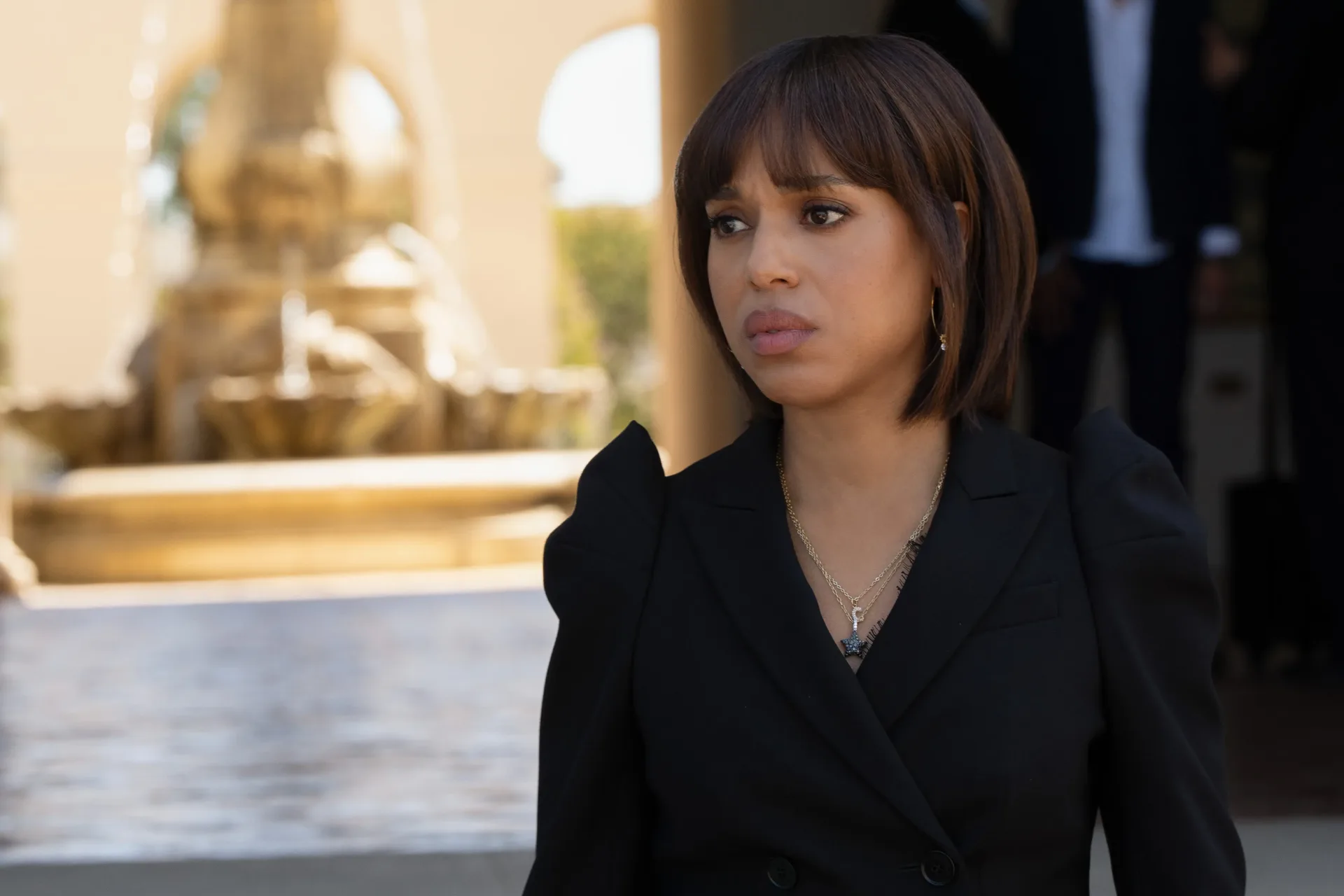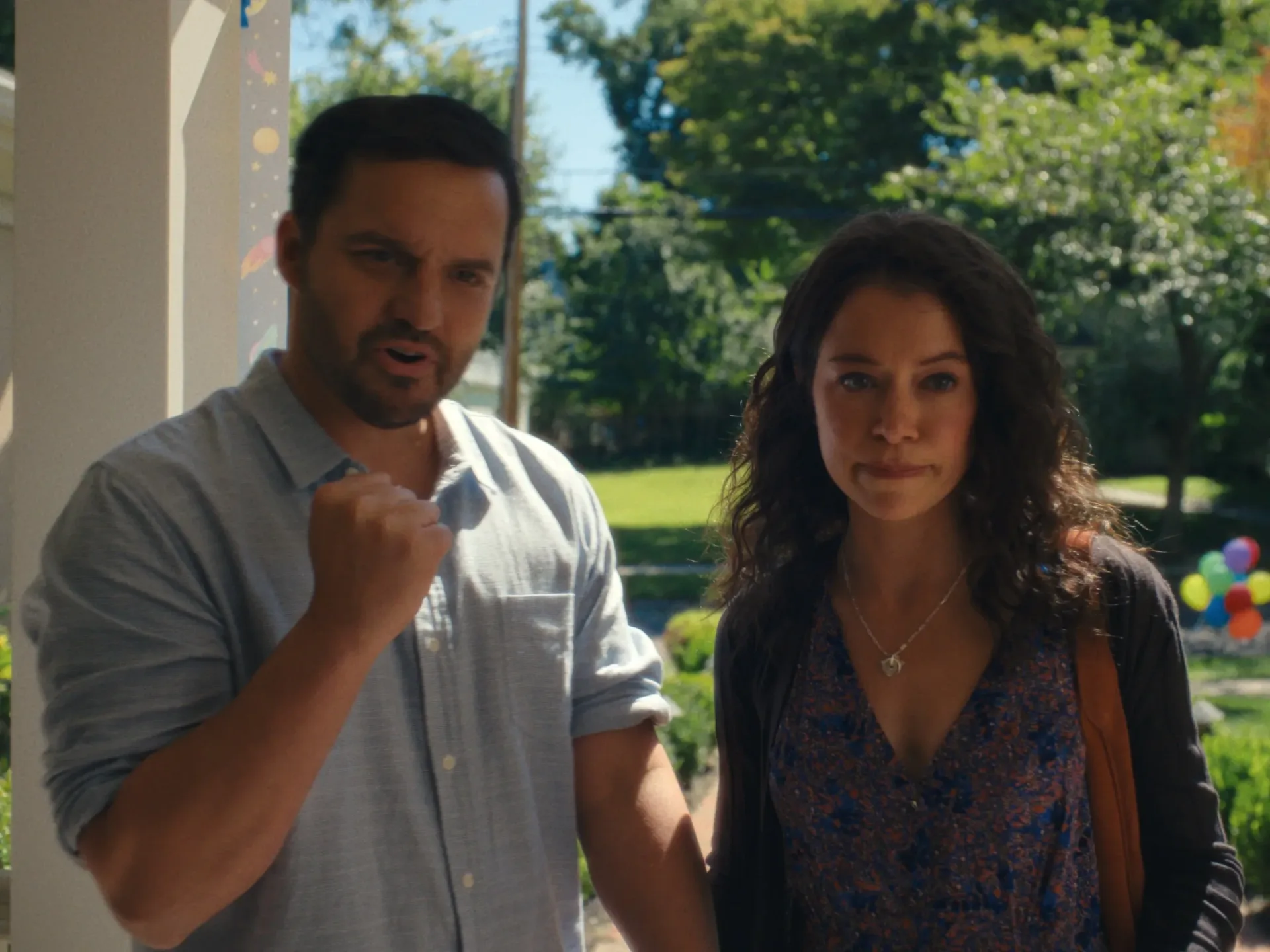
Maximum Pleasure Guaranteed will return for Season 2 on Apple TV. The renewal keeps the story moving after a first-season finale that deliberately complicated the audience’s understanding of Paula, the newly divorced mother played by Tatiana Maslany. It is an especially meaningful continuation for a series built around uncertainty: blackmail, murder, youth soccer, a custody dispute and a protagonist whose perspective may not be as straightforward as it initially appeared.
Created and showrun by David J. Rosen, the series follows Paula after she believes she has seen a crime. Rather than simply reporting it and stepping aside, she begins investigating on her own while trying to navigate an identity crisis and a fight over custody. The official premise positions that investigation as something potentially much larger than one incident: Paula may uncover a wider conspiracy, while the same journey could affect her relationship with her family and her sense of who she is.
That combination is the show’s key pressure point. Paula is not investigating from a stable, detached position. Her domestic life is already in flux, and the consequences of being believed—or dismissed—are personal. Season 2 therefore has room to continue both strands at once: the external mystery of what happened and the internal question of how accurately Paula understands the events around her.
A renewal that preserves the show’s central ambiguity
Rosen has described the Season 1 ending as a “reframing” rather than merely a last-minute surprise. That distinction matters. A twist can exist chiefly to shock an audience. A reframing asks viewers to reconsider earlier scenes, assumptions and character judgments in light of newly supplied information.
In this case, the first season encouraged viewers to see Paula as a basically reliable guide through increasingly alarming circumstances, even when other characters considered her behavior eccentric or inconsistent. Her ex-husband Karl, played by Jake Johnson, repeatedly characterizes her that way. The show’s finale apparently does not simply endorse Karl’s interpretation, though. Instead, it suggests that there was more going on than the audience had been allowed to fully recognize, and that Paula herself is more complicated than the initial framing suggested.
That is a useful foundation for a second season because it creates an active question without requiring the series to dismiss Paula’s experience outright. “Reliable narrator” is a storytelling term for a character whose account the audience can generally treat as dependable. An unreliable narrator, by contrast, may misunderstand, conceal, distort or be unable to access important parts of the truth. Unreliability does not automatically mean dishonesty. It can emerge from limited information, emotional strain, bias, trauma, confusion, self-protection or circumstances the character cannot yet explain.
The available description points to a more nuanced possibility than a simple gotcha. Paula can be under immense stress, behave in ways that alarm the people close to her and still have witnessed something significant. Season 2 can interrogate the gap between those ideas: what Paula knows, what she thinks she knows, what others assume about her, and what evidence might finally support or contradict her fears.
Why the family story is not just background
The premise’s custody-battle element raises the stakes well beyond the usual amateur-investigator setup. A protagonist pursuing danger can ordinarily be judged as impulsive, courageous or reckless without that judgment changing every part of their life. For Paula, credibility has immediate personal weight. If Karl and others see her as unstable or inconsistent, that perception can affect not only her investigation but also the conflict over her family.
That makes the show’s conspiracy thread and its domestic thread mutually reinforcing. The mystery is not an escape from Paula’s real life; it is entangled with it. Pursuing answers may offer her a way to reclaim agency after divorce, but it could also make her look more erratic to the people deciding whether she is acting responsibly. Conversely, pressure from the custody battle may influence how Paula reacts to clues and whom she trusts.
Season 2’s most compelling avenue is likely not simply supplying more danger. It is testing what happens when the person pursuing the truth has to prove that she is capable of identifying it. A conspiracy story usually revolves around hidden links between people or events. Here, the hidden link may also be between the mystery Paula is chasing and the version of herself that other characters believe they know.
The inclusion of youth soccer in the premise also signals an intentionally peculiar collision of worlds. The sport is not presented as a standalone setting; it sits beside murder, blackmail and family upheaval. That contrast can make ordinary community routines feel suspect, with social spaces that should seem familiar instead becoming part of Paula’s expanding web of concern. Crucially, the official setup does not identify the exact nature of the conspiracy or the direction the second season will take, so viewers should not assume that every unresolved question has been answered by the renewal itself.
The returning creative framework
Rosen remains central to the show as its creator and showrunner. A showrunner is the lead creative figure responsible for guiding a television series at the production level, typically overseeing the writing direction and coordinating the broader creative process. In a story whose ending relies on a carefully managed shift in perspective, continuity in that role is notable: the person explaining Paula’s reframing remains the person steering the series forward.
David Gordon Green is an executive producer and director. Rosen and Green are joined as executive producers by Simon Kinberg, Audrey Chon and Bard Dorros, who developed the project through Anonymous Content. Apple Studios and Counterpart Studios produce the series.
Production credits do not reveal plot specifics, release timing or episode plans, and none were provided with the renewal. What they do establish is that the central creative and production structure remains connected to the show as it continues. For a series built on tone as much as plot mechanics—where a tense investigation shares space with divorce, parenting and youth-sports culture—that continuity can be significant.
Rosen marked the renewal with a characteristically playful observation that the show’s title originated in a spam email. It is a small detail, but it suits a series name that sounds simultaneously alluring, ominous and faintly absurd. The title’s strange appeal mirrors the premise’s mix of threatening stakes and offbeat specificity.
Who is in the cast
Maslany leads the series as Paula, with Johnson as Karl, Paula’s ex-husband. The cast also includes Murray Bartlett, Dolly De Leon, Brandon Flynn, Jessy Hodges, Jon Michael Hill, Charlie Hall, Kiarra Hamagami Goldberg and Nola Wallace.
The renewal announcement does not set out character details for every member of that ensemble, nor does it specify Season 2 storylines for individual performers. That absence is worth keeping clear. The confirmed point is that these actors are part of the series’ cast; it is not a confirmation of how each character may figure into the next phase of the mystery.
Still, the ensemble matters to the show’s central premise. When a narrative asks viewers to reassess its lead character’s viewpoint, surrounding characters become more than supporting witnesses. They can validate Paula, challenge her, misunderstand her, conceal information from her or become part of the larger puzzle. Karl is already especially important because his interpretation of Paula’s behavior comes from the intimate, adversarial setting of their post-divorce conflict. He is neither an objective authority nor a disposable obstacle simply because he disagrees with her.
What the finale setup means for Season 2
The decisive word from Rosen is “complicated.” The finale’s purpose, as described, was to reveal that something more was happening beneath the account viewers had accepted. That does not answer the mystery; it enlarges it. A continuation now has an opportunity to make earlier uncertainty productive rather than merely withholding.
For audiences, that may mean approaching a second season with two questions in mind. First: what is the actual nature of the crime Paula believes she witnessed, and how far does the promised larger conspiracy extend? Second: what new information changes the meaning of Paula’s choices, memories and relationships? Those questions are linked, but they are not identical. A show can solve the factual mystery while leaving a character’s emotional self-understanding unsettled, or it can reveal a personal truth that changes how the conspiracy is interpreted.
The strongest practical implication of the renewal is simple: the Season 1 ending was not designed as a closed door. It was built to alter the lens through which the audience sees Paula, creating a fresh foundation for the next chapter. Rather than moving on from her instability-versus-insight tension, Season 2 is positioned to examine it more closely.
There is no Season 2 premiere date, episode count or further plot description included with the announcement. Until Apple TV provides those details, the confirmed news is the continuation itself—and the prospect of returning to a story where family strain, suspicion and personal reinvention are all part of the same investigation. For more Apple-related platform context, see Apple HomeView’s app-list plans.