Matthew Lawrence is looking back on Mrs. Doubtfire as more than a beloved 1993 family comedy. For him, the production was a rare childhood experience in which the actors playing his family made a sincere effort to function like one away from the cameras, too.
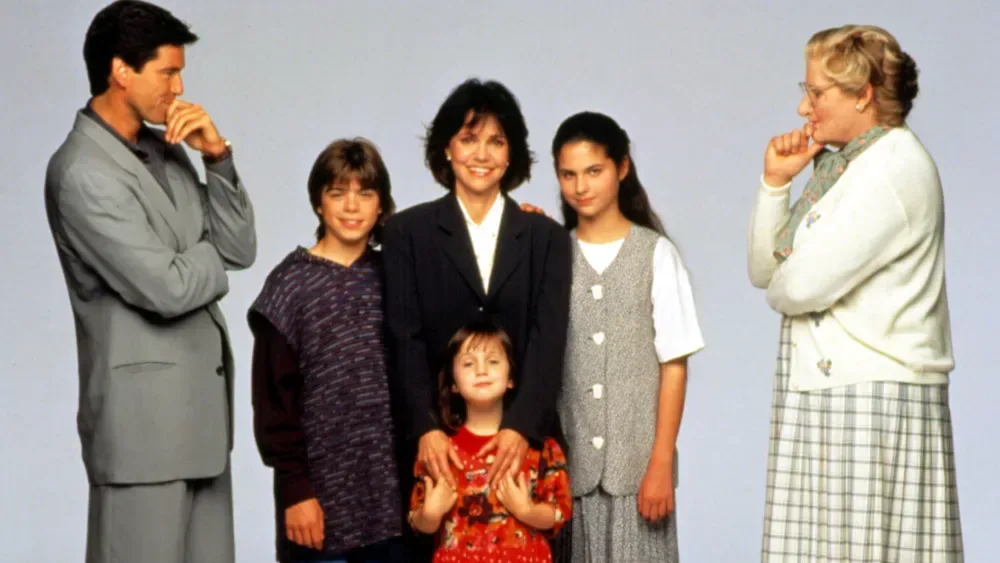
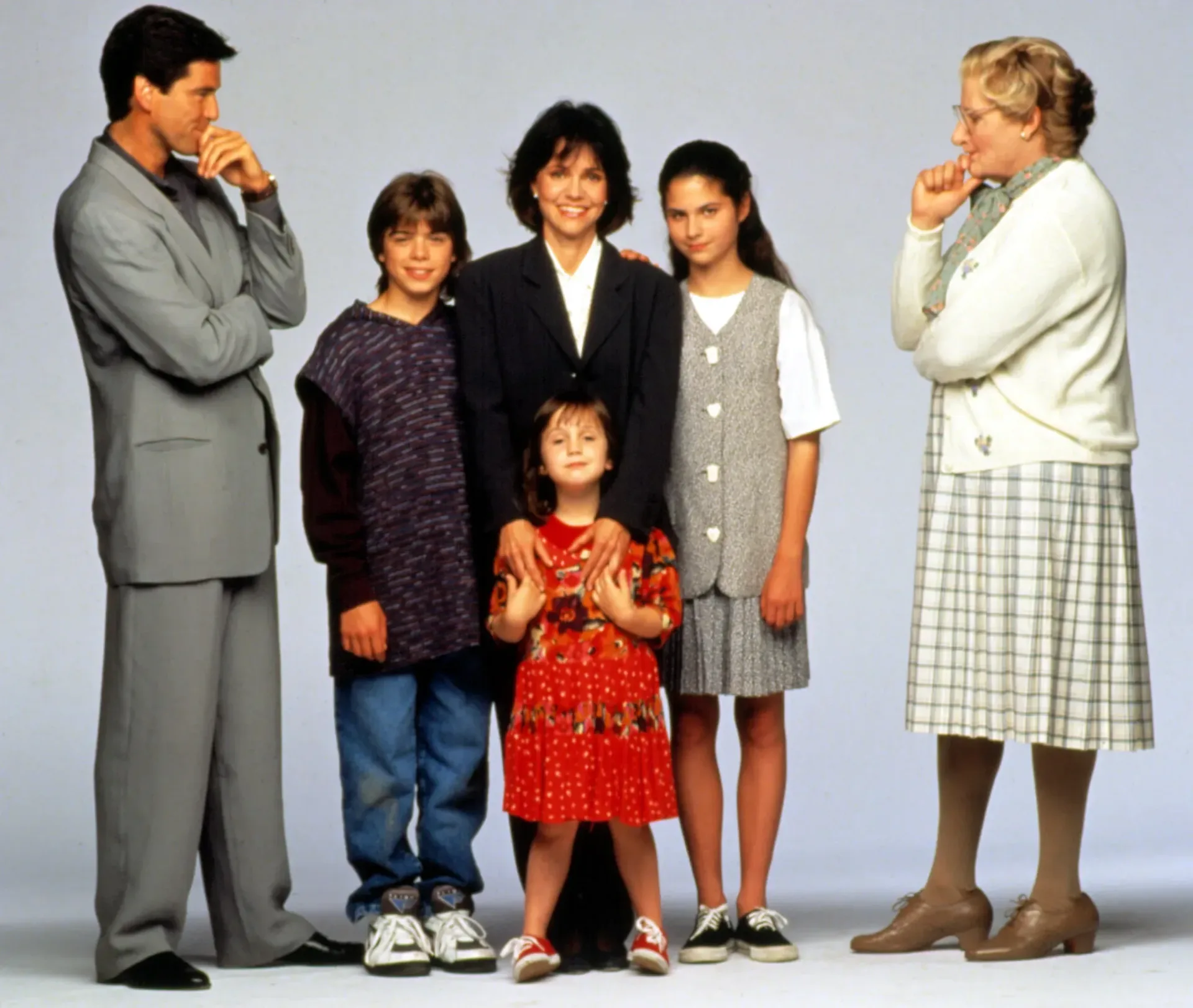
Lawrence played Chris Hillard, one of the three children of Daniel Hillard, Robin Williams’ character, and Miranda Hillard, played by Sally Field. In a recent reflection, Lawrence described Field as becoming “another mother figure” after the cast spent time getting acquainted before rehearsals began.
“We really became a family unit on that set,” Lawrence said of the group, which also included Pierce Brosnan. Brosnan played Stu Dunmeyer, Miranda’s boyfriend, while Lisa Jakub and Mara Wilson portrayed Chris’ sisters, Lydia and Natalie.
A family comedy built around a fractured family
Mrs. Doubtfire follows Daniel after his separation from Miranda. Determined to be close to his children and persuade Miranda that he can be more mature, he takes on the elaborate disguise of Euphegenia Doubtfire, a Scottish nanny. The premise demands a great deal from its young cast: the story’s comic engine is Daniel’s outlandish deception, but its emotional stakes rest on how the children respond to their parents’ separation and the changes in their home.
That distinction matters when considering Lawrence’s recollections. The film’s characters are navigating an unstable family situation; the performers playing the children were working on a production that, by Lawrence’s account, took time to create mutual comfort and familiarity. Those are not the same thing, but a supportive set environment can give young performers a steadier foundation for scenes involving tense or vulnerable material.
Lawrence was 12 during filming. He remembered Field as “so sweet,” caring and kind, and stressed that the adult leads managed a balance that he found especially meaningful as a child actor.
“Neither treated me and talked down to me as a child, nor did they overexpose me to the adult world,” Lawrence said of Field, Williams and Brosnan.
His point describes a useful boundary rather than a vague compliment. Treating a young performer with respect means acknowledging their work, listening to them and communicating directly. Not overexposing them to adult matters means retaining appropriate limits around issues and conversations that should not become a child colleague’s burden. Lawrence said the three adults “walked a line” that was “absolutely wonderful.”
Related coverage includes Matthew Lawrence Recalls Sally Field’s Care on ‘Mrs. Doubtfire’.
Why Field’s role reached beyond Miranda Hillard
Field’s on-screen role is central to the movie’s emotional perspective. Miranda is not simply an obstacle for Daniel to overcome. She is the estranged wife who wants evidence that he can be responsible, and the plot turns on Daniel’s attempt to demonstrate that change while hiding behind Mrs. Doubtfire’s identity.
Off screen, Lawrence’s memories suggest Field brought an additional sense of reassurance to the cast’s younger members. Calling someone a “mother figure” does not mean blurring the difference between a co-star and a parent. In this context, Lawrence is describing the kind of care, warmth and protection he felt during the work. He singled out Field repeatedly, calling the experience extraordinary and saying she was “amazing.”
The recollection also gives extra texture to the ensemble chemistry audiences see in the finished film. Chemistry is often used as shorthand for a cast that appears believable together, but Lawrence’s comments point to a more practical ingredient: the performers spent time establishing trust before rehearsal. That preparation did not erase the fictional conflicts between the Hillards, nor was it meant to. Instead, it appears to have helped create a working atmosphere in which the young actors could feel included without being pushed into an adult space.
Robin Williams and Pierce Brosnan were part of the balance
Lawrence’s praise was not limited to Field. He grouped Williams and Brosnan with her when discussing how the adult cast treated him. Williams carried the film’s most demanding performance, shifting between Daniel and the Mrs. Doubtfire persona, while Brosnan played the new partner whose presence sharpens Daniel’s insecurity. Yet Lawrence remembers all three as adults who handled their relationship with a child co-worker thoughtfully.
That perspective is significant because it focuses on conduct rather than spectacle. Lawrence did not frame the set memory around a particular prank, scene or celebrity story. Instead, he emphasized being treated as a person whose age was respected. It is a modest detail, but it offers a clearer measure of a positive workplace than an anecdote designed only to celebrate a famous production.
For viewers revisiting the film, it also helps explain why the Hillard children remain more than props for the title character’s comic scheme. Chris, Lydia and Natalie are the reason Daniel pursues the disguise in the first place, and their changing relationship with both parents supplies much of the film’s feeling. The child performers had to hold their own in scenes with highly recognizable adult actors while maintaining the believable rhythms of siblings. Lawrence’s account suggests that the cast relationship was approached with care from the beginning.
A connection that lasted after the 1993 release
More than three decades after Mrs. Doubtfire premiered, Lawrence says he still occasionally runs into Field. His assessment has remained simple: “She’s always great.” That continuity gives his memory additional weight. It is not presented as a one-time courtesy from a set long ago, but as an impression that has persisted through later encounters.
Earlier this year, Lawrence and his real-life brothers released the graphic novel The Lawrence Brothers Detective Agency. The book includes a tribute to both Field and Williams, connecting his current creative work with people he remembers as important to a formative chapter in his career.
Williams’ Daniel and Mrs. Doubtfire remain at the center of the film’s title and its most famous comic transformation, but Lawrence’s comments place attention on the wider group that made the story work. Field’s Miranda provides the standard Daniel must meet; Brosnan’s Stu complicates the family’s new reality; and the three young actors make the consequences feel immediate. Lawrence’s account of the set describes an ensemble that took seriously the responsibility of making its youngest members feel safe, respected and part of the unit.
That is a compelling way to view a film remembered for its costume changes and broad comedy: as a production where the off-camera relationships may have supported the on-camera family dynamic. For more stories examining the people and projects that shape entertainment culture, see our look at the wider Green Lantern television concept behind Emerald Knights.