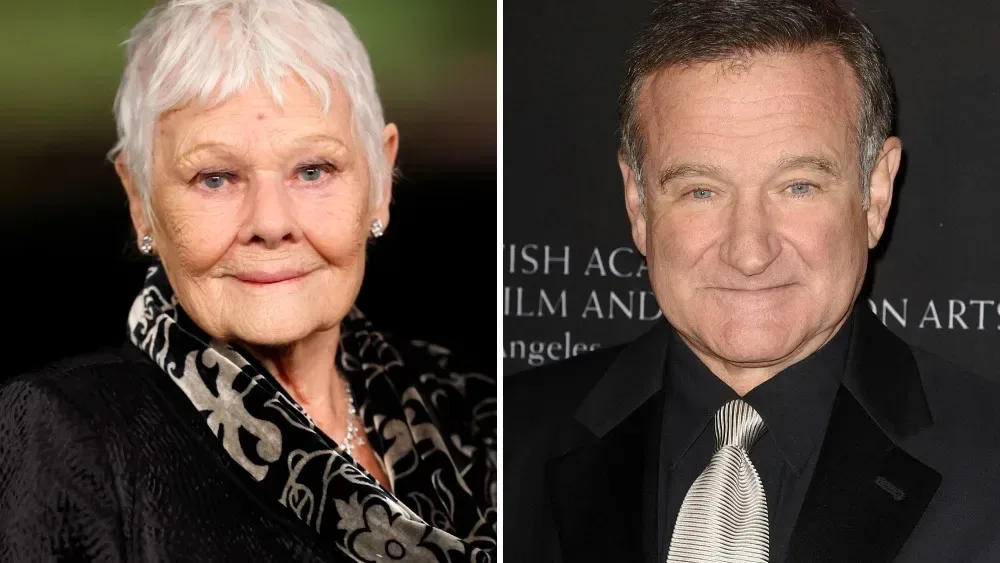
Judi Dench’s forthcoming memoir, Is It Too Late to Make a Run For It?, contains a small remembrance of Robin Williams that is striking precisely because it is not framed as a grand gesture. It is an account of attention, restraint and companionship at a moment when Dench’s husband, actor Michael Williams, was seriously ill with lung cancer.
Dench recalls staying with Billy Connolly in Scotland nearly three decades ago, where she and Michael encountered Williams at an outdoor gathering featuring a ceilidh and bonfire. As Michael began to tire, the couple left and started up a steep hill. Robin Williams came alongside them and offered to help. Michael declined, saying he could manage. Williams nevertheless chose to accompany them, telling the pair he would “ride shotgun anyway.”
For Dench, the lasting meaning is in the way the offer was made. She describes Williams as sensitive and understanding: present without taking control of the situation, supportive without forcing assistance on someone who had said he could continue on his own.
A memory about presence, not performance
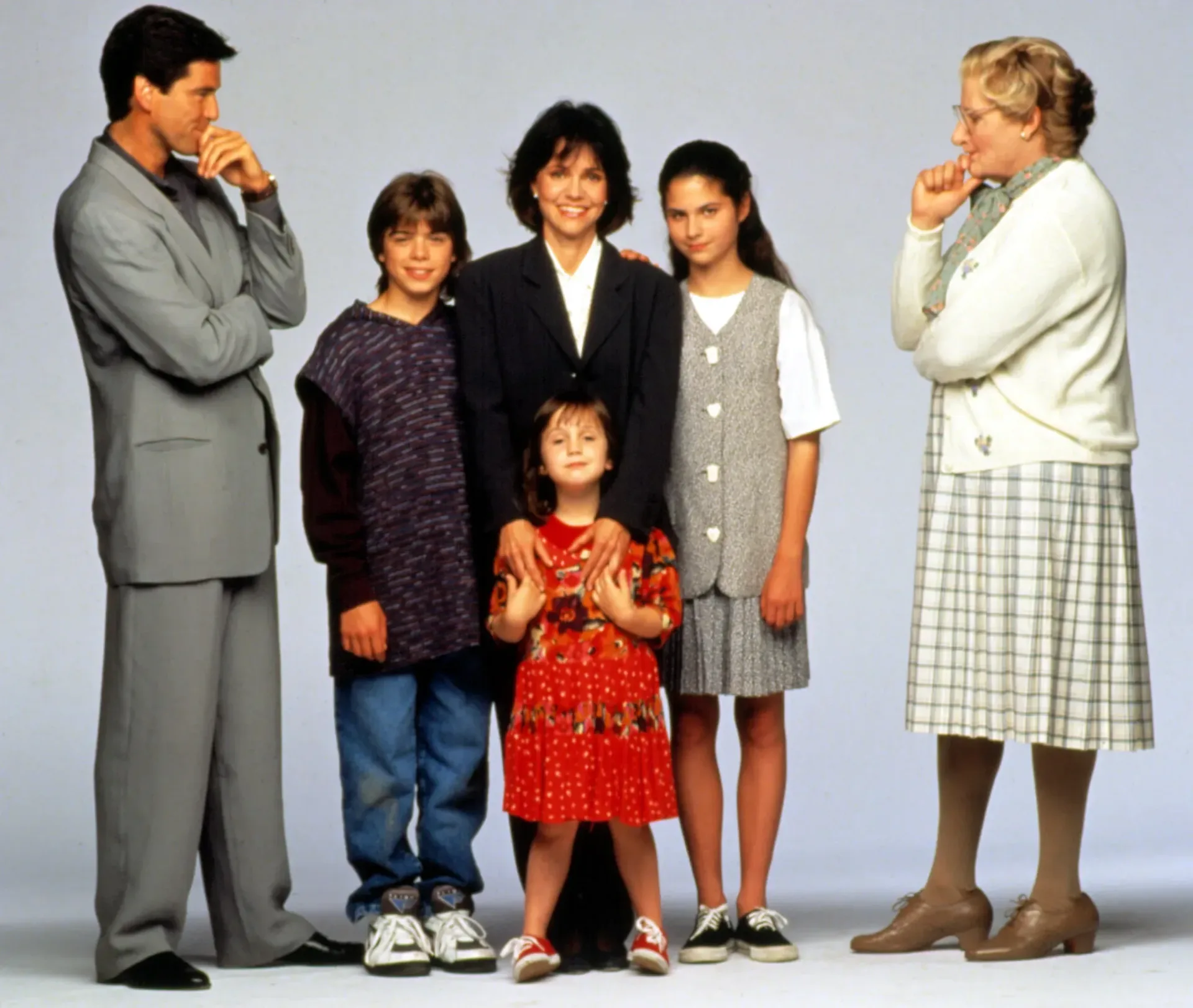
Williams is often remembered through the scale and velocity of his screen persona: the exuberant comic invention of Mrs. Doubtfire, the adventurous spirit of Jumanji and Hook, or the emotional intensity associated with Good Will Hunting and Dead Poets Society. Dench’s recollection points in a different direction. Its focus is not a joke, a speech or an act of celebrity generosity performed for an audience. It is a decision to walk with two people up a hill after a difficult evening.
That distinction matters. Practical support is not always defined by doing something for another person. Sometimes it means recognizing the boundary between an offer and an imposition. Michael Williams had said he could manage; Robin Williams did not publicly overrule him or turn the moment into a confrontation over care. Instead, he remained nearby. Dench’s account identifies that balance as the kindness she remembers.
The passage also gives the memoir’s title an appropriately personal texture. Rather than treating a celebrated career as a string of formal milestones, the book appears to make room for the fleeting encounters that acquire much greater weight in retrospect. A short walk, a steep hill and a gently phrased offer can become part of the emotional record of an entire period.
Dench and Williams’ professional connection
The actors had already worked together before the Scottish gathering. Dench appeared with Williams in the 1996 film Hamlet. Their paths crossed again on one of the most prominent nights of Dench’s career: Williams presented her with the Academy Award for best supporting actress in 1999, recognizing her performance as Queen Elizabeth I in Shakespeare in Love.
Those public connections give readers useful context, but Dench’s memory does not depend on them. The episode is not presented as an anecdote about awards, famous friends or the social orbit of the film industry. It is about how a colleague behaved when someone in that orbit was unwell. The contrast between the highly visible Oscar moment and this private one is part of what makes the recollection resonant.
Related coverage includes Judi Dench Recalls Robin Williams’ Quiet Support During Michael Williams’ Illness.
Michael Williams died on January 11, 2001, aged 65. He and Dench married in 1971. Robin Williams died in 2014 at age 63. Dench’s memoir therefore records an encounter involving two people whose lives are now viewed through substantial public legacies, while keeping the focus on the experience she and Michael had in the moment.
Why the wording carries weight
Dench’s description is especially clear about what Williams did not do. He did not insist that Michael accept help, make a display of concern, or center himself in a vulnerable moment. Instead, he positioned himself close enough to be useful. In everyday language, “riding shotgun” means taking the passenger seat alongside a driver. Here, it becomes a light, companionable metaphor: Williams is not claiming responsibility for the journey, but he is making sure Michael and Dench are not making it alone.
That is a useful way to understand the scene without romanticizing illness or reducing it to an inspirational anecdote. Serious illness changes the ordinary logistics of an evening and can expose the tension between independence and needing support. Dench describes noticing Michael was flagging, which prompted them to leave. Williams’ response recognized the reality of that fatigue while respecting Michael’s stated wish to carry on under his own power.
It is also why the memory has endured for Dench. Major kindnesses are easy to identify because they announce themselves. Smaller gestures can be harder to articulate, yet their value may lie in their precision. Williams understood what was needed without requiring the couple to explain it further.
Dench also addresses Cats
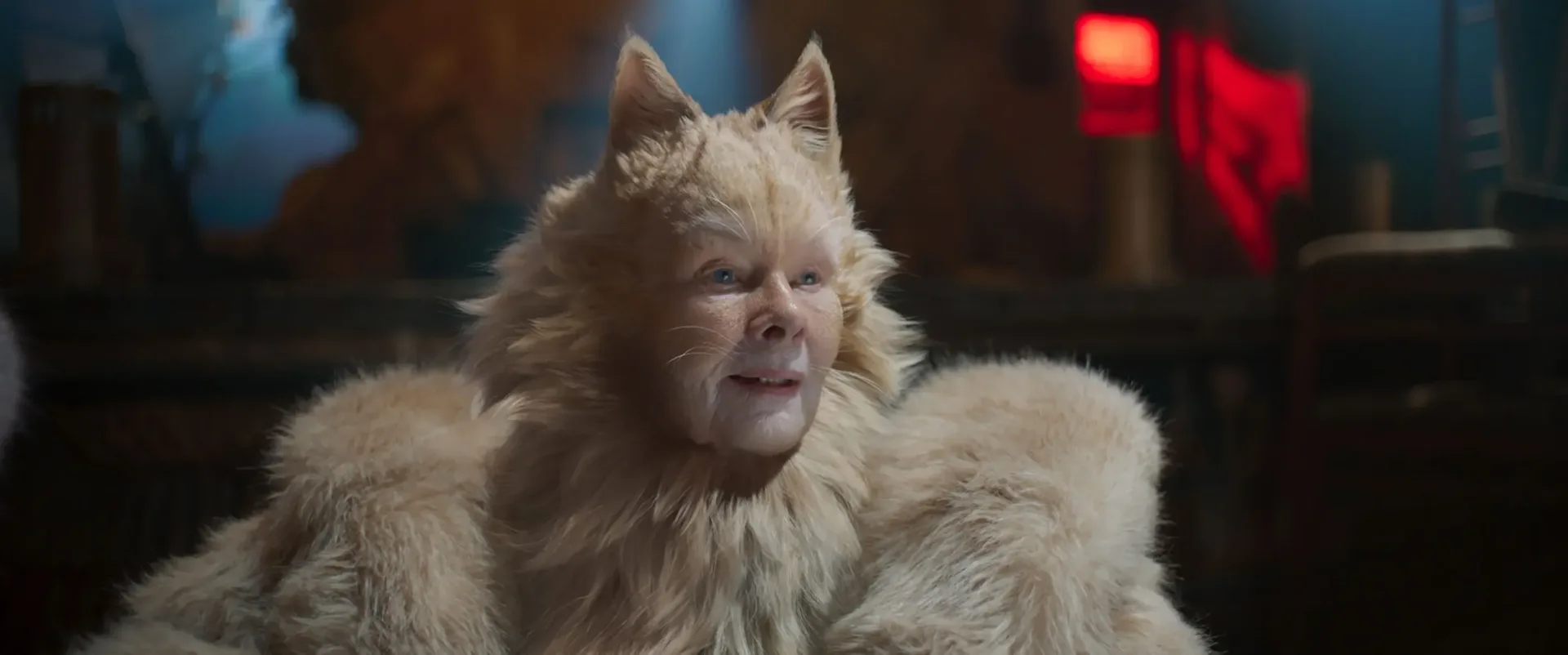
The memoir contains a very different reflection on Dench’s work: her experience appearing in the 2019 film adaptation of Cats. The movie drew a strongly negative critical response and struggled commercially despite a large ensemble that included Dench, James Corden, Idris Elba and Taylor Swift. It was adapted from Andrew Lloyd Webber’s successful stage musical.
Dench writes with evident disappointment about the result, particularly given the long wait for a film version of the musical and the amount of talent and goodwill connected to the project. At the same time, she makes an important qualification: she says she never watched the final cut and therefore cannot offer a complete judgment of the finished film.
That qualification separates her personal regret from a claim to definitive criticism. Dench is not presenting herself as someone who has re-examined every creative decision in the completed release. Her observation is instead about intention and collective effort. Performers and filmmakers, she notes, do not set out to make poor work; they contribute what they can and hope an audience responds.
It is a sober account of a familiar creative reality. A production can gather accomplished people, a well-known underlying property and considerable anticipation, yet still fail to find its audience or satisfy critics. Dench’s comments do not try to erase that outcome. They acknowledge it while maintaining a distinction between a finished work’s reception and the commitment of people who made it.
That perspective connects, in an indirect way, with the Robin Williams passage. Both memories resist the temptation to turn people into simplified symbols. Williams is not reduced to his most famous comic roles; he is remembered as a considerate companion in a difficult personal moment. Cats is not defended as a hidden success, but neither are its contributors dismissed as people who intended to fail. In both cases, Dench makes room for the human behavior behind more familiar public narratives.
A memoir shaped by candor and scale
The material described from Is It Too Late to Make a Run For It? moves between the intimate scale of a walk home and the much larger machinery of film history, awards recognition and a notorious modern release. That range is part of the appeal of a performer’s memoir when it is handled with specificity. Career landmarks may establish context, but the most revealing passages often concern the moments that did not make headlines at the time.
Dench’s recollection of Williams does not revise the facts of either actor’s career, nor does it ask readers to infer more than it says. It offers one memory: a party, an exhausted husband, a steep incline and a colleague who chose to stay close. Its power comes from the modesty of that frame.
For readers following current entertainment stories beyond this memoir, Joking Joystick’s pop-culture coverage also tracks notable developments in music and public appearances.
Dench’s book is due to reach shelves Tuesday. Its two reported reflections offer sharply different forms of honesty: gratitude for a long-remembered act of quiet care, and disappointment over a film whose final version she did not see. Neither account overstates its case. That restraint is exactly what gives the Robin Williams memory its force.