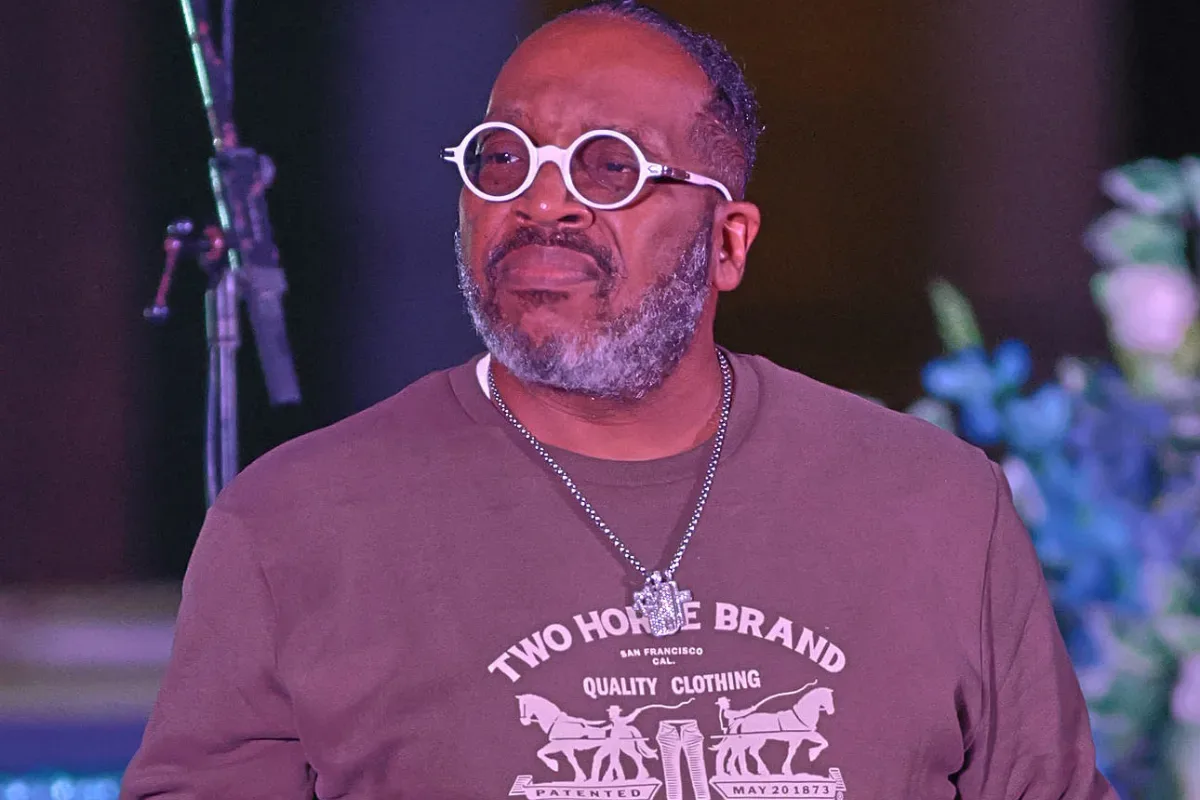
Marvin Sapp is making the case that a gospel artist can broaden distribution without surrendering the center of the music. As Restoration, his 17th album, approaches its Friday, November 20 release, Sapp has addressed criticism surrounding his relationship with Roc Nation by stressing a key detail: he says he retains ownership of the album’s master recording.
The deal has prompted questions among some gospel listeners because Roc Nation is closely associated with hip-hop. Sapp’s answer has focused less on branding and more on the structure of the arrangement. He has characterized it as a distribution relationship, not a conventional label setup in which the label takes ownership of the finished music. His stated goal is to place the record in more spaces while retaining control over the recording itself.
“I’m keeping it Christ-centered, churchy and funky all at the same time,” Sapp said.
That description presents Restoration as an album intended to keep its gospel identity intact, even as its route to listeners changes. It also puts a practical music-business issue at the heart of a debate that can otherwise be reduced to assumptions about corporate affiliations.
What Sapp says the arrangement does
In simple terms, music distribution is the process of delivering a completed release to the places where listeners can find it. A distributor can help take a finished album to outlets and platforms without necessarily becoming the owner of the master. Sapp has explained the distinction this way: a distributor takes an already-finished product to places where it may not otherwise be heard.
A master is the specific recorded version of a song or album. Master ownership matters because the owner generally has a central role in decisions involving use of that recording and the revenue it generates. That is distinct from ownership of the underlying composition—the lyrics and musical work—which is commonly discussed through publishing rights. The information Sapp has shared concerns the recorded work: he says he keeps the masters for Restoration.
He also says Roc Nation receives a smaller portion of earnings than he gave up in his prior label arrangement. That does not make every distribution deal identical, nor does it reveal the full terms of Sapp’s agreement. It does explain why he sees this particular setup as a meaningful business change. For an artist, keeping ownership while using a partner’s distribution network can mean trying to combine reach with a greater degree of control.
Producer Stanley Brown, who leads Timeless Music Group, brokered the partnership. The distribution agreement itself was announced in July, rather than alongside the more recent discussion around the album’s release.
Related coverage includes Marvin Sapp Explains Roc Nation Deal as ‘Restoration’ Nears Release.
Distribution is not automatically a label deal
“Distribution” can sound like an industry technicality, but it is central to Sapp’s defense. A traditional label relationship and a distribution agreement can overlap in practice, yet they are not automatically the same thing. The decisive details are contractual: who owns the master, who collects which share of revenue, what services are supplied, and how much creative or business authority the artist keeps.
Sapp’s public explanation identifies two terms that matter most to him: he says the master remains his, and he says the partner takes a smaller share than his former label did. Those claims are the relevant facts for understanding why he has rejected the idea that working with Roc Nation changes the faith-based purpose of his music.
It is also important not to overstate what the available information establishes. There is no public breakdown here of every service, payment term, or decision-making right in the agreement. What is clear is Sapp’s stated rationale: he views distribution as a way to expand access to the album while preserving ownership of the finished recording.
Why the partnership has drawn scrutiny
The concerns surrounding the deal are not chiefly about whether Sapp has identified Restoration as gospel music. They stem from Roc Nation’s connection to hip-hop and the public image of Jay-Z. For some listeners, the question is whether a gospel performer should align with a company whose best-known cultural roots lie outside the gospel world.
Sapp’s response is not that the concerns do not exist. Instead, he has argued that the musical content and the ownership terms should be evaluated directly. His “Christ-centered, churchy and funky” description is a concise statement of that position: the music, he says, remains grounded in faith and church tradition, even if the business pathway is different.
The wider point is that distribution partnerships do not automatically dictate an artist’s message. A company’s catalog, industry history, or high-profile associations can shape public perception, but the artist’s own recording, ownership position, and creative priorities are separate questions. In Sapp’s case, the deal is being discussed publicly precisely because listeners are weighing those ideas against one another.
He is not the only gospel artist connected to the company through distribution. Hezekiah Walker also reached a Roc Nation distribution agreement in September. That does not make the two deals interchangeable, as contract terms can differ, but it shows that Sapp’s arrangement is not an isolated instance of a gospel artist using that distribution channel.
A push for gospel music on the biggest stage
Sapp has paired his business explanation with a more expansive idea for gospel music’s public visibility: a Super Bowl halftime show built around gospel performers. He named Kirk Franklin as the person he would want to assemble such a lineup.
His proposed group included the Clark Sisters, Kim Burrell, Deitrick Haddon, Fred Hammond, and Sapp himself. The suggestion is notable because it is not framed as merely a solo crossover slot. It imagines a lineup rooted in multiple established gospel voices and different stylistic expressions within the genre.
That proposal fits the language Sapp has used about his own music. “Churchy” points toward the worship and congregation-based traditions listeners associate with gospel. “Funky” points to rhythmic energy and a performance style that can travel beyond a sanctuary setting. “Christ-centered” sets the boundary he says remains non-negotiable. Together, those terms describe an approach that seeks a wide audience without presenting gospel identity as something that must be diluted to reach one.
Gospel music has already moved beyond strictly gospel-specific spaces in notable ways. In 2020, Justin Bieber performed Sapp’s “Never Would Have Made It” with Kanye West’s Sunday Service Choir. Kim Kardashian documented that appearance online. The same gathering included music from Roddy Ricch and Nas, illustrating how gospel material and performers can appear within events involving artists from different musical lanes.
That moment does not settle the discussion over Sapp’s current distribution partnership, and it should not be treated as a direct parallel to the business deal. It does, however, provide a concrete example of Sapp’s songwriting reaching a highly visible audience outside a conventional gospel-only presentation.
For readers following crossover stories at the intersection of music, public image, and hip-hop culture, Joking Joystick has also covered a recent development involving rapper Sha EK.
The offering-video fallout remains part of the backdrop
The conversation around Restoration and Roc Nation comes while Sapp continues to deal with the consequences of a viral video from a church offering. The clip showed him asking for donations toward a $40,000 goal. Its circulation generated intense backlash.
Sapp has said that the reaction escalated to death threats and required police protection. Organizers, meanwhile, said no one was confined or held against their will. They described the instruction to close the doors as a security measure, stating that the doors were not locked.
Those details matter because short, widely shared clips can create a controversy far larger than the moment visible in the excerpt. The available account includes both the fundraising target that sparked criticism and the organizers’ explanation of the doors. It also includes Sapp’s report of serious personal safety consequences. None of that is directly about the Roc Nation agreement, but it forms part of the environment in which listeners are evaluating his public statements and upcoming album.
Keeping those subjects distinct is useful. The offering clip concerns a church fundraising moment and the reaction to it. The Roc Nation issue concerns distribution, master ownership, revenue share, and perceived fit between a gospel artist and a company with hip-hop roots. They intersect only in the sense that both have intensified public attention around Sapp.
What to watch as ‘Restoration’ arrives
The most immediate development is the release of Restoration on November 20. It will be Sapp’s 17th album, and the record will likely become the clearest expression of the “churchy and funky” balance he has described. Until listeners hear the completed work, claims about its exact sound should remain limited to Sapp’s own framing.
On the business side, the key point is straightforward: Sapp says he owns the album master and regards Roc Nation as a distribution partner that can help the release reach audiences it might otherwise miss. The key cultural question is more subjective: whether listeners see that wider business relationship as compatible with the values and musical traditions they expect from a gospel artist.
Sapp has made his view clear. For him, the arrangement is not a retreat from gospel music but a method of extending its reach while holding onto the recorded work. His Super Bowl vision follows the same logic: gospel can be unmistakably itself—faith-forward, rooted in church, rhythmically alive—and still belong on one of entertainment’s largest stages.