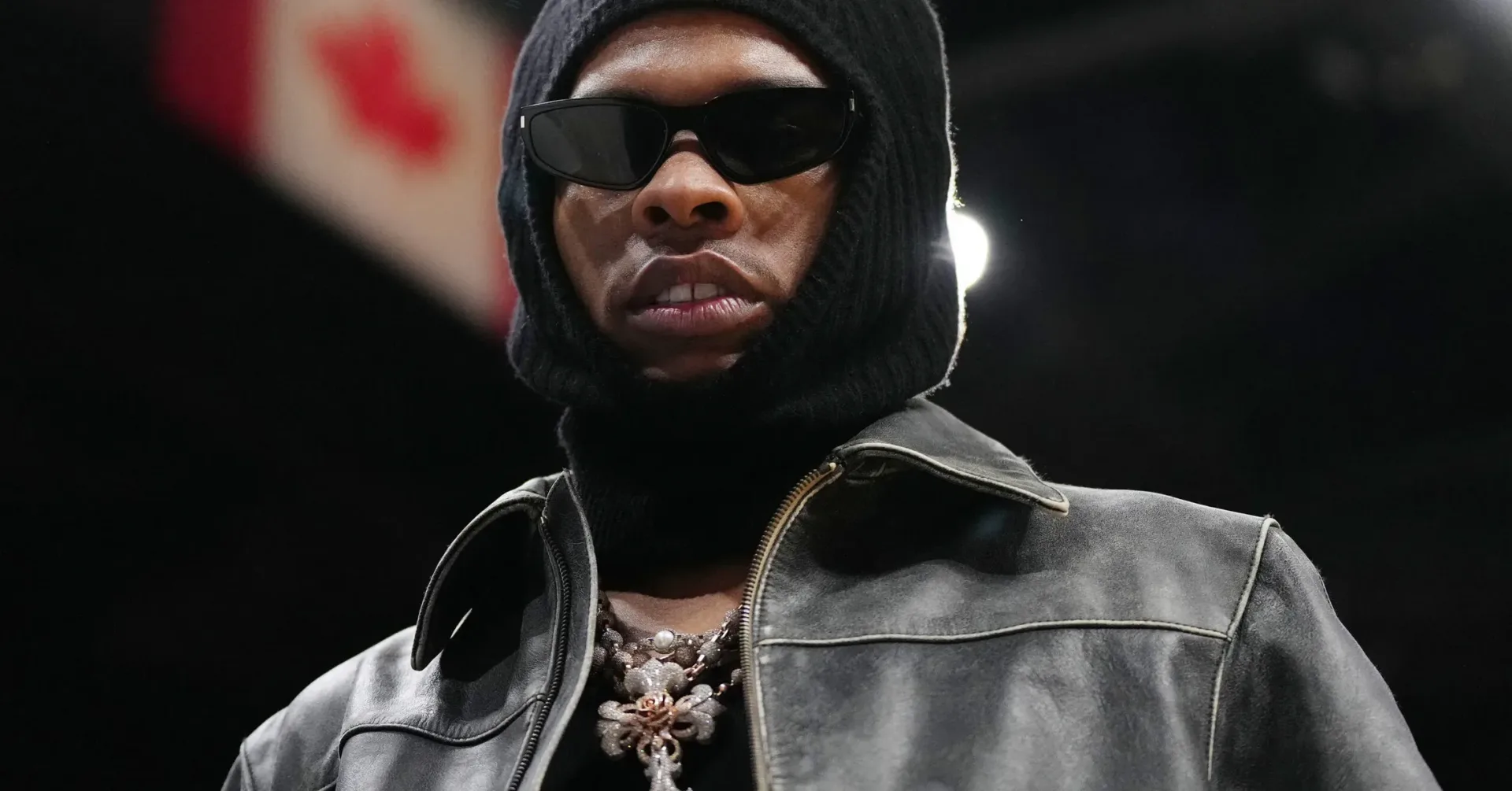

GloRilla has made her position plain: criticism of her place in gospel music will not persuade her to stop praising God. In a November 11 post on X, the Memphis rapper responded to the continuing debate around her faith and her collaborations with Kirk Franklin without identifying any particular critic.
“Long as I’m breathing ima give God the glory and nobody can ever make me feel bad about that,” she wrote. GloRilla also invoked Psalm 150:6, a passage calling on everything with breath to praise God.
The statement is notable for what it does not try to do. GloRilla did not offer an apology, announce a move away from rap, or say she would step back from gospel collaborations. Rather than litigating her catalog song by song, she framed the matter as one of personal faith: praise is not something that needs to be earned through outside approval.
The criticism behind the response
The backlash appears rooted in a familiar question about genre, image and religious participation. Some religious listeners have objected to a mainstream rap artist appearing in a gospel context. GloRilla’s answer does not seek to settle every disagreement about music or artistic identity. It challenges a narrower premise: that a person’s success or work in secular music means they cannot publicly praise God.
That distinction matters. A collaboration is a shared recording, not necessarily a declaration that each artist has abandoned every other part of their creative work. GloRilla has not said she is changing musical direction. The available facts instead show that she is continuing to stand behind both her praise and the work that prompted criticism.
For audiences, that means it is worth separating a reaction to a specific song from a broader judgment about who is allowed to participate in spiritual expression. GloRilla’s post centers the latter. Her appeal to Psalm 150:6 presents praise as expansive rather than exclusive, extending to “every breathing thing” rather than a narrowly approved class of performers.
Kirk Franklin’s public defense
Franklin had already addressed the controversy during an October conversation with Big Boy. He characterized the treatment of GloRilla as painful and pushed back against the implication that her mainstream rap career should disqualify her from appearing on a gospel record.
In discussing their exchange, Franklin recalled GloRilla asking why she could not praise God if scripture says even rocks can do so. His defense also rejected a more cynical reading of the collaboration: the idea that she needed a gospel feature to build her career. Franklin pointed to the career GloRilla had already established outside gospel music.
Related coverage includes GloRilla Stands Firm on Faith Amid Gospel Collaboration Backlash.
That point is practical as well as personal. The claim that an artist must be using a crossover record for career leverage treats participation as strategy first and conviction second. Franklin’s comments argue against that assumption. GloRilla’s own post reinforces the same idea by stressing an ongoing responsibility to give God glory, not a promotional calculation.
Franklin placed the discussion in a longer-running pattern. He connected the reaction to GloRilla with criticism he has encountered across decades, including arguments around his earlier work with Salt. The names and circumstances differ, but the underlying dispute remains recognizable: who gets to speak about Jesus, and who gets to be heard when they do?
Two songs, and a continuing creative connection
GloRilla and Franklin have worked together on “Rain Down On Me” and “This Time,” combining her rap delivery with his gospel sound. “Rain Down On Me” received the Dr. Bobby Jones Best Gospel/Inspirational Award at the 2025 BET Awards, giving the pairing a major recognition point amid the debate.
Their latest pairing, “This Time,” appears on Franklin’s I Am What I Am, which arrived October 30. Davido and Jelly Roll are also among the guests on the record. The guest list underscores a key feature of contemporary collaborative releases: one project can bring together performers whose established audiences, styles and genre associations are very different.
That does not erase the sensitivities listeners may bring to gospel music. It does show why simple genre labels can fail to describe what a collaboration is doing. Gospel is a musical tradition and a faith-centered form of expression; rap is a broad form with many approaches, audiences and subjects. Putting artists associated with those spaces on the same recording can invite debate, but it can also create a direct exchange between musical communities that may not otherwise meet.
What the debate is—and is not—about
There are several separate questions that can get blurred together in online reactions:
- Faith: whether an artist may offer praise or discuss a relationship with God.
- Genre: whether a particular performance belongs under a gospel label, a rap label, or both in different ways.
- Artistic history: how listeners weigh an artist’s broader body of work when assessing one faith-centered song.
- Collaboration: whether different musical backgrounds can share a recording without requiring either artist to become identical to the other.
GloRilla’s message deals most directly with the first point. It does not require people to agree on every genre boundary or approve of every song she has made. Her position is that external criticism cannot make her ashamed to praise God. Franklin’s comments similarly focus on rejecting the premise that a mainstream career bars someone from that expression.
A public statement without a retreat
Public responses to criticism often come with a clarification, a rebrand or a promise to change course. GloRilla has offered none of those here. She did not distance herself from “Rain Down On Me” or “This Time,” and she did not suggest that the backlash had altered her approach to music. The lack of a retreat is itself the central development.
It also keeps the attention on the words she chose. Psalm 150:6 is not presented as a detailed argument over industry categories; it is a concise statement of who can praise. Her wording—“Long as I’m breathing”—makes that scriptural reference personal and immediate.
For observers following rap collaborations more broadly, the dispute is another reminder that a feature can carry cultural meaning beyond its credits. Cross-genre records can become flashpoints precisely because they put different expectations into contact. That is true even when the musical partnership has tangible recognition, as “Rain Down On Me” did at the 2025 BET Awards. Readers keeping up with the wider world of rap partnerships can also follow recent discussion around another possible hip-hop collaboration, though GloRilla and Franklin’s work is shaped by a distinct faith-centered conversation.
At present, the clearest facts are straightforward. GloRilla remains committed to praising God. Franklin has publicly defended her right to do so. Their collaborations remain part of the record, including an award-winning song and a newer appearance on I Am What I Am. The disagreement has not produced an announced change in her musical direction, nor has it caused her to disown the partnership.
That leaves the debate where GloRilla placed it: not on whether everyone will agree with her music, but on whether criticism has the power to silence her praise. Her answer is no.