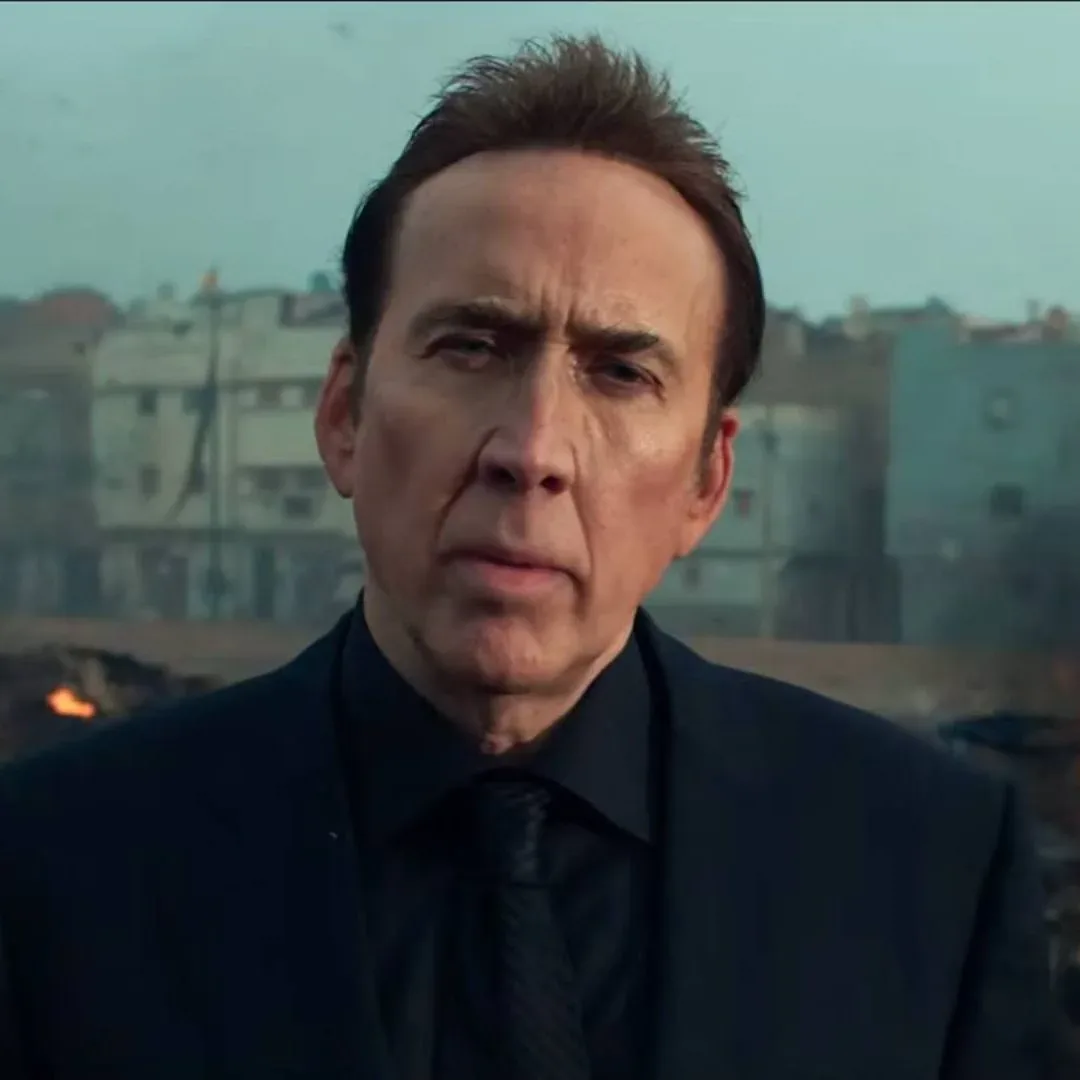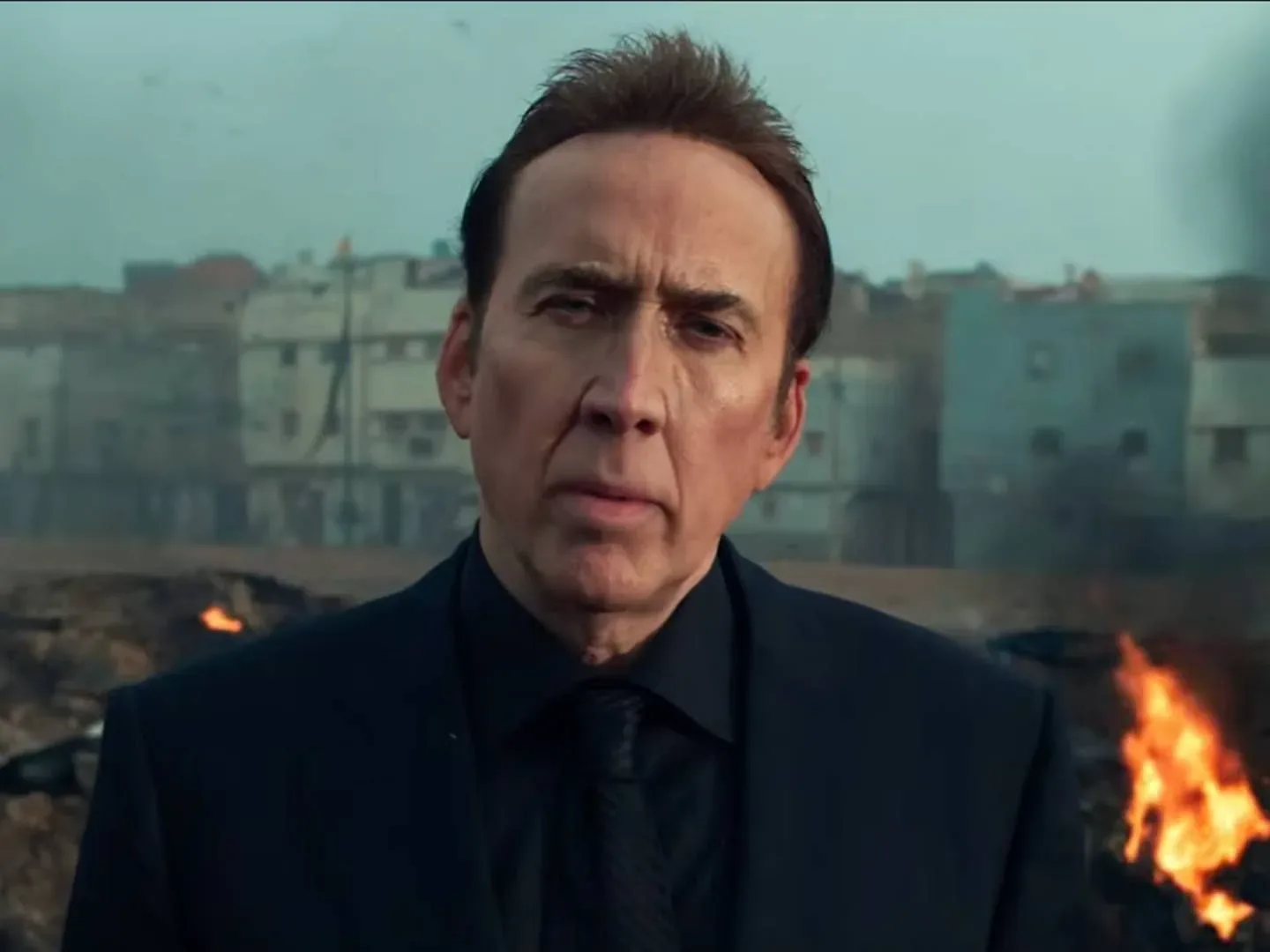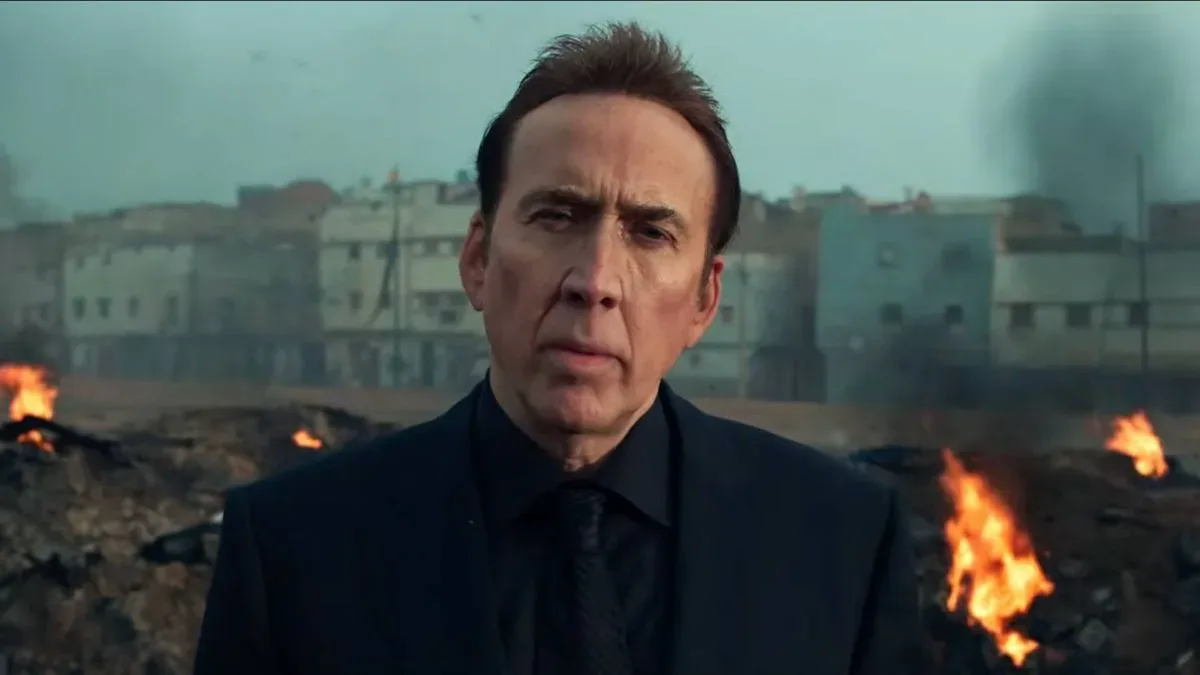
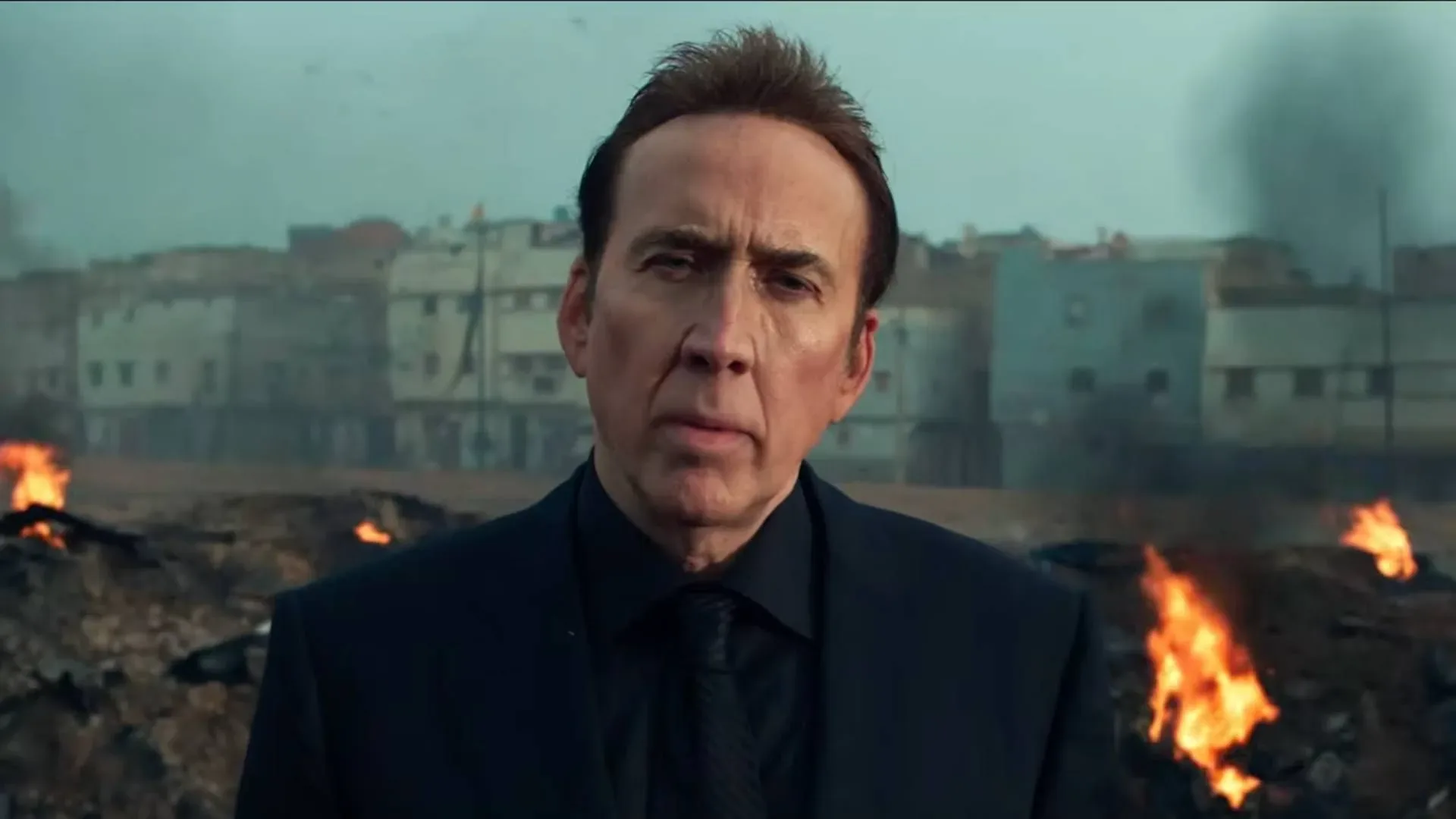
Nicolas Cage is back in the weapons business—on screen, at least. The first trailer for Lords of War introduces the long-awaited follow-up to 2005 crime thriller Lord of War, returning Cage to the role of international arms dealer Yuri Orlov and placing Bill Skarsgård opposite him as Yuri’s son, Orlov.
The setup is immediately more volatile than a straightforward legacy-sequel reunion. Yuri and his son do not appear to be enjoying a peaceful family catch-up: the trailer’s brief footage includes Orlov pursuing his father with a gun. The official story premise adds a larger and darker wrinkle. Orlov does not simply reject Yuri’s history as an arms dealer. Instead, while attempting to correct his father’s wrongs, he forms a mercenary army to fight America’s conflicts in the Middle East.
That contradiction is the clearest hook in the material revealed so far. A character can recognize the damage caused by a system and still decide that power, violence, and private military force are the means to fix it. For a franchise built around an arms dealer whose business depends on global conflict, that is fertile ground for a father-son story in which “doing better” may mean expanding the same destructive machinery under a different justification.
A sequel built around Yuri Orlov’s legacy
Lords of War is a direct sequel to Lord of War, which arrived in 2005. The original was inspired by the real-life history of Russian arms dealer Viktor Bout and followed Yuri through the international weapons trade. Its reception was mixed-to-positive, although it did not become a global box-office success.
That history makes the sequel’s central premise especially pointed. Yuri is not merely a returning protagonist who gets one more adventure; he is the origin point of the new conflict. Orlov’s stated effort to redress his father’s wrongdoing means the film is explicitly concerned with inheritance: not just a surname or a relationship, but the consequences, resources, knowledge, and moral compromises passed from one generation to the next.
The available details suggest that Yuri’s past cannot be isolated from Orlov’s present. The son is described as Yuri’s illegitimate son, a fact that potentially adds personal distance and resentment to their conflict. It also leaves key questions for the film itself: how much Yuri knew about him, what their relationship looked like before the reunion, and whether Orlov’s campaign is driven by reform, revenge, ambition, or some unstable combination of all three.
Skarsgård’s character sharing the Orlov name gives the sequel a deliberately familial frame. Yet the trailer’s gunpoint confrontation indicates that this is not a story about a successor quietly inheriting a business. It looks more like a dispute over what the business means, who controls it, and whether a legacy of war can ever be repurposed without reproducing the harm it caused.
What “mercenary army” signals in the new premise
The phrase mercenary army is important to the premise. A mercenary is a fighter employed for payment rather than someone serving as a member of a nation’s regular armed forces. In popular crime and war thrillers, mercenary forces often represent the point where commercial incentives and military action blur: armed power can be assembled, deployed, or redirected by private interests.
Here, that concept also creates an escalation from Yuri’s original role. An arms dealer profits by moving weapons through networks shaped by conflict. Orlov, as described, is launching an organized fighting force. The distinction matters because the son is not merely operating in the market his father helped embody; he is taking a more direct role in conflict itself.
Whether the film presents Orlov’s rationale as sincere, self-deceiving, calculated, or all of the above remains unknown. The announced premise is careful enough to invite that ambiguity. “Trying to right his father’s wrongs” sounds redemptive, while creating a mercenary army to engage in wars is plainly not a simple path away from violence. That tension could give Lords of War its defining dramatic engine if the final film follows through on it.
It also offers Cage’s Yuri a potentially unusual position. Yuri’s worldview in the first film was bound to the economics and persistence of warfare. A son who transforms the family’s legacy into a paramilitary project could be adversary, reflection, competitor, or all three. The gun chase in the trailer suggests the conflict will be personal before it is philosophical.
Andrew Niccol returns as writer and director
Andrew Niccol returns to direct Lords of War and has again written the screenplay. That continuity is significant for a sequel arriving more than two decades after the first film. Niccol is not only returning to oversee the production; he is also shaping the story that determines how Yuri’s world has changed and why it is worth revisiting now.
In 2023, when the project was announced, Niccol said there was more to explore with the characters and invoked the line, “Only the dead have seen the end of war.” The observation fits the franchise’s foundational subject: the way violence and commerce can become self-perpetuating. It also gives some context to why the sequel’s narrative is framed around a new generation rather than simply putting Yuri back in familiar circumstances.
Niccol’s return does not reveal the finished film’s tone or resolution, but it does provide a direct creative link between the two entries. With Cage again playing Yuri, the sequel has continuity both behind and in front of the camera. Skarsgård’s Orlov, meanwhile, supplies the major new viewpoint through which Yuri’s choices can be confronted.
The cast around Cage and Skarsgård
Laura Harrier, Sylvia Hoeks, and Greg Tarzan Davis are also part of the Lords of War cast. Their character details have not been provided, so their positions in the father-son conflict remain under wraps.
The original film’s cast included Hawke, Jared Leto, Bridget Moynahan, Sammi Rotibi, Ian Holm, and Eamonn Walker. The newly revealed sequel information specifically confirms Cage’s return while setting Skarsgård up as the new figure at the story’s center beside him.
For audiences tracking upcoming screen follow-ups, Lords of War joins a wider slate of projects that are revisiting established cinematic worlds while changing the angle of attack. Another forthcoming sequel discussion, including the evolving approach to Dune Messiah, shows how much attention can rest on the balance between continuity and a new dramatic direction. In this case, the new direction is clearly Orlov—and the dangerous idea that he can correct Yuri’s legacy by wielding its tools more aggressively.
What the first trailer establishes—and what it does not
Trailers are designed to establish conflict rather than settle it, and the first look at Lords of War leaves several substantial questions unanswered. It confirms Yuri and Orlov will clash. It confirms that Orlov’s response to Yuri’s legacy involves a mercenary army. It confirms that the story reaches into America’s Middle East conflicts. Beyond that, the characters’ alliances, motivations, and ultimate aims have not been detailed.
There is likewise no basis yet to assume the film will repeat the first movie’s exact structure, broaden specific returning relationships, or offer a neat moral accounting for Yuri. The most concrete reading is also the simplest: a father whose career was shaped by the trade of weapons now encounters a son who has inherited the consequences of that world and chooses an even more militarized response.
That makes the title’s plural form feel purposeful. Lords of War is not only about Yuri’s continued presence. The announced plot introduces another person capable of exerting influence over war, profit, and force. The trailer’s hostility makes clear that sharing that power is not on the table.
Lords of War is scheduled to open in theaters on January 22, 2027.