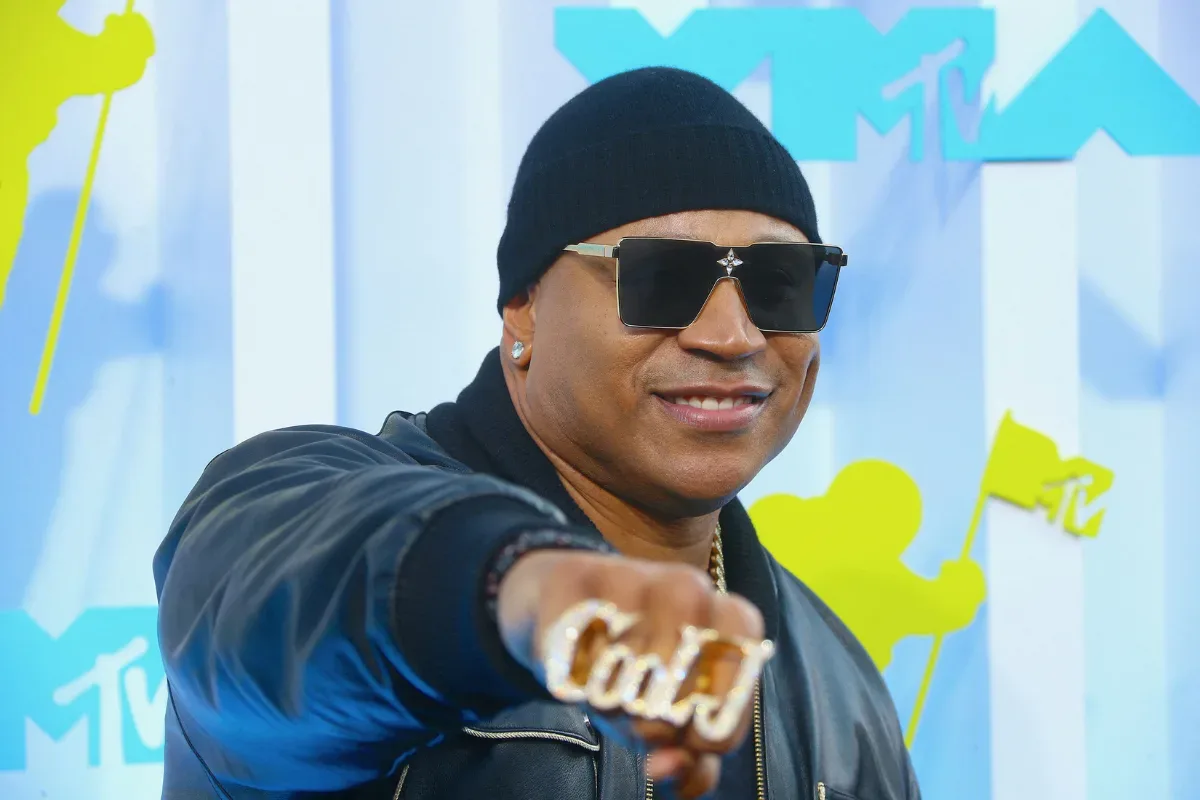
Before LL Cool J was a recording artist, actor, Rock & Roll Hall of Fame inductee or television mainstay, he was James Todd Smith: a young hip-hop fan with an unusually consequential home setup. He has recalled that his grandfather bought him two turntables and a mixer after his grandmother argued the equipment would keep him at home and give his musical interest a constructive outlet.
It is a modest family story on its face—three pieces of audio gear, a teenager, and relatives trying to balance encouragement with rules. But its importance comes from what the gear represented. For a young artist drawn to hip-hop, turntables and a mixer were not simply a way to listen to records. They created a workspace for repetition, timing, record control and performance ideas. LL Cool J says the setup let him lean further into the culture he already loved.
His memories also make clear that the purchase was meaningful in his household. His grandfather, who was from Barbados, was careful with money, LL Cool J said. Yet he was open-minded about his grandson’s passion and, after his grandmother made the case, agreed to invest in the equipment. That combination—financial caution alongside a willingness to support an artistic interest—gave the eventual rapper an early foundation that could not be reduced to a simple gift.
Two turntables and a mixer as a creative workspace
The phrase “two turntables and a mixer” has become a familiar shorthand in hip-hop, but each component has a practical role. A turntable plays a vinyl record. With two of them, a performer can move between records, repeat a section, or prepare the next selection while another is playing. The mixer is the central control unit that blends the audio from both decks and allows the performer to choose, combine or sharply switch between them.
For someone learning the craft, the arrangement offers a direct, physical relationship with sound. It makes timing visible and tactile: where a beat begins, when a vocal line lands, how a transition changes the energy of a song. LL Cool J described those decks as the place where he practiced, developed his voice and learned to command a record.
That matters because an early creative tool is rarely valuable only for the finished work it might produce. It establishes a routine. The artist can experiment privately, make mistakes without an audience and return to the same difficult technique until it becomes natural. LL Cool J’s story is therefore not just one of being handed equipment; it is one of having space to use it seriously.
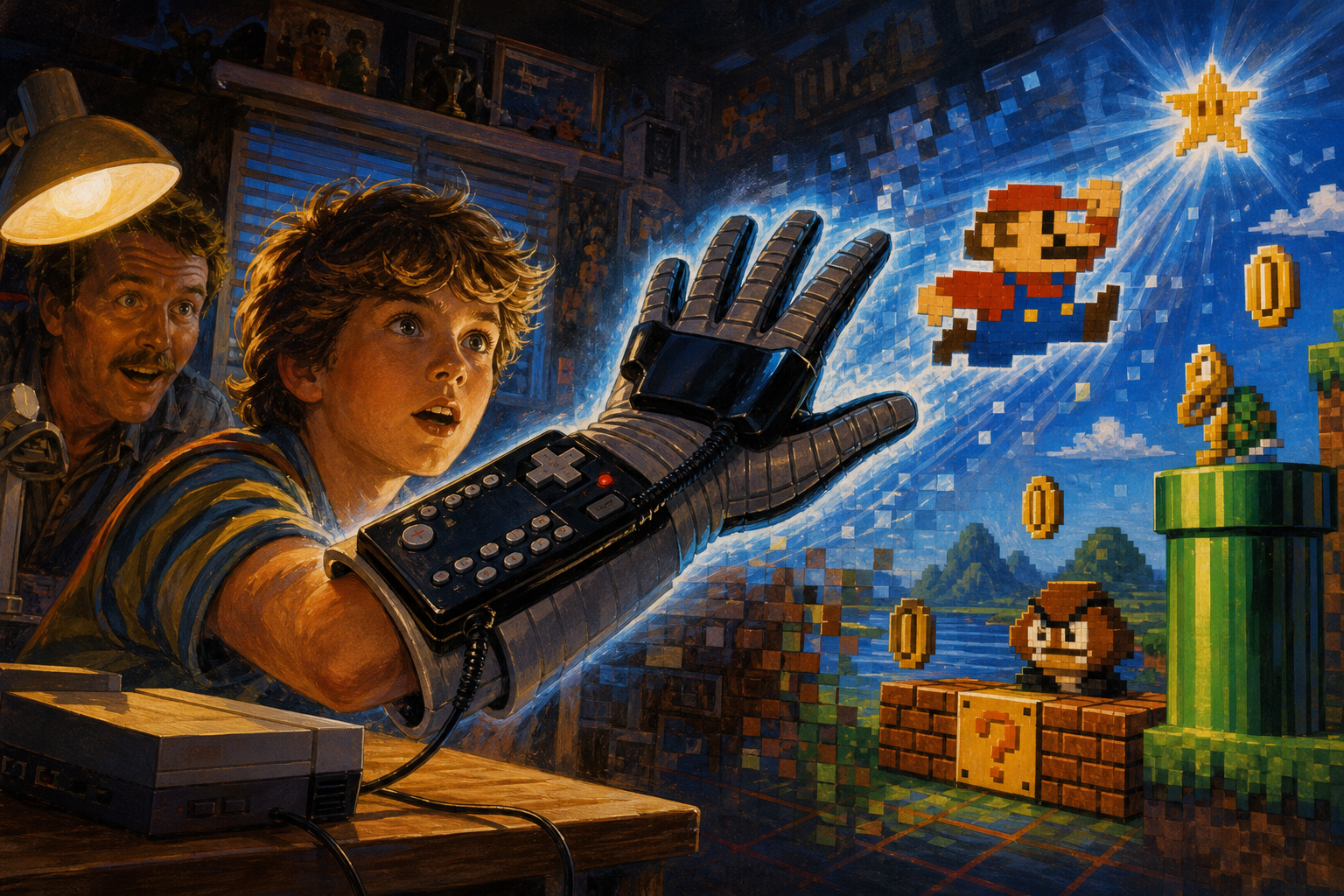
The broader appeal of unusual hardware can outlast the technology itself. Game history has its own famous examples of ambitious input devices, including the Power Glove, an unusual NES controller. The comparison is not about claiming equivalent cultural roles. Rather, it underlines a shared truth: a device can become memorable when it changes how people imagine interacting with a medium. LL Cool J’s turntables were useful because of the practice they enabled, not because the objects alone could create a career.
A grandfather’s musical encouragement
LL Cool J’s grandfather did more than approve the purchase. He was a jazz player, and LL Cool J has said that he recorded his grandson’s voice on reel-to-reel tape in the basement. Reel-to-reel recording uses magnetic tape wound from one reel to another. In this context, its significance is personal rather than technical: it gave a young performer a chance to hear himself recorded and made an older relative an active participant in that early process.
Related coverage includes LL Cool J on the Turntables, Tough Love and the Family Roots of ‘Radio’.
That early encouragement took on greater emotional weight after his grandfather died before LL Cool J became a professional artist. During his final years in a VA hospital, LL Cool J recalled, his grandfather would hear music on the radio and say it was Todd—the family name he used for his grandson—on the air. It was an expression of confidence before the prediction could be proven.
LL Cool J later named his 1985 debut album Radio in tribute to him. The title consequently carries more than its immediate connection to broadcast music or rap’s public breakthrough. It honors the person who imagined hearing LL Cool J’s future success before it existed.
From “I Need a Beat” to a defining debut
Radio followed LL Cool J’s 1984 single “I Need a Beat,” released when he was 16. Produced by Rick Rubin, the single helped establish Def Jam. Radio became the label’s first full-length album and included “Rock the Bells” and “I Can’t Live Without My Radio.”
The timing is central to why the family equipment story remains compelling. A home practice environment is not the same thing as a recording contract, a producer or a finished album. Still, it can be the bridge between interest and readiness. When an opening arrives, the years spent sharpening an approach can determine whether an artist has a distinct voice prepared to meet it.
The record’s title also preserves a family connection inside a major professional milestone. That is a quieter legacy than a songwriting credit or a visible feature, but it is enduring. Every later mention of Radio carries the memory of the grandfather who believed he could already hear Todd on the airwaves.
Grandmotherly support, grandmotherly limits
The same grandmother who helped get the turntables and mixer into the home also provided an important counterweight. LL Cool J recalled that, after he had made his first song, she gave him a choice: attend school or leave her house. Her rule was not an argument against his talent. It was a line about responsibility and direction.
Then came the memorable comic addendum: she told him to keep his shirt on and, above all, not to pierce his nipples. The remark drew laughter when he recounted it, but it also gives the story its human texture. Families can support a dream while still maintaining boundaries, offering blunt advice and objecting to some parts of an emerging public image.
LL Cool J said this was the time he chose to go after his dream despite her instruction. He framed that decision as an exception to an otherwise attentive relationship with family guidance. His own formulation for artistic survival was that a person needs “rhino skin and a baby’s heart”—a compact way of describing resilience without losing sensitivity.
The phrase fits the career arc described here. “Rhino skin” suggests the ability to withstand criticism, rejection and the changing tastes that face any long-running artist. The “baby’s heart” portion points in the opposite direction: protecting the emotional openness that makes creative work feel alive rather than merely calculated. LL Cool J’s account does not present those qualities as automatic. It presents them as necessary tensions to manage.
Family influence across an evolving catalog
LL Cool J’s work moved beyond hard-edged battle records to the more vulnerable “I Need Love.” His grandmother also later inspired “Mama Said Knock You Out,” encouraging him to answer critics who believed his run was over. The title’s familial language is therefore not incidental; it reflects a specific source of motivation when his career faced doubt.
He won a Grammy for that record in 1992 and won another in 1997 for “Hey Lover.” His induction into the Rock & Roll Hall of Fame followed in 2021. In 2024, he returned with The FORCE, extending a music career whose early roots he places squarely in his grandparents’ home.
There is no single formula embedded in that timeline. A supportive relative, access to equipment and determination do not guarantee a particular outcome. But the story does show why support can matter most when it is specific. Two turntables and a mixer met the needs of a young person already committed to a craft. Basement recordings offered attention and feedback. Firm rules supplied another kind of structure. Together, those elements formed an environment in which ambition was neither ignored nor treated as a free pass from every obligation.
From rap landmark to television continuity
LL Cool J’s career has also extended across film and television, with roles in Krush Groove, In the House, Any Given Sunday, Last Holiday and S.W.A.T.. His largest television role has been Sam Hanna, the agent he played for 14 seasons on NCIS: Los Angeles.
That character is now set to continue in NCIS: New York, a CBS spinoff that pairs LL Cool J with Scott Caan’s Nick Schaeffer. CBS is scheduled to premiere the series on October 6 at 9 p.m. ET/PT, and LL Cool J will also serve as an executive producer.
The producer credit signals a role beyond acting in the series, though the supplied information does not specify his day-to-day responsibilities. What is clear is the continuity of a career that has repeatedly crossed formats: from records shaped by hands-on practice, to albums carrying family tributes, to screen work that has made Sam Hanna a long-running character.
For LL Cool J, the two turntables and mixer remain the beginning point rather than a nostalgic footnote. They connect a young fan’s private learning space to Radio, to the determination behind “Mama Said Knock You Out,” and to an entertainment career still adding new chapters. His grandparents’ lesson was not simply to dream big. It was to cultivate the dream, give it room to work, and remember that encouragement can arrive with a house rule—or an unforgettable warning—attached.