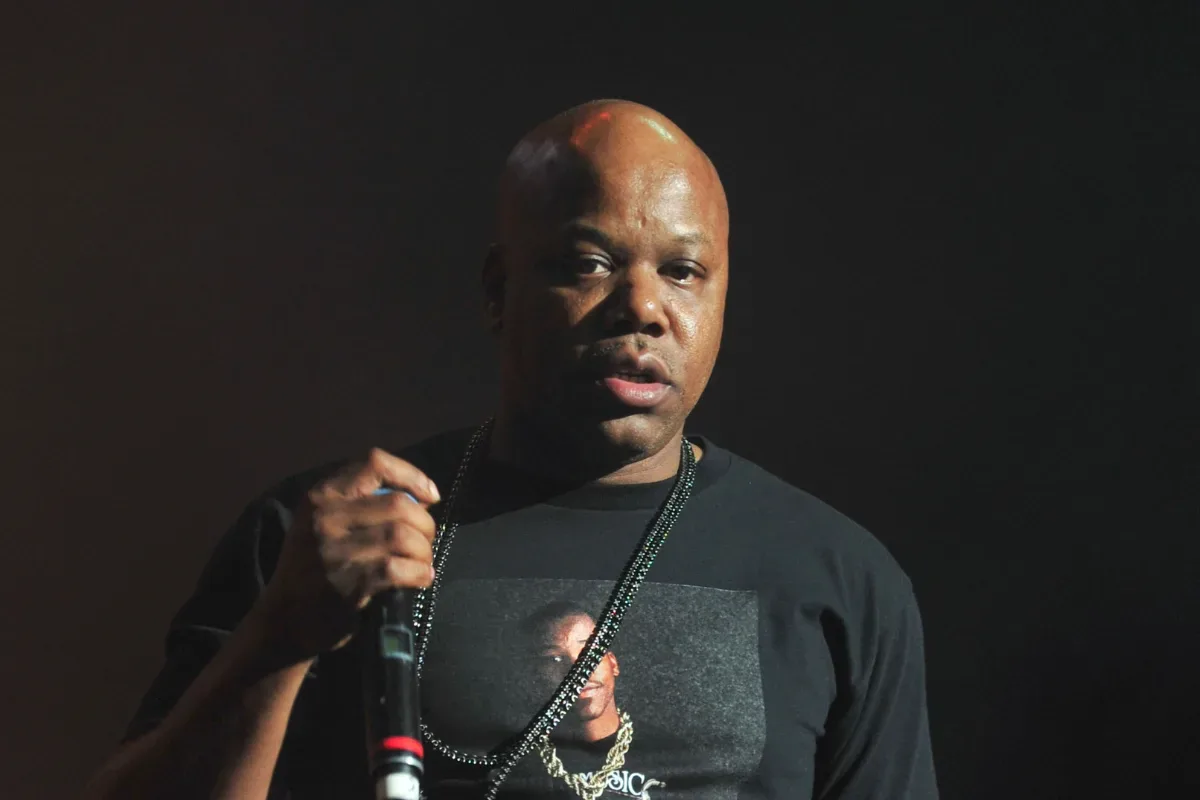
Too $hort has apologized after facing criticism for saying he would attend a welcome-home party for Sean “Diddy” Combs once Combs leaves federal prison. The Oakland rapper says that, after hearing from people close to him and looking further into the case, he understood that his initial remarks had failed to account for the broader allegations of abuse and their impact.
His updated comments do not erase the friendship he has described with Combs, but they do substantially change the line he is drawing in public. Too $hort said he does not condone emotional, physical, or sexual abuse, and apologized to people hurt by his earlier words. It is a notable revision because the original reaction centered on a distinction he had tried to make: he said he opposed the assault of Cassie Ventura while still suggesting he would socialize with Combs after his release.
That distinction proved impossible to make casually. Public comments about a high-profile criminal case, especially one involving visible footage of violence and testimony concerning coercion, are not heard in a vacuum. Too $hort’s response acknowledges that point: he said he had known about the video showing Combs attacking Ventura, but had not understood the number of women who had alleged abuse or how those allegations affected people.
An apology that focuses on being better informed
Too $hort said calls, texts, and other messages from people in his life prompted him to reconsider. He characterized his earlier language as insensitive, then explained that he had read more and listened more carefully after the backlash.
“I do not condone abuse in any kind of way—not emotional, not physical, not sexual—and I don’t support anybody that does it,” he said, adding that he was sorry to those hurt by what he said.
He also framed the shift as personal, mentioning his daughter, her mother, and other women in his family. In doing so, he stressed that abuse is not confined to one community and said his apology extended beyond women because men can be victims too.
That is the most material change in his position. The first set of comments could be understood as trying to preserve a personal bond while separating it from behavior he said he did not endorse. The apology recognizes that describing a future celebration for someone associated with such serious allegations can communicate something larger than a narrow account of one person’s own experiences at celebrity events.
There is no need to assume that everyone who knew Combs had the same knowledge of his conduct, or that every event connected to him had the same character. But a public figure’s personal experience does not settle what other people may have experienced. Too $hort’s revised remarks get closer to that distinction: not seeing abuse firsthand is different from treating its alleged victims, evidence, and consequences as secondary.
What Too $hort says he meant by “party”
Too $hort also tried to clarify the setting he meant. He said he was referring to large social gatherings for friends that he had attended in the past, rather than the sexual encounters described during Combs’ federal trial. He said he had been to dozens of Combs’ parties and had never personally seen nudity or sexual activity.
He further rejected the idea that every party hosted by Combs was a sex party. That clarification is important as a statement of his own experience, but it does not answer the central concern raised by the reaction to his original remarks. The criticism was not simply about a label applied to every event. It was about the prospect of publicly celebrating Combs’ return from prison in light of the case, the admitted assault on Ventura, and the testimony heard in court.
It is also useful to keep several terms separate. A personal account describes what a person says they saw or did not see. It can be relevant to that person’s experience, but it cannot by itself disprove conduct alleged or described elsewhere. A criminal conviction is a legal finding on specific charges after a trial. It does not automatically establish every allegation that arose during proceedings, and an acquittal on one charge does not mean every allegation outside that charge was determined to be false.
Those distinctions matter here because the legal record cited in the case is narrower than the broader public conversation, while the public conversation includes more than only the counts that resulted in conviction.
The legal context around Sean Combs
Combs, also known as Diddy and Puff Daddy, is serving a 50-month sentence at FCI Fort Dix following his July 2025 conviction on two transportation-for-prostitution counts. Jurors acquitted him of racketeering conspiracy and sex-trafficking charges, the most serious counts brought by the government.
During the trial, testimony described violence, coercion, and paid sexual encounters involving former girlfriends. The jury’s decisions should be described precisely: Combs was convicted on two transportation-for-prostitution counts and acquitted on the racketeering-conspiracy and sex-trafficking counts. The mixed verdict does not turn a complicated and painful set of allegations into a simple scoreboard, nor does it justify compressing separate legal questions into a single claim.
Video from a hotel showing Combs kicking, dragging, and striking Ventura became a major piece of evidence and public focus. Combs later issued a public apology for the assault. Too $hort had already said he did not condone that violence; his new statement accepts that trying to isolate it from the rest of the allegations and discussion caused harm.
Federal prison records list January 21, 2028, as Combs’ projected release date, although projected release dates can change as sentence calculations are updated. He is awaiting a decision in his federal criminal appeal.
Combs is also reportedly back in the Special Housing Unit at Fort Dix while officials investigate claims regarding his conduct and treatment in prison. Those reports include allegations of contraband phones, alcohol, massages, special meals, and other inmates performing chores. Those claims remain allegations, and Combs’ representatives have disputed them, maintaining that he is serving his sentence under prison rules.
Why the clarification still matters
Celebrity friendships often create a temptation to speak in shorthand: a person can insist they know a friend’s good side, recount ordinary shared experiences, and separate that relationship from allegations they did not personally witness. But when abuse is part of the subject, shorthand can land as minimization. The people harmed by violence or coercion are not debating props, guest lists, or whether every gathering was alike. They are responding to what it signals when well-known peers appear ready to celebrate a person whose conduct has been scrutinized in court and in public.
Too $hort’s apology does not claim he has mastered every detail of the case. Instead, he says he was insufficiently informed when he spoke and that he has learned from the response. That is a more constructive position than arguing that his own uneventful experiences at parties should end the conversation.
He still referred to Combs as his “brother” and expressed hope that prison changes him. That pairing—maintaining personal concern while explicitly condemning abuse—is likely to remain uncomfortable for some observers. It nevertheless makes the boundary clearer than it was in the initial remarks: friendship is not a defense of abusive conduct, and familiarity with someone does not obligate the public to accept a celebratory framing.
There is a wider communications lesson in the episode, particularly for artists and other public figures speaking about serious allegations involving people they know. Before responding, it helps to identify what is known, what has been alleged, what has been adjudicated, and what a statement may imply to survivors. “I never saw it” may be truthful as a personal account, but it is not the same as “it never happened.” Likewise, a legal outcome on particular counts needs to be reported accurately without using it to erase conduct acknowledged in a public apology or other testimony that was part of the case.
A more careful public line
Too $hort ultimately apologized to anyone—male or female—offended or hurt by his comments. The practical value of that statement will be judged less by the intensity of its wording than by whether the revised understanding holds when he discusses Combs going forward.
For now, the essential point is straightforward: Too $hort says he regrets presenting himself as willing to attend a future Combs party without appreciating the wider allegations and impact of abuse. He has clarified that the events he attended were, in his experience, conventional celebrity gatherings, while acknowledging that this experience did not justify the way he spoke about the situation.
The story also arrives in a music world where public events can have consequences beyond entertainment headlines. In a different example of music being directed toward community support, Jooselord’s All Onyx World Festival has focused on helping families facing childhood illness. The contrast is not a comparison of circumstances; it is a reminder that artists’ platforms and public language can shape how audiences understand responsibility.