Warning: This article contains major spoilers for Lanterns episode 6.
Lanterns has now put Carol Ferris on screen, and it does so in a scene that is both meaningful and startlingly brief. Her arrival at Hal Jordan’s sparsely attended funeral confirms that she belongs to this version of the Green Lantern world. Yet the episode gives viewers only a fragment of what that connection means: Carol was invited by Sheriff Kerry Kane because she and Hal “had history,” and Carol quickly makes clear that she understands the emotional distance between Hal and John Stewart.
For an audience coming to the show fresh, that may simply register as a quiet encounter between a grieving acquaintance and a man trying to understand a dead former partner. For readers and viewers with any familiarity with Green Lantern, however, Carol’s appearance carries a much larger charge. She is not a random figure from Hal’s past. Across decades of DC stories, Carol Ferris has been one of the central characters in Hal Jordan’s life and one of the mythology’s most complicated figures in her own right.
That makes episode 6’s choice an intriguing, if frustrating, one. Lanterns has consistently preferred a crime-story framework over a faithful page-by-page recreation of comic-book continuity. Its willingness to reshape established material has helped distinguish it. But sidelining Carol so thoroughly also means passing up one of the clearest ways to illuminate who Hal was before the present-day murder mystery turned him into Rushville’s most despised absent presence.
What Carol Ferris’ one scene tells us
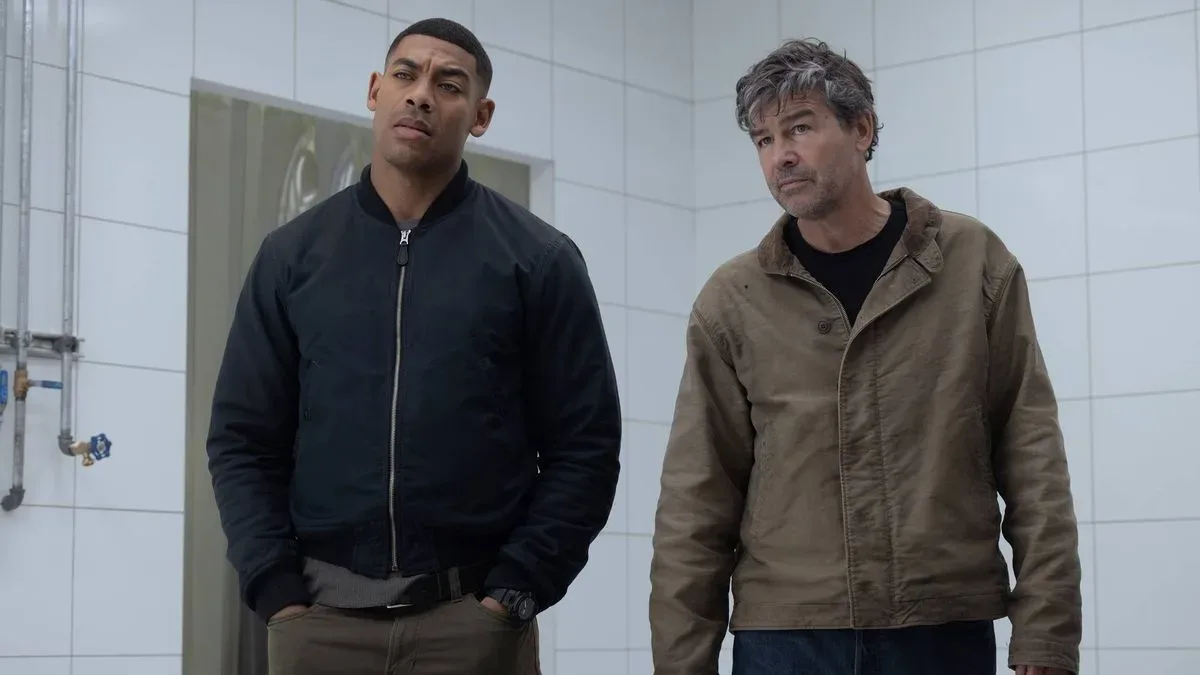
Episode 6 is focused primarily on the present-day questions surrounding Hal’s death. John Stewart, played by Aaron Pierre, learns just how deeply people in Rushville resent the former Green Lantern because of events from a decade earlier. Kerry Kane, played by Kelly Macdonald, explains why she summoned John in the first place: she wanted someone else nearby who cared that Hal was gone.
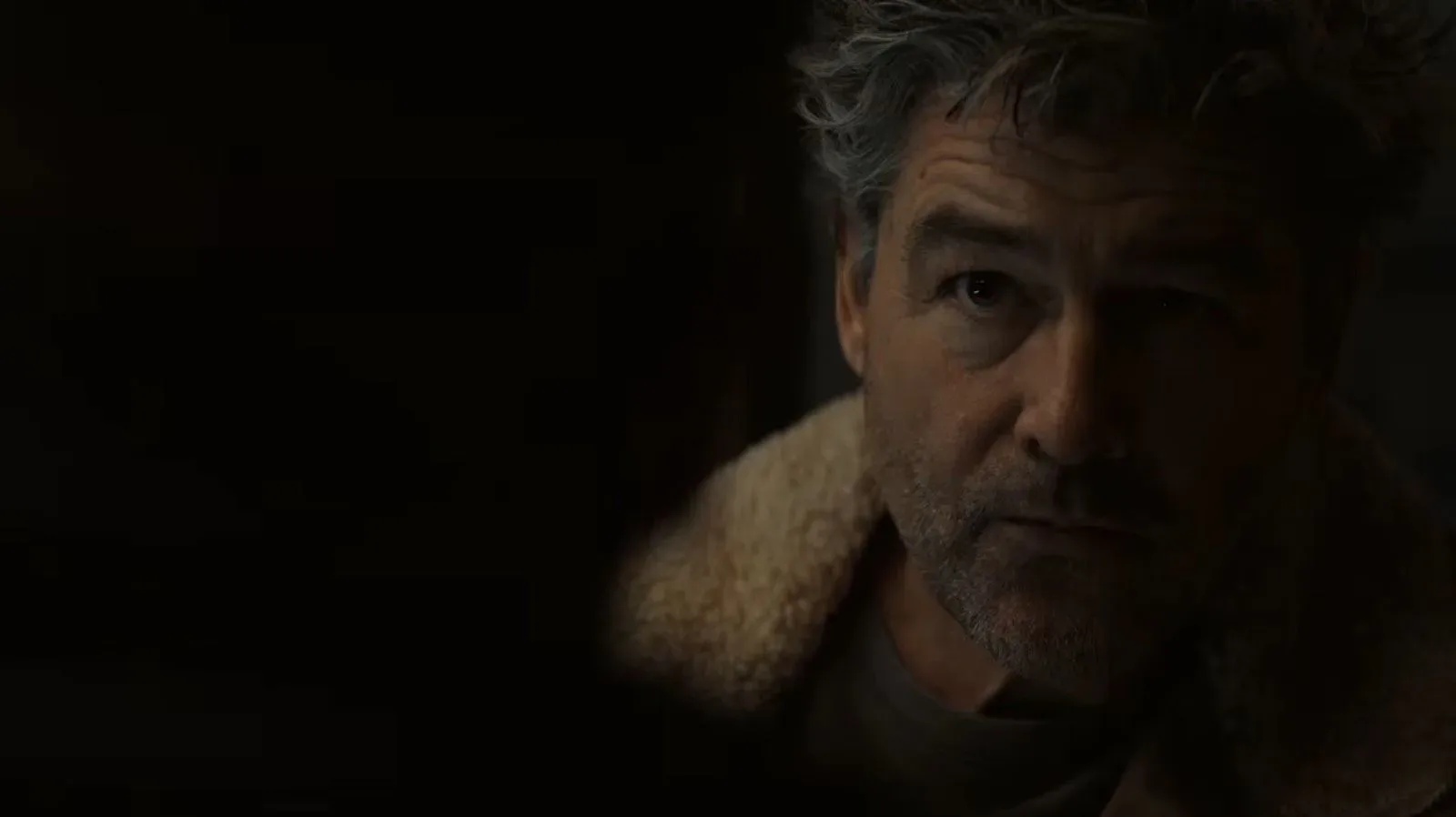
The small funeral reinforces the point. Hal may have been enormously important in a cosmic superhero context, but the local picture is one of isolation. Then Carol arrives. Kerry invited her because of her past with Hal, making Carol the one person outside the immediate investigation whose presence suggests a relationship that endured, or at least mattered enough to acknowledge at the end.
Her exchange with John is understated but revealing. Carol says she bets Hal liked John, and then adds that Hal probably never told him. The line does not provide a detailed history, but it establishes Carol as someone who can read Hal’s silences. She seems to know the difference between his feelings and his ability to express them. In a series where the audience is piecing together the truth of Hal Jordan from hostile testimony, partial memories and the consequences of his choices, that kind of knowledge could be invaluable.
Instead, the scene ends almost as soon as it begins. The deliberate restraint may be part of the intended effect: Carol’s very brevity can make Hal’s isolation feel more severe. He apparently pushed people away, and the show has not presented her as a stable, active part of his life at the time of his death. Still, the absence creates a notable imbalance. The series introduces a person uniquely positioned to complicate the public story of Hal, then offers almost no opportunity for her to do so.
Why Carol matters beyond being Hal Jordan’s former flame
Carol’s importance starts at the beginning. She debuted in Showcase #22 in 1959, the same comic that introduced Hal Jordan as Green Lantern. In the foundational setup, she hires Hal as a test pilot at Ferris Aircraft. That professional link is as crucial as the romantic one: it gives Carol a place in his life that is built on competence, work and shared history rather than merely superhero attraction.
Whether Lanterns ultimately uses that exact Ferris Aircraft background remains unconfirmed. The show has already demonstrated that it is willing to revise familiar elements, including John Stewart’s origins. But Carol’s established history explains why her introduction lands differently from a standard ex-partner cameo. In most major versions of the Green Lantern mythos, she is intertwined with the very conditions that made Hal Jordan who he became.
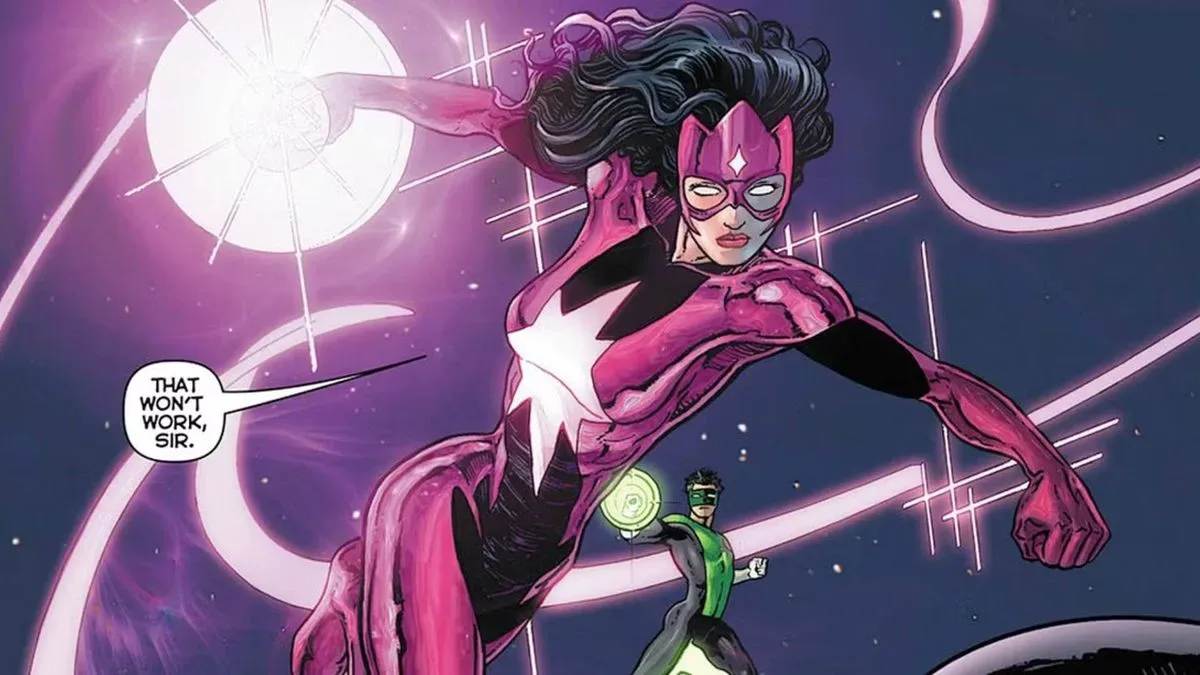
She has also endured because she is more than a conventional romantic lead. In comic continuity, Carol becomes Star Sapphire, a supervillain identity with abilities comparable to a Green Lantern’s. The name matters because it represents the character’s central tension: Carol is frequently tied to love, but not a simple or passive version of it. Her stories can place her between affection and anger, partnership and rivalry, heroism and villainy.
That complexity has made Carol durable across adaptations. She has appeared in animated Green Lantern-related stories, including the Justice League cartoon and the short-lived Green Lantern animated series. She was also part of the 2011 live-action Green Lantern film, where Blake Lively played her. A character reportedly based on Ferris, called Carrie Farris, also appeared briefly in Man of Steel and Batman v Superman: Dawn of Justice.
Her comic-book role continues to extend beyond Hal as well. Carol has recently been a member of the Justice League in DC’s All In relaunch. That is useful context for what the series leaves on the table. A Carol Ferris story does not need to revolve around repairing, rekindling or explaining a romance with Hal Jordan. She can function as an aerospace figure, a powerful rival, an uneasy ally or an independent superhero presence. The episode’s decision to define her chiefly through “history” with Hal is understandable as an introduction, but it is a very narrow doorway into a character with a much wider range.
A mystery series has reasons to hold cards back
It would be a mistake to judge Lanterns solely by whether it follows comic-book expectations. The series was framed as a True Detective-style story, meaning its defining engine is investigation: clues, buried events, unreliable impressions and the slow exposure of a community’s secrets. In that structure, a familiar name can work as texture rather than as a promise of immediate prominence.
The show’s approach to John is evidence of that. It has already made a bold adjustment to his origin material, prioritizing this series’ particular mystery and character drama over a more straightforward adaptation. That kind of adaptation is not automatically a betrayal of the comics. Long-running superhero lore provides a large toolbox, not a set of immutable scene directions. Sometimes a new version needs to remove, delay or reframe a famous character in order to make room for a different protagonist.
And John is the protagonist who needs that room. The episode’s larger purpose is not to revisit the conventional Hal-and-Carol dynamic; it is to put John in contact with the wreckage of Hal’s life and ask what it means for a new Green Lantern to inherit that legacy. Carol’s observation about Hal and John serves that purpose efficiently. It tells John something important about the man he is investigating without turning the episode away from John’s journey.
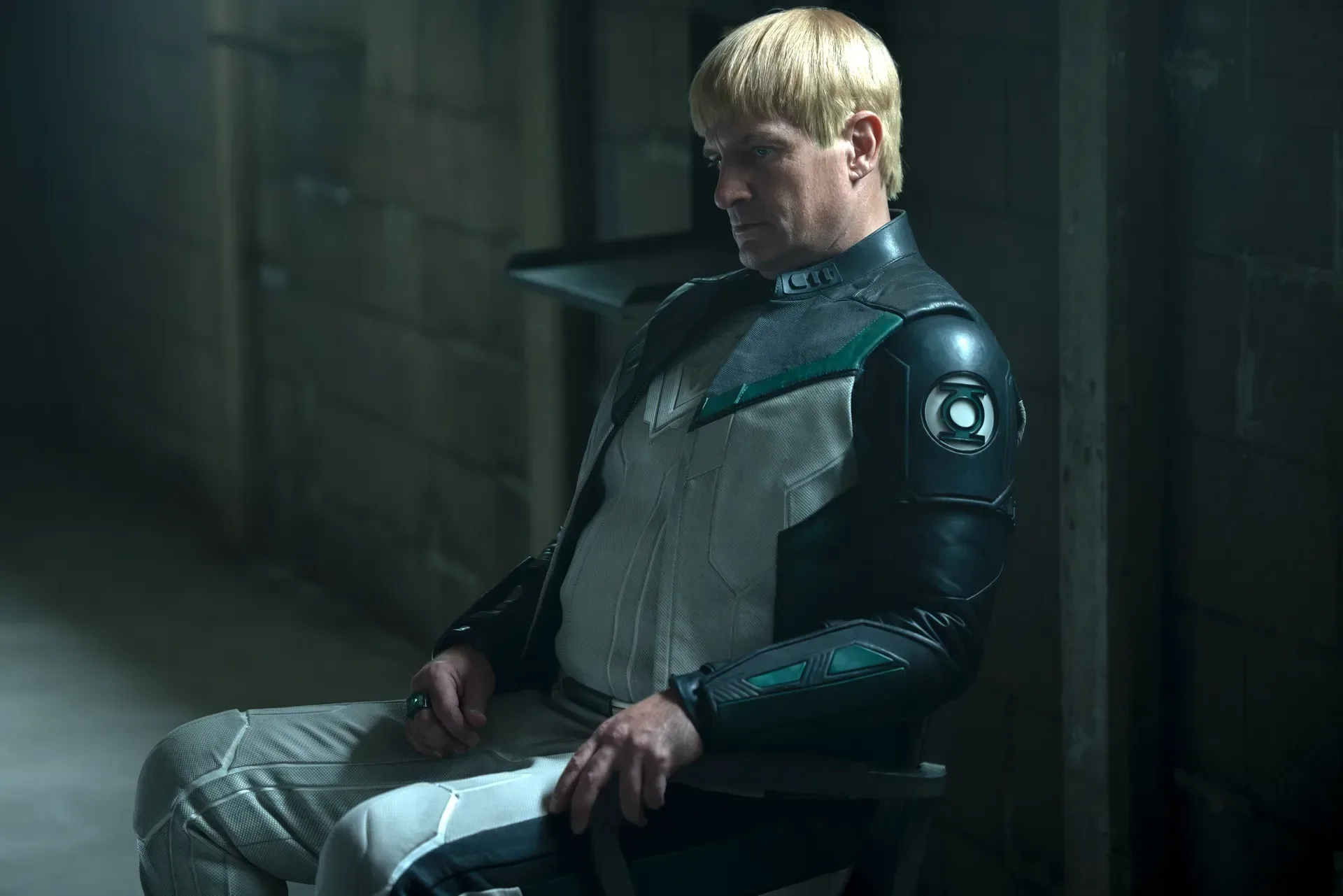
Guy Gardner’s introduction shows the other side of the equation. Nathan Fillion returns to the role after appearing in Superman, bringing an already recognizable Lantern personality into this more grounded setting. As explored in the episode 6 look at Guy Gardner’s new problem, his ring does not spare him from the show’s central human stakes. The series is clearly interested in using established Lantern figures selectively, adapting them to its own mood rather than arranging a roll call of the best-known names.
Why the limited role still feels like a missed opportunity
The issue is not that Carol needed to dominate episode 6 or become Hal’s definitive love interest in this continuity. It is that the show spends time developing the potential romance between Hal and Kerry while holding Carol almost entirely outside the story. Kerry has a direct role in the present investigation, so the attention is not unjustified. But Carol’s long history with Hal potentially gives her a distinct perspective that Kerry cannot supply.
Carol could have helped clarify whether Rushville’s version of Hal is incomplete, accurate or both. She could know the person behind the damage without excusing the damage. She could be angry at him, grieve him, distrust John, or offer a sharply different account of the man who apparently became impossible for the town to mourn. Any of those possibilities would deepen the investigation while preserving the show’s focus on John.
There is also an emotional irony in reducing Carol to a fleeting funeral attendee. In much of Green Lantern lore, she is among the people least likely to be treated as peripheral to Hal’s life. Her role has traditionally been more comparable to a co-lead of his corner of DC than a nostalgic callback. That does not oblige the series to reproduce old patterns, but it does make the choice feel intentionally provocative.
The show may yet have a reason for the restraint. Carol’s scene establishes that she exists and that she knows more than she says. A short appearance could be groundwork for a later return, whether within this season or elsewhere in DC’s expanding screen continuity. Nothing in episode 6 proves that her story has ended.
At the same time, the season’s apparent direction gives that possibility real limits. Hal’s journey looks set to conclude within the season, which makes it harder to see where a substantial Carol-and-Hal thread would fit if it has not begun already. A future Carol appearance could absolutely explore her independently, particularly given the character’s comic-book history as Star Sapphire and a Justice League member. It simply may not be able to recover the specific dramatic value of having her participate in the central unravelling of Hal Jordan.
Carol’s arrival changes the question, even if it does not answer it
For now, episode 6 gives Carol Ferris the smallest possible footprint while making it impossible to mistake her significance. She attends when almost no one else does. She recognizes an emotional truth about Hal that John has not fully seen. And she exits before the show has to explain any of it.
That is effective as a tease, but it is also a gamble. Lanterns has succeeded by breaking from assumptions, and its standing as HBO Max’s third most successful show, behind House of the Dragon and The Last of Us, suggests audiences have responded to its unconventional approach. Yet adaptation is not only about surprise. It is also about identifying which pieces of a mythology contain dramatic power worth carrying forward.
Carol Ferris is one of those pieces. Her value is not simply that she is a famous name or that she has a romantic connection to Hal. She represents the possibility of a person who knew him long before his final reputation calcified, and who can stand as a compelling figure even when he is gone. Episode 6 has opened that door. Whether Lanterns walks through it remains the more interesting mystery.