Spoilers for Lanterns Season 1, Episode 6 follow.
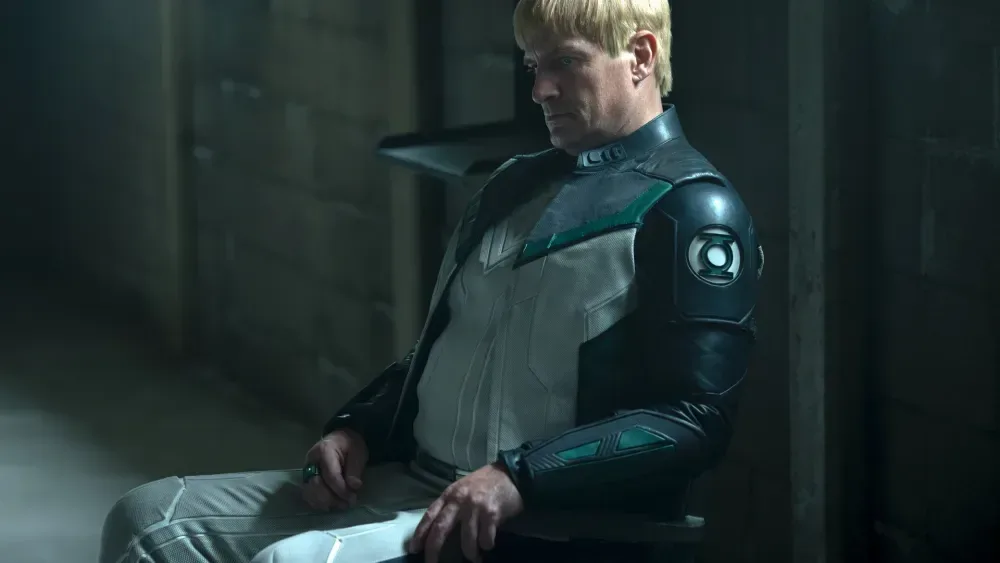
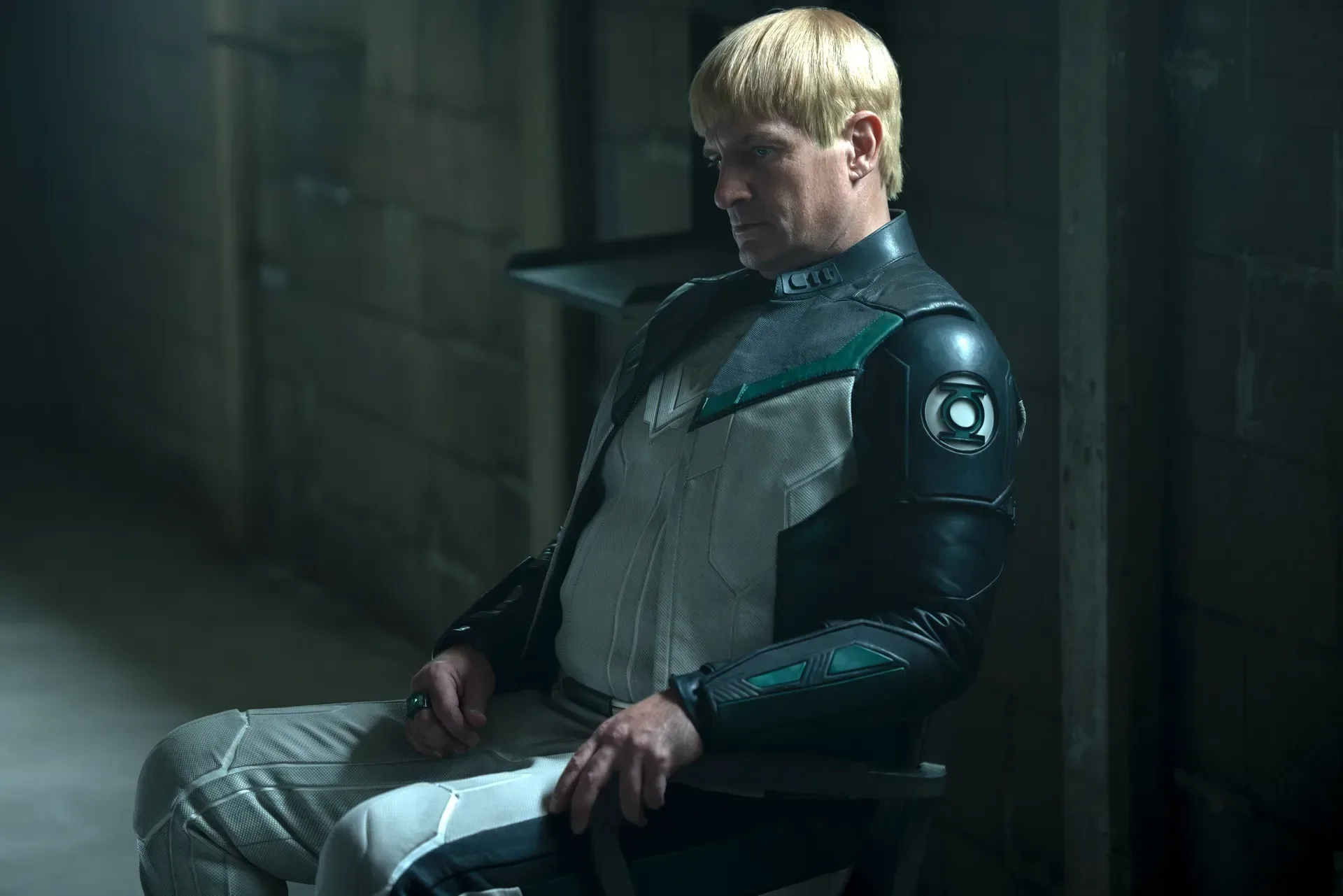
Nathan Fillion’s Guy Gardner has spent most of Lanterns conspicuously absent, which is exactly the sort of circumstance the character would hate. Episode 6 corrects that absence decisively: Guy arrives as the new Green Lantern after John Stewart, played by Aaron Pierre, leaves the ring behind. It is a major shift in the series’ 2026 storyline, but it is not presented as a clean victory lap for the loudest person in the room.
Guy’s entrance puts the Green Lantern identity in the hands of a man who sees the job as more than an obligation. For Hal Jordan and John, the mantle has carried weight, duty and consequences. For Guy, Fillion explains, it is inseparable from his ego and sense of self. That distinction supplies the episode’s central tension. Guy has the ring, the title and the attention he wants—but he gets pulled into John’s crisis because he owes John something he cannot comfortably dismiss.
The result is a debut that uses the character’s familiar swagger without making him merely a comic disruption. Guy Gardner’s bowl haircut, corporate-ready visibility and argumentative energy remain intact. Yet Episode 6 gives those traits a dramatic function: they are armor for a person who is determined to make being Green Lantern prove his importance.
What changes in Episode 6
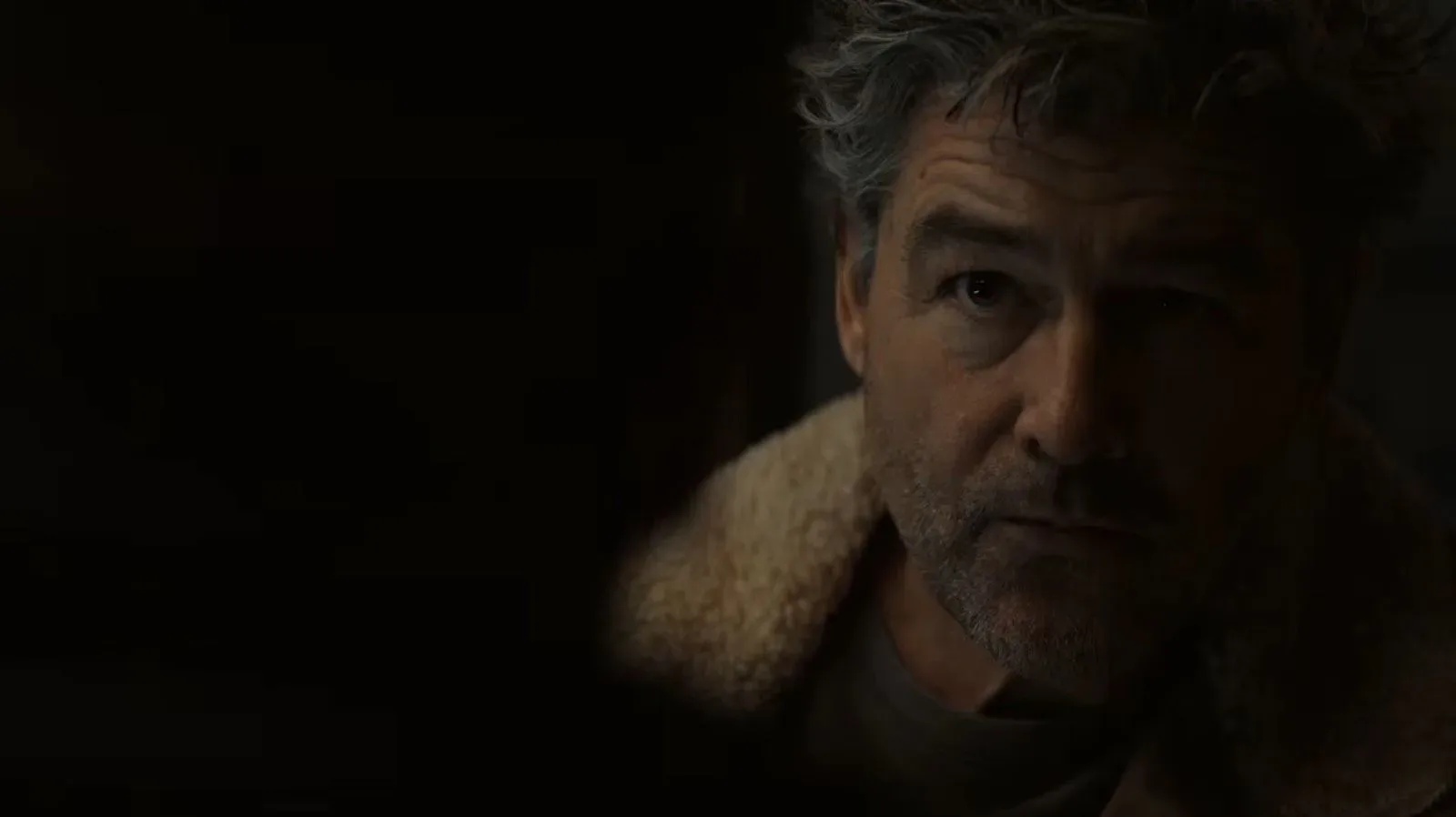
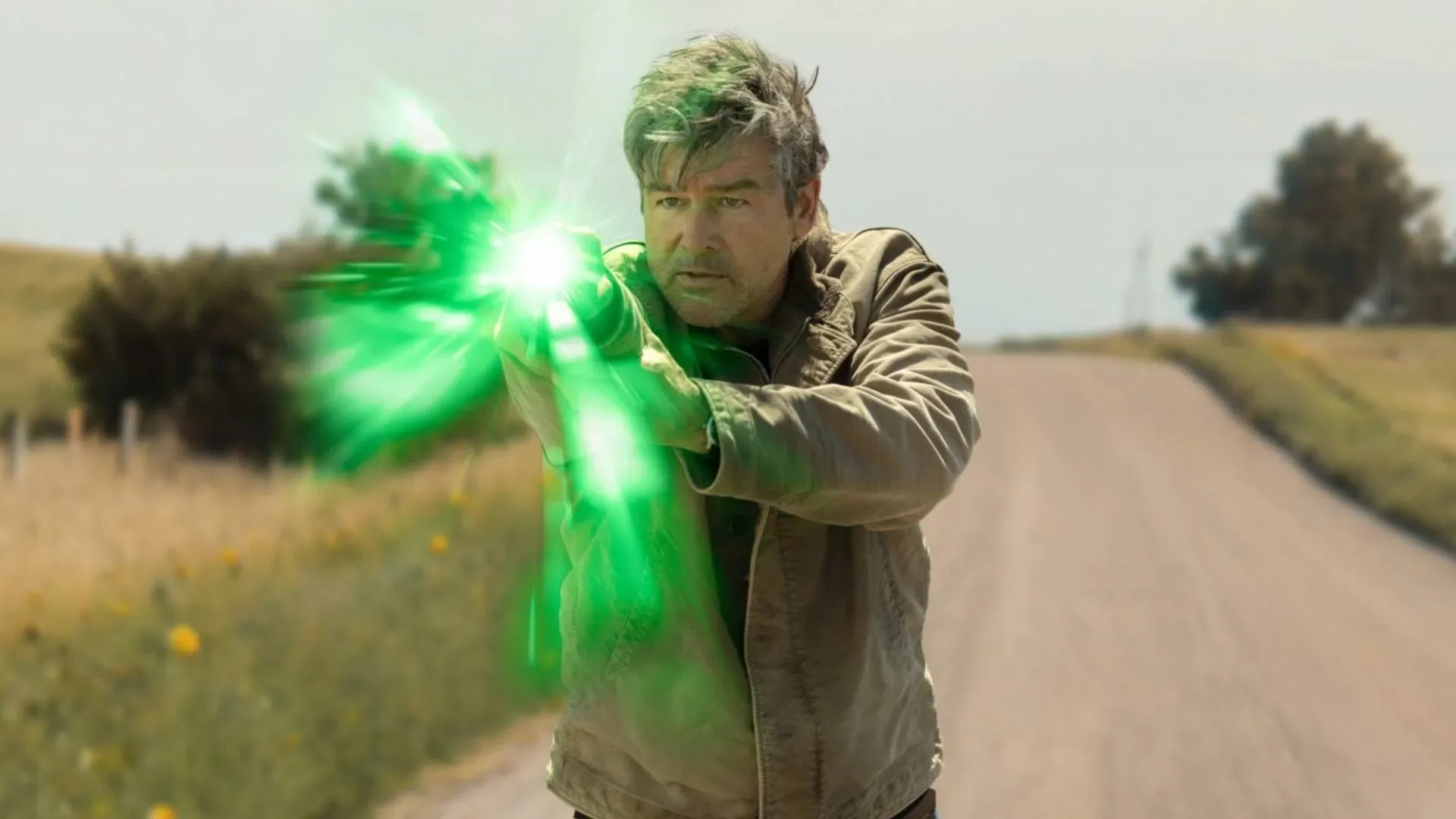
The episode places Guy in the 2026 timeline as John returns to Rushville and has one final meeting with Hal Jordan, played by Kyle Chandler. Hal is subsequently found dead in the bleachers. Against that backdrop, John’s decision to abandon the ring for good creates the opening for Guy to become the active Green Lantern.
“Active” matters here. A superhero mantle is the identity and responsibility associated with a hero’s name, symbol or power. In Guy’s case, the ring does not simply grant him access to Green Lantern abilities; it makes him the visible representative of that role on Earth at this point in the story. Fillion frames Guy as the third choice behind Hal and John, a status that naturally feeds his chip on the shoulder. Being the only ring-bearer in the room, however, gives him a position he finds deeply satisfying.
That is not quite the same as confidence. The episode’s prison sequence makes the distinction clear. Guy receives a distress signal from Rushville and visits John in jail, but initially resists helping him escape. John gets through by invoking a debt: everything Guy has, John says, exists because John did not take it away. Guy may wield extraordinary power, but the scene gives John leverage of a more ordinary and more irritating kind—an obligation.
Fillion’s explanation is useful because it shifts the moment away from simple heroic cooperation. Guy helps not because he has suddenly become selfless, but because his self-image cannot tolerate denying a debt he recognizes. That is a compelling engine for conflict. A character who hates owing favors can be motivated into action, while still making every action feel grudging, boastful or volatile.
Related coverage includes Nathan Fillion’s Guy Gardner Takes the Ring in ‘Lanterns’ Episode 6.
Guy’s fame obsession is part of the story, not just a gag
Before Guy meets John on screen, viewers see his face on a cardboard promotional display for Electro Punch in a grocery store. That ordering is deliberate character information. The show introduces Guy first as a public commodity, then as a superhero caught in a dangerous situation.
Fillion describes Guy as attentive to branding, sponsorship and financial planning, with ambitions that include opening a bar and preparing for retirement. He also imagines the character as fluent in TikTok trends. The details are played for humor, but they establish a particular version of ambition. Guy does not only want to do the job of Green Lantern. He wants recognition for doing it.
In superhero stories, a secret identity often creates a boundary between private life and public heroism. Guy appears to push in the other direction. His public-facing image is an extension of the mission, or perhaps the mission is an extension of the image. Either way, the Electro Punch display suggests that the show can make celebrity part of its world-building rather than treating it as a one-line joke.
That also makes Guy a useful contrast to John and Hal. The supplied details do not establish every difference between the three men, but Fillion is clear that the ring matters more to Guy’s ego than it does to the other two. John walking away from the ring becomes a defining event not just because it changes who has power, but because it hands Guy the sort of singular status he has apparently craved.
A grounded series, with the same Guy Gardner
Fillion says he was surprised to be asked to reprise Guy in Lanterns, given that the series has a more grounded mode than the character ordinarily suggests. His concern was consistency: a tonal change should not turn Guy into a different person.
That is a sensible challenge for a shared universe. Tone means the emotional and stylistic character of a story—the difference between a bright, heightened superhero adventure and a more restrained, reality-adjacent drama. A character can react differently in those environments without losing the traits that make them recognizable. Fillion’s own comparison is that the same person would have very different weekends in Metropolis and Gotham.
Episode 6 seems to test precisely that idea. Guy can retain the look, self-promotion and abrasive personality associated with the character while entering a plot involving imprisonment, a distress signal, John’s departure from the mantle and Hal’s death. The comedy is not removed; it is placed under pressure. A boastful hero who is used to being publicly visible must now contend with consequences that cannot be solved by raising his profile.
For the broader DC Universe, that approach permits contrast between projects without requiring every appearance to have identical rhythm. Fillion describes this universe as one where citizens already live amid giant monsters, robots and fantastic events. In that context, a branded Green Lantern presence is not an impossible intrusion. It is part of the everyday texture of a comic-book world that recognizes superheroes as public figures.
Fillion’s route to a deliberately difficult hero
Fillion says he grew up reading stacks of secondhand comics across both DC and Marvel, though he did not initially see the appeal of Guy Gardner. In fact, he says audiences are broadly meant to dislike him. That is a valuable observation for interpreting the performance: Guy does not need to be softened into a universally lovable quip machine to work.
When Fillion first introduced the character in 2025’s Superman, he drew from different points in Guy’s comic history because the screen version had not explored his past in great detail. The actor cites Guy being passed over, a difficult upbringing and a poor relationship with his father as pieces that help explain the character’s constant need to prove himself. He also points to a comics incident in which Guy was hit by a bus and spent time in a coma, calling it a turning point for the character.
Those references are not a promise that every element will be dramatized in Lanterns. They do explain the interpretive foundation Fillion is using. His Guy is not simply obnoxious for the sake of a punchline; Fillion sees a cause behind the bravado. The useful dramatic question is not whether Guy is a jerk—Fillion is remarkably straightforward on that point—but what happens when being a jerk is no longer enough to protect his rank, pride or relationships.
That question has immediate stakes in the John scene. John knows the correct pressure point because Guy’s status is personal. He does not need to outmuscle the new ring-bearer. He only needs to remind him that the life and position Guy defends so fiercely have been affected by John’s choices.
What this could mean for John and Guy’s next chapter
Episode 6 is the first encounter between Guy and John in Lanterns, and it establishes an unusually productive imbalance between them. Guy has the ring and the formal status that comes with it. John has the history that enables him to call in a favor. Neither advantage cancels the other.
Both characters are set to appear in Man of Tomorrow, the follow-up to Superman scheduled for 2027. Fillion has characterized that project as going deeper into the Green Lantern corner of the superhero world, a smaller “club” inside the larger community of heroes. That description should be taken as a tease rather than a plot outline, but the Episode 6 setup gives the future pairing a clear starting point: respect may be in short supply, while necessity is abundant.
It also suggests why Guy can be valuable to a growing shared universe. He is not merely another hero who arrives to validate the franchise’s expansion. His hunger to be seen turns expansion itself into a character trait. The more places Guy appears, the more his desire to be famous seems baked into the fiction.
That visibility will continue in the animated Mister Miracle, for which Fillion has already recorded voice work. The cross-medium presence is especially suited to a character introduced through advertising imagery and described as obsessed with recognition. Guy’s ubiquity can read as marketing outside the story, while also reflecting the man he is inside it.
For readers tracking the wider DC slate, this look at a Superman comic storyline offers another point of entry into the larger world surrounding these characters. But Lanterns Episode 6 keeps its most important development direct: John leaves the ring behind, Guy claims the position, and the new Green Lantern immediately discovers that power does not erase a debt.
That is a stronger introduction than a simple cameo. Guy Gardner gets the thing he wants most, then learns it comes with people, history and responsibility he cannot brand his way around.