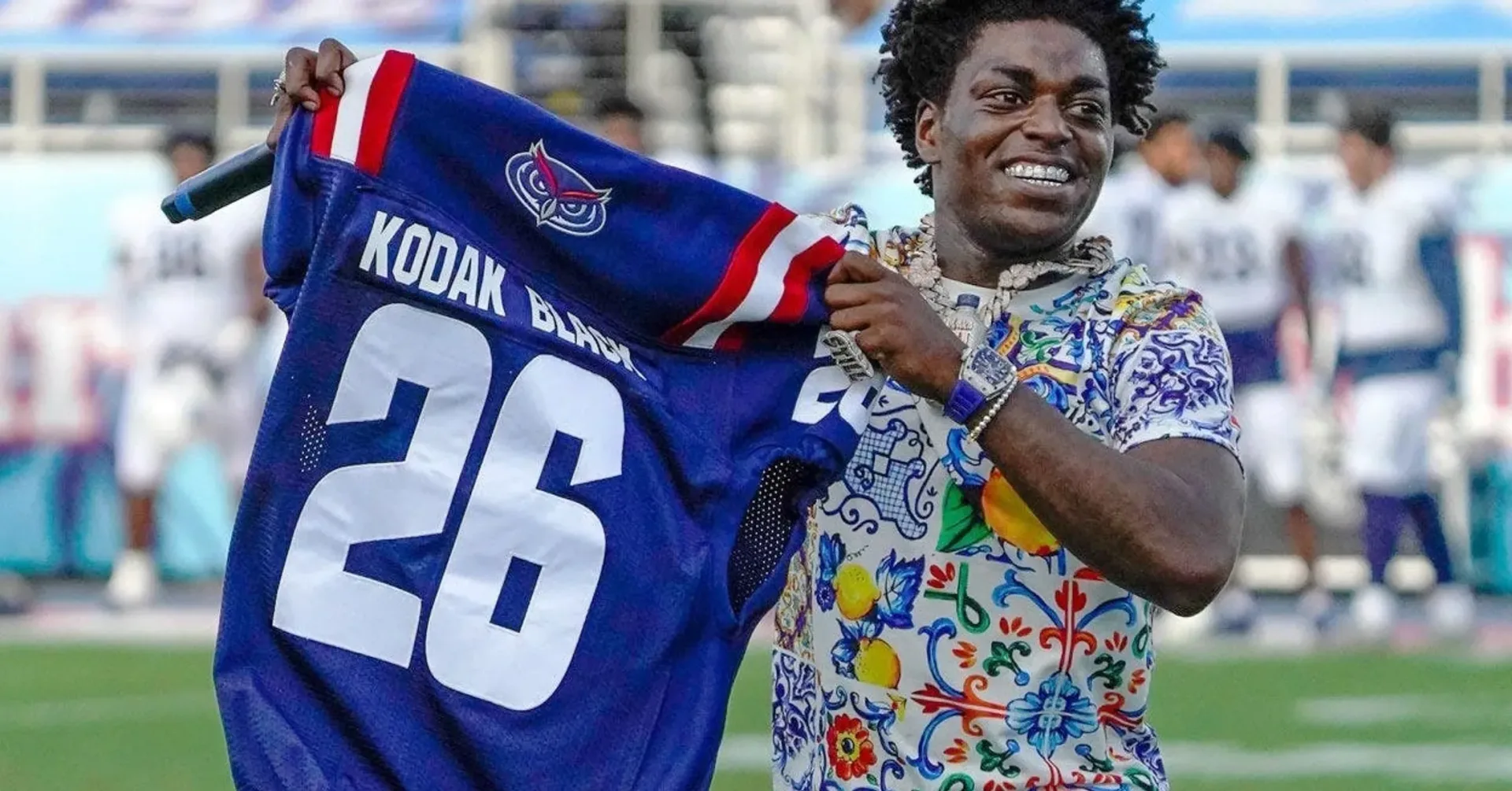
Kodak Black’s appearance at the Nightmare on Channelside concert in Tampa, Florida, ended early after an apparent medical episode onstage during the Halloween-night event.
Video from the performance shows the rapper collapsing while crew members and other people onstage moved quickly to assist. He was later able to stand and walk away from the stage. Beyond that visible sequence, there is little confirmed information: no cause for the incident has been disclosed, and no update on his condition was available in the immediate aftermath.
What is known about the Tampa incident
The performance took place at Benchmark International Arena on Saturday evening. The available footage establishes that an interruption occurred and that people near Kodak Black responded immediately. It also shows that he left under his own power after receiving help.
That is not enough information to identify what happened medically. A collapse can have many potential explanations, and a short social-media clip cannot provide a diagnosis, establish contributing factors, or show what care may have occurred away from the stage. Describing the event as an apparent medical episode reflects the visible circumstances without claiming knowledge that has not been made public.
The practical detail that matters most for concerned fans is also the simplest: there has been no stated explanation for the collapse and no publicly provided condition report. Until Kodak Black or an authorized representative shares more, anything more definite is speculation.
Why the video has prompted concern—and why restraint matters
Live-performance clips spread quickly because they capture a startling moment with little context. In this case, the footage of people rushing toward an artist naturally led to concern online, particularly because fans have previously discussed Kodak Black’s wellbeing. But public concern is not evidence of a specific medical cause.
There is an important difference between reporting an observable event and attaching an explanation to it. The former is supportable here: the set was cut short, he fell onstage, people assisted him, and he subsequently walked away. The latter is not currently supported: no reason for the incident has been confirmed.
That distinction is more than cautious wording. It avoids turning a potentially serious health matter into a crowd-sourced diagnosis. Social media often rewards speed and certainty, while reliable information about someone’s health may arrive slowly—or may properly remain private. Fans sharing concern can do so without repeating claims that go beyond what has been established.
Related coverage includes Kodak Black Leaves Tampa Stage After Apparent Medical Episode.
What “no update” does and does not mean
A lack of immediate information should not be treated as proof of either a severe outcome or a harmless one. It means only that no public update was provided at the time the incident was reported. The visible fact that Kodak Black walked away is reassuring in a limited sense, but it does not explain why he collapsed or indicate whether any follow-up care was needed.
Likewise, the absence of a stated cause does not invite responsible reporting to fill the gap with assumptions about lifestyle, substances, exhaustion, or any other theory. None of those explanations has been established in connection with this event.
A disrupted set is also a live-event safety moment
The footage’s most concrete takeaway is the rapid response from the people around Kodak Black. On a concert stage, crew members and fellow performers are often the closest people when a problem emerges. Their role in those first seconds is straightforward: clear space, prevent further injury, and help move the affected person away from the performance environment when possible.
For audiences, the responsible response is similarly straightforward. Give venue staff room to work, avoid crowding an active emergency, and refrain from obstructing access routes. While fans often want an immediate explanation, the first priority in an onstage incident is the person’s welfare, not preserving the schedule or producing a complete account in real time.
In this instance, the performance did not continue as planned. That is appropriate context for attendees who expected a Halloween-night show, but it should remain secondary to the unanswered health question. A shortened set is disappointing; an artist receiving prompt assistance is more important.
Kodak Black’s upcoming game connection remains separate from the incident
The interruption arrives as Kodak Black is also expected to be featured on the soundtrack for Grand Theft Auto VI. The available information does not specify a song, station placement, or other soundtrack details. Any assumption that his music will appear on a contemporary rap station remains just that—an assumption, rather than a confirmed programming detail.
That distinction matters because game soundtracks are often discussed as if every element is locked in long before listeners can verify it. An artist’s reported involvement confirms interest in the project, but it does not by itself reveal how a track will be used in the game. Fans looking for confirmed Rockstar-related news should separate confirmed artist participation from unannounced track lists and station assignments.
Music has long been part of the appeal of the Grand Theft Auto series’ radio format, where songs can shape the atmosphere of a drive, mission, or open-world detour. But there is no need to turn an expected soundtrack placement into a prediction machine. Until more is officially detailed, the concrete point is simply that Kodak Black is set to be involved with the GTA VI soundtrack.
For more on how rapidly music and celebrity claims can detach from the facts around a live event, see this look at a viral Drake shout-out claim that did not hold up.
Streaming ambitions add another strand to his public profile
Separately, Kodak Black has said he is considering a streaming career. That possibility sits apart from both the Tampa incident and the GTA VI soundtrack news, but it illustrates how established music artists can look toward direct-audience platforms alongside recorded releases and live appearances.
Streaming, in this context, means broadcasting live content to an online audience rather than releasing a finished music project alone. The format can include conversation, gaming, reaction content, or other programming, though no specific plan or format has been detailed for Kodak Black. Considering a move into streaming is not the same as launching a channel or committing to a schedule.
For now, those career threads should not overshadow the immediate matter in Tampa. The public record supports concern, not conclusions: Kodak Black collapsed during a performance, was helped by people onstage, then got up and walked away. No cause has been given, and no condition update has been publicly provided.