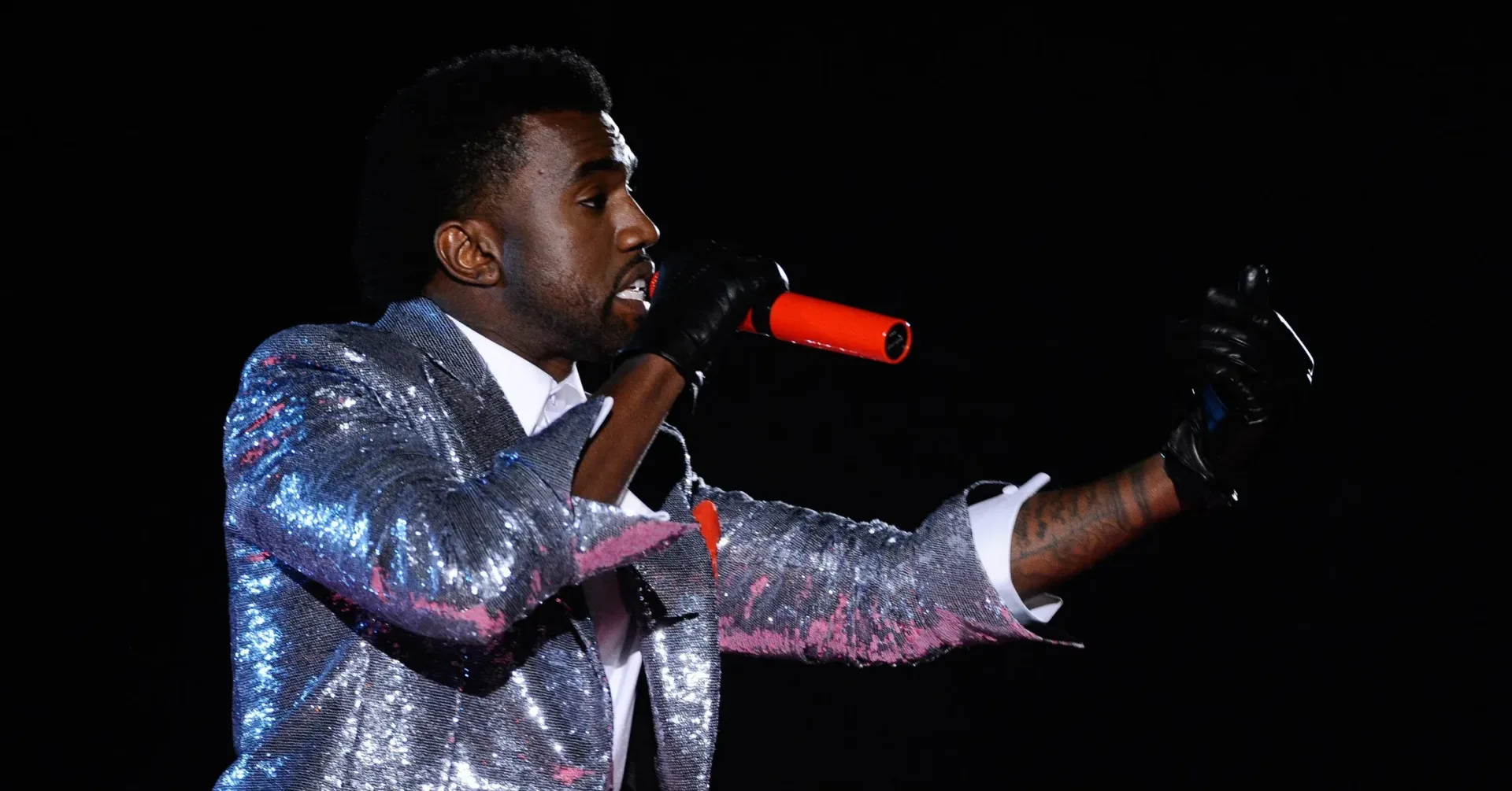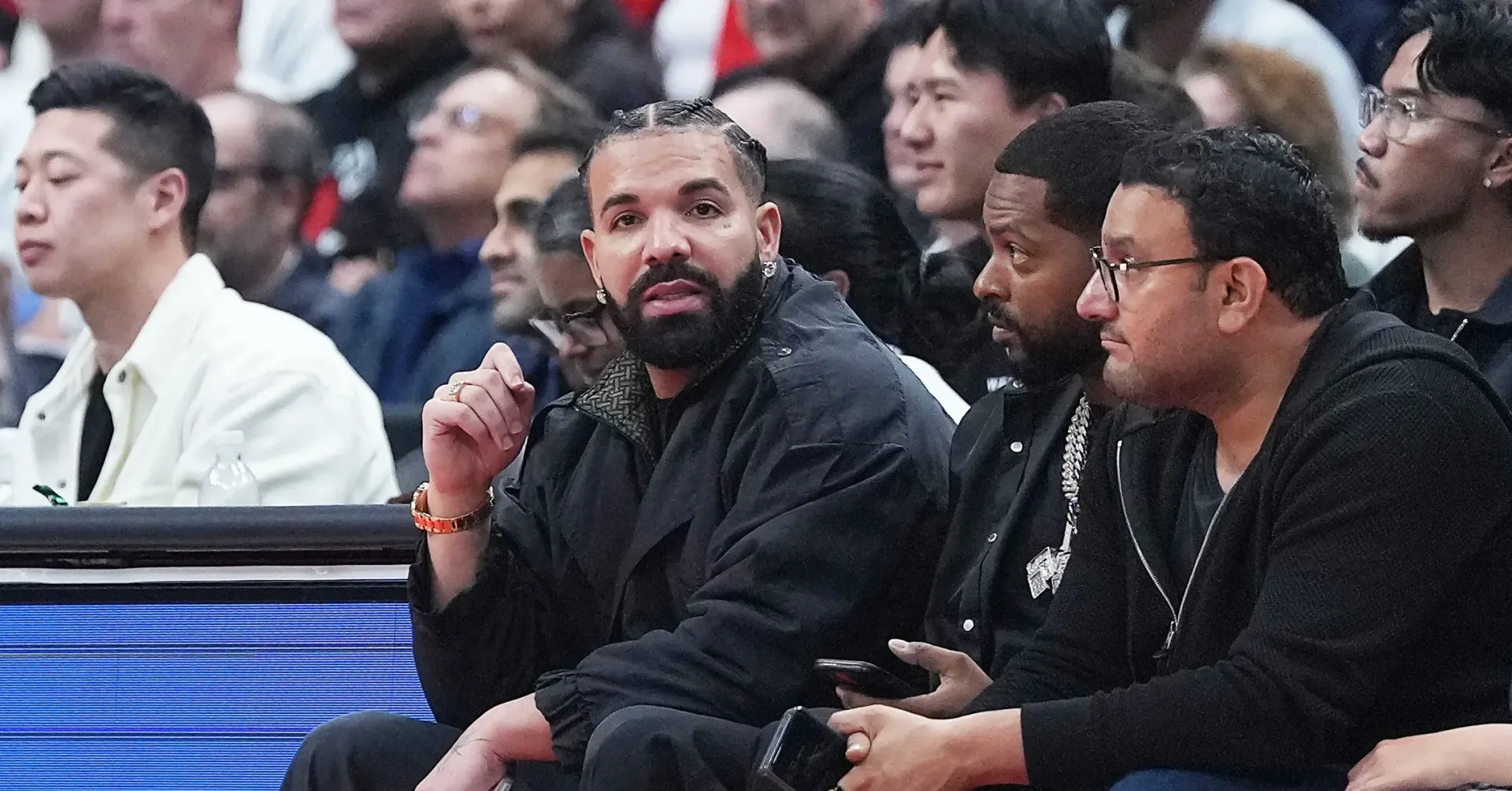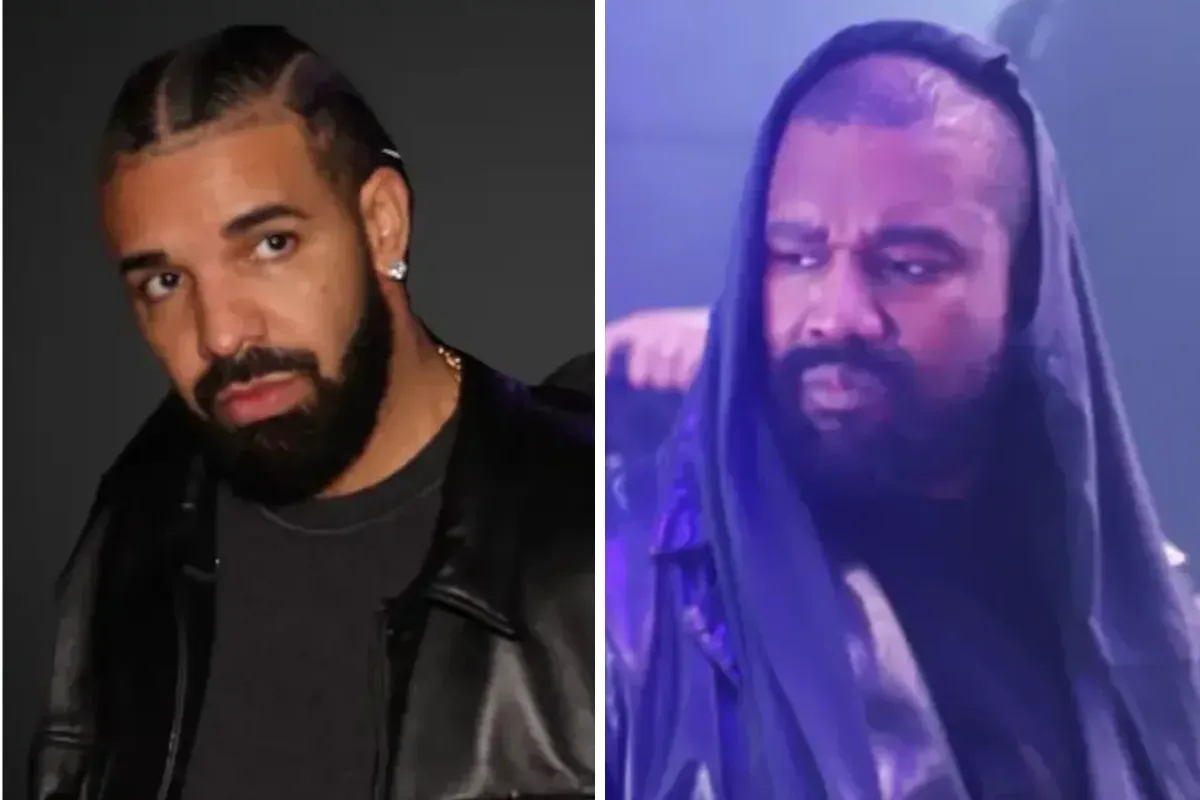
Drake and Travis Scott were filmed in the audience at Ye’s Halloween concert at Reliant Stadium in Houston on October 31, 2026, but a viral claim about a direct onstage exchange with Drake does not hold up.
The two rappers had made a public appearance earlier that evening at the Houston Rockets’ game against the Oklahoma City Thunder at Toyota Center. Fan-shot footage later showed Drake and Scott watching Ye’s stadium set from the crowd. Their presence was real; the supposed public shout-out to Drake was not.
That distinction matters because the footage rapidly gathered a larger narrative online. A circulating caption said Ye had spoken directly to Drake during the show, inviting viewers to read the moment as a visible sign of a repaired relationship. The account that shared the claim later issued a correction, stating that Ye had been addressing André Troutman rather than Drake.
So, the cleanest version of events is straightforward: Drake and Scott attended the concert, and video documented them there. But the alleged verbal recognition of Drake was based on a mistaken identification. Attendance is evidence of attendance; it is not, by itself, evidence of a reunion, collaboration, or reconciliation.
What the correction changes — and what it does not
Corrections can seem minor in the speed of social-media discussion, especially when the underlying video is genuine. Here, however, the correction changes the central interpretation. There is a meaningful difference between a performer addressing a fellow artist by name from the stage and that artist simply being part of the audience.
The initial framing encouraged people to treat a brief concert moment as a statement about the relationship between Ye and Drake. Once the intended recipient was identified as André Troutman, that inference lost its key piece of support. The audience footage remains valid, but it no longer demonstrates the interaction people believed they had seen.
This is a useful reminder of how celebrity-event clips can be misread. Stadium videos are often distant, noisy, and detached from the full context of a performance. A caption can supply apparent certainty before viewers have enough information to verify who was being addressed or why. When the caption is wrong, the video itself may still be authentic, while the story built around it is not.
In this case, the reaction also moved quickly from an alleged shout-out to the broader suggestion that Drake’s presence confirmed a public reconciliation. That is a separate, larger conclusion that the available evidence does not establish. Neither the footage of Drake in the crowd nor Ye’s corrected remark can settle the private or professional status of their relationship.
Related coverage includes Drake and Travis Scott Attend Ye’s Houston Show as Alleged Shout-Out Is Corrected.
The confirmed guest moments at the Houston set
The concert did include several onstage appearances that were far less ambiguous. Playboi Carti joined Ye for multiple songs: Carnival, Off the Grid, Evil J0rdan, and FE!N. North West also performed during the show.
Those appearances are important context for why concert reporting can become crowded with overlapping storylines. A major stadium production, a varied set reaching from older songs to newer Bully material, and recognizable guests all create many moments that can be clipped, reposted, and interpreted independently. Confirmed performers have a clear musical role in the show; notable attendees have a different one.
That separation is worth keeping intact. Carti’s place in the performance was established through his participation in specific songs. Drake and Scott’s role was that of audience members, based on the available footage. Treating those categories as interchangeable makes it easier for speculation to outrun what was actually documented.
A record claim alongside a complicated Houston weekend
Reliant Stadium said the show set a “U.S. stadium rap concert attendance record.” The claim underscores the scale of the night, though the supplied information does not provide an attendance figure or a definition of the previous benchmark. It should therefore be understood as the venue’s stated record claim, rather than a statistic that can be independently compared here.
The event also took place amid public concern tied to Ye’s history of antisemitic rhetoric. Holocaust Museum Houston offered free admission over the weekend as counterprogramming. That context does not disappear because the concert generated high-profile guest appearances and viral crowd footage; it was part of the city’s response around the event.
Counterprogramming is an event scheduled as an alternative to another prominent event. In this instance, the museum’s free admission offered Houston residents a different place to spend time during a weekend centered on the concert. It also made clear that a stadium show’s cultural footprint can extend beyond the stage, social posts, and attendance claims.
For readers following the viral clip, the key practical lesson is not to flatten those separate parts of the story into one headline-ready narrative. There was a large Ye concert. There were confirmed onstage guests. Drake and Travis Scott attended. A social-media claim about Ye speaking to Drake was corrected. And the weekend included an institutional response linked to Ye’s prior rhetoric. Each point has its own evidentiary basis and should be described on its own terms.
Why Drake’s attendance drew immediate attention
Drake’s appearance was especially likely to draw speculation because Ye had publicly backed him in April 2025 while discussing Drake’s lawsuit against Universal Music Group. Ye said he had to show Drake love for “going at the machine” and added, “I’m Team Drake 100 percent.”
That earlier public support supplies context for why observers might view a Drake sighting at Ye’s concert as significant. But it does not transform an audience appearance into confirmation of any new development. Public statements from 2025 and a concert attendance clip from 2026 are distinct pieces of information. They can explain heightened interest without proving an outcome that neither moment explicitly announced.
It is also easy for the presence of Travis Scott to make a clip feel like a coordinated message, even where no such message has been documented. The available account supports only that Drake and Scott went to the Rockets-Thunder game and later appeared at the Ye concert. It does not establish why they attended, whether they spoke with Ye, or whether the night involved any planned professional announcement.
How to read viral concert footage more carefully
Concert clips are unusually prone to confident but incomplete interpretations. The sound mix may make speech hard to discern, camera angles can obscure where an artist is looking, and a short repost can strip away the lead-in or follow-up that gives a moment its meaning. The fastest caption often becomes the frame through which people experience a video.
For this Houston moment, a careful reading comes down to a few simple checks:
- Separate visual proof from added claims. The video supports that Drake and Travis Scott were in attendance. It does not independently prove whom Ye addressed.
- Look for a correction with the same urgency as the original post. A correction may travel less widely, but it can fundamentally alter the conclusion attached to a clip.
- Do not infer relationship status from proximity. Being seen at the same event is not equivalent to confirming a reconciliation or future collaboration.
- Distinguish confirmed stage appearances from crowd sightings. Carti and North West performed; Drake and Scott were filmed watching.
That approach does not make live-event coverage less interesting. It simply keeps the most interesting claims tied to what can actually be supported. Fans can reasonably note that Drake’s attendance was notable in light of Ye’s prior supportive comments. They cannot reasonably present the corrected shout-out as proof that Ye publicly addressed Drake that night.
Houston’s concert was therefore a real celebrity sighting with several legitimate points of interest, not the definitive Drake-and-Ye onstage moment that early captions suggested. For more on how hip-hop intersects with major live sports broadcasts, see Wu-Tang Clan’s planned Detroit Lions Thanksgiving halftime show.