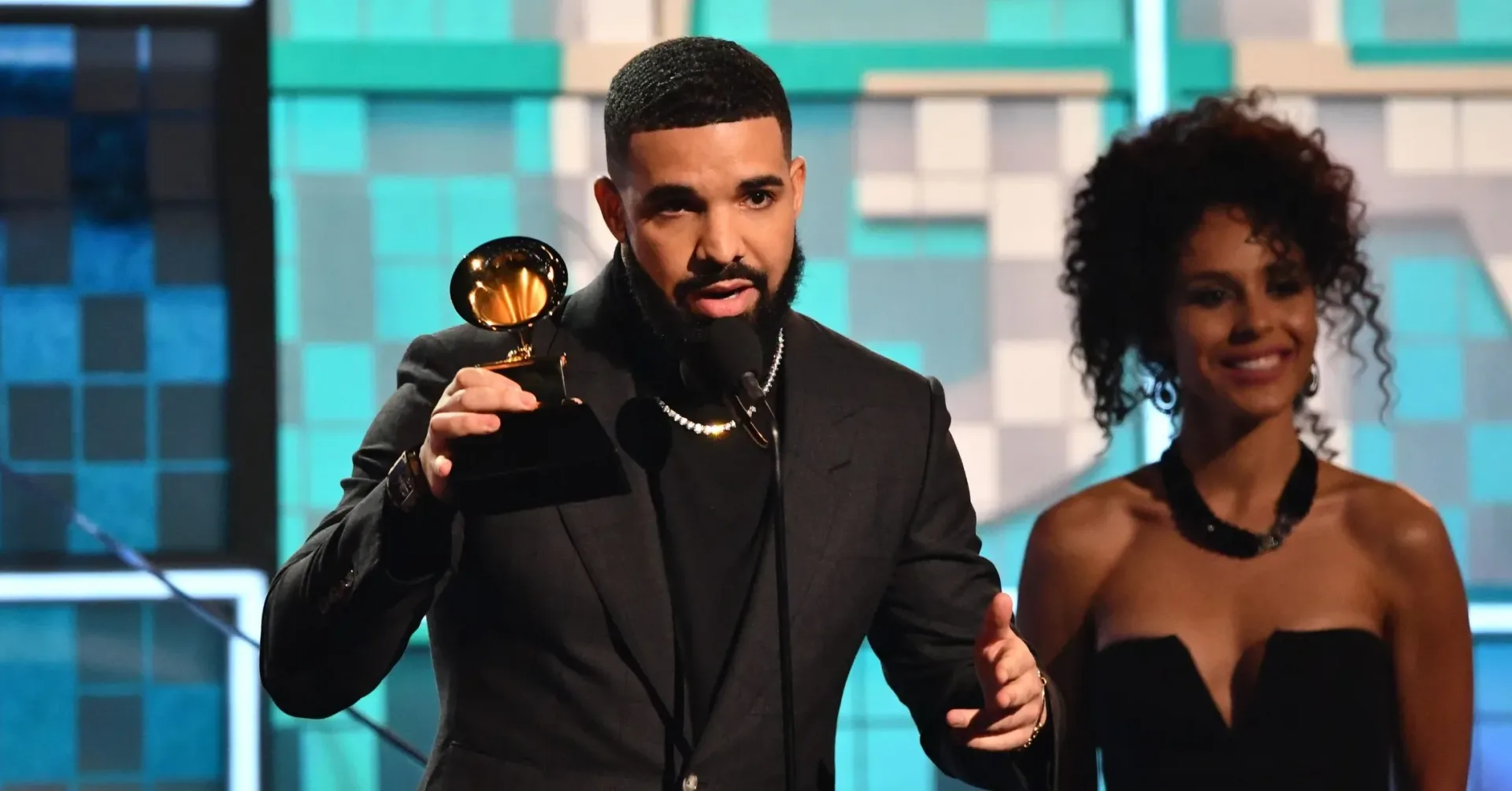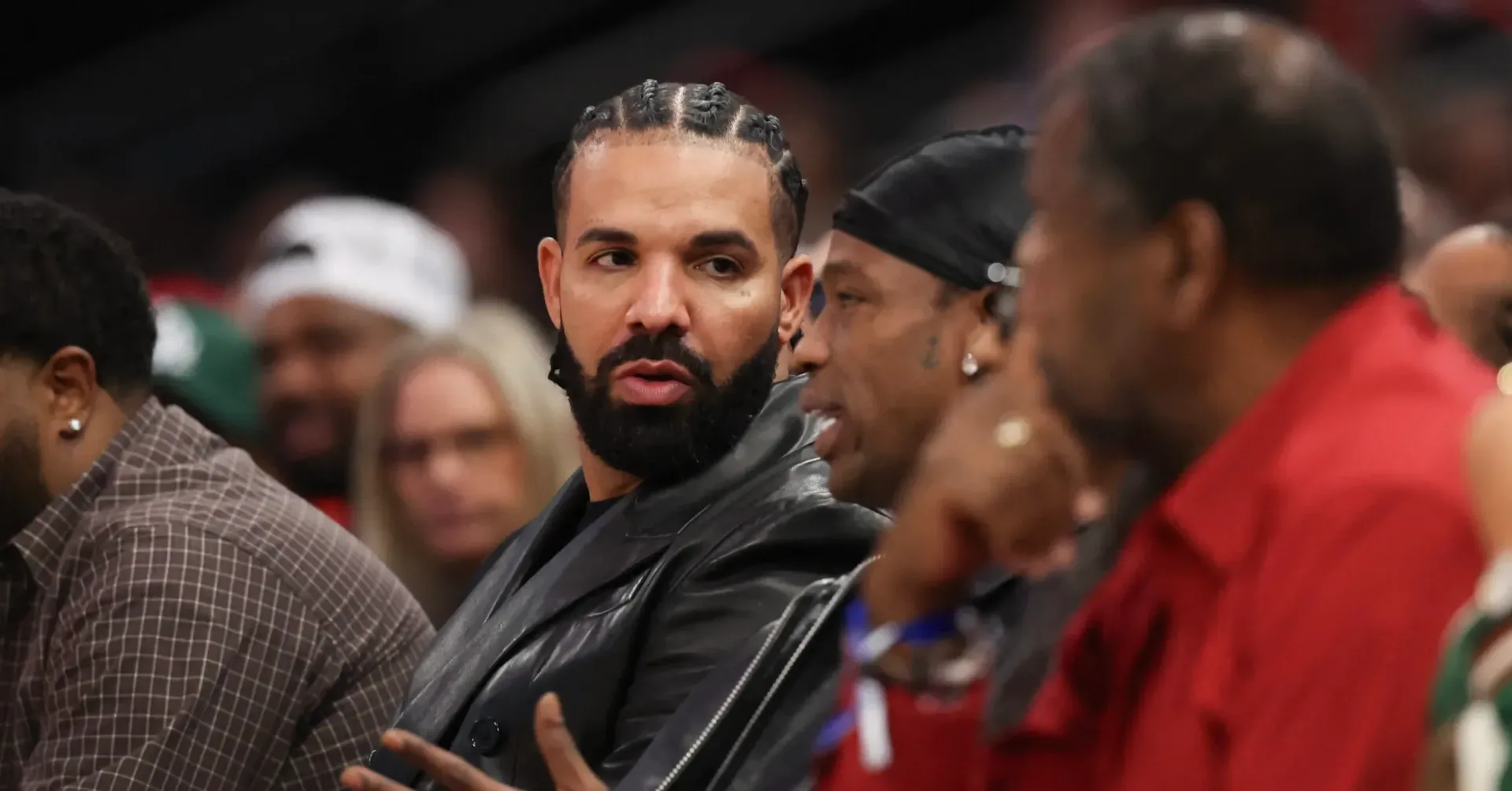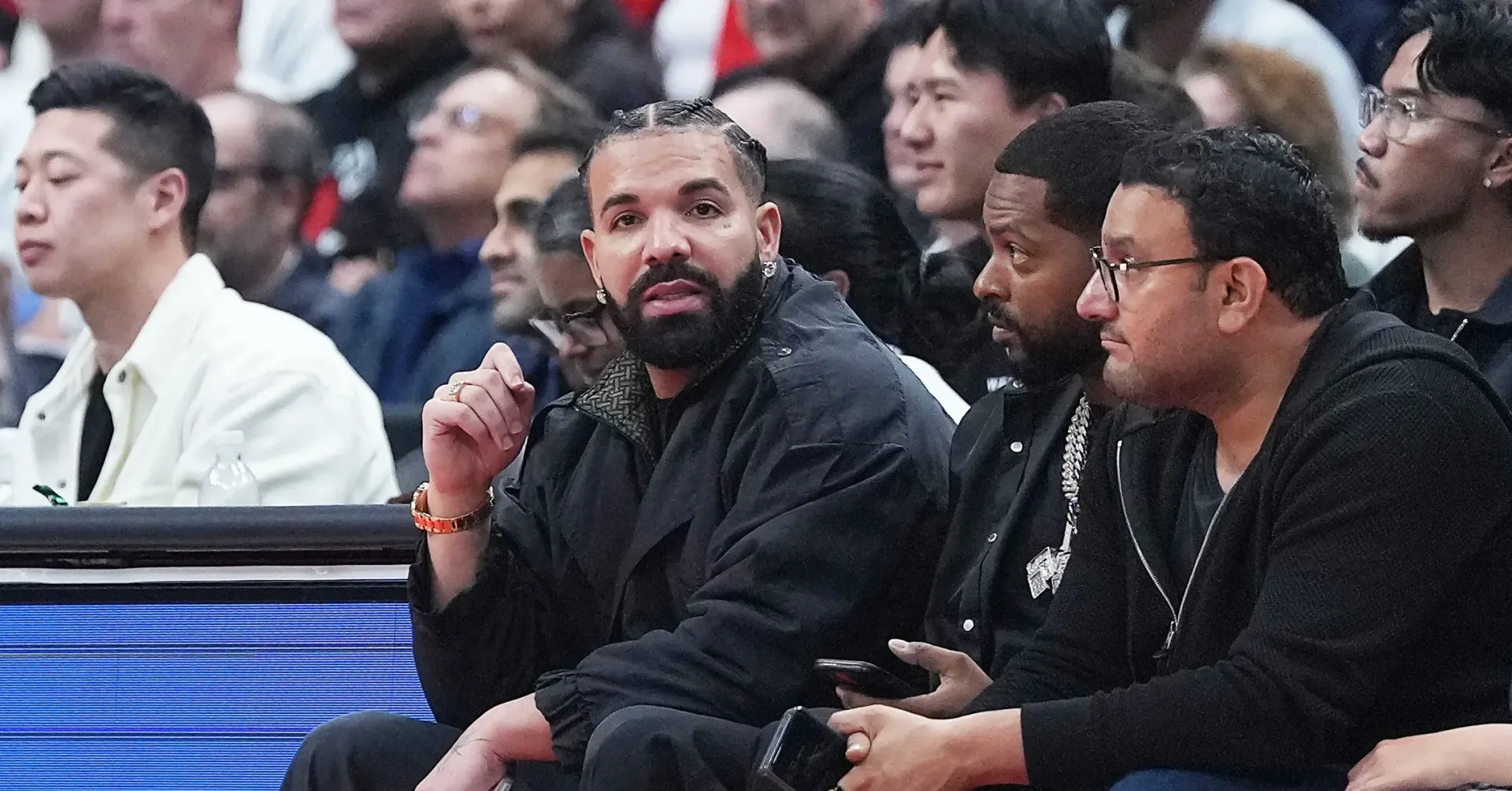
Drake and Travis Scott were reportedly in the audience for Kanye West’s October 31 concert in Houston, an appearance that has rapidly become a new data point in fans’ ongoing effort to map hip-hop’s shifting personal and professional alliances. The two artists had also attended the Houston Rockets’ game against the Oklahoma City Thunder earlier that evening.
The Houston show itself was a major event: it was described as drawing 80,210 attendees, a figure said to establish a U.S. attendance record for a hip-hop concert. Playboi Carti also made a guest appearance during the performance. Yet it was Drake and Scott sitting together in the crowd, rather than taking the stage, that spurred particularly intense discussion online.
That reaction says as much about the unresolved narratives around the artists as it does about a single night out. An audience appearance is not a collaboration announcement, a public reconciliation statement, or confirmation that old tensions have vanished. Still, in a genre where a like, a lyric, a shared stage, or even a conspicuous absence can invite detailed interpretation, seeing two frequent collaborators attend a Kanye West show together naturally gave fans plenty to parse.
A visible appearance, not a confirmed collaboration
The most important distinction is also the simplest: Drake and Travis Scott attending the concert establishes that they were there. It does not, by itself, establish what they discussed, whether they are recording together, or whether any of the longstanding speculation surrounding either artist has been resolved.
That may sound obvious, but celebrity news often turns small public signals into firm conclusions unusually quickly. A collaboration means a creative project that the artists have actually made or formally confirmed. A reconciliation means the people involved have clearly indicated that a prior dispute is settled. Neither one follows automatically from being seated together at a concert.
What the moment does provide is visibility. Drake and Scott have been closely associated through prior work, including “SICKO MODE” and “Fair Trade,” so their presence together is inherently notable. Fans had also spent time speculating about a possible strain in their relationship after Scott appeared to enjoy “Like That” when the record arrived, alongside a perceived lack of recent public encounters between the two.
The concert appearance makes the broadest version of that theory harder to maintain: whatever conversations took place are private, but Drake and Scott were publicly together at a highly visible event. That is a meaningful correction to assumptions built mainly from sparse public appearances and online interpretation. It is not, however, a detailed explanation of their current creative plans or personal relationship.
Why Kanye West adds another layer to the story
Drake’s attendance also renewed attention on his unclear relationship with Kanye West. West had directed criticism at Drake during the 2024 rap battle period. The following year, West changed his tone after Kendrick Lamar received the Super Bowl halftime-show slot. Since then, Drake has offered little obvious public evidence of a fully renewed friendship, apart from occasionally liking social-media posts concerning the Chicago artist.
That sequence is why the Houston sighting has prompted talk of a thaw. It places Drake at a landmark concert for an artist with whom his relationship has been publicly difficult to define. But fans should be careful with the word beef, a loose term that can cover everything from artistic competition and diss records to a genuinely personal dispute. It can also persist as a storyline long after the people involved have ceased making it central to their public behavior.
There is a difference between uncertainty and conflict. The available facts support uncertainty: West has criticized Drake in the past, later altered his tone, and Drake has not publicly said much to clarify where things stand. The facts do not supply a new public statement from either man saying they have repaired the relationship, nor do they reveal a planned song, performance, or business venture.
For that reason, the most reasonable reading is restrained. Drake’s presence may indicate openness, mutual respect, a social connection, an interest in witnessing a huge hometown-area event alongside Scott, or any combination of those possibilities. It could also be a one-night event with no wider consequence. Fans will need something more direct before treating the moment as a confirmed reset.
The scale of the Houston event matters
The setting helps explain why the appearance attracted attention beyond the usual celebrity-spotting cycle. A concert reported to have drawn 80,210 people is not a minor industry gathering. It is a large-scale public spectacle, and the record claim attached to its attendance elevated its cultural profile further. With Playboi Carti joining West as a special guest, the event already connected several major names in contemporary rap before Drake and Scott became part of the evening’s conversation.
Houston also gives Scott’s presence an intuitive local context. But the key public image here was the pair: Scott and Drake, together, watching West perform. In an era where short clips can circulate at greater speed than explanations, the visual was inevitably going to be analyzed in isolation from the mundane reality that artists, like anyone else, can attend sporting events and concerts without issuing a manifesto afterward.
That does not mean the interest is baseless. Public appearances can matter because they indicate which doors are at least open enough for people to be in the same room. They can also change the temperature of a conversation. Where fans once saw a lack of public interaction and filled the space with conflict theories, they now have a contrary image: two artists sharing the crowd at an unusually high-profile concert.
How to read the signals without overreading them
The Houston moment is a useful reminder that there are levels of evidence when following any widely discussed creative relationship:
- Attendance: An artist appears at another artist’s show. This confirms presence, but little else.
- Public interaction: A photograph, conversation, greeting, or mutual social-media activity can show basic contact or goodwill, while still leaving the wider relationship undefined.
- Performance appearance: Sharing a stage is a stronger professional signal, although it does not necessarily mean a new release is imminent.
- Official creative confirmation: A released song, credited project, announced show, or direct statement is the clearest evidence of an actual collaboration.
Drake and Scott’s Houston appearance belongs in the first category. The pair attended a show together. Everything beyond that remains inference. For fans, this framework can make the discussion more useful: it allows the moment to be interesting without demanding it answer every lingering question in rap’s web of relationships.
It is also worth recognizing how quickly presumed grievances can become accepted as fact online. Speculation often begins with a small event, such as a reaction to a song or the absence of a recent public link-up. It then gathers weight through repetition, even when none of the people involved confirms it. The concert sighting does not prove that every rumor was false, but it demonstrates why absence and silence are fragile foundations for sweeping conclusions.
What the appearance could mean for fans
For listeners who enjoy Drake and Travis Scott as collaborators, the sighting may understandably raise hopes that they will work together again. Their prior records give that possibility a clear musical basis. But the sensible expectation is not that new music has been confirmed; it is that public speculation will continue until one of the artists offers firmer evidence.
For observers focused on Drake and West, the same caution applies. Their history is sufficiently complicated that fans want a simple answer: friends again, still estranged, or headed toward a joint record. The available information does not settle those options. It does show that Drake attended West’s concert at a moment of exceptional scale, which makes the possibility of a softer relationship plausible without making it certain.
West’s show has also revived broader theories about rap’s high-profile divides, including speculation that he could appear during Jay-Z’s Super Bowl halftime show. That remains only a rumor, and it has been characterized as unlikely. There is no reason to treat the Houston audience sighting as confirmation of any Super Bowl-related plan.
Ultimately, the more grounded story is still a notable one. Three of rap’s biggest names became connected by one enormous Houston night: Kanye West performed for a crowd reported at 80,210, Playboi Carti appeared as a guest, and Drake and Travis Scott watched from the audience after attending an NBA game together. That combination is enough to explain the buzz. It is not enough to turn theories into facts.
For a separate look at another music-related Halloween-season story, see Violent J’s comments on a Paid Family Era reunion.