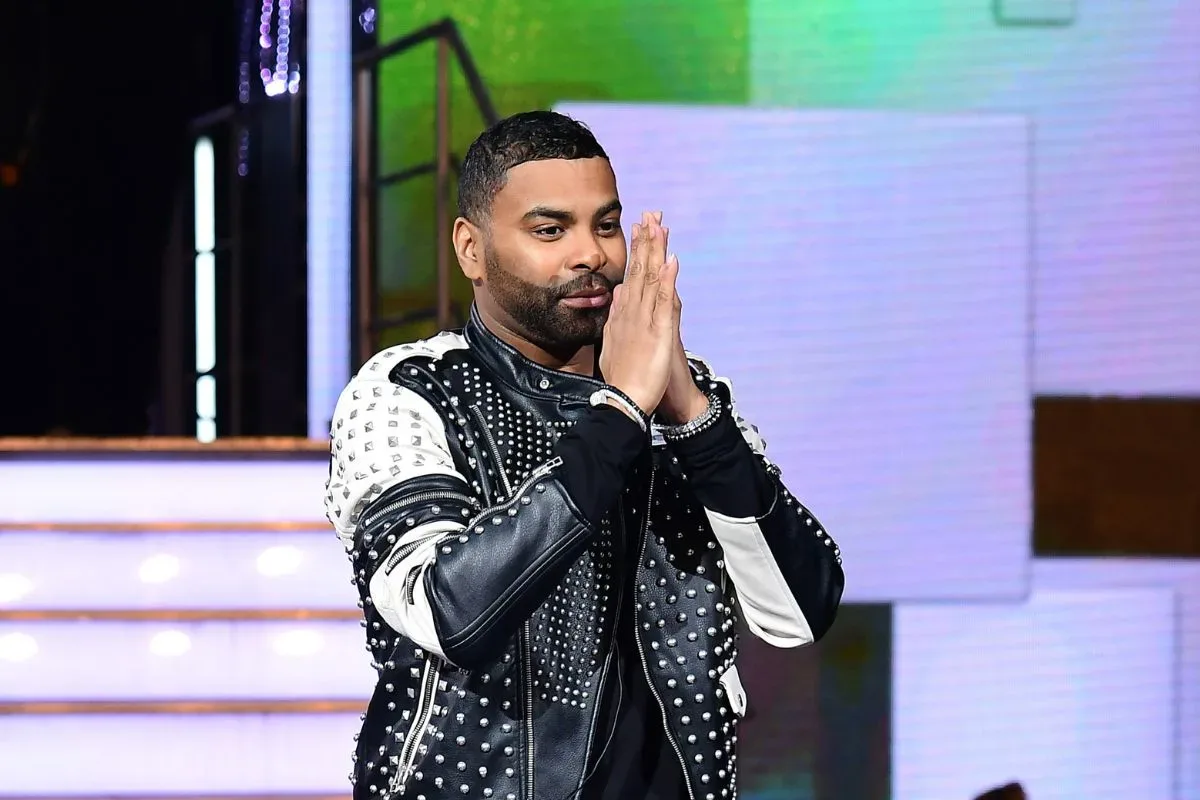
Ginuwine is working with his son on an autobiographical project, a collaboration prompted in part by AI-generated YouTube shorts that led the pair to consider how his story was being framed online. Rather than leave that account to short-form, machine-made interpretations, the singer plans to help tell it himself.
The project is intended to encompass both the public career and the personal experiences behind it. Ginuwine has said he hopes the work can reach people facing difficult periods in their own lives, centering not just survival but the continued work of changing course and getting better. He has also been careful about the label “life story,” noting that he has more life ahead of him.
That distinction matters. An autobiography can imply a settled account, with its major chapters neatly closed. Ginuwine’s description instead points toward a living document: a personal narrative that looks back at major losses and struggles while acknowledging that recovery, family and creative work remain ongoing.
Why authorship is the key part of the announcement
AI-generated shorts are brief videos assembled with generative tools, often using synthesized visuals, narration or editing to compress a subject into a highly shareable story. They can introduce viewers to an artist’s past, but their speed and format can also flatten a complicated life into a few dramatic beats.
Ginuwine and his son responding by creating an autobiographical project gives the artist a chance to provide the context that a short clip cannot. That does not mean the project has been defined as a book, documentary, film or another specific format; no format, release timetable or additional production details have been disclosed. What is clear is that Ginuwine wants the project to address the person as well as the performer.
Working with his son may be equally significant. The story includes family, and Ginuwine has previously described how thoughts of his children helped him reconsider his direction during an extremely difficult time. A collaborative approach creates room for an intergenerational perspective without suggesting that the project is only a nostalgia exercise.
Grief, depression and seeking help are part of the story
Ginuwine has spoken publicly about the losses of both parents: his father died in 1999, followed by his mother, who died of cancer, in 2000. In an earlier interview, he described struggling with depression after those losses and turning to drugs and alcohol.
He has also discussed the intervention that helped him move toward support. One friend urged him to get help, and Ginuwine has recalled counseling with his pastor. He said that he initially felt alone in his grief and resisted help, before considering what it would mean for his own children to lose him.
Related coverage includes Ginuwine and His Son Begin an Autobiographical Project.
“I’m just trying to show people how you can still survive and continue on your journey to get better and do things differently,” Ginuwine said.
The phrasing is important because it does not frame healing as a single completed achievement. “Journey” is commonly used in recovery conversations, but here it reflects the limits of a simple comeback narrative. Grief does not move on a clean schedule, and asking for help can be difficult precisely when someone feels isolated.
In September 2024, Ginuwine marked two months sober in an Instagram post. He characterized the milestone as a meaningful step and encouraged people dealing with addiction not to feel ashamed about reaching out for support. His public message was direct: progress that may appear small to one person can still carry enormous weight for another.
For readers dealing with substance use, depression or overwhelming grief, the useful takeaway is not that one artist’s experience provides a universal template. It does not. Rather, Ginuwine’s account underlines the value he found in support from people around him, including a friend and pastoral counseling. Anyone in immediate danger or at risk of harming themselves should contact local emergency services or an appropriate crisis resource right away.
A songwriter placing the songs beside the person
The project also connects to how Ginuwine describes his creative process. He has said he wrote about 90% of his catalog, treating songwriting as a way to articulate both happiness and pain. In his view, listeners recognize their own experiences in those songs because the underlying emotions are shared.
That is a useful lens for the proposed autobiography. Music can preserve an emotion in a few minutes, while a longer personal project can explain the circumstances around it: what was happening away from the studio, why a feeling mattered, and how an artist understood it later. The two forms do different jobs. A song can leave space for listeners to make it their own; autobiography can give the creator’s version of the circumstances.
Ginuwine also said he routinely approves samples of his work by other artists. A sample is a portion of an existing sound recording or composition used in a new track, generally requiring permission from the relevant rightsholders. His comments connect authorship in two directions: he remains involved when his catalog is revisited by others, and he is now taking an active role in telling the broader story around that catalog.
That attention to creative ownership is especially relevant in an era when AI-made media can circulate quickly. The stated catalyst was not a rejection of every technological tool; it was the realization that simplified accounts of a real person can spread without the nuance that person might choose. The planned project is Ginuwine’s answer: more context, more direct perspective and a collaboration rooted in family.
Live work continues alongside the personal project
Ginuwine has continued performing as the autobiographical work takes shape. He toured this year with Keith Sweat, Joe and Dru Hill, placing the new project alongside an active live schedule rather than presenting it as a retreat from music.
He is also scheduled to perform at Lehman Center for the Performing Arts in the Bronx on November 7 at 8 p.m., with Ro James listed as the special guest. The available information does not say whether the autobiographical project will be discussed during the show, so fans should not assume it will be part of the program.
The broader entertainment conversation often turns artists into a few familiar headlines: the hit records, the public hardships, the viral clips. Ginuwine’s planned collaboration suggests a more deliberate alternative, one that puts career achievements, private pain, recovery and continuing life in the same frame. It is a move toward authorship over a narrative that has already been reduced into short-form content.
For more culture coverage where public narratives and their real-world stakes collide, see this look at 2 Chainz and Keith Lee’s debate over the “normal customer”.