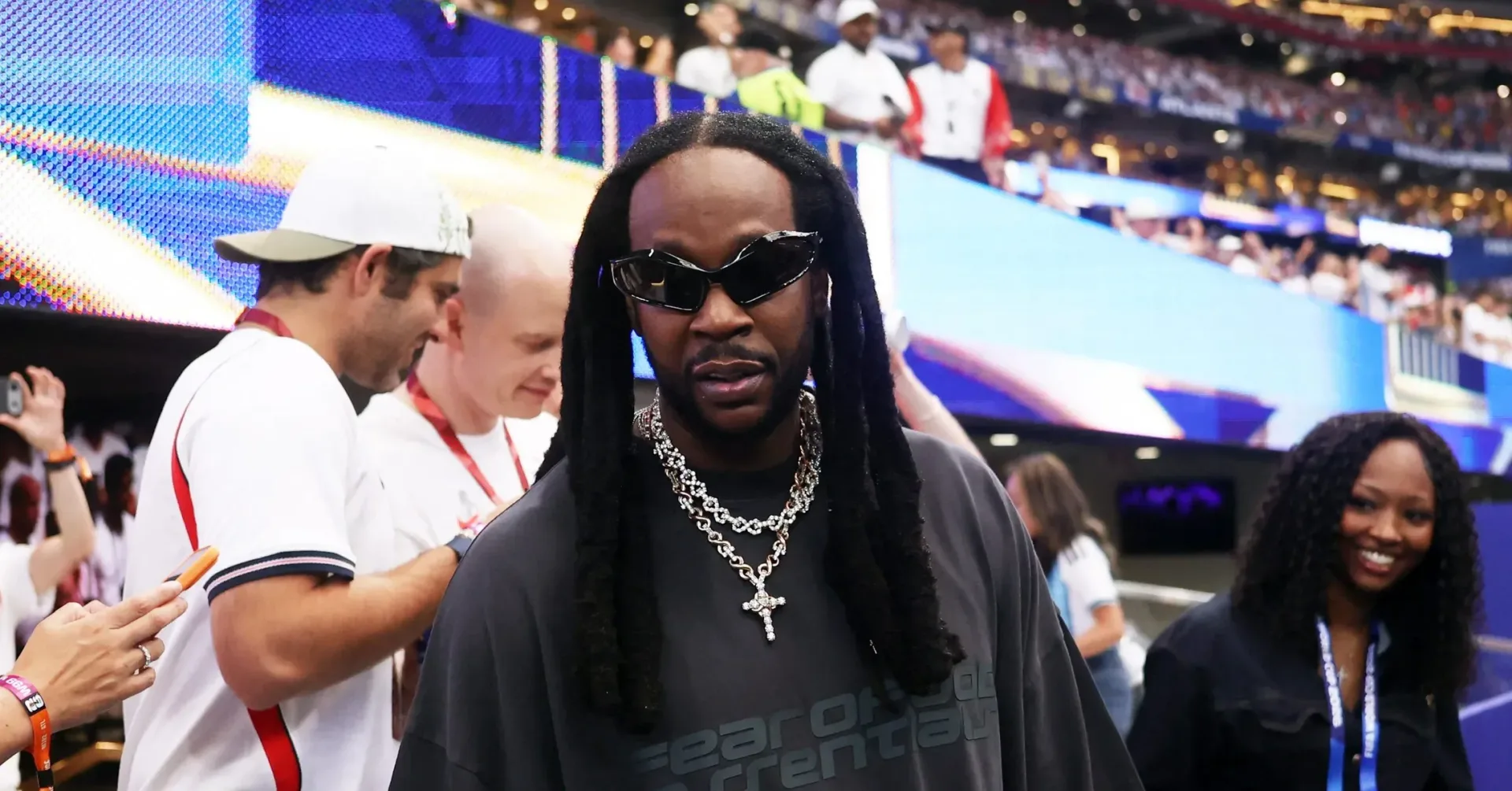
Restaurants have a familiar boss battle: serve the customer in front of you, not the customer you hope will post about you. A discussion between 2 Chainz and food reviewer Keith Lee on a recent episode of Den Of Kings put that pressure point in the spotlight—and the response online has been rough for the rapper.
2 Chainz appeared on the episode alongside Lee, Kirk Franklin, Mojo Brookzz and Desi Banks. The exchange that has travelled furthest concerns negative reviews of 2 Chainz’s restaurants, and the standards behind them. Lee’s central explanation was not an abstract disagreement over cuisine. It was inconsistent service.
That sounds simple, but it opens a much bigger argument. What should a restaurant review represent when the reviewer is famous enough that a visit can change the way a business behaves? And if VIP treatment is an ordinary part of celebrity life, does accepting it make a review less useful to the public?
For many watching, the uncomfortable part was not that 2 Chainz defended the reality of special treatment. It was the apparent clash between that defense and the expectation that a restaurant should work for everyday guests, including people who have no recognition, no entourage and no chance of sending a crowd of new customers through the door.
The issue was service consistency, not simply one meal
Keith Lee became widely known for visiting smaller, independently run restaurants around the United States. His positive reviews can bring a major rush of business, potentially changing a restaurant’s immediate prospects. That reach also creates a problem for any reviewer: once staff recognize the person walking in, the experience can stop resembling the one a typical customer receives.
Lee’s answer has been to send family members in before he visits. The purpose is straightforward. They can assess whether the restaurant gives regular customers the same care, access and hospitality that it may reserve for a prominent reviewer.
This is a form of attempting to control for recognition. In plain terms, it tries to remove the “Keith Lee effect” from the visit. If a restaurant is only exceptionally responsive after it identifies a high-profile guest, then a polished service experience does not necessarily describe its normal operation.
That distinction matters because restaurant criticism is not only about flavour. A meal can be excellent while the ordering process is confusing, wait times are poorly handled, customer concerns go unanswered or service varies sharply depending on who walks through the door. A restaurant’s food and a restaurant’s overall customer experience overlap, but they are not the same category.
Related coverage includes 2 Chainz and Keith Lee’s Restaurant Debate Draws Backlash.
Lee said the issue in the discussion came down to inconsistent service. The method involving family members matters in that context: it is designed to compare treatment, rather than assume that the most influential guest receives the most representative version of it.
2 Chainz’s counterpoint: special treatment is real
2 Chainz pushed back by arguing that famous people receive special treatment as a fact of life. He also said that, after working hard to reach his position, he does not want to wait 40 minutes to get into a restaurant.
That statement is candid about celebrity access. It also identifies why the debate landed badly with some viewers. A reservation policy, a queue or a long wait may be frustrating for anyone, regardless of status. Yet when a business owner treats bypassing those conditions as expected for well-known guests, it can sound like an endorsement of two separate standards: one for people with influence and one for everyone else.
There is a practical business case for taking care of notable visitors. A public figure’s visit may lead to attention, promotion or future business. But that calculation does not erase the risk. If routine customers repeatedly experience a less dependable restaurant than the person who can boost its profile, the business may receive praise that its ordinary clientele cannot reproduce.
That is why “everyone does it” is not necessarily a persuasive answer to a critique about consistency. The claim may describe an industry habit, but it does not resolve whether the habit is fair to customers—or whether a review should report the special version of service rather than the everyday one.
Can a reviewer’s palate be questioned?
The conversation also moved into another frequent dispute around food criticism: whether Lee has the culinary background needed to judge restaurants. Lee responded by emphasizing his love of cooking and that he cooks for his family.
It is useful to separate two kinds of expertise that are often blended together. Technical culinary expertise concerns how food is prepared: technique, ingredients, timing, texture and execution. Consumer-review expertise concerns communicating a diner’s experience: whether the food appeals to the reviewer, whether ordering and service are workable, and whether the visit matches what a customer can reasonably expect.
A reviewer does not need to be a chef to describe a personal response to a meal. At the same time, no single diner’s taste is universal. That is not a flaw unique to food reviews; it is the basic limitation of opinion. The value lies in being clear about what is being assessed and in giving audiences enough context to decide whether the reviewer’s priorities match their own.
In this case, the service point is especially difficult to dismiss as merely a matter of palate. A person may disagree completely about seasoning, texture or a preferred dish. It is harder to argue that unequal treatment of recognizable guests and ordinary customers is only a difference in taste.
Why the reaction has focused on what customers are owed
Online backlash toward 2 Chainz has included viewers who see his position as a betrayal of values they associate with him. The available reaction does not establish one unified public verdict, nor does it show that every viewer interpreted the exchange the same way. It does show that the idea of celebrity priority struck a nerve.
Part of that response is likely about the power imbalance built into the scenario. A famous visitor can leave and publicly describe a business to a large audience. An everyday customer usually cannot. If the powerful visitor is shielded from the inconveniences that shape the ordinary customer’s meal, then their account becomes less informative precisely where public-facing criticism is meant to help.
Lee’s family-first approach addresses that imbalance without claiming to make a visit perfectly objective. It cannot turn taste into mathematics, and it cannot guarantee that every visit captures every aspect of a restaurant. What it can do is test a concrete question: does the service remain consistent when the staff do not know that a major reviewer is connected to the table?
That question may be more useful to diners than a debate over who deserves the shortest wait. It asks whether hospitality is a dependable practice or a performance activated by status.
What restaurant owners can take from the exchange
The discussion offers a clear operational lesson for any restaurant that hopes to benefit from attention without being exposed by it: build a customer experience that does not depend on identifying the customer.
- Make service standards repeatable. A welcoming interaction should not require a famous face at the door.
- Treat feedback as a system check. A complaint about inconsistency points to variation in the experience, not necessarily a blanket rejection of the food.
- Distinguish hospitality from preferential access. Making a guest feel valued is different from making other guests feel secondary.
- Remember the post goes viral because the ordinary visit matters. The audience for a review is usually looking for a sense of what will happen when they show up.
For customers, the exchange is a reminder to read food coverage with a little context. A glowing review may be meaningful, particularly when it sends attention toward a small business. But service can vary by time, location, staffing and, as this debate underlines, recognition. The most valuable recommendation is one that remains useful even when no one at the table is famous.
The 2 Chainz–Keith Lee disagreement is therefore bigger than a dispute over restaurant credentials or a 40-minute wait. It is about the promise behind a public recommendation. If the best experience is reserved for the most visible person in the room, then the review has identified an exception—not necessarily the restaurant the rest of the public will encounter.
For more music-adjacent pop-culture coverage, see our report on Kodak Black leaving a Tampa performance after an apparent medical episode.