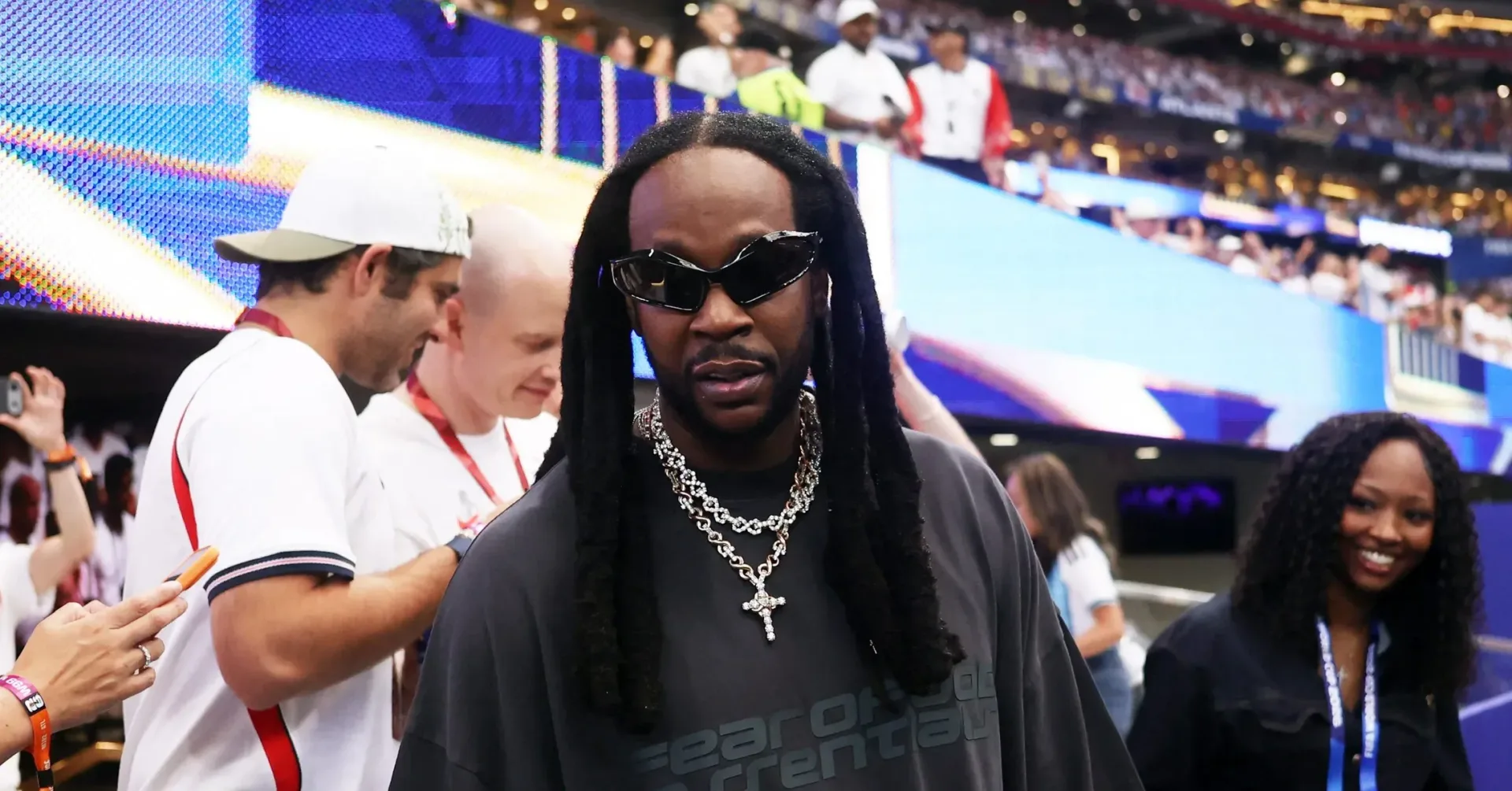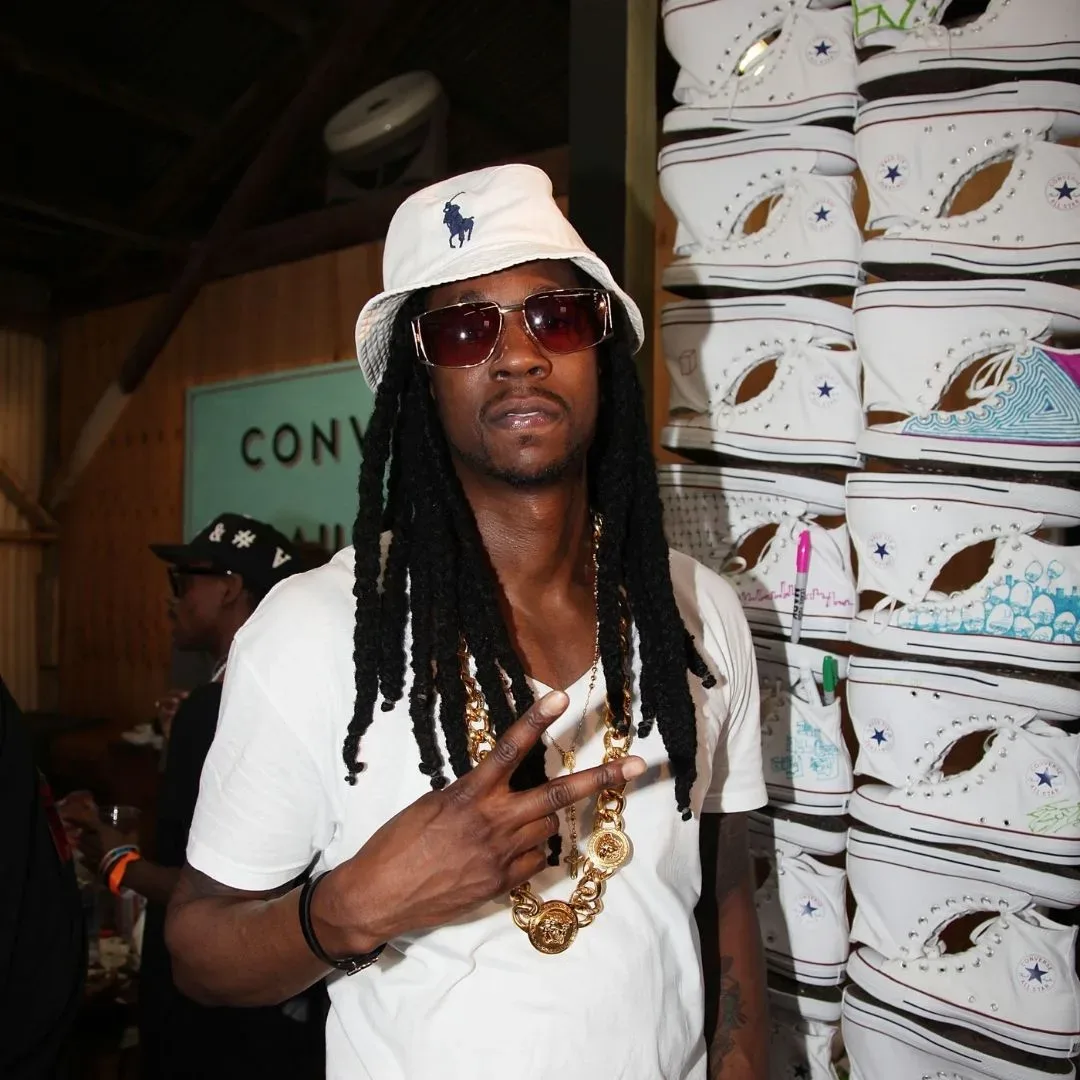
2 Chainz has distilled a change in spending priorities into a choice that is especially pointed given his stage name: rather than buy another expensive chain, he says he put the money into a business he already owns.
“So I invested in one of my businesses instead,” he said. “Today, I’d rather own something.”
It is a simple statement, but an important distinction. Jewelry can carry cultural meaning, personal style and status; it may also retain some resale value depending on the piece. An ownership stake in a business, meanwhile, represents an interest in an operating venture. Its value and risk depend on the venture’s performance, rather than solely on the object itself. 2 Chainz did not identify the business, say how much money was involved or specify when he made the decision, so there is no basis for measuring the financial result of that particular investment.
What is clear is the broader priority he is describing: directing money toward enterprises he owns rather than another luxury purchase. He also placed buying a home for his mother above jewelry or a car in personal significance, connecting financial choices with family care rather than treating them only as investments or displays of success.
A portfolio built around food, nightlife and more
The comment fits with a business record that reaches well beyond music. His interests have included real estate, cannabis, food and fashion, as well as work in film and television. The range matters because it shows that “own something” is not being used as an abstract slogan. It points to ventures in different sectors with different audiences, operations and demands.
Among the businesses he has highlighted are Candyland, an Atlanta nightlife venue, and Pizza Fedora, a vegan pizza brand. In a December 2024 business recap, he also discussed plans to give former Zesto’s locations a new purpose. He has described Esco as a venture that matches his tastes in food, music and atmosphere.
Those details do not establish how any individual business is performing, and they should not be read as proof that an investment is automatically more valuable than a luxury item. But they do show the practical side of the preference: business ownership means tying capital to places, brands and customer experiences that must continue to serve people well.
Food and nightlife in particular are not passive categories. They require an identifiable concept, day-to-day execution and a reason for customers to return. A restaurant or nightlife brand may be fueled by personality and recognition, but it also depends on the less glamorous work behind that identity: operations, staffing, product consistency and a clear fit with its market. The available information does not detail how those responsibilities are divided within 2 Chainz’s ventures, but the businesses themselves illustrate that ownership extends past a name on a sign.
Related coverage includes 2 Chainz Puts Ownership Ahead of Another Jewelry Purchase.
The Smoothie King arena kiosk
A 2024 Smoothie King expansion provides one concrete example of a venture designed around an existing audience and location. On June 25, 2024, the company said 2 Chainz and longtime franchisee Philip Jones were opening a kiosk inside Atlanta’s State Farm Arena, with a launch planned for June 26. A company update the following month confirmed that the kiosk had opened in June.
The placement is notable because State Farm Arena serves concerts and live events. A kiosk is a compact sales location, generally built to serve customers quickly in a high-traffic setting rather than operate like a full-size standalone shop. In this case, it brought Smoothie King into an event venue within a market where the chain already had more than 80 stores.
That context helps explain why the opening should not be understood as merely another storefront. Event venues concentrate large groups of people into limited windows before, during and after programming. A business in that environment is working around different rhythms from a neighborhood location: the biggest demand may be tied to event schedules and attendee flow. The supplied information does not disclose sales, traffic or any financial terms for the kiosk, so its outcome cannot be assessed from the opening alone.
2 Chainz linked the partnership to his own consumer habits and to efforts to make healthier choices. “I visit Smoothie King at least twice a week, so this partnership has been a long time coming,” he said at the time. That is a useful piece of context, because it presents the deal as an extension of a product he says he was already using, rather than an unrelated endorsement.
Celebrity business ventures are often discussed as if fame and ownership are interchangeable. They are not. A recognizable partner can attract attention, while a franchise arrangement connects a location with an established brand and operating model. Neither fact guarantees results. Still, the State Farm Arena kiosk is a more specific example of the kind of ownership-oriented activity 2 Chainz is talking about: a real location, a named partner in Philip Jones and a customer setting built around Atlanta events.
Ownership is a priority, not a claim of certainty
The appeal of the statement lies partly in its restraint. 2 Chainz did not claim that every business bet wins, nor did he reveal a dollar amount or name the company that received the jewelry money. He described a shift in what he would rather have: ownership.
That distinction leaves room for the realities often flattened in conversations about wealth. Owning a business can create an opportunity to build a long-term asset, but it can also involve exposure to losses and ongoing responsibilities. A chain is tangible and immediate. A business stake is tied to a living operation, with outcomes that are uncertain. The value in 2 Chainz’s comment is not a universal prescription for what anyone else should buy; it is a window into how he is weighing visibility, control and purpose.
His reference to his mother’s home sharpens that point. The most meaningful use of money, in his telling, is not necessarily the purchase with the biggest visual impact. It can be an asset or decision that affects family life. That framing gives the line about another chain more weight than a quip built around his name. It is a statement about what he sees as lasting.
Judgment, recovery and the memoir’s larger frame
The emphasis on choosing for himself also aligns with themes in his memoir, The Voice in My Head Is God. Atria/Black Privilege Publishing released the book on March 3, 2026. 2 Chainz wrote it with Derrick Harriell.
The book covers his beginnings in College Park, Georgia, where his mother raised him as an only child while his father was in prison. It also addresses formative points in his career, including early support from Ludacris and his relationship with Lil Wayne.
Just as significantly, the memoir addresses addiction, recovery, faith and discipline. The account examines setbacks alongside career success, with trusting his own judgment presented as a central theme. In that light, his decision to favor an investment over jewelry reads as part of a wider personal vocabulary: making choices with intention rather than simply following expectation.
That does not turn a business purchase into a neat moral lesson, and it should not erase the uncertainty that comes with any venture. But it explains why a decision involving a luxury item can carry a larger meaning for him. The contrast is between an object that signals success and an ownership stake intended to participate in creating something beyond the moment of purchase.
For a related look at how entertainment figures and projects can remain in flux, see this update on O’Shea Jackson Jr. and the ongoing Last Friday casting conversation.
What the decision does—and does not—tell us
- It does show: 2 Chainz says he chose to invest money earmarked for jewelry in an existing business.
- It does show: His public business activity has included Atlanta food and nightlife ventures, along with a Smoothie King kiosk at State Farm Arena with Philip Jones.
- It does show: He connects financial decisions to family, healthier habits and a broader preference for ownership.
- It does not show: Which company received the investment, how much was invested or when that decision happened.
- It does not show: Revenue, profitability, ownership percentages or the investment’s eventual return.
For now, the jewelry-versus-business contrast is best understood as a personal statement of direction, supported by a visible set of ventures rather than a disclosed financial ledger. Another chain may make sense as style, celebration or craftsmanship. For 2 Chainz, however, the stated appeal of putting that money into something he owns has become the stronger choice.