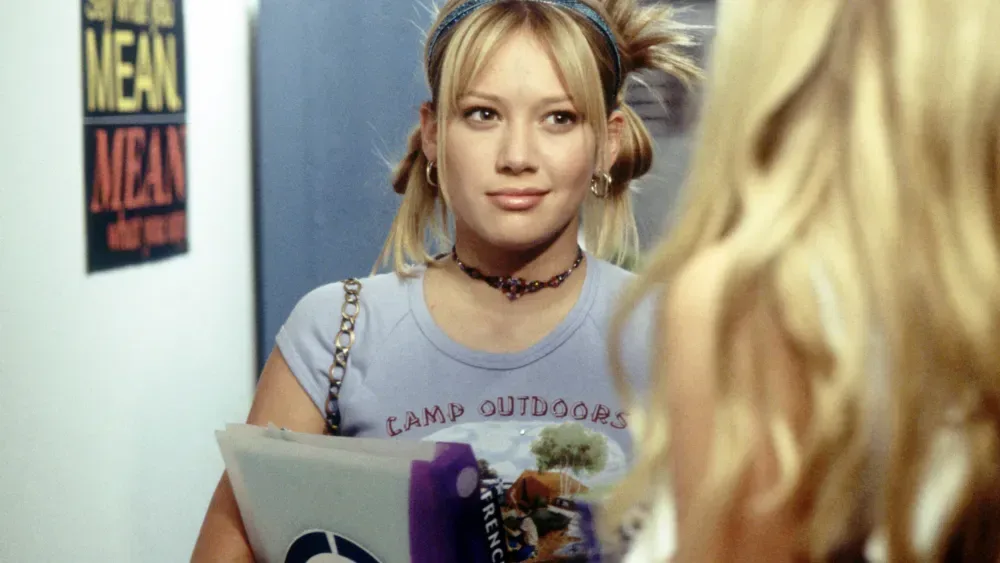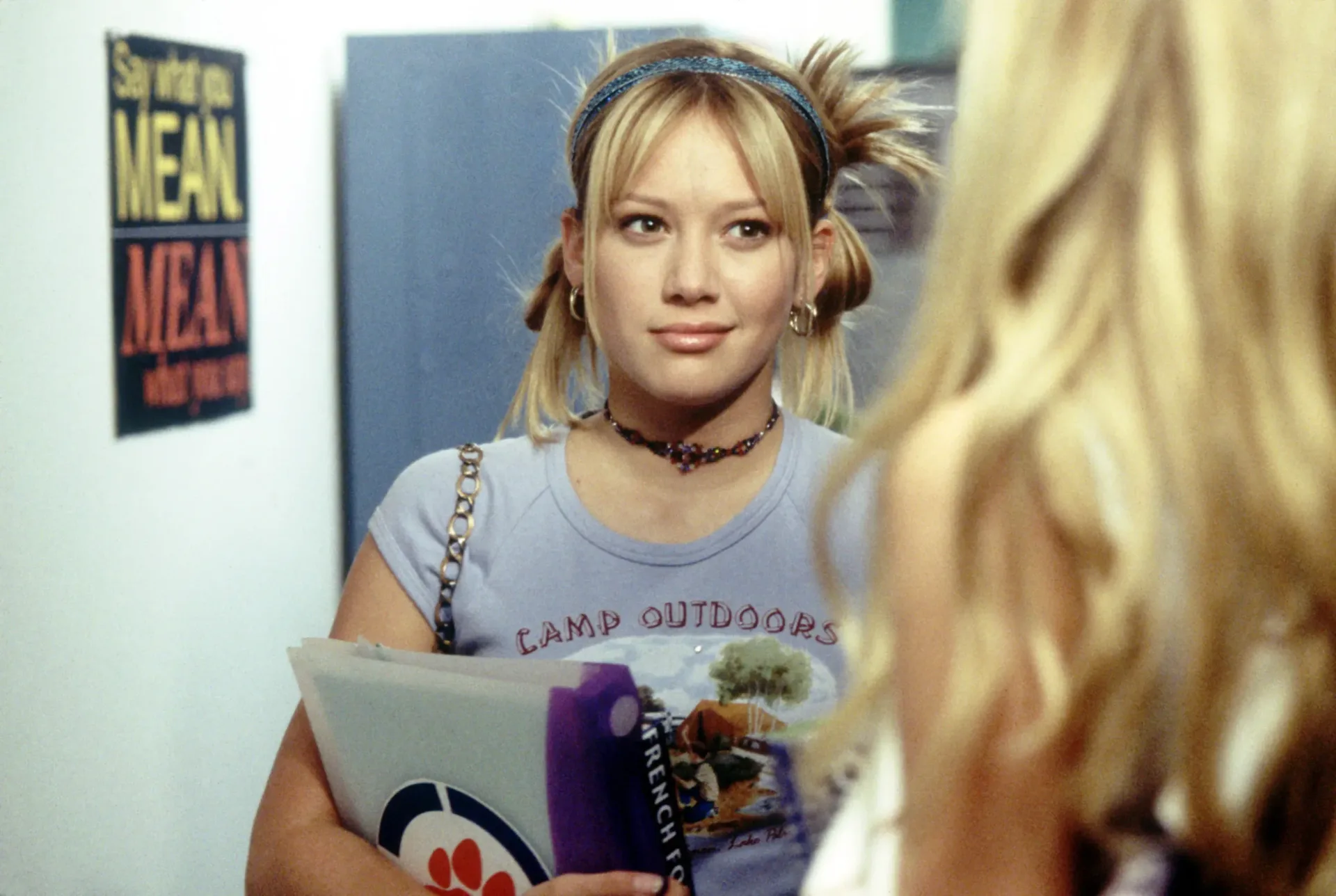
For audiences who grew up with Lizzie McGuire, “What Dreams Are Made Of” can feel inseparable from the 2003 film: a big-screen musical release, an Italian setting and a character whose story had become a defining early-2000s pop-culture memory. For Hilary Duff, though, that moment arrived at the end of an intense period in which the character had become difficult to escape.
Looking back on filming The Lizzie McGuire Movie, Duff said she was “pretty done with Lizzie.” Her explanation is direct: she had filmed 30 episodes in one year and 35 in the next, became a major star, and found that people identified her primarily with the character. By the time production moved to Italy for the movie, she wanted to be seen as Hilary Duff rather than Lizzie McGuire.
That distinction gives new context to a song that is now treated as an enduring fan favorite. Duff has re-recorded “What Dreams Are Made Of” for her 2026 EP (Mine) and performed it live for the first time on the Small Rooms, Big Nerves Tour. She says the experience now feels better because she can participate in the celebration of what the song means to listeners—and what it means to her.
A character-sized shadow
Being closely associated with a breakthrough role is a familiar feature of long-running pop culture, but Duff’s account illustrates why that association can feel limiting for the performer. The issue was not simply that Lizzie McGuire was successful. It was the speed and scale of the role’s place in her life: 65 episodes across two seasons, followed by a feature film, while her public identity became entwined with the character.
Lizzie McGuire debuted in January 2001. Alongside Duff, its cast included Lalaine, Adam Lamberg, Jake Thomas, Hallie Todd and Robert Carradine. The series ended in 2004, with the film part of its overall legacy. Duff’s reported episode counts—30 in one year and 35 the next—also line up with the show’s full 65-episode total. That is a concentrated workload for a young lead, before the additional work and visibility attached to the movie.
Her comments do not dismiss the audience’s affection for the series or song. In fact, she says she is glad the material has resonated for so many years. What she describes is the difference between a viewer’s nostalgia and an actor’s memory of being inside the machine that created it. Fans may remember a bright, celebratory performance. Duff remembers feeling exhausted and eager to establish an identity beyond the role.
Why the new version matters
A re-recording is a newly made version of a previously released song. In this case, Duff’s (Mine) EP contains seven newly re-recorded versions of her hits. Those tracks first appeared as bonus material on vinyl variants of Luck… or Something.
That detail matters because Duff has specifically connected the new recording to a change in personal perspective. At the time of the film, she said she did not consider “What Dreams Are Made Of” to be her song to sing and said she did not own it. Now, she says, it feels like it is hers.
Related coverage includes Hilary Duff Revisits Lizzie McGuire and Finally Makes “What Dreams Are Made Of” Her Own.
It is important not to stretch that statement beyond what it says. Duff’s comments communicate an emotional and artistic sense of ownership; they do not, by themselves, set out the song’s legal or commercial rights arrangements. Still, the contrast is clear. The earlier performance was tied to a character she was trying to move beyond. The 2026 version and tour performance let her approach the song as an adult artist making a choice to bring it into her own live set.
That can alter a familiar song’s meaning without changing why people loved it in the first place. The song remains linked to The Lizzie McGuire Movie, but it is no longer confined to the exact context in which it first appeared. Its return is also a return on Duff’s terms.
From distance to participation
One of the most revealing parts of Duff’s reflection is that she once had no interest in singing the song again. She said she was at a point where her reaction was essentially, “I’m never singing that song.” That was not a rejection of its cultural impact. It was a boundary drawn by someone who felt consumed by a role and who wanted the public to recognize a separate self.
Her current position is markedly different. Duff said she can now join in the celebration around the track. She also described feeling present in it when she performs now, compared with feeling disconnected from herself in the earlier period. The result is not a rewrite of the past; it is a reframing. The performance can carry both histories at once: the character and movie audiences cherish, and the performer who needed time away from that identity.
That makes the live debut on the Small Rooms, Big Nerves Tour more significant than a routine revival of a recognizable catalog song. It represents a choice to revisit material after years of distance. For fans, that may make the track’s appearance feel especially meaningful. For Duff, it appears to be a way of turning something that once symbolized pressure into a performance she can inhabit.
The practical lesson in nostalgia
Pop-culture nostalgia often works as if old favorites are frozen in place: a show, a scene, a song, a memory. Duff’s remarks are a useful reminder that the people associated with those works continue to develop their own relationship to them. A return need not mean that an artist always felt comfortable with the original moment, nor does past exhaustion cancel the joy audiences took from it.
For listeners approaching the (Mine) EP, the re-recorded “What Dreams Are Made Of” carries this extra layer of context. It is tied to a song from a Disney Channel-era film, but also to Duff’s effort to distinguish herself from the character who made her famous. Her willingness to sing it live now suggests that the separation she sought is what has made renewed connection possible.
That is a more interesting story than simple retro celebration. The song’s place in pop culture has endured; Duff’s relationship with it has changed. And rather than pretending the difficult part never happened, she has articulated why revisiting it can finally feel rewarding.
Her return also arrives amid broader attention on artists reconsidering their catalogs and public identities. For more music news, see SZA’s plans for more album work.