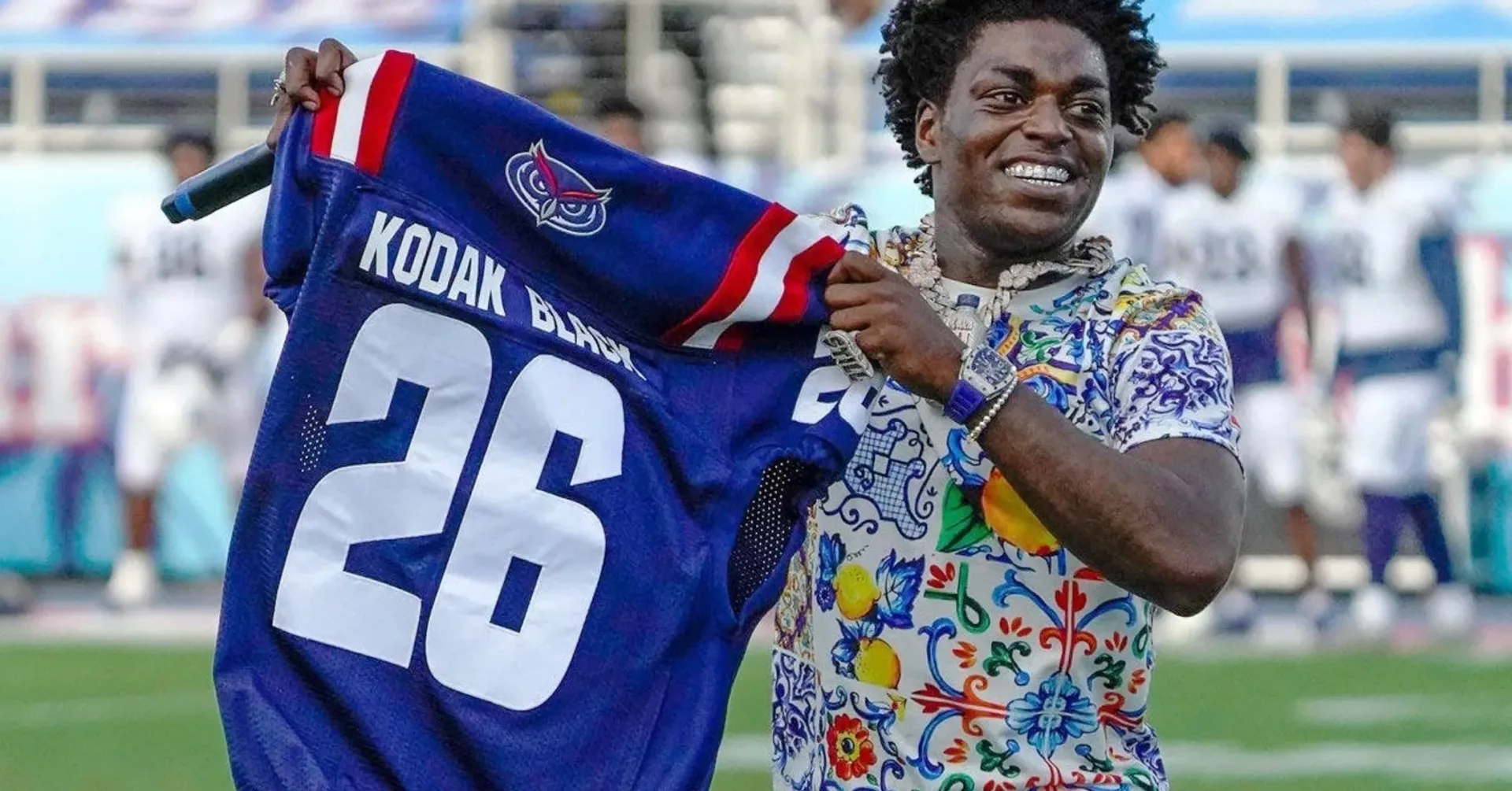
A newly circulated bodycam clip involving Kodak Black has become a talking point for its unusually low-key tone: the rapper is shown seated with a takeout meal, continuing to eat while officers wait for him to wrap up before leaving with them. The footage, described as relating to an arrest in May, does not play like the frantic, heavily edited viral-arrest videos audiences may expect. Instead, it presents a short and remarkably calm exchange in which everyone involved appears focused on getting through the process without escalating the moment.
That contrast is the reason the video has attracted attention. Kodak Black—also known as Yak—appears unhurried and composed. At one point, he reportedly offers the arresting officer a handshake, signals that he is ready, and then continues with his food. An officer can be heard encouraging a quicker departure on the practical grounds that arriving sooner would help the process move along. The officer also handles the takeout container as Kodak Black exits the vehicle.
The clip has resurfaced amid continued discussion of Kodak Black’s legal history and an active period of music-related conversation around him. Most notably for game-culture audiences, his track “Skrilla” has been associated with an extended Grand Theft Auto VI trailer shown on Netflix. That placement has naturally prompted fan speculation about whether more of his music could turn up around the game. At this stage, though, the trailer use alone does not confirm any broader soundtrack role or a full list of songs connected to the eventual release.
A quiet moment in footage with serious context
It is important to separate the striking visual of the clip from the underlying legal matter. Reports connect the video to a prearranged surrender tied to an Orlando investigation from the previous year. Police said cash and MDMA were located in a vehicle, along with documents bearing Kodak Black’s legal name. Authorities also said the items found were similar to objects visible on his Instagram account.
Kodak Black pleaded not guilty to a trafficking MDMA charge and posted bond. A not-guilty plea is a formal denial of the accusation, not a determination of the case’s outcome. The bodycam sequence may be memorable because of its placid mood, but it should not be mistaken for a resolution of the allegations or for a complete account of the investigation.
That distinction can get lost when a brief clip becomes social-media material. A few minutes of video can establish what is visible and audible in that particular interaction: a meal, a handshake, officers waiting, and a calm departure. It cannot, by itself, supply the full factual or legal record behind the surrender. The unusual patience shown in the scene is what makes it shareable; the seriousness of the charge is what makes careful framing necessary.
Why the clip has a different feel from typical celebrity-arrest coverage
Celebrity arrest footage often reaches the public after being condensed into a dramatic headline, a confrontation, or a punchline. Here, the memorable detail is practically domestic. Someone is hungry, a meal is in progress, and the immediate logistical question is how quickly everyone can get on the road. The interaction appears to be governed by cooperation rather than resistance.
That does not make the event trivial. Rather, it illustrates how real-world law-enforcement encounters can be more routine and procedural than the genre conventions viewers bring to viral video. There is no need to manufacture extra meaning from Kodak Black’s body language, the officer’s demeanor, or the food itself. The available footage simply depicts a calm exchange during a reported surrender.
It also demonstrates the strange afterlife of bodycam video in pop culture. The footage was not created as entertainment, yet once it circulates, its smallest details can be interpreted like a scene from a reality program: the pause before leaving, the handshake, the thumbs-up, and the unfinished takeout. The internet tends to elevate the most unexpected human detail. In this case, the arrest is the context, while the meal became the image people remembered.
The GTA VI connection remains a music conversation, not confirmation
For gaming audiences, the other thread is Grand Theft Auto VI. Music has always been central to the Grand Theft Auto identity, from radio stations that define a city’s mood to licensed tracks that become inseparable from trailers and memorable in-game moments. A song appearing in promotional material can ignite discussion quickly because fans know Rockstar Games has historically used music with care and cultural fluency.
“Skrilla” appearing in the extended GTA VI trailer on Netflix therefore gives Kodak Black a place in a much wider conversation about the game’s sound and its cultural orbit. Still, audiences should avoid leaping from a trailer placement to firm claims about the official soundtrack, a radio station, an artist cameo, or additional tracks. None of those possibilities are established merely by the song’s appearance in promotional footage.
The prospect is easy to understand. GTA’s music selections frequently function as more than background; they can help sell a regional atmosphere, signal an era, and frame how players remember a trailer long after it ends. Kodak Black’s South Florida roots make any connection to a Vice City-adjacent setting especially interesting to fans. But interest is not evidence. Until specific music details are officially laid out, the sensible position is that “Skrilla” has been used in trailer material, while any expanded involvement remains unconfirmed.
That same balance is useful across entertainment news generally. A highly shareable bodycam moment and a high-profile game trailer can coexist in the public conversation without one validating assumptions about the other. One is a legal matter with a documented plea; the other is a promotional-music detail that has encouraged speculation. They are separate stories connected by the artist at their center.
Recent music activity adds to the attention
Beyond the legal and gaming discussion, Kodak Black has remained visible through new music activity. He recently appeared alongside Yung Miami and Lil Baby on a remix of “Spend Dat.” That collaboration, paired with the renewed attention around “Skrilla,” means the bodycam footage is arriving at a time when listeners have multiple reasons to encounter his name.
For artists with long, complicated public narratives, that overlap can make every separate development feel like one larger storyline. Legal reporting, viral clips, trailers, remixes, and fan theories begin to feed into the same online stream. Yet each deserves its own level of certainty. The arrest clip shows a calm reported surrender. The case involved allegations that Kodak Black has denied through a not-guilty plea. The GTA VI trailer included “Skrilla.” A wider game-music role has not been confirmed.
There is also a broader relationship between rap and game culture worth noting. Grand Theft Auto has long been one of the industry’s most visible intersections of music, satire, cars, fashion, regional identity, and open-world fantasy. A contemporary rapper’s song entering the GTA conversation is not an unusual development, but it can carry added weight when the setting and the artist’s cultural associations seem to align. In this case, that perceived alignment is part of what has driven interest—not a substitute for official confirmation.
Music remains a major bridge between games and wider popular culture, just as live performance can turn identity and staging into a larger event. For another recent example of that overlap in entertainment coverage, see Rauw Alejandro’s Forest Hills shows and their three-part presentation of Puerto Rican heritage.
What can be said with confidence
- Bodycam footage circulating online shows Kodak Black eating takeout while officers wait during what has been described as a May arrest.
- The interaction shown is notably calm, including a reported handshake and cooperative departure.
- The footage has been linked to a prearranged surrender connected with an Orlando investigation from the prior year.
- Police alleged that cash, MDMA, and documents bearing his legal name were found in a vehicle.
- Kodak Black pleaded not guilty to trafficking MDMA and posted bond.
- His song “Skrilla” appeared in extended GTA VI trailer material on Netflix.
- Any claim that he will have more music in the game’s official release remains speculation unless confirmed.
For now, the viral clip is likely to endure because it is so visually incongruous: a celebrity arrest video remembered not for disorder, but for a plate of food and a patient wait. Its wider context, however, is more consequential than the internet’s immediate punchline. And for GTA VI followers, the music angle is best treated as an intriguing trailer detail rather than a completed soundtrack announcement.