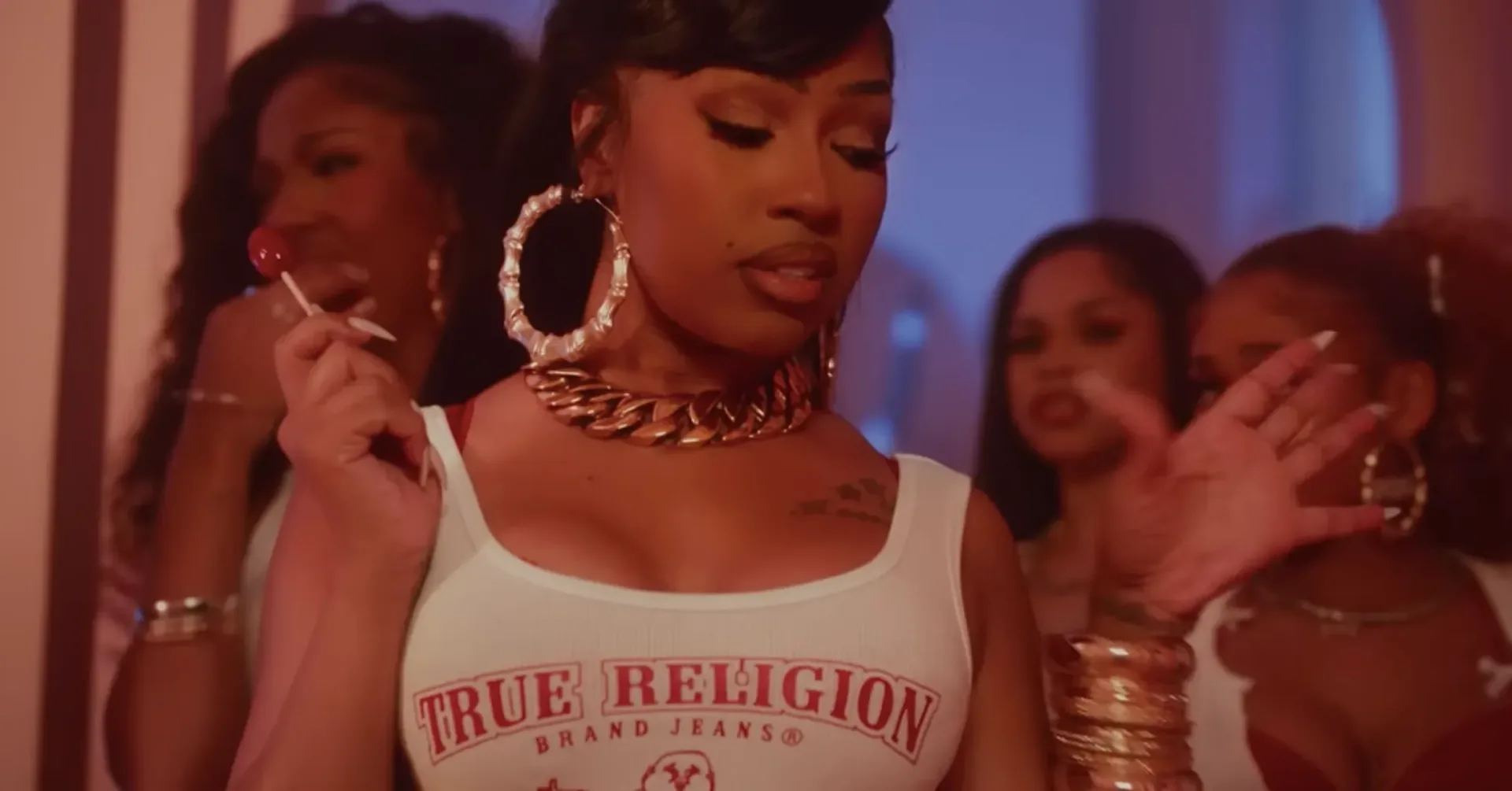
Yung Miami used a recent interview with Lore’l to address a criticism she says has been hard to ignore: a pattern of negative commentary whenever the radio host discusses her.
The exchange was not framed as a broad complaint about criticism itself. Miami’s objection was more specific. She said that, when she hears Lore’l speak about her during visits to a particular radio station, the tone repeatedly lands on the negative side. For Miami, that repetition made the commentary feel pointed rather than incidental.
“Every time I go to this one radio station, whenever my name comes up, you just always got something negative to say,” Miami said.
Miami added that she notices the commentary in the normal course of her day, including while taking her children to school. That detail matters because it shifts the dispute away from the usual abstract celebrity-versus-media framing. Her point was that public conversation around her is not something she can simply tune out; it reaches her in everyday settings and, in her view, too often comes with the same critical voice attached.
What Yung Miami Was Challenging
The disagreement centers on intent as much as content. Miami said she viewed Lore’l as someone who seems to have “always got something to say” when her name arises, calling that pattern “weird.” She also referred to Watch This, the title of her new album, while identifying people she sees as doubters of her ability to move forward as a solo artist.
That is an important distinction in the conversation. A public figure can disagree with one critique and move on; a perceived run of criticism can feel like a narrative being built around them. Miami’s argument was not merely that a particular remark was harsh. It was that the accumulation of remarks had caused her to question whether the coverage was personal.
Lore’l pushed back on that reading. She said she does not believe she talks negatively about Miami all the time, while also conceding that some of her prior observations may not have been flattering. Lore’l’s central defense was that the comments were not personal.
Neither side fully accepted the other’s premise. Lore’l separated professional commentary from personal animus; Miami treated the recurring nature of that commentary as evidence that the divide may not be so clean. The tension is therefore less about whether every prior statement was positive or negative, and more about how repeated public assessments are interpreted by the person being assessed.
The Earlier Tour Comment at the Center of the Friction
Miami appeared to be referring, at least in part, to a previous remark from Lore’l concerning her decision to leave Bossman D-Low’s tour while “Spend Dat” was gaining attention. Lore’l had said Miami seemed to think she was “bigger than the program.”
That phrase carries more weight than a routine critique of a single career decision. It speaks to attitude, ambition and a performer’s relationship to the team or opportunity around them. In entertainment discussion, a comment of that kind can easily be heard as a judgment about character, not simply strategy. That helps explain why Miami raised it while challenging the idea that the commentary had been neutral or nonpersonal.
At the same time, the available exchange does not establish Miami’s reasons for leaving the tour, nor does it settle whether Lore’l’s earlier characterization was fair. Those are separate questions from the one the interview actually puts in focus: why the two women came away with sharply different impressions of the same body of public commentary.
Why the Solo Context Raises the Stakes
The conversation arrives during a transition for Miami. The City Girls era has ended, with Miami and JT now pursuing separate paths, and Miami is entering a solo-album chapter under heightened scrutiny. That context gives criticism a different edge. A listener or host may see a comment as part of ordinary entertainment coverage, but an artist trying to establish a standalone identity may hear it as another test of whether audiences are willing to take that identity seriously.
Solo artist, in this context, means a performer presenting work outside a prior group framework. It does not automatically erase the visibility, accomplishments or audience recognition attached to the group. It does mean that new music and career choices are more likely to be judged as an individual statement. For Miami, the title Watch This appears to fit that defiant posture: criticism becomes part of the motivation behind the next phase, rather than a topic she intends to ignore.
That does not make every negative observation invalid, and Miami did not argue that media figures cannot discuss public figures. Lore’l explicitly pointed to that function of her job. The dispute instead illustrates the difficult line between commentary and a perceived pile-on. There is no universal measurement for when coverage crosses it. Frequency, phrasing, context and the speaker’s prior remarks can all shape how the subject receives it.
Analysis: A Disagreement Over Pattern Recognition
There are two coherent, competing interpretations in the exchange.
- Miami’s interpretation: negative remarks have appeared often enough that they establish a recognizable pattern, making it reasonable to suspect that the commentary is directed at her rather than simply at her public decisions.
- Lore’l’s interpretation: not every unflattering opinion is an attack, and discussing artists candidly is part of the role of a radio personality.
The gap between those positions is why direct confrontations can be difficult to resolve. One participant is describing impact: how recurring criticism feels and what it appears to communicate. The other is describing intent: the purpose behind saying it. Intent and impact can overlap, but they are not identical. A speaker can insist a critique is professional, while its subject can still reasonably experience the aggregate effect as personal.
The interview also shows why celebrity-media conflicts frequently become debates about consistency. When a critic believes each remark stands on its own, they may not see a larger throughline. When the artist remembers each moment as part of a collection of barbs, the throughline is exactly what stands out. Miami’s challenge was effectively about that collected record.
There is a wider practical implication for performers navigating an online and radio-driven conversation: responding to criticism can clarify boundaries, but it also keeps attention on the criticism. Miami chose a direct approach, naming the issue to Lore’l rather than leaving supporters to speculate about who she meant. Lore’l, in turn, did not deny that some previous remarks were unflattering, but rejected the suggestion of a personal agenda.
What the Exchange Does—and Does Not—Resolve
The discussion provides no indication that the pair reached a shared conclusion. Lore’l maintained that her commentary was not personal. Miami remained unconvinced, arguing from her sense that the remarks have repeatedly leaned negative.
For now, the clearest takeaway is the contrast between their positions: Miami is alert to the public discourse surrounding her solo era and willing to confront voices she believes have underestimated her; Lore’l sees criticism as part of discussing people in the public eye, even when that criticism is not complimentary.
Miami’s new album, Watch This, is central to the emotional framing of the moment, but the exchange offers no further details about its rollout or release. It does, however, show the personal stakes Miami attaches to being evaluated outside the City Girls partnership. For related pop-culture coverage involving another major rap artist’s business venture, see Cardi B’s Grow-Good salon treatment story.