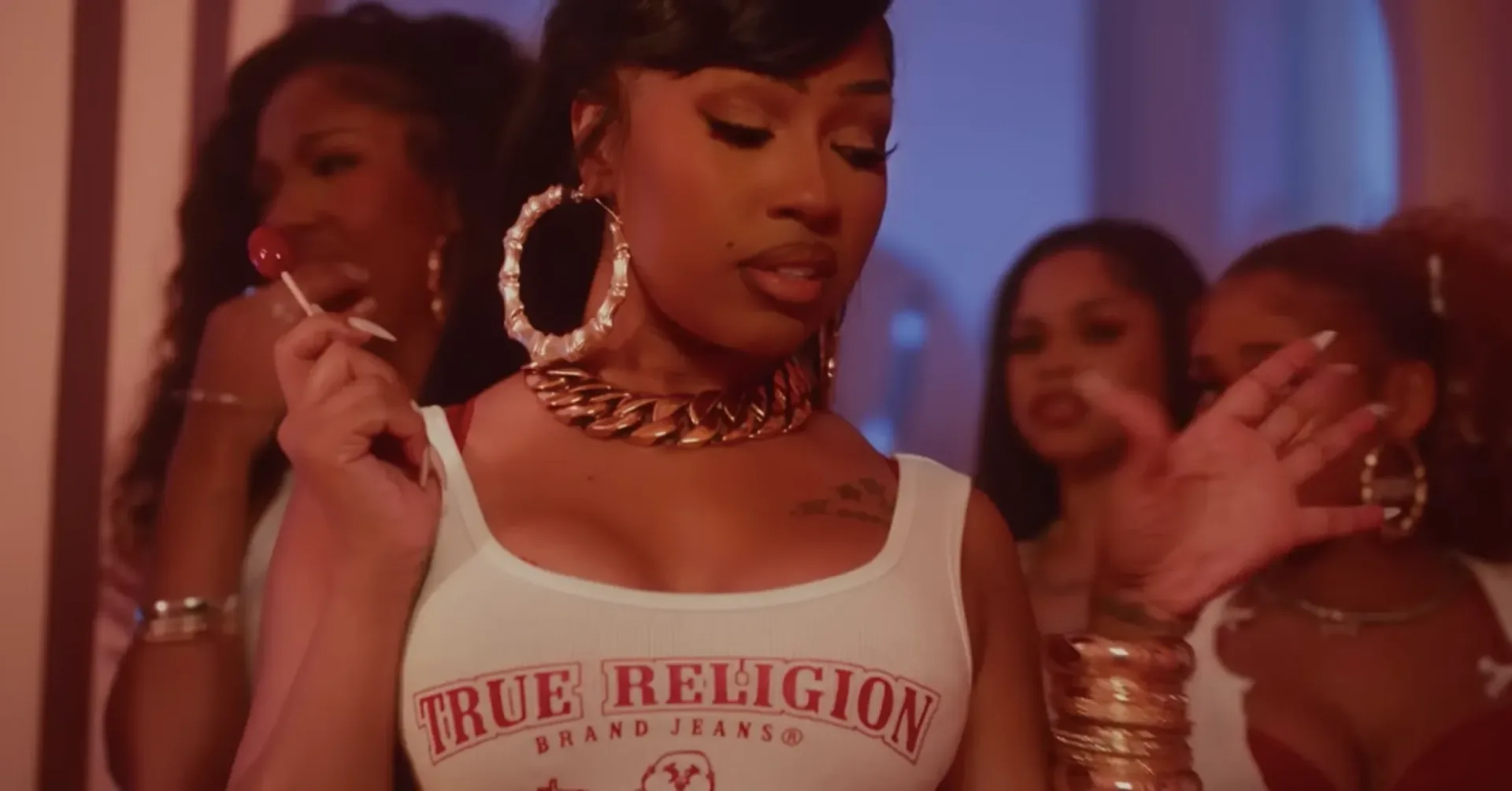
Yung Miami used a radio interview to revisit a criticism she had apparently been carrying since July. While appearing on The Morning Hustle, the rapper interrupted a question about why women can receive heightened scrutiny over their music and turned it toward host Lore’l: “Why was you coming at me? As a female?”
The exchange was notably more direct than explosive. Lore’l said she had anticipated the interview and had positive questions prepared, but she also defended her ability to be critical of Miami’s music and professional choices. Miami’s response drew an important distinction: she did not frame the disagreement as an objection to criticism in general. Her concern was that the earlier discussion, in her view, had moved beyond a critique of a decision or a record.
That difference is the center of the conversation. Artists regularly face opinions about their songs, tours and rollout decisions. But criticism can become more personal when it assigns motives, treats a professional choice as a character flaw, or turns a setback into a running joke. Miami’s on-air question put that boundary up for discussion in real time, with the person whose commentary had bothered her sitting across from her.
The July tour exit behind the disagreement
The dispute goes back to Miami’s departure from BossMan Dlow’s Motion Party Tour in July. Following her exit, Lore’l criticized the move on air, suggesting Miami believed she was “above the program.” Lore’l also made a joke about the earning power of the City Girls song “Act Up,” as others in the studio laughed.
Miami had offered a different rationale publicly. She said she needed to complete her debut album, was dealing with deadlines and needed to “lock in” on the project. In other words, the explanation she gave positioned the decision as a scheduling and creative-priority issue rather than a rejection of touring itself.
The tour was subsequently postponed, with BossMan Dlow’s team describing Miami’s departure as last-minute. Both points can exist at once: a departure can create a difficult logistical problem for a tour, while the departing artist can have real obligations that make the original plan impossible to complete. The disagreement is less about whether the change had consequences than about how Miami’s reasons and intent were interpreted in public.
Miami said during the interview that she had heard the earlier discussion and had nearly called the station at the time. Instead, she waited until there was an opportunity for a face-to-face conversation. That choice changed the format of the conflict. A call-in response would have been an immediate reaction to an already-moving story; the interview allowed Miami to identify what she found objectionable while Lore’l answered for her own commentary.
Critique versus personal framing
There is a practical distinction between reviewing someone’s work and narrating their motives. A music critique evaluates the music: its songwriting, performances, direction or audience appeal. Commentary about a touring decision can assess its timing and effect on ticket holders, promoters or other performers. Personal framing goes further by suggesting why someone acted as they did or by attaching a broader judgment to the choice.
Related coverage includes Yung Miami Addresses Lore’l’s Past Tour Comments During Interview.
Miami’s challenge to Lore’l focused on that second category. She appeared willing to acknowledge that public figures are going to be discussed, especially while promoting music. Yet she disputed the implication that leaving the tour meant she viewed herself as superior to it. Her stated reason was album completion, and the distinction matters because it is the explanation she gave fans at the time.
For listeners, this is also a reminder that a public disagreement can involve several overlapping questions. Was the tour change disruptive? The postponement indicates it had a meaningful impact. Was Miami entitled to prioritize an unfinished album and deadlines? Her statement makes clear that was the priority she chose. Did commentary about the withdrawal fairly represent her explanation? That is the issue Miami brought directly to Lore’l.
None of those questions requires treating criticism as forbidden. Rather, they show why an artist may accept that a decision will be scrutinized while still objecting to commentary that they feel converts an operational choice into an attack on their personality or work ethic.
Why the timing matters for Watch Dis
The conversation arrives during a crucial solo-album campaign. Miami is preparing to release Watch Dis, described as her first full-length solo album, on Oct. 23. The project follows the releases “Spend Dat,” “F You” and “2008.”
An album rollout is the period when an artist builds attention around a forthcoming record through singles, interviews, performances and public appearances. It can also become a period when old narratives return, because every new appearance gives interviewers and audiences an opening to revisit past controversies. Miami’s appearance shows that she is not avoiding those conversations, including with people whose past comments she believes crossed a line.
That approach has a tradeoff. Addressing criticism can clarify an artist’s position and prevent others from defining it without a response. It can also keep attention on the disagreement, rather than placing every ounce of focus on the songs. Miami’s decision to raise the issue herself suggests that, for her, leaving the previous commentary unanswered was not a preferable route.
Her argument also places the tour exit in the context of a larger professional transition. Completing a debut full-length project is a major responsibility, and Miami’s account was that deadlines required her to step back and finish it. The available information does not establish the complete scheduling picture behind the tour or the album, so it would be unfair to assume more than that. What is clear is that Miami publicly gave album work as her reason, while the tour’s later postponement heightened the attention around the choice.
A confrontation that stayed conversational
There is a tendency for celebrity conflict to be reduced to a single viral line or the appearance of an argument. This exchange is more useful when read as a dispute over standards: what a commentator can say, what an artist can challenge, and where criticism becomes personal.
Lore’l’s position was that criticism remains part of her role. Miami’s position was that criticism must not erase or distort the explanation she offered. Those are not perfectly compatible views in every instance, but they are both recognizable parts of public culture. Hosts and commentators can analyze decisions; artists can ask whether those analyses were fair, informed or needlessly personal.
For Miami, the immediate stakes are tied to the release of Watch Dis. The larger stakes are about authorship of her own story. Her response did not argue that she should be insulated from opinion because she is a woman or because she is promoting a new project. Instead, she took issue with being characterized in a way she felt did not match her stated reason for leaving the tour.
The interview therefore did not settle every disagreement around Miami’s decision. It did make one thing plain: she heard the commentary, remembered it, and preferred to answer it directly rather than let it stand without a challenge. As her solo campaign continues, the music will be the central measure of this next chapter—but the interview makes clear she intends to participate in the conversation around it on her own terms.
For more music-and-pop-culture coverage, see how Usher’s birthday celebration brought major music figures together in Manhattan.