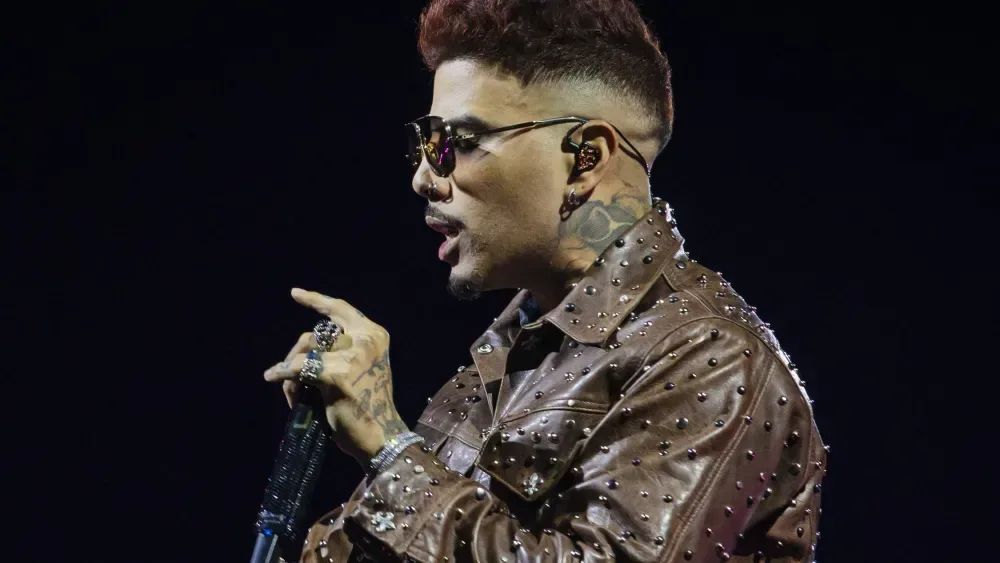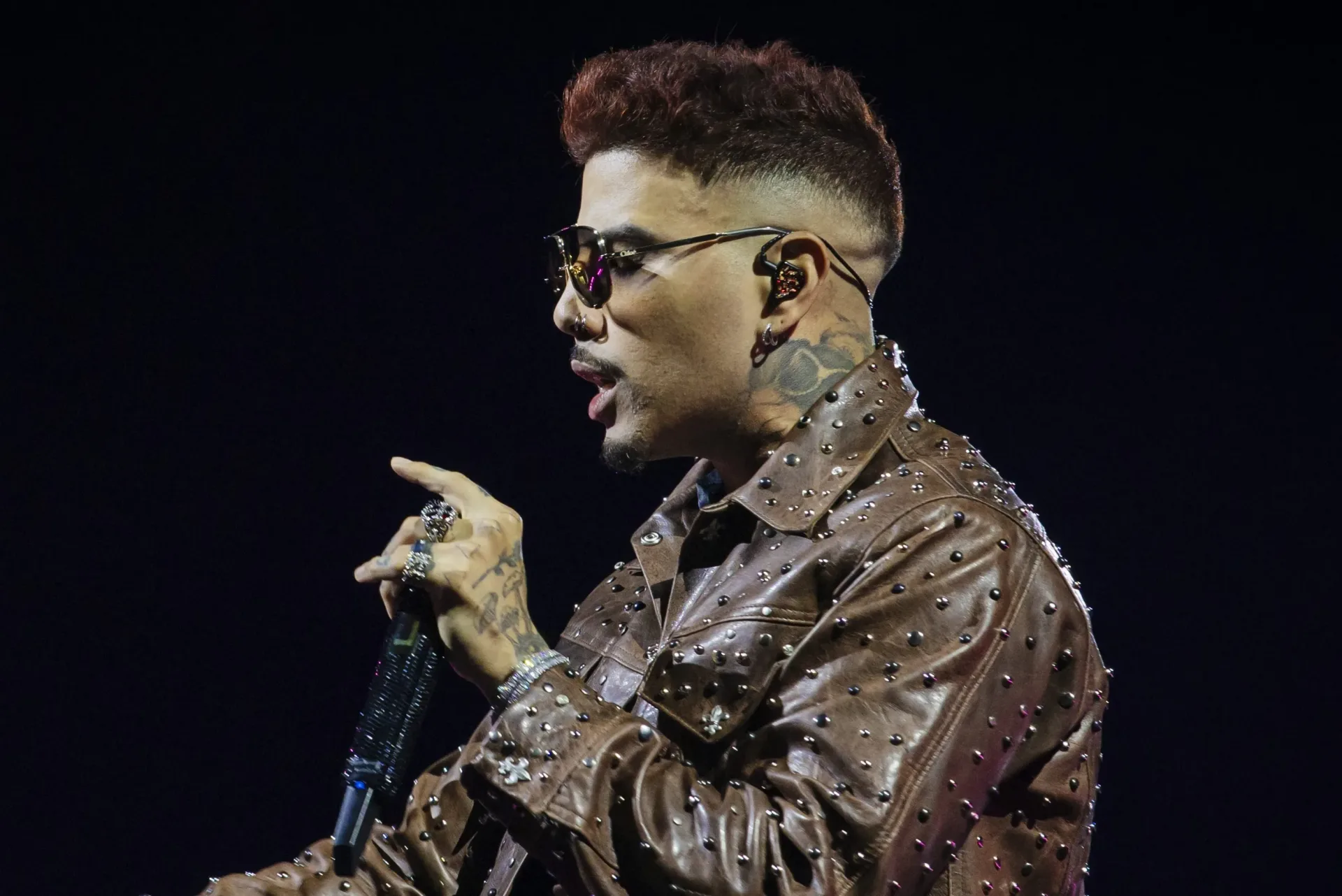
Rauw Alejandro’s two-night run at Forest Hills Stadium in Queens placed Puerto Rican identity at the center of the production rather than treating it as a backdrop. The concerts, presented as Red Bull Chapters With Rauw Alejandro, were described as the first time a Latin artist had headlined the historic New York venue. More importantly, they turned a 90-minute pop spectacle into a three-part story about upbringing, ambition, migration, artistic evolution and the musicians who built the reggaeton foundation.
The setting carried its own weight. Forest Hills Stadium has a long history that includes appearances by the Beatles, Bob Dylan, Frank Sinatra, the Rolling Stones and Jimi Hendrix. Alejandro’s arrival there came after the release of his fifth studio album, Cosa Nuestra, in November 2024 and its 2025 follow-up, Cosa Nuestra: Capítulo 0. These Queens dates were his first shows of 2026, and they extended the broader identity-focused direction associated with his Cosa Nuestra era.
The shows arrived during a period in which questions of Puerto Rican culture, diaspora, gentrification, poverty and the treatment of Latino communities in the United States remain intensely felt. Alejandro’s answer was not a lecture detached from the music. Instead, the concert’s imagery, sequencing and guests worked together to make cultural memory part of the main event.
Three chapters, one larger story
The production divided Alejandro’s narrative into three sections: Inspiration, Momentum and Legacy. That framework could not possibly capture every part of an artist’s life, but it gave the show a clear arc. Early material and childhood influences established the beginning; the middle dealt with celebrity and movement through the music industry; the last section widened the focus to recognize the artists whose work helped turn reggaeton into an international force.
Puerto Rico and New York were the visual anchors throughout. That pairing is personal for Alejandro, born Raúl Alejandro Ocasio Ruiz. His father is Brooklyn-born and Puerto Rican, with family roots in Canóvanas, while his mother is from Carolina. The concert therefore presented the island and New York City not as separate symbols but as interconnected homes, reflecting the experience of a diaspora shaped across both places.
That idea appeared repeatedly in the stage designs and graphics. Puerto Rican landscapes and city imagery shared space with the New York skyline, creating a visual dialogue between where cultural roots begin and where many Puerto Rican families have built lives across generations. The theme was not simply nostalgia. It was about visibility: making room for Latino audiences to show heritage openly, and encouraging younger listeners to explore the histories behind the sounds they already know.
Inspiration begins on the island
The first chapter began with a narrated introduction about the locations, people and childhood experiences that helped form Alejandro’s musical tastes and ambitions. Images of beaches, bright buildings and the Puerto Rican flag accompanied the opening stretch. The production used the flag’s red, white and celestial-blue colors, recalling the palette associated with it before Puerto Rico became a U.S. territory.
Musically, Alejandro opened with “Santa,” then moved through a “Dream Girl” and “Toda” medley before performing “Déjame Entrar.” He also sang his own version of “Tú Con Él,” the 1985 song associated with salsa pioneer Frankie Ruiz. That selection was a useful statement of purpose: Alejandro’s concert was built around contemporary Latin pop and reggaeton, but it made room for the salsa lineage that remains essential to Puerto Rican musical culture.
Related coverage includes Rauw Alejandro’s Forest Hills Shows Turn Puerto Rican Heritage Into a Three-Chapter Statement.
The first chapter closed with “Carita Linda,” alongside skateboarders dressed in helmets and costumes drawing from the island’s vejigantes. These horned, expressive folkloric figures appear in Puerto Rican carnivals and festivals, and their placement on a modern arena-scale stage made the production’s approach especially clear. Heritage was not framed as an artifact behind glass. It was active, kinetic and allowed to move alongside skateboarding, choreography and current pop music.
Momentum turns toward New York and stardom
The second section shifted toward the pressure and routine of life as a prominent Latin music star. Its New York imagery emphasized the changes involved in public success: constant motion, different roles to inhabit and the difficult balance between personal identity and a highly visible career. The skyline returned through the production, strengthening the show’s love letter to Puerto Rican New Yorkers and to the larger diaspora.
In this chapter, Alejandro drew from Vice Versa, released in 2021, and 2022’s Playa Saturno. The set included “Todo de Ti,” “Baby Hello,” “Desenfocao’” and the remix of “Tiroteo.” Those songs helped connect the concert’s cultural argument to the records that established much of Alejandro’s contemporary reach. The show did not suggest that mainstream hits and cultural specificity are opposites. Its structure argued the reverse: the familiar songs can be pathways into a deeper appreciation of place, family and history.
That approach is part of a wider moment in Latin music, where major artists increasingly foreground regional and personal histories while operating on a global scale. Alejandro’s albums arrived close to Bad Bunny’s Debí Tirar Más Fotos, released in January 2025, another record closely associated with Puerto Rican identity and remembrance. The artists’ paths are distinct, but both demonstrate how huge audiences can meet work that speaks directly to roots and community.
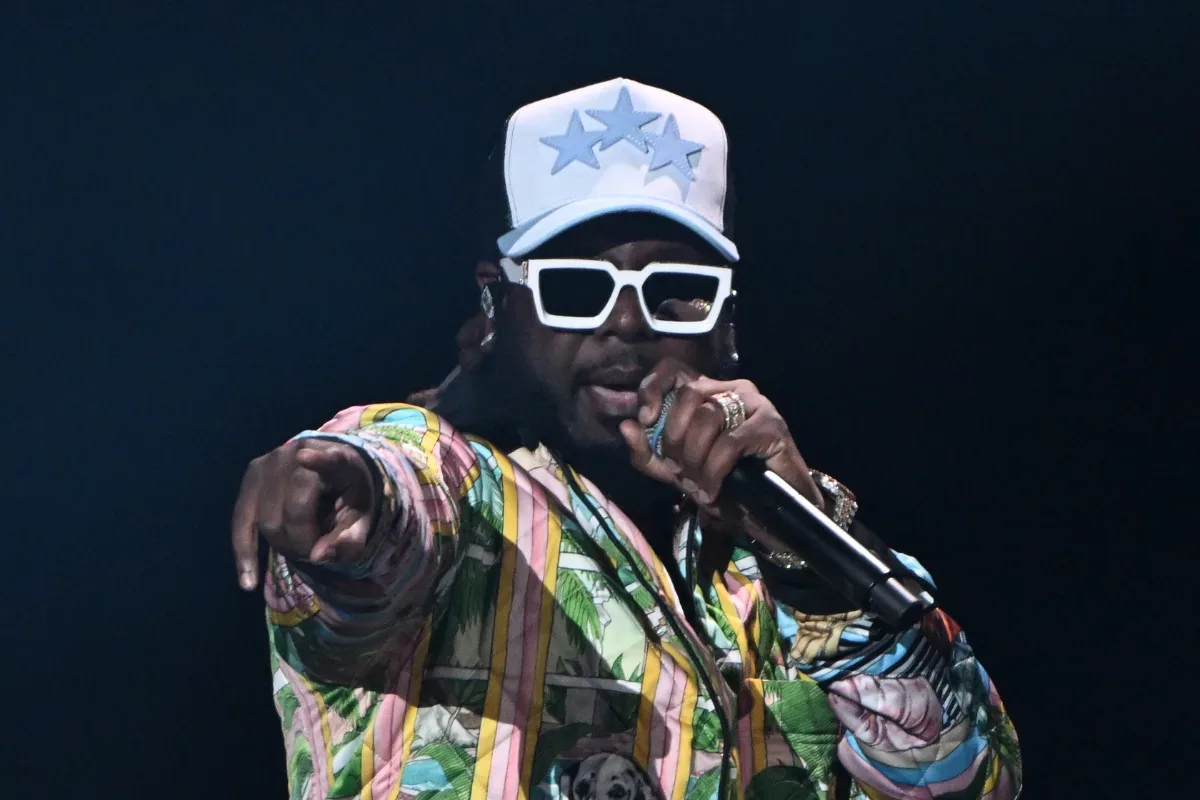
Music-industry disputes also remain a reminder that the public life of a hit song can involve complicated business questions beyond performance itself; for another recent example, see this report on T-Pain’s royalty dispute with Konvict Entertainment. Alejandro’s Forest Hills concept, however, kept its attention on the creative and historical side of popular music: who shaped the sound, and how should new audiences encounter that lineage?
Legacy gives the pioneers their due
The final chapter addressed that question directly. Alejandro used the closing segment to honor the figures and records that helped establish reggaeton as a globally dominant genre. Producer Tainy appeared as the evening’s first guest, underlining the importance of production as well as performance in reggaeton’s development. The section then moved through a canon that included music connected with Héctor el Father, Daddy Yankee, Arcángel, Tony Dize and Bad Bunny.
That list spans different moments of reggaeton’s growth. It places pioneering voices, major commercial breakthroughs and current global stars in a shared continuum rather than pretending today’s success emerged out of nowhere. For a genre routinely consumed in isolated tracks, algorithms and viral snippets, a live sequence like this can function as a compact history lesson without giving up the party atmosphere.
Chencho Corleone, one half of Plan B, later joined Alejandro for “El Efecto” and “Desesperados.” The concert concluded with “Lokera” and “Punto 40.” With that closing run, the show connected Alejandro’s catalog to the artists and scenes that preceded him while keeping the evening firmly in the present tense.
Why the Forest Hills dates matter
Calling a concert historic can be an easy promotional reflex, but the Forest Hills milestone had a concrete meaning: Alejandro was identified as the venue’s first Latin headliner. The distinction is meaningful not merely because it adds another venue to a résumé, but because the production consciously addressed the communities whose stories travel between Puerto Rico and New York.
Its strongest idea was that cultural pride does not have to be limited to a speech, a flag in the crowd or a short heritage tribute. Alejandro built it into the full architecture of the show: the chapters, the visuals, the folk references, the salsa selection, the New York imagery, the reggaeton genealogy and the guest appearances. The result was a concert designed to entertain while insisting that Latino identity can be visible, specific and proudly expansive.
For younger fans in particular, the Legacy section supplied an invitation to look backward as well as forward. Alejandro’s point was not that a new generation must abandon its own music for an older canon. Rather, its continued growth depends on knowing the people and traditions that made that future possible. At Forest Hills Stadium, that lesson arrived through bass, choreography, city lights and an unmistakable Puerto Rican point of view.