Álvaro Díaz has completed a three-night, sold-out run at Mexico City’s Palacio de los Deportes before taking the OMAKASE live production to the United States. The Puerto Rican rapper performed on October 9, 10 and 11, closing the Mexico City engagement with appearances from Tainy and Latin Mafia.
Each show ran to roughly 35 songs, making the dates more than a brief album showcase. They also established the live language for a tour built around a particularly clear central idea: food preparation as a way to frame a record, its genre shifts and the relationship between an artist and an audience.
The U.S. leg is scheduled to begin October 14 at Chicago’s Riviera Theatre. New York’s Hammerstein Ballroom follows on October 16, while the itinerary continues through the East Coast, Texas and the Southwest before its scheduled November 7 finish at San Jose Civic in California.
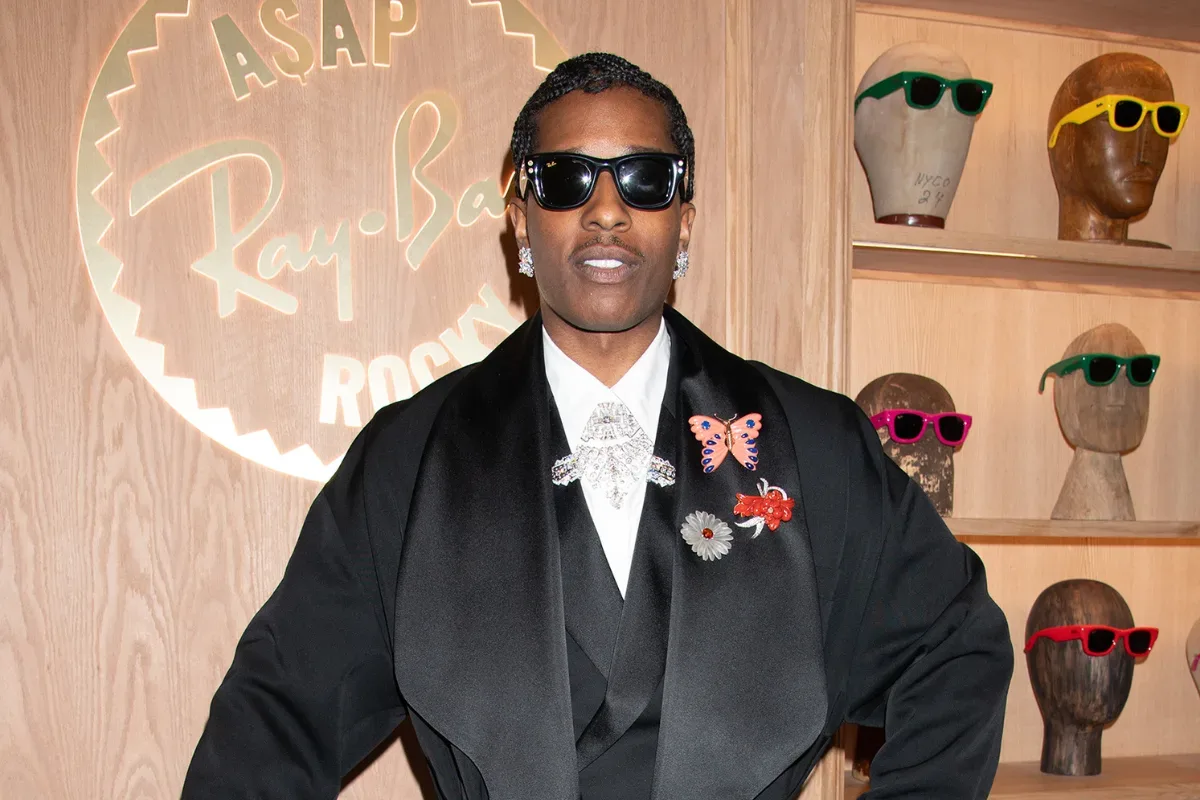
For a useful point of comparison on how touring can turn a record’s visual identity into a larger event, see A$AP Rocky’s planned Australia and New Zealand tour dates. Díaz’s approach is distinct, however: the reported Mexico City staging tied the show’s imagery directly to the title and creative process behind OMAKASE.
A kitchen becomes the stage concept
On the opening night in Mexico City, Díaz wore a white chef’s jacket and performed above a counter, with dancers dressed as cooks extending the setting across the stage. Those details matter because the kitchen imagery is not simply decorative. It is a physical expression of the album’s organizing concept.
Omakase is a Japanese dining format in which diners entrust course selection to the chef. Díaz has described applying that idea to his music: he wanted listeners to place trust in his decisions in a way comparable to trusting a filmmaker or chef. In practical terms, that means the album’s title functions as a statement of intent. Rather than signaling that every song must stay inside one sound, it gives the artist room to guide the listener through changing moods and styles.
The record moves among hip-hop, reggaeton, cumbia and electronic music. Those are not interchangeable labels: hip-hop is rooted here in rap’s vocal and rhythmic framework; reggaeton centers a dance-oriented rhythmic tradition; cumbia brings another set of Latin rhythmic references; and electronic production can alter a track’s texture, pulse and atmosphere. The supplied details do not establish how much of any individual song belongs to each category, but they do make the larger point clear: OMAKASE was designed as a multi-style work rather than a one-lane project.
That helps explain why the chef imagery can carry over to performance without seeming detached from the music. A counter, a jacket and cook-costumed dancers make the album’s metaphor immediately readable in a venue. The audience does not need to know every part of the record’s creation to understand that Díaz is presenting himself as the person selecting and arranging the experience.
Related coverage includes Álvaro Díaz Completes Sold-Out Mexico City Run Before U.S. OMAKASE Tour.
From an unclear recording period to a defined structure
The concept reportedly arrived after Díaz had spent months recording without a clear direction. The omakase idea gave the work a framework. His cousin Tino’s open-kitchen restaurant in Puerto Rico helped connect that framework to a personal environment, bridging the restaurant format and Díaz’s own creative process.
An open kitchen is especially fitting for a project concerned with process. In a restaurant, it makes preparation visible rather than hiding it completely behind a wall. The Mexico City production appears to translate that visibility into concert design: the counter is not merely a prop, but a reminder that construction, selection and presentation are part of the experience.
This is analysis of the reported staging and album concept, not a claim that a concert can perfectly reproduce an open kitchen. A live show has its own demands: the performer must command a large room, songs have to work in sequence, and visual motifs must read quickly from a distance. But the pairing of counter staging and the chef costume gives the audience a concise visual cue for the album’s structure.
It also shows why a theme can be useful when an album moves through several musical forms. Genre variety can be exciting, but it can also feel arbitrary if there is no unifying principle. A culinary progression supplies one possible thread: separate courses can differ substantially while still belonging to a planned meal. Díaz’s reported approach uses that underlying logic without requiring the music to follow one fixed genre throughout.
Collaborators joined the final Mexico City date
Tainy and Latin Mafia appeared during the final Mexico City show, bringing two collaborators associated with the album into the live production. Across the three-night run, Jesse Baez, NSQK, Rubi, Pao Pao and Akrilla also appeared as guests.
Guest appearances can serve several roles in an album-led concert. At their simplest, they let performers present collaborative material with more of the voices involved. They can also change the energy of a long set, especially one reported to include around 35 songs each night. Most importantly in this case, the guests reinforce that OMAKASE is not defined solely by a single vocal or a single stylistic tradition.
There is an important limit to what can be concluded. The available information identifies the guests and their appearances, but does not specify which songs each performed, how long they remained onstage or whether any guests will join the U.S. shows. Fans should therefore treat the Mexico City lineup as a record of those dates, not as a promise of a fixed guest roster for every stop ahead.
Anthony Bourdain reference adds a travel-and-food lens
Díaz also paid tribute to Anthony Bourdain during the Mexico City production. He characterized the goal as making the audience feel as though Bourdain had returned. That reference adds another layer to the show’s food language.
Bourdain’s work is associated in the supplied information with travel and food storytelling. In that context, the tribute does not reduce the staging to a restaurant visual alone. It points toward food as a means of telling stories about places, people and personal experience. That broader lens fits a project that travels between hip-hop, reggaeton, cumbia and electronic sounds while using a dining concept as its frame.
It would be a mistake to overstate the connection: no further details are provided about the exact form of the tribute or whether it will appear at every upcoming date. Still, its inclusion in Mexico City suggests the OMAKASE production is intended to evoke more than cooking. It is also concerned with curation, movement and storytelling.
“Pienso En Ti” gives the set emotional weight
Amid the culinary concept and the collaborative energy, the Mexico City set also made space for grief. “Pienso En Ti” was included in the performance. The song came from Díaz’s late friend and collaborator Milkman, who gave him the track before his death.
That history changes the song’s role within the wider album framework. A record can have a cohesive visual or conceptual identity while still holding songs with different emotional origins. “Pienso En Ti” is described as fitting the album’s sound, but its connection to Milkman gives it a separate personal significance. In performance, that means it can operate both as part of the set’s musical flow and as a tribute.
The distinction is worth preserving. The kitchen metaphor describes the architecture around OMAKASE; it does not erase the individual stories held within the music. The inclusion of “Pienso En Ti” indicates that the live show has room for a more intimate emotional register alongside dancers, elaborate thematic staging and guest appearances.
What the Mexico City dates indicate for the U.S. run
The sold-out Mexico City run provides the clearest available picture of what audiences may expect from the tour’s visual foundation: a chef-led stage identity, a counter-based setting, dancers who support the kitchen motif, and a set built at substantial length. It also demonstrates that Díaz has used the production to connect collaborators, a Bourdain tribute and a song carrying personal loss.
What remains unconfirmed is equally important. The available tour information does not establish whether every U.S. venue will receive identical staging, whether the set will remain at roughly 35 songs, or whether Tainy, Latin Mafia or any of the Mexico City guests will make additional appearances. The announced schedule confirms the route and the San Jose Civic closing date, but not those production specifics.
For now, the Mexico City shows stand as a tightly defined preview of Díaz’s ambition for OMAKASE: turn a recording concept into a concert environment without flattening the album’s shifts in sound or its personal material. Chicago is next, and the U.S. dates will show how that food-centered format travels from the Palacio de los Deportes to a new run of rooms.