
Kid Cudi is planning a deliberately less-documented kind of Los Angeles show. Performing under the name Rager, the Cleveland artist is scheduled to bring Ragerville to Reframe Studios on December 9, and attendees will be expected to keep their phones put away during the event.
The plan calls for Yondr pouches: lockable cases that hold a guest’s phone while leaving it in that guest’s possession, rather than requiring a device to be handed over at the entrance. Cudi emphasized the policy in his social-media announcement with a simple “NO PHONES!” message. The setup makes the restriction part of the show’s intended atmosphere, not merely a request for audience etiquette.
Ragerville is notable not just as a one-off Los Angeles date, but as a close companion to a new musical identity. Cudi is set to release Visions in the Night under the Rager name on December 10, one day after the event. The album is described as a dance release, separate from the spring Rebel Ragers tour, which spanned material from “Day ‘N’ Nite” through his 2025 album Free.
A phone-free format built around participation
A locked-phone pouch policy does not mean people are physically separated from their phones. That distinction matters. With Yondr pouches, guests retain the device but cannot use it while the pouch is secured. In practical terms, the format is intended to prevent filming, photographing, scrolling and message-checking from competing with the performance and the surrounding crowd.
For a dance-focused event, the implication is straightforward: the room is being designed for presence over documentation. Cudi’s announcement explicitly directs attention toward the dance floor. Rather than constructing an evening around clips that may circulate afterward, Ragerville is positioned as an experience primarily for the people inside Reframe Studios.
That will be a meaningful change for fans accustomed to treating phones as an all-purpose concert tool. Devices now commonly handle entry materials, group coordination, camera use and post-show sharing. A pouch approach does not eliminate the device from a guest’s personal belongings, but it does remove its normal role as a live recording and social-feed machine during the performance.
The specific details beyond the pouches have not been outlined here, so attendees should avoid assuming further rules about access or use. What is clear is the central policy: Ragerville is planned as a no-phone show, and Yondr pouches will be provided.
When tickets go on sale and where the show is happening
Ticket access is set to begin in two stages on Wednesday, November 25. The artist presale begins at 10 a.m. Pacific, while the general sale is scheduled for noon Pacific. Cudi directed prospective buyers to his website to register for early access.
The show is booked by Framework at Reframe Studios, located at 4594 Electronics Place in Los Angeles. It lands during the opening week of Framework’s second season at Reframe. That run begins with ZHU performances on December 4 and 5, putting Cudi’s December 9 appearance in the venue’s early-season stretch.
For prospective attendees, the practical takeaway is to distinguish the two access windows. Early registration is tied to the artist presale, while the general sale follows two hours later. The supplied information does not specify ticket quantities, pricing, set times, age restrictions or any additional entry procedures, so those details should not be presumed from the announcement.
Why the Rager name fits a dance project
The Rager billing is new in the sense that it separates Visions in the Night from Cudi’s broader touring identity, but the word has a clear connection to his earlier catalog. “Mr. Rager” appeared on 2010’s Man on the Moon II: The Legend of Mr. Rager. Using Rager for a dance album therefore links the newer project to an established part of his creative vocabulary rather than presenting an entirely disconnected alias.
The distinction from the Rebel Ragers tour is equally important. That tour drew from a wide range of Cudi material, beginning with “Day ‘N’ Nite” and extending to Free. Visions in the Night, meanwhile, has its own Rager billing and is identified specifically as a dance album. The Los Angeles date arrives in the narrow window between the new identity’s live presentation and its recorded release.
There is already a substantial dance-floor history behind that move. Cudi’s vocal presence reached dance audiences years before Ragerville. The Crookers remix of “Day ‘N’ Nite” reached No. 2 on the U.K. singles chart in 2009 and spent seven weeks at No. 1 on the U.K. dance singles chart. That is an example of a track crossing into dance culture through a remix: the original song existed first, and another production recast it for a different club-oriented context.
His connection to dance music also included David Guetta’s “Memories,” on which Cudi sang. That track reached No. 2 on the same U.K. dance chart. Unlike a remix-driven crossover, “Memories” placed him directly on a dance-oriented single from the outset.
“Pursuit of Happiness” offers another angle on the pattern. The original version featured MGMT and Ratatat, before Steve Aoki reworked the song. Taken together, those records show Cudi’s music and vocals repeatedly finding a place in dance settings, whether via a producer’s remix or a song constructed as a dance release.
From dance reinterpretations to Cudi’s own dance tracks
The key shift with Visions in the Night is authorship of the dance direction. Earlier touchpoints such as the Crookers remix and Aoki’s version of “Pursuit of Happiness” demonstrate how Cudi’s work could be transformed by other producers. The Rager album instead puts forward his own dance tracks. That does not erase the value of those earlier reinterpretations; it changes the framing from an artist whose songs are adopted by dance culture to an artist issuing a specifically billed dance project himself.
Ragerville’s phone rule supports that framing. It suggests a performance context meant to foreground movement and collective attention alongside the album’s dance positioning. The event being held the night before the record’s release gives it the feel of a launch-adjacent gathering, though no setlist, album-preview promise or performance format has been specified.
That uncertainty is worth preserving. A dance album does not automatically confirm that every song from it will be performed at the show, and an indoor event does not reveal the scale or design of its production. The confirmed facts are narrower and more useful: Cudi will perform as Rager on December 9 at Reframe Studios; phones are to be secured in provided Yondr pouches; and Visions in the Night is due the following day.
What attendees should expect from the policy
- Keep the phone with you: The pouch system is described as locking the phone inside rather than collecting it at the door.
- Expect no routine filming: The announced “NO PHONES!” policy means recording and casual screen use are not part of the intended in-room experience.
- Plan ticket timing: Artist-presale access begins at 10 a.m. Pacific on November 25, followed by general sale at noon Pacific.
- Know the venue: Ragerville is set for Reframe Studios at 4594 Electronics Place in Los Angeles.
- Do not overread the announcement: No ticket price, schedule, setlist or further venue protocol is supplied in the available details.
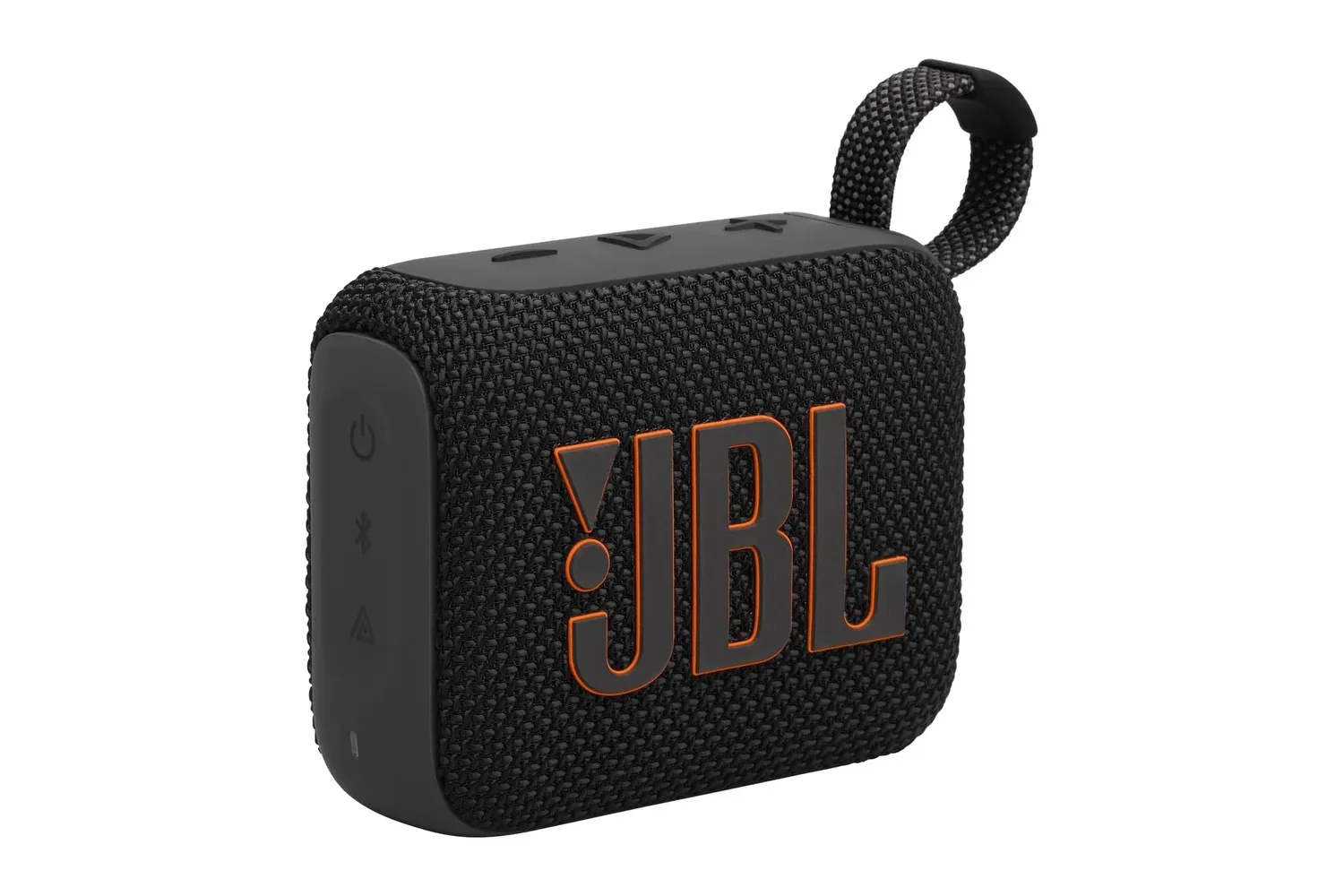
For listeners interested in the technology usually surrounding portable music rather than temporarily sealing it away at a show, Joking Joystick has also covered the JBL Go 4 portable Bluetooth speaker.
Ragerville ultimately gives Cudi a tightly timed platform for the Rager project: a Los Angeles dance-floor event on December 9, a no-phone environment intended to keep attention in the room, and Visions in the Night arriving on December 10. For an artist whose catalog has repeatedly intersected with dance music through remixes and collaborations, the new billing marks a more direct step into that space.