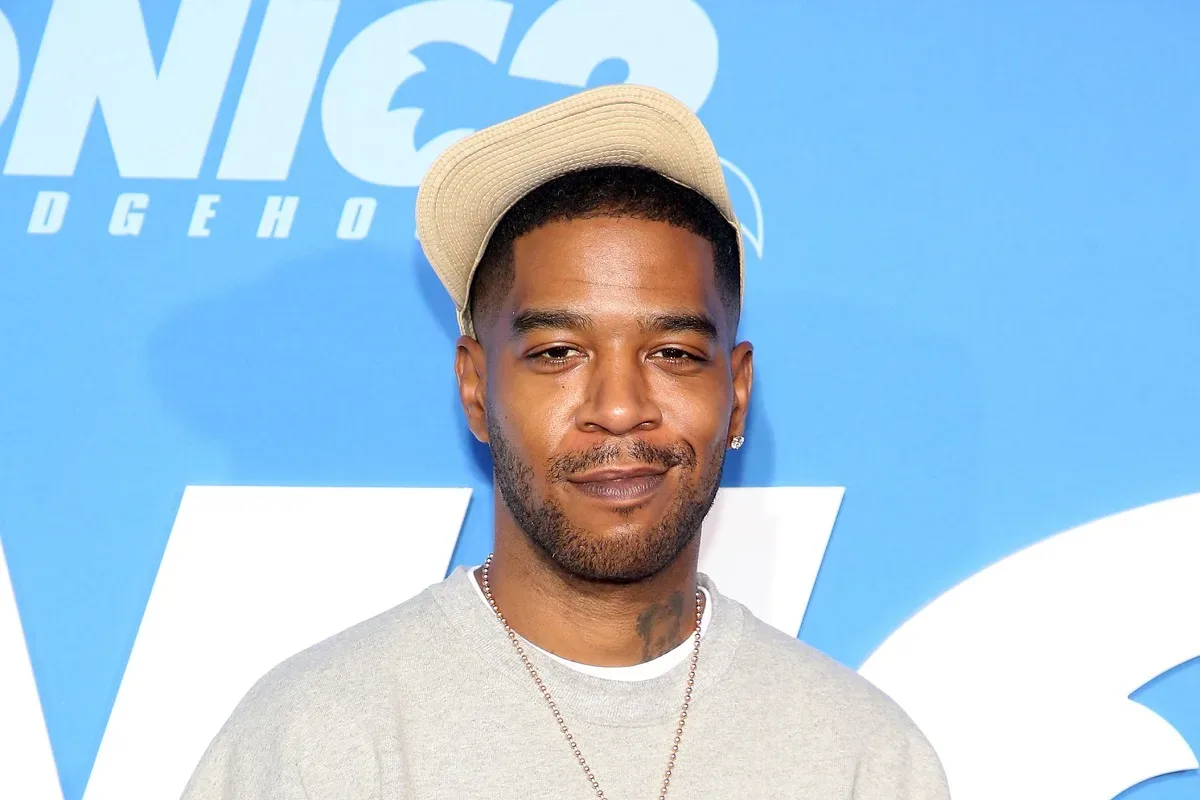
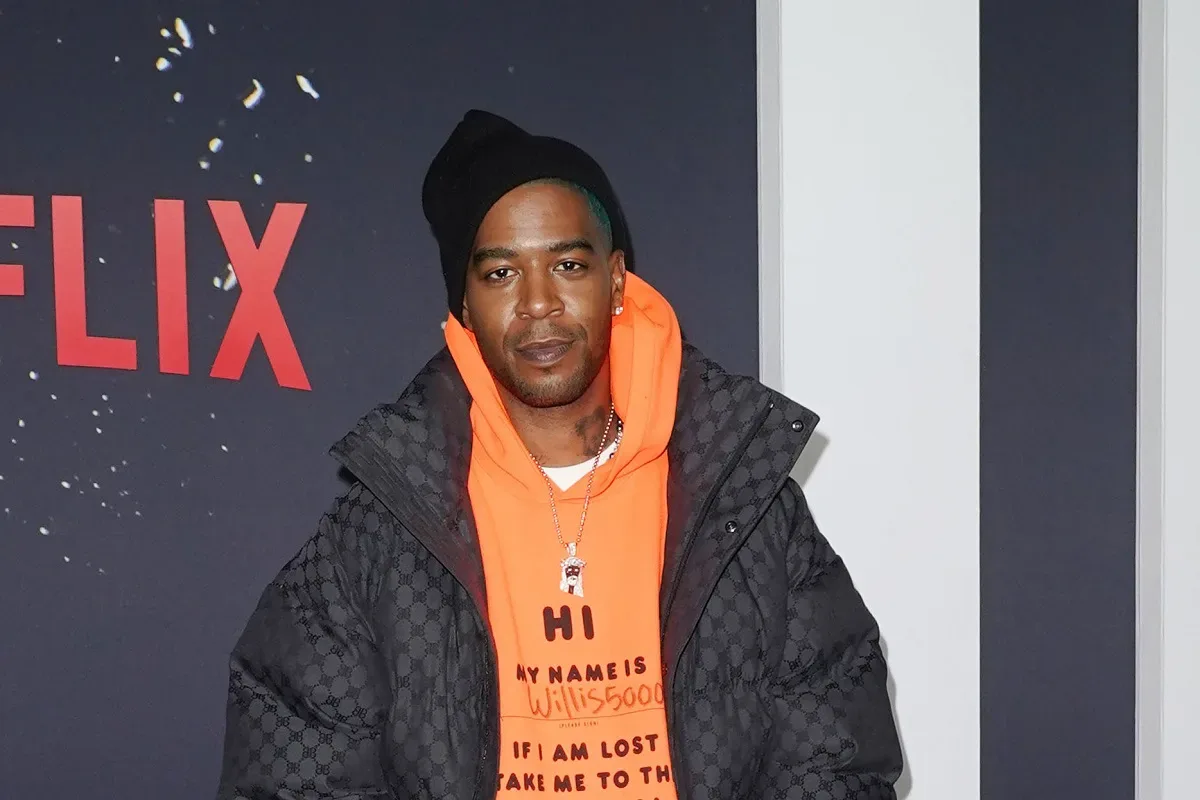
Kid Cudi is drawing a firm line between marijuana and his professional obligations. In a recent conversation with Travis Barker on Big Bro, the musician and actor said he does not smoke during the day when he has work to do, specifically placing movie sets and business meetings on the no-smoking side of that boundary.
The distinction is notable because Cudi framed it against a much heavier earlier routine. He estimated that he once smoked 15 to 20 blunts a day and described marijuana as something that had followed him through virtually every waking activity. Now, he said, the timing depends on his schedule: a day without commitments might involve about four joints, but a workday means waiting until he is home.
“I’m not smoking at all during the day,” Cudi said.
This is not a declaration that marijuana has disappeared from his life. Rather, it is a description of limits: separating personal time from a professional environment and refusing to let the habit overlap with commitments that require his attention. That nuance matters. Cudi has said treatment changed the way he approaches marijuana, while also making clear that abstinence is not the claim he is making here.
A workday boundary, not a simple before-and-after story
Celebrity conversations about substance use are often reduced to a neat transformation narrative: a person either uses or does not use, is either “before” or “after.” Cudi’s account is more specific and more complicated. He is talking about a change in behavior, routine and context.
His previous recollections made the scale of the old routine vivid. He described carrying hundreds of pre-rolls in a Louis Vuitton briefcase, with the next smoke readily available before he had even finished the last one. A pre-roll is a ready-made joint, generally prepared in advance rather than rolled immediately before use. In Cudi’s story, the detail is less about a luxury accessory than it is about constant access: marijuana was close at hand wherever he went.
That earlier pattern was not confined to downtime. Cudi summed it up by saying that if he was awake, he was smoking, regardless of what he was doing. His current practice, as he explained it, introduces a practical interruption into that old pattern. Work comes first; smoking, if it happens, comes later.
There is a meaningful difference between saying someone has changed a habit and claiming that the underlying challenge has been permanently solved. Cudi did not make the latter claim. What he did provide was a clear description of the rule he now follows around work. It is a self-defined boundary, and the value of the conversation lies in its specificity rather than in a grand promise.
Related coverage includes Kid Cudi Says He Keeps Marijuana Off Movie Sets and Out of Business Meetings.
Why the change matters for acting
Cudi has connected this shift to acting as well as to business. In 2025, he discussed the contrast between performing sober and performing while high, saying that he found it easier to access his emotions when he was not smoking.
That observation is personal, not a universal prescription for every performer. Still, it explains why the workday boundary carries particular weight for him. Acting requires a performer to respond to a scene, collaborators and direction in real time. For Cudi, being sober during that process made him feel more emotionally available to the work.
His acting credits include Don’t Look Up and How to Make It in America. The issue he raised was not whether viewers approved of his performances. Instead, it was about his own internal experience of doing the job: whether he felt connected to the emotions he was trying to reach.
That distinction pushes the discussion beyond public perception. Audiences can only see the finished result. The performer experiences the preparation, the concentration and the emotional demands behind it. Cudi’s comments suggest that his move away from daytime smoking was connected to wanting a different relationship with that process.
It also places his remarks within a broader entertainment conversation about the conditions behind a performance. Interviews about film and television can become consumed by casting, box-office expectations and final cuts. Cudi’s comments point to something more personal: the routines that shape how an artist arrives at the work in the first place. That emphasis on context also runs through other recent long-form music interview coverage, including the story of Angie Martinez’s Tupac interview coming to Netflix.
Treatment and recovery remain part of the context
Cudi previously discussed seeking help for marijuana use around August 2025, near the release of Cudi: The Memoir and his album Free. The memoir covers his upbringing in Cleveland, his music career, addiction and recovery. In that context, his newer comments can be understood as an update on an ongoing process rather than an isolated lifestyle adjustment.
Recovery language can be easy to oversimplify, especially when a public figure speaks candidly but briefly. The available details support a narrower reading: Cudi says treatment changed his habits, and he now keeps marijuana away from daytime work. They do not establish a medical diagnosis, provide a treatment timeline or offer a comprehensive account of his health.
That restraint is important. Addiction and recovery are personal medical and emotional subjects, and no outside observer can responsibly fill in gaps from a few interview comments. Cudi’s own framing is the relevant one: he has recognized a prior relationship with marijuana that he wanted to alter, sought help, and now describes concrete boundaries that he follows.
What his remarks do and do not say
- They do say that Cudi keeps marijuana out of movie-set work and business meetings.
- They do say that he waits until he gets home on days when he has obligations.
- They do say that marijuana remains part of his life on some days without obligations.
- They do say that he believes being sober helped him more readily access emotions while acting.
- They do not say that he has completely stopped using marijuana.
- They do not say that this approach is a clinical plan or guidance for other people.
Keeping those points separate prevents the remarks from being turned into something broader than Cudi presented. The change he described is substantial, especially compared with the 15-to-20-blunt estimate, but it is still a boundary-based account rather than a total break from marijuana.
A host becomes the subject of the conversation
The setting also gave the exchange an interesting reversal. Big Bro is a platform where Cudi typically asks guests to speak openly. Barker’s appearance put Cudi’s own routines and history at the center of the discussion.
The two revisited their early connection through Myspace and the MTV era of their careers, tying the conversation to a period when online profiles, music television and artist discovery were shaping how many fans encountered performers. But the discussion did not stay in nostalgia. It moved into present-day habits, work and health.
Big Bro launched earlier this year, with Kylie Jenner as its first guest. Barker’s visit continued the show’s conversational format while allowing Cudi to answer with unusual directness about an aspect of his life that can easily be sensationalized.
Later in the episode, Cudi also said he smokes cigarettes and wants to become more physically active. That comment adds another layer to the health-related context, but it should not be treated as a promised plan or a report of a completed change. It is an aspiration he voiced alongside the larger discussion of his routines.
The practical significance is in the boundaries
There is no need to turn Cudi’s account into a moral lesson to see why it stands out. His comments are compelling because they are practical. “No smoking at all during the day” is not abstract language. It is a rule attached to a time of day and to specific professional situations.
For someone whose earlier routine involved smoking throughout the day, even the decision to delay use until after work represents a concrete restructuring of habits. In behavioral terms, a boundary is a limit that makes a desired action easier to identify: work begins, the smoking stops; work ends, personal time resumes. Cudi did not use that terminology, but his description fits the basic idea.
His experience also underscores that the stakes of a habit can change with the kind of work someone does. On a movie set, he has said sobriety helps him reach emotion. In a business meeting, the stated expectation is similarly clear: he wants to be present for the responsibility in front of him. The public takeaway is not that every artist must work in the same way. It is that Cudi has identified the conditions under which he feels better able to do his own work.
That is the core of his update. Marijuana is still in the picture, but it no longer gets to occupy every part of the day. For Cudi, movie sets, meetings and other obligations now have a defined place ahead of it.