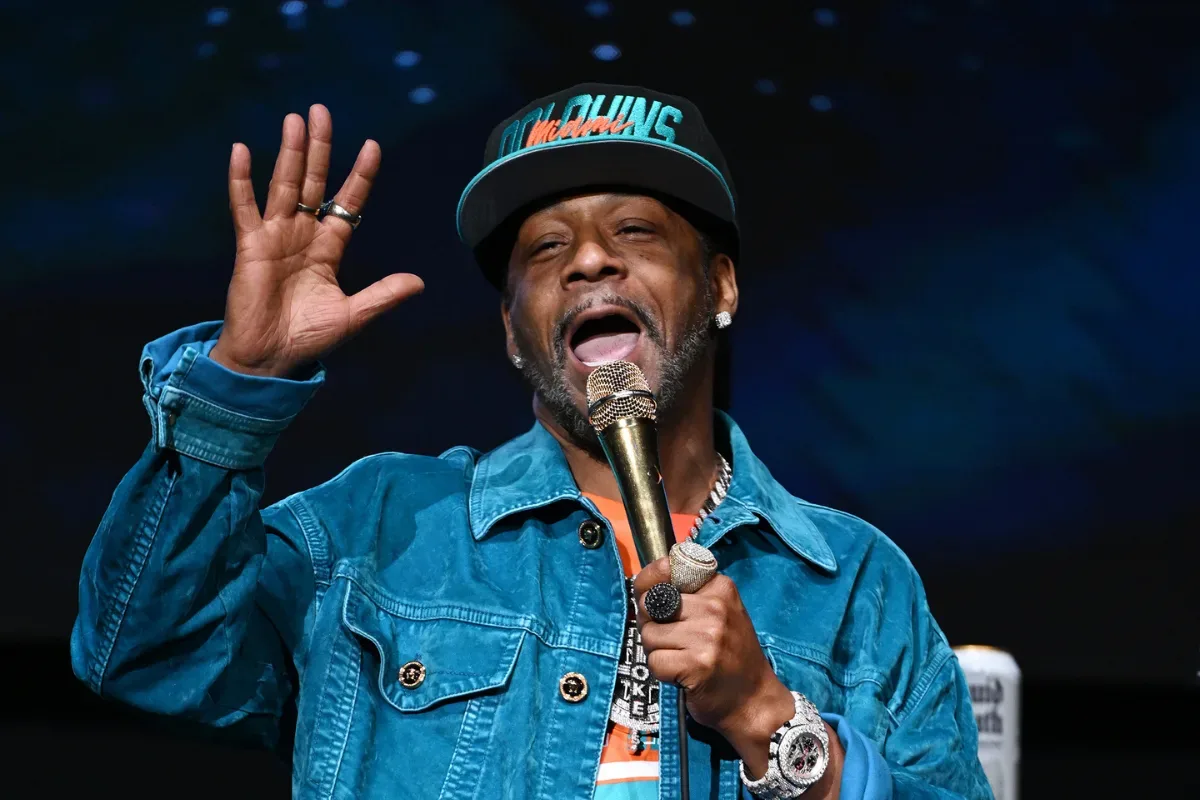
Katt Williams is placing creative control at the center of his next major venture. The comedian and performer has discussed Kemet Movie Works, a studio effort based at Fort McClellan in Anniston, Alabama, as a way to do more than criticize the entertainment business from the outside. Its stated remit spans film, television, music and live shows, with an ambition to provide both places where work can be made and places where it can be presented.
Williams’ argument is straightforward: he believes Black films are given narrower boundaries around the stories they can tell than other projects. In discussing the studio, he positioned ownership and infrastructure as his response. “Nobody needs a complainer, even if they’re correct,” Williams said, adding that criticism should turn into action when the opportunity exists.
That makes Kemet Movie Works more than a celebrity side project in the way Williams describes it. The central issue is not simply whether a well-known comic can add film work to an already broad career. It is whether a creative operation can give more people meaningful room to develop projects without surrendering the core decisions about what those projects are, where they are made and how audiences encounter them.
A studio plan built around making and showing work
Kemet’s plans identify film, TV and music production alongside live events. That combination matters because each part of the operation addresses a different stage of creative work. Production is the process of creating a film, series, recording or performance. Exhibition, in this context, means giving finished work a place to be screened, staged or otherwise experienced by an audience. A venue can therefore be part of creative independence, not merely a final stop after a project is completed.
There is no announced slate of specific Kemet productions in the available information, and the studio’s full operating model has not been detailed. That uncertainty is important. A stated mission is not the same thing as a finished film, a commissioned television series or a distribution agreement. What is clear is the intended scope: a physical and creative base at Fort McClellan that can support multiple forms of entertainment work rather than a single title.
Williams has been moving toward this concept for some time. During a 2025 appearance on The Tonight Show Starring Jimmy Fallon, he pointed to Tyler Perry’s studio as an example. The comparison signals an interest in the practical power of owning a production home: facilities, workflows and a base from which creators can develop material. It does not establish that the two operations are alike in scale, programming or business structure, but it helps clarify why Williams sees a studio as a meaningful answer to a representation problem.
Why creative control is the through line
The studio discussion connects with a theme Williams also explores in his forthcoming memoir, Nine Lives, No Wives, and 69 Concubines. The book is due from Gallery/13A on October 20 and is described as examining how Williams financed his own tours and retained control over his work. It also recounts two instances in which he declined multimillion-dollar deals on principle.
That background does not prove that every independent decision is easy or automatically successful. It does explain why the Kemet plan fits Williams’ public view of his career. Self-financing a tour and developing a facility are different undertakings, but both concern who holds the authority to make key choices. For an artist, “creative control” can mean authority over material, collaborators, presentation and the terms under which work reaches an audience. Williams’ comments suggest he sees that authority as inseparable from the kinds of stories that get made.
Related coverage includes Katt Williams Builds Kemet Movie Works Around Creative Control.
His criticism is also audience-focused. Williams said the business can lose sight of the people who pay to watch. In practical terms, that is a challenge to an industry tendency to reduce audiences to a narrow set of assumptions. His position is that Black viewers, and Black creators, should not be treated as if their interests or their stories are limited to a small approved range.
Williams’ studio idea is framed less as a complaint about access alone and more as an attempt to create capacity: space, tools, stages and a route for a wider range of projects to exist.
Alabama, the Chitlin’ Circuit and the purpose of place
Kemet ties its mission to the Black cultural history of the region, including the Chitlin’ Circuit. The term refers to a network of venues where Black performers could work during segregation, when broader entertainment access was restricted. Referencing that circuit places the venture in a tradition of Black artists and organizers building opportunities through their own venues and networks when conventional pathways were closed or constrained.
The point is not that a contemporary multimedia studio is identical to those earlier venues. The circumstances, technologies and businesses are different. But the historical connection is significant because it grounds the project’s stated commitment to wider creative voices in a local legacy of making room for performers and audiences. For Williams, a studio in Alabama is presented as part of that continuing effort rather than simply a change of address from an established entertainment center.
That regional grounding also gives the Fort McClellan site a broader role in the plan. A dedicated location can potentially bring together the making of film and television, music work and live programming in one place. The supplied details do not establish when every capability will be operational or which creators will use it, so those questions remain open. Still, the mix of functions reveals an intention to build an ecosystem rather than rent a location for one isolated production.
Miles College agreement introduces emerging technology training
An agreement announced by Miles College in May adds an educational dimension to the project. The historically Black college, based in Fairfield, Alabama, said its deal with Kemet Productions would give students access to artificial-intelligence and augmented-reality film work at the Fort McClellan location.
AI is a broad term for computer systems used to perform tasks associated with recognizing patterns, generating material or assisting decisions. The information available does not specify which AI tools students would use, how they would be taught or how their output would be governed. That distinction matters, particularly in screen industries where the phrase can cover many very different tools and workflows.
Augmented reality, or AR, overlays digital elements onto a view of the physical world. In a film-oriented setting, the phrase can encompass work that blends digital visual material with real environments. Again, the college announcement does not lay out a curriculum, equipment list or course structure. The concrete takeaway is narrower but still substantial: students are expected to have access to AI and AR film work through the Kemet arrangement.
For a studio whose stated mission involves expanding who gets to bring projects to life, training access is a logical part of the picture. Equipment and facilities only widen opportunity if people can learn how to use them and participate in the work. The agreement does not guarantee careers or productions for participants, but it connects the site’s prospective creative activity to students in Alabama rather than treating the facility as sealed off from nearby education.
Williams’ expanding work across platforms
Kemet arrives during a period in which Williams is extending his work beyond live stand-up. Netflix said in September that he will launch an original podcast on the service later this year. His stand-up programming is already available there, including The Last Report.
A podcast and a studio are very different forms of expansion. One is a recurring audio-led format delivered through an established platform; the other is a long-term production venture with a stated physical home and multiple creative disciplines. Taken together, though, they show Williams working in formats beyond a conventional touring model. The podcast creates another outlet for his voice, while Kemet is meant to create a setting where other voices can develop work as well.
That tension between platform access and ownership is increasingly relevant across entertainment. A major service can offer reach, while an independently controlled base can offer greater influence over the conditions under which a project is made. Neither advantage necessarily replaces the other. Williams’ current moves suggest he is pursuing both: distribution and audience reach through existing platforms, plus a studio designed around longer-term creative capacity.
The conversation overlaps with broader questions about who gets to make decisions in media businesses, including the control exercised by major digital platforms. A separate platform-control dispute involving documentary advertising illustrates why access to audiences can become a business issue as well as an artistic one.
What Kemet can and cannot be said to represent now
Based on the available details, Kemet Movie Works is a developing creative venture with an Alabama home, a cross-media mission and an educational connection through Miles College. Williams has made its philosophical purpose unusually clear: he wants to answer perceived restrictions on Black filmmaking with a structure that can help more creators make work.
What remains unconfirmed is equally worth keeping in view. There are no provided details about a release calendar, a first feature, a television order, a roster of resident creators or the scale of the facility. There is also no basis to assume that every project associated with Kemet will follow one format or share one viewpoint. The promise being articulated is wider access and broader storytelling, not a fully disclosed production pipeline.
For now, the strongest significance of the effort lies in its direction. Williams is connecting the independence described in his memoir, the audience relationship he values in stand-up, a regional Black performance history and emerging-media access for students into one plan. If Kemet fulfills that mission, its most meaningful output may not be any single project. It may be the durable ability for creators to make more choices about what gets created in the first place.