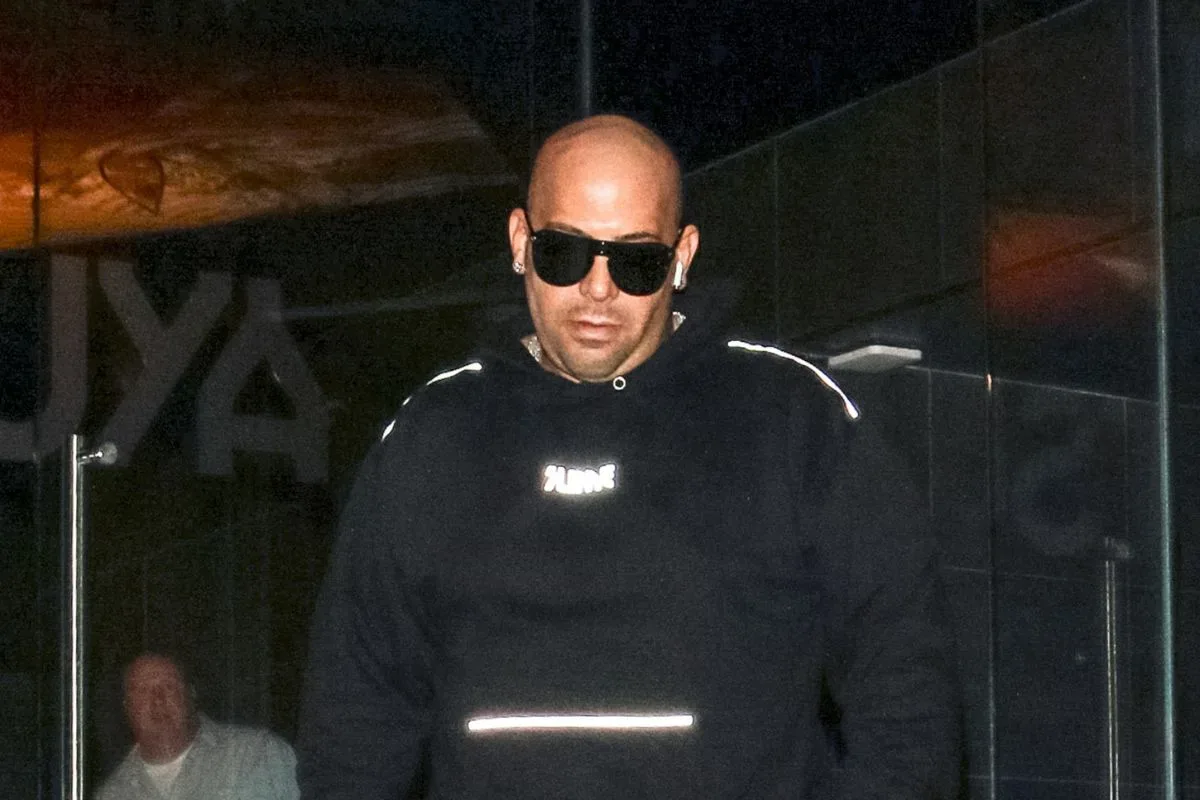
U.S. District Judge Fernando L. Aenlle-Rocha issued an order authorizing U.S. Marshals to compel Eugene “Big U” Henley Jr. to attend a federal court hearing after the court was told he would not leave his cell at the Metropolitan Detention Center in Los Angeles.
The Sept. 17 order directed Marshals to bring Henley to Courtroom 6B for that day’s 9 a.m. proceeding. It authorized the use of reasonable force and restraints if necessary, but paired that authority with explicit safeguards: deputies were instructed not to take action that could endanger Henley in light of a medical condition, and he was to be given one last chance to agree to appear voluntarily before force could be used.
The order is significant because it grants authority to secure an appearance; it does not establish that force or restraints were ultimately used. It addresses what Marshals could do if Henley continued declining to leave his cell, rather than documenting how the situation ended.
What the court order does—and does not—say
Federal courts need defendants to be present for many proceedings, especially hearings directly affecting representation and case management. Here, the judge instructed the Marshals to produce Henley in court immediately for the scheduled hearing. The authorization covered reasonable force and restraints necessary to do so.
“Reasonable force” is a limiting phrase, not an open-ended directive. In practical terms, the order makes clear that any effort to bring Henley to court had to remain tied to the immediate purpose of producing him for the hearing. The medical restriction further narrows the order by requiring officers to avoid measures that could put him at risk.
The final-warning requirement is another important detail. Before resorting to force, authorities were told to read the order to Henley and give him a final opportunity to come to court voluntarily. That sequence distinguishes a court-backed contingency plan from an automatic instruction to physically remove him from the cell.
For readers following legal coverage, the distinction matters. A judge authorizing force if needed is not the same as a finding that force occurred, nor is it a finding on the allegations in the larger prosecution. It is a procedural measure designed to ensure a defendant can be brought before the court.
The hearing involved Henley’s legal representation
The scheduled proceeding concerned an emergency request from Henley’s attorneys to withdraw from representing him. That makes the question of attendance especially consequential: disputes over counsel can affect how a defendant communicates with the court and how the case moves forward.
Related coverage includes Big U Court Order Allows Marshals to Compel Appearance.
The case is also unusually document-heavy. Henley’s defense has previously said it was working through more than 1.1 million pieces of evidence, including thousands of surveillance videos and tens of thousands of intercepted phone calls. That volume helps explain why representation and case logistics may be central issues even apart from the immediate dispute over courtroom attendance.
A request by attorneys to withdraw does not itself resolve who will represent a defendant or why a legal team seeks to leave a case. The supplied record identifies the request as the subject of the hearing, but does not provide a court ruling on it. It would be inappropriate to infer motives or an outcome beyond that.
Where the federal case stands
Henley, 59, has been in federal custody since his March 2025 arrest. Prosecutors have accused the longtime music executive, who previously managed Nipsey Hussle and Kurupt, of being a figure within the Rollin’ 60s Neighborhood Crips. Henley has denied the government’s allegations.
The prosecution began with a 43-count indictment and later expanded through a superseding indictment. A superseding indictment is a later charging document that replaces an earlier indictment and can revise or add allegations. In this case, the expanded filing included additional allegations involving solicitation to commit a crime of violence, witness tampering, wire fraud, and conspiracy connected to transporting an individual for prostitution.
Henley pleaded not guilty to the additional charges in August. A not-guilty plea is not evidence for or against either side’s claims; it formally places the allegations in dispute and preserves the case for litigation or trial.
His request for release has already been contested. A magistrate judge denied bail in April 2025, citing concerns involving possible obstruction and witness intimidation. That ruling concerned pretrial custody, while the Sept. 17 order concerns the separate operational question of getting a detained defendant into the courtroom for a hearing.
Why the order may extend beyond one hearing
The directive reportedly remains in effect for future proceedings unless the court changes it. That means the issue is potentially larger than the single Sept. 17 appearance: Marshals may retain the authority to compel Henley’s attendance at later hearings under the terms the judge established.
Still, the continuing effect of the order should not be read as a prediction that force will be used at every future court date. The order provides an available mechanism if voluntary compliance does not happen. Its safeguards—consideration of the reported medical condition and a final warning—remain central to understanding the scope of that authority.
The larger case is currently scheduled for trial on Feb. 16, 2027. Between now and then, a prosecution of this scale can involve many hearings, including matters concerning counsel, evidence, scheduling, custody, and motions brought by either side. The supplied information does not identify what later hearings will occur or how the court will rule on any of those issues.
A procedural development within a high-profile music-world case
Henley’s past work with Nipsey Hussle and Kurupt gives the case a clear connection to the music world, but the Sept. 17 development is fundamentally a federal courtroom and custody matter. The narrow question before the judge was whether Henley would be produced for a hearing, not whether the prosecution’s accusations had been proven.
That line is essential when tracking high-profile cases. An indictment contains allegations. A superseding indictment expands or alters the charges the government is pursuing. A plea records the defendant’s position. And an order authorizing Marshals to use reasonable force if necessary concerns court procedure and attendance. None of those steps, standing alone, decides guilt.
For broader coverage of legal and business disputes involving prominent entertainment figures, see this report on Mark Ruffalo’s intervention in a challenge involving the Paramount Skydance and Warner Bros. transaction.
For now, the clearest takeaway is limited but consequential: the court has stated that Henley must be produced for proceedings, established conditions for compelling that appearance, and preserved that authority for future hearings unless it is modified. The underlying criminal allegations remain contested, and Henley’s trial remains scheduled for February 2027.