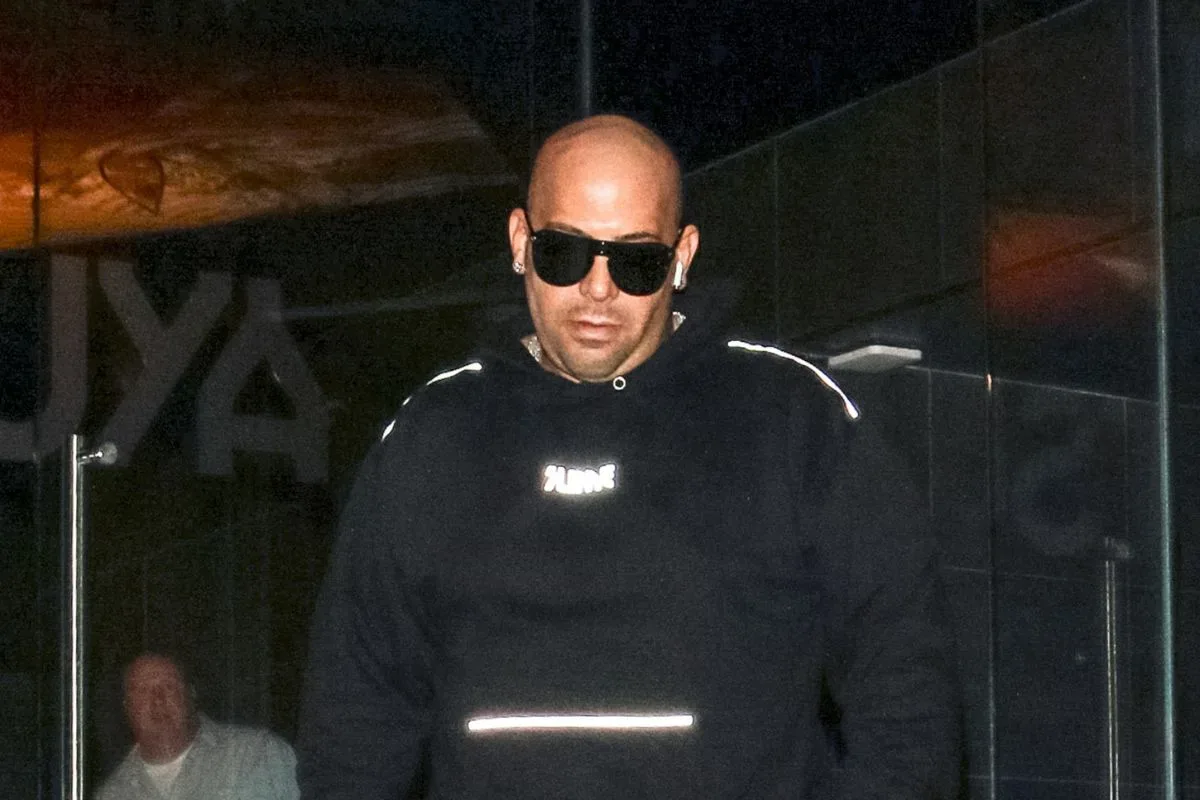
Music producer Mally Mall has been ordered back to federal prison for 17 months after admitting to five violations of his supervised release during a revocation hearing in Las Vegas.
The new sentence follows the completion of a 33-month federal prison term connected to his 2019 guilty plea for operating a high-end prostitution business presented as escort services from 2002 through 2014. He was released from that sentence under federal supervision.
The violations addressed at the recent hearing included a failed drug test, witness tampering and concealing a secret room in his Las Vegas home from probation officers. The court ordered 17 months of incarceration, with roughly three months of credit for time already served.
What a supervised-release revocation means
Supervised release is a period of court-ordered oversight that follows a federal prison sentence. It is not the same thing as probation, which is generally imposed instead of, rather than after, incarceration. A person on supervised release must comply with specified conditions, which can include reporting requirements, substance testing, restrictions on conduct and cooperation with probation officers.
A revocation hearing is the proceeding in which a court determines whether those conditions were violated and, if so, what consequence should follow. Here, the reported outcome rests on Mally Mall’s admission to five violations. The 17-month term is therefore a sentence arising from violations of post-release conditions, rather than a new sentence described as being imposed for the conduct underlying his 2019 plea.
That distinction matters when parsing the news. It does not erase the seriousness of the admitted violations or the resulting prison term, but it identifies the legal basis of the court’s latest order: compliance with supervision after release from custody.
Attorney distinguishes current case from original conviction
Jack Buchanan, Mally Mall’s attorney, said the current allegations did not involve an assertion that his client had continued sex trafficking. “There is nothing within the allegations that he was continuing to sex traffic whatsoever,” Buchanan said following the hearing.
The statement draws a line between the violations considered in the revocation matter and the conduct associated with the earlier federal case. The available information identifies the new violations as including the drug-test failure, witness tampering and the undisclosed room, while Buchanan’s comment addresses what was not alleged in the current proceeding.
For readers encountering legal coverage, that separation is useful: a revocation can result in additional prison time even when the court is not resolving a newly charged repeat of the original offense. It concerns whether the conditions attached to release were followed.
Credit for time served and what comes next
Mally Mall will receive about three months of credit for time already served toward the 17-month sentence. In practical terms, credit for time served means qualifying time already spent in custody is counted against the total term imposed by the court. It does not change the stated 17-month sentence, but it affects how much of that term remains to be served.
Once he completes this new sentence and his supervised release expires, there will be no additional probation period. That point is also distinct from the prison term itself: it concerns the absence of another scheduled period of post-sentence supervision after this matter is complete.
The case is a sharp legal development for a producer whose work has connected him to a wide range of major names across hip-hop, R&B and pop. Before his legal troubles, Mally Mall built a career described as spanning more than two decades, with credits and associations involving Drake, Chris Brown, Usher, Snoop Dogg, Lupe Fiasco, Tyga, XXXTentacion, NBA YoungBoy, Justin Bieber and Rae Sremmurd.
A career that extended beyond the studio
Mally Mall’s public profile was not limited to production. He also appeared on VH1’s Love and Hip Hop, placing him in the overlap between music-making, reality television and celebrity culture. His released singles include “Molly,” featuring Tyga and Wiz Khalifa; “Drop Bands On It”; and “Where You At,” with French Montana and 2 Chainz.
That broader public footprint explains why the court outcome reaches beyond a routine legal brief for music audiences. Producers can occupy a less visible role than performers while still helping shape records and artist networks across genres. At the same time, television appearances and featured releases can make a behind-the-scenes figure recognizable to an audience that may not track individual production credits closely.
Coverage of musicians often gets pulled toward career summaries, but the immediate development is narrower and more concrete: an admitted set of supervised-release violations has produced a 17-month federal prison sentence, subject to approximately three months of time-served credit. The underlying 2019 conviction, the completed 33-month term and the new revocation sentence are related parts of the same legal timeline, but they should not be collapsed into one event.
Why precise language matters in legal and entertainment coverage
Entertainment reporting frequently carries a tension between a recognizable name and a complicated court record. The clearest way to handle that tension is to separate established procedural facts from claims that are not part of the current case. In this instance, the reported admissions, sentence length, credit for time served and lack of a further probation period define the ruling. Buchanan’s statement, meanwhile, specifically says that continuing sex trafficking was not among the current allegations.
That precision is especially important because the story concerns a revocation after release, not a fresh overview of every part of Mally Mall’s past prosecution. Terms such as “supervised release,” “revocation” and “time served” may sound interchangeable in a quick headline scan, but each describes a different feature of the federal process.
- Supervised release: court oversight after a federal prison sentence.
- Violation: conduct found, or admitted, to breach a condition of that oversight.
- Revocation: the court process and resulting action when supervision is violated.
- Credit for time served: custody time already completed that is applied to the sentence imposed.
For music and pop-culture readers, the story lands amid a wider landscape in which public figures’ artistic output, media roles and legal matters can all become part of the same news cycle. For another look at how artists frame a major change in their musical direction, see Chanel West Coast’s discussion of her country-music pivot.