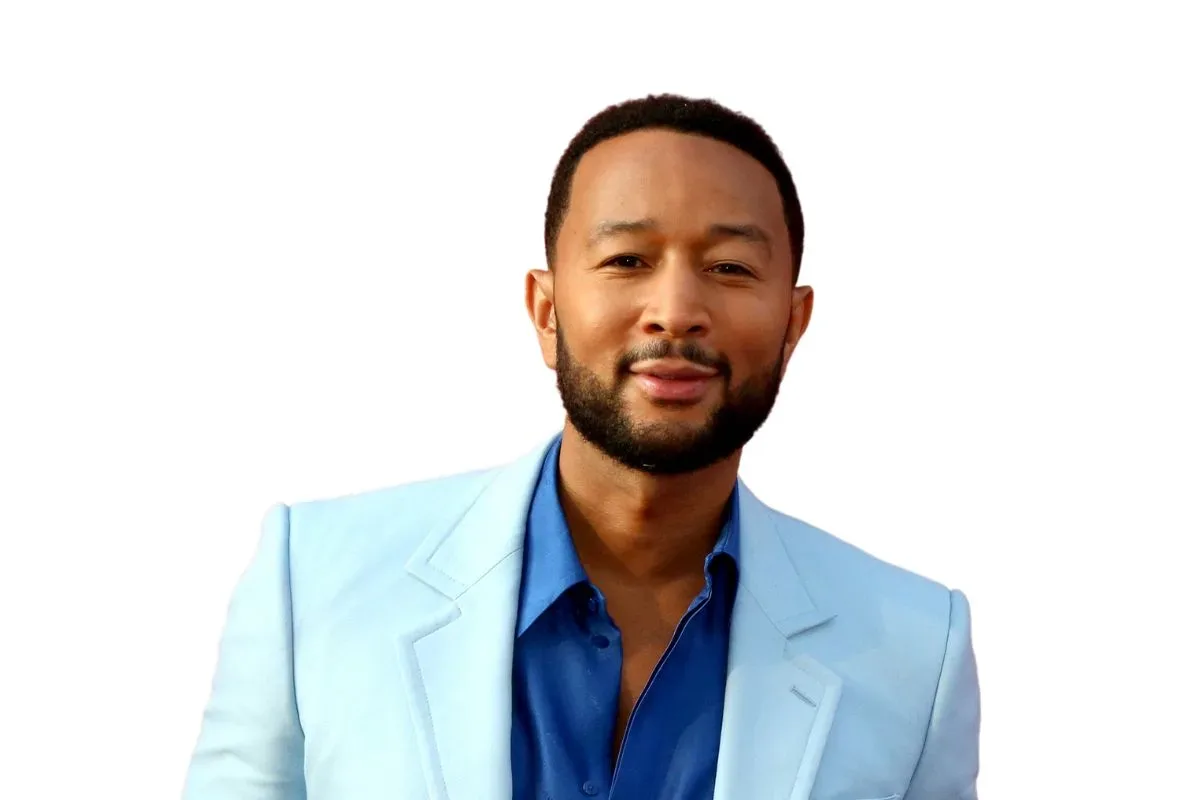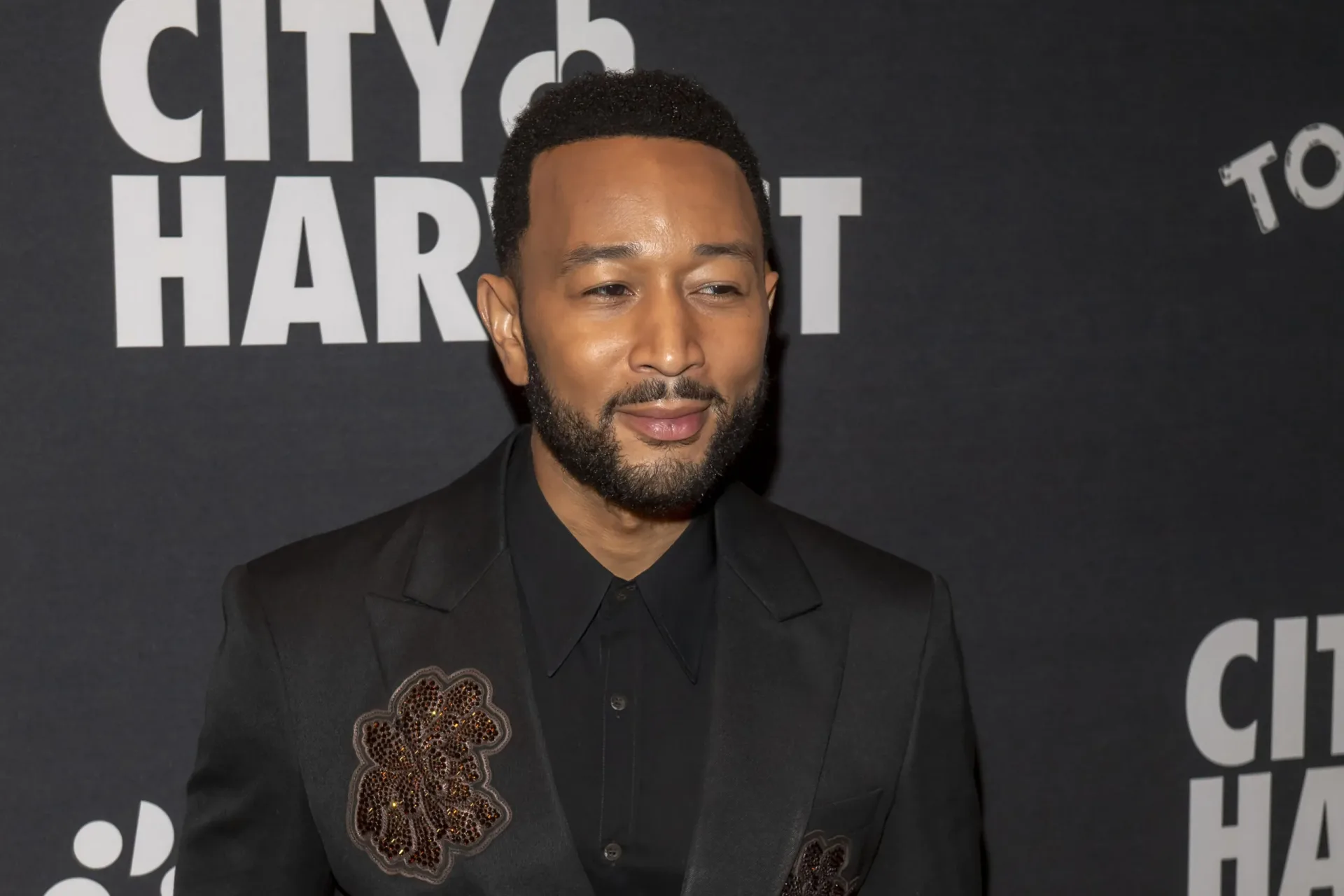
John Legend is approaching the release of Muse with a deliberately long view. The Pharrell-produced album is due October 23, and Legend has said he is not worried about whether its opening-week sales meet an industry-sized expectation.
Asked whether softer debut numbers for established artists make him anxious about releasing new music, Legend’s answer was direct: “No, I don’t get nervous about numbers.” His reasoning was equally clear. He sees his albums as records that can find more listeners over time, rather than products whose entire value is decided in the first several days.
That outlook matters because opening-week reporting can turn music releases into a scoreboard. A debut figure provides a quick, easy comparison, but it cannot by itself tell listeners whether a record will become a personal favorite, support a long touring life, or remain meaningful years after its release. Legend’s stated benchmark is closer to that latter group of outcomes: songs that stay in people’s lives, memories and relationships.
“Like I said, like I’ve never been defined by chart success,” Legend said.
What Legend is—and is not—rejecting
Legend is not claiming that charts are meaningless. His career includes substantial chart milestones. Instead, he is pushing back on the idea that an artist’s success should be reduced to one release window or one peak position.
That distinction is useful. First-week sales describe the commercial activity recorded shortly after an album arrives. They are often used as a shorthand for immediate demand. Chart peak, meanwhile, refers to the highest position a release reaches on a particular chart. Neither measure is the same as long-term cultural connection, and neither automatically captures how music functions in someone’s day-to-day life.
Legend said he has never had a No. 1 album on the main U.S. album chart. Rather than treating that as a missing career credential, he presented it as evidence that he never built his own definition of achievement around winning a release week. His emphasis is on making durable records and continuing to tour, not on pursuing whatever style is currently most dominant.
There is a practical creative point in that position, too. If an artist is focused primarily on a brief commercial burst, the temptation is to chase the sound that seems most likely to generate one. A longevity-centered approach allows for a different question: will these songs still mean something to listeners after the immediate campaign has passed?
Related coverage includes John Legend Puts Longevity Over Opening-Week Sales as ‘Muse’ Nears.
That does not guarantee that every record will have the same trajectory. It does explain why Legend can release a new project without treating its first set of numbers as a verdict on his place in music.
His early career already carried a different kind of scoreboard
Legend’s comments also sit against a career that began with prominent connections across R&B and hip-hop. Before his debut album, he played piano on Lauryn Hill’s “Everything Is Everything” and contributed backing vocals for Jay-Z and Alicia Keys. He later became the first artist signed to Kanye West’s GOOD Music.
His debut, Get Lifted, did have a strong commercial start. It entered the Billboard 200 at No. 7, later reached No. 4, and sold 116,000 copies in its first week, as reported by Sony. It also reached No. 1 on Billboard’s Top R&B/Hip-Hop Albums chart.
Those details make Legend’s perspective more nuanced than a simple dismissal of commercial performance. He knows what an impressive launch looks like. Yet the accomplishments connected to Get Lifted extended beyond its debut frame. The album launched “Ordinary People,” which peaked at No. 24 on the Hot 100, while Legend received Best New Artist, Best R&B Album and Best Male R&B Vocal Performance at the 48th Grammy Awards.
In other words, a release can produce several different kinds of results: an album-chart run, a song’s own chart path, critical or peer recognition, and a longer relationship with an audience. The fact that these measures do not always move in lockstep is central to Legend’s argument. A record does not need to claim the top album position to create a career-defining song, and a large opening does not by itself establish lasting value.
Why Pharrell’s role is central to ‘Muse’
Muse puts another major hip-hop producer at the center of a Legend album. Pharrell produced the project, and Legend has said that entrusting a full album to one producer helped pull him outside his comfort zone. Their work included time in Paris.
That full-album producer arrangement is more significant than a guest appearance on a single track. A producer can influence the musical framework of a project: the choices around rhythm, instrumentation, arrangement, atmosphere and the overall connective tissue between songs. Giving one collaborator a central role can therefore create a more unified direction, while also asking an artist to work within instincts that are not entirely his own.
Legend’s description of being pushed beyond his comfort zone suggests that Muse is not merely a familiar formula with a recognizable producer attached. It indicates a process built around creative trust. The available details do not define the album’s full sound, and listeners will have to wait for the record itself to assess that. But the structure of the collaboration offers a concrete reason to pay attention: Legend is choosing a sustained partnership over a scattered collection of unrelated production choices.
That decision also fits his stated priorities. If the goal is a record designed to endure, a coherent creative partnership may matter more than assembling songs around short-lived market calculations. It is an approach that places the album experience—not just the launch-week outcome—at the center.
Longevity is difficult to quantify, but easy to recognize
Legend’s preferred measure is not as tidy as a chart number. “Songs that stay in people’s lives” cannot be captured by one statistic, because they can live through relationships, milestones, memories and live performance. But that vagueness is partly the point. Music’s role in a listener’s life is usually broader than a ranking.
For fans, the practical takeaway is straightforward: the immediate conversation around Muse may focus on sales, rankings or comparisons to other releases, but Legend is explicitly asking for a different frame. The more revealing question may be whether the songs connect after the initial release cycle—whether they reward repeat listening and become part of the audience’s own history.
That is not an argument against paying attention to chart data. Charts document real audience activity, and they remain part of how the business measures releases. For a useful perspective on how lengthy chart runs become their own kind of headline, see the recent Hot R&B/Hip-Hop Songs record discussion. But Legend’s comments draw a line between observing those numbers and allowing them to define the work.
A release strategy rooted in the songs’ afterlife
Legend’s stance is ultimately a statement of artistic priorities ahead of October 23. He wants to make lasting records, keep touring over the years and create songs that audiences attach to their own memories. The commercial response to Muse will be one part of its public story, but he has made clear that it will not be the whole story.
His history gives that position context. From playing on Lauryn Hill’s work and singing backing vocals for Jay-Z and Alicia Keys, to becoming GOOD Music’s first signing and earning major recognition for Get Lifted, Legend’s career has moved through both hip-hop and R&B spaces while producing tangible chart and awards results. The new album continues that connection through Pharrell’s full-project involvement.
For Muse, then, the headline is less about a number Legend has not yet received and more about the kind of album he intends to make. He is betting that a project shaped by a trusted producer, a willingness to leave familiar territory and an eye toward emotional staying power has value beyond the first week.