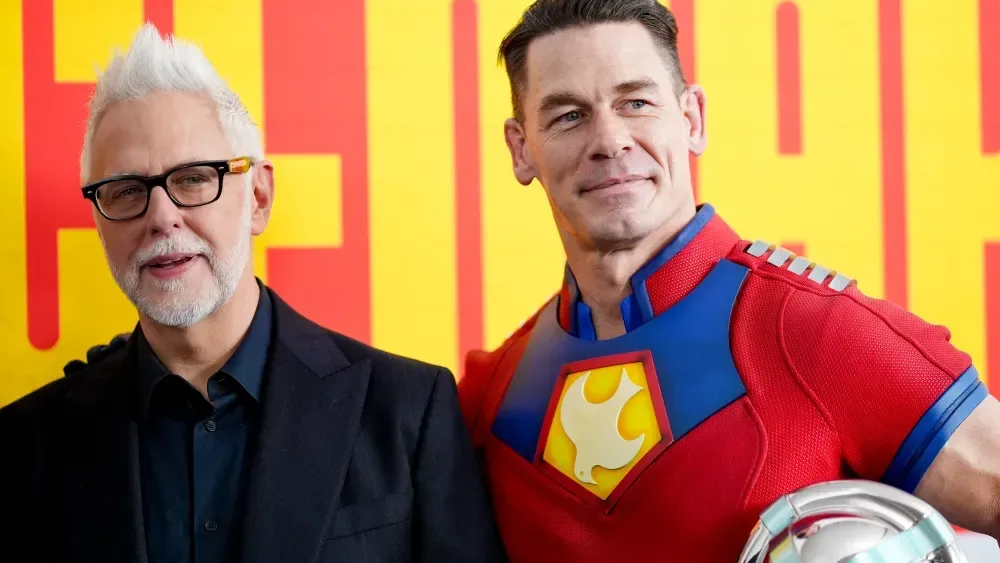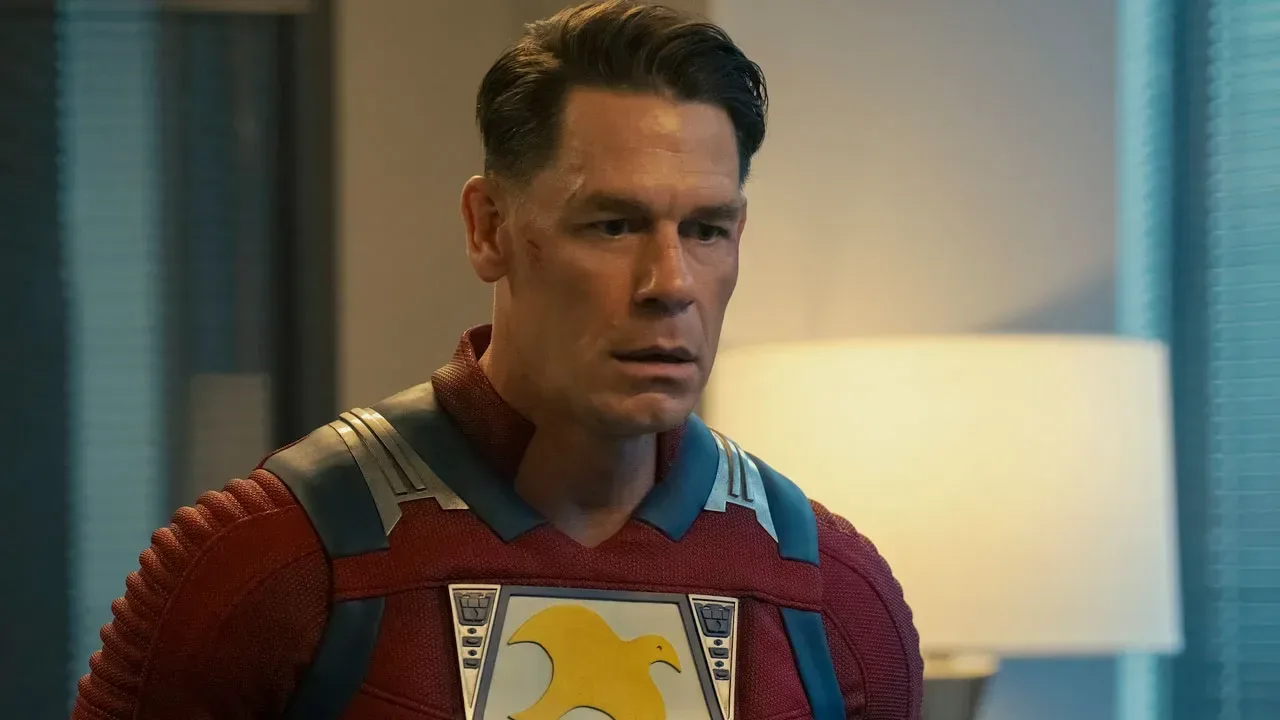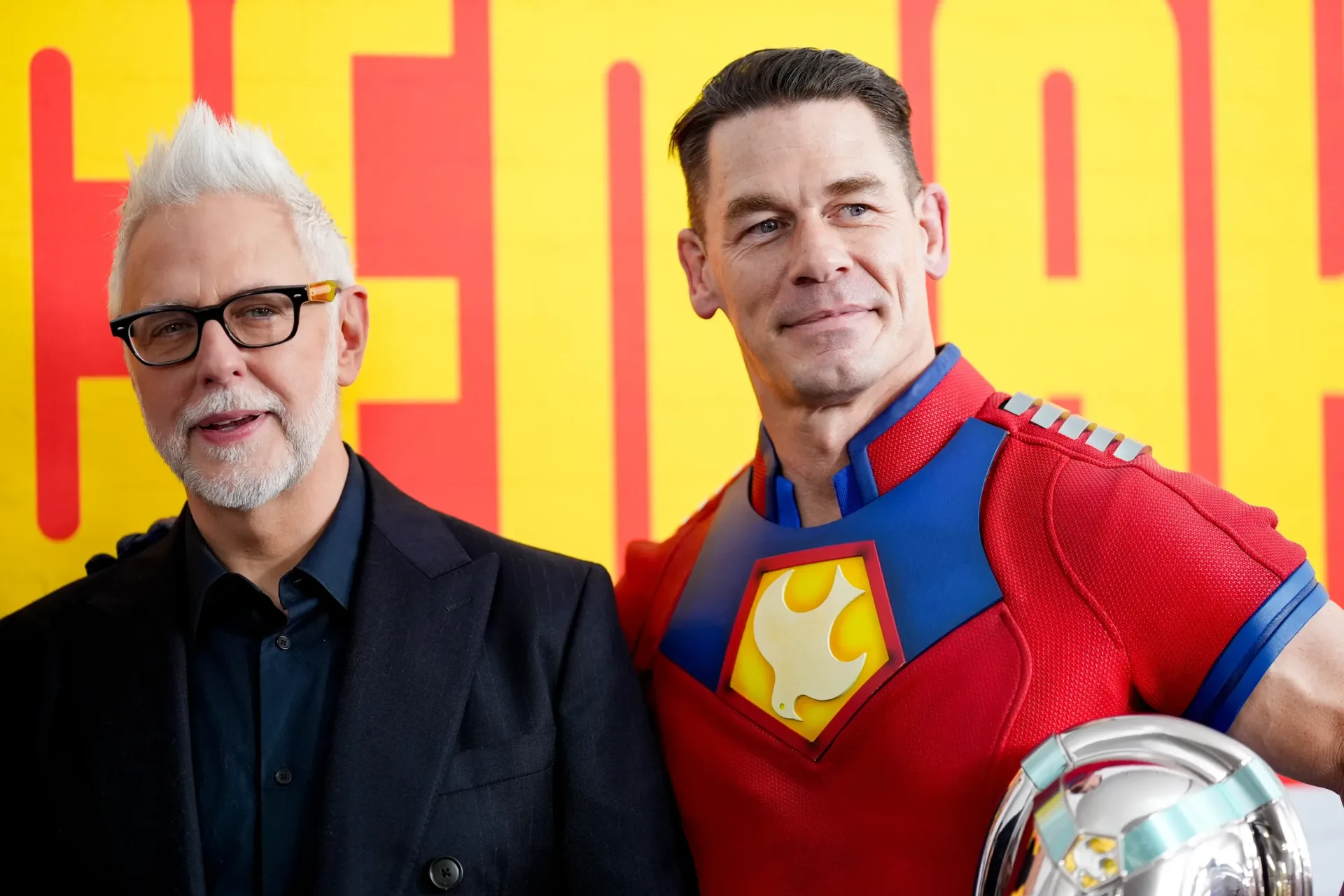
John Cena has not declared Peacemaker finished. But he has offered a notably practical reading of where Christopher Smith sits now that James Gunn is helping lead all of DC Studios.
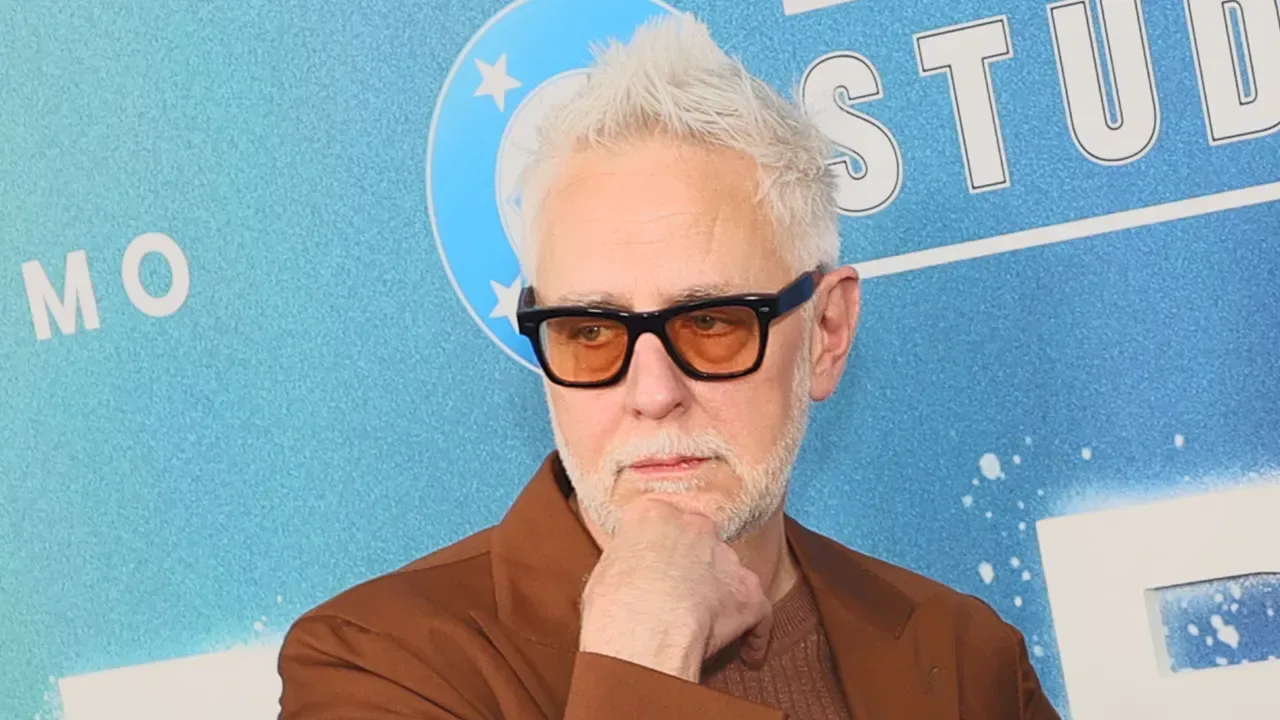
Speaking about whether audiences have seen the last of the helmeted antihero, Cena avoided presenting himself as the person with the answer. “You need a different guy in this chair,” he said, pointing toward Gunn as the decision-maker. His own position was simple: he has not put the costume back on since production on Season 2 wrapped, but he is willing to return if Gunn calls.
“When I put that helmet on, I told James, I’m like, ‘Dude, I’ll put this helmet on as long as you need me to.’”
That is an expression of enthusiasm, not a confirmation of another season, a new special, or an appearance elsewhere in the DC Universe. The distinction matters. Cena’s remarks leave the door open, but they do not establish that a Peacemaker follow-up is in active development or that Christopher Smith has been assigned a future role.
A character created in a much smaller DC sandbox
Cena first played Christopher Smith in 2021’s The Suicide Squad. The character then led Peacemaker, which premiered on HBO Max in 2022. Season 2 arrived in October 2025, more than three years after the first season.
In Cena’s account, the show came from a period when Gunn’s DC responsibilities were far narrower. After Guardians of the Galaxy, Gunn entered DC with the Suicide Squad ensemble available to him. COVID then created downtime, and Gunn wrote what became Peacemaker.
That origin story helps explain the series’ unusual position. It began as a character-focused extension of one film and one corner of DC’s screen world, rather than as a title designed to carry an entire interconnected franchise. A spin-off is a show built around a character or setting that branches away from an existing work; Peacemaker fits that description, with Cena’s character moving from a team movie into his own series.
The situation around the show is now fundamentally different. Gunn and Peter Safran became co-CEOs of DC Studios between the two seasons. Their work has included rebooting the new DC Universe with Superman and Creature Commandos. Following the completion of the Paramount-Warner Bros. Discovery merger that formed Skydance Corp., David Ellison said Gunn and Safran would remain co-heads of DC Studios at the new company.
In other words, the creative behind Peacemaker is no longer only deciding what comes next for a single offbeat antihero. He is part of the executive leadership responsible for an entire DC slate and its biggest characters.
Cena’s “whole box of toys” explanation
Cena described Gunn’s changed circumstances using a toy-box metaphor. Gunn, he said, now gets to work with the full range of DC characters, and that means dealing with the most valuable properties first. Cena specifically named Superman, Batman and Wonder Woman as examples.
Here, “IP” means intellectual property: recognizable fictional characters, stories and brands that a company controls and can adapt across films, television, comics, games and merchandise. Major superhero names are especially consequential IP because they often function as the clearest public entry points to a shared universe.
Cena’s argument is not that Peacemaker lacks value. Rather, he is describing a hierarchy of attention. When leadership has responsibility for Superman, Batman and Wonder Woman alongside every smaller-scale project, prioritizing those foundational characters is a logical business and storytelling choice.
“I’m not in a leadership spot, but if I was, I’d be making those plays first,” Cena said. “That’s OK.”
It is a refreshingly unsensational answer to a question that can easily be framed as a sign of trouble. There is no indication in Cena’s comments of a disagreement with Gunn or reluctance to reprise the role. On the contrary, Cena credited Gunn with making him a better performer and said he enjoys working with him. The uncertainty is about priority and scheduling, not apparent bad blood.
What the comments do—and do not—tell viewers
The strongest takeaway is that Cena remains available and interested. He has said he would wear the helmet as long as Gunn needs him. That makes a return possible in principle.
But “possible” is not the same thing as “planned.” Nothing in these remarks specifies:
- a renewal for a third season;
- a production date;
- a release window;
- an appearance in another DC project; or
- the particular format of any potential return.
That restraint is important for fans tracking a universe built from many related projects. Shared-universe storytelling can encourage people to treat every cast comment as a teaser for a specific crossover. Cena did not offer one. He instead deferred to Gunn and explained why Gunn’s attention may be occupied by properties with broader responsibilities.
There is also a meaningful difference between a creator’s personal focus and a character’s permanent status. A show not being a present-day priority does not, by itself, mean it has been cancelled, concluded, or removed from continuity. It only means that other work may sit ahead of it in the queue. Cena’s comments support the first point; they do not settle the others.
The pressure of building a connected universe
Gunn and Safran’s role changes the context around every returning DC character. As co-CEOs, they are not merely selecting the next installment of an individual story. They are shaping a larger structure in which different movies and series must coexist.
That is why Cena’s Superman, Batman and Wonder Woman examples are useful. Those names can establish the broad identity of the DC Universe for audiences, while a property such as Peacemaker can provide a more specialized angle: an adult antihero story rooted in Christopher Smith’s perspective. Both kinds of project can matter, but they need not receive the same immediate emphasis.
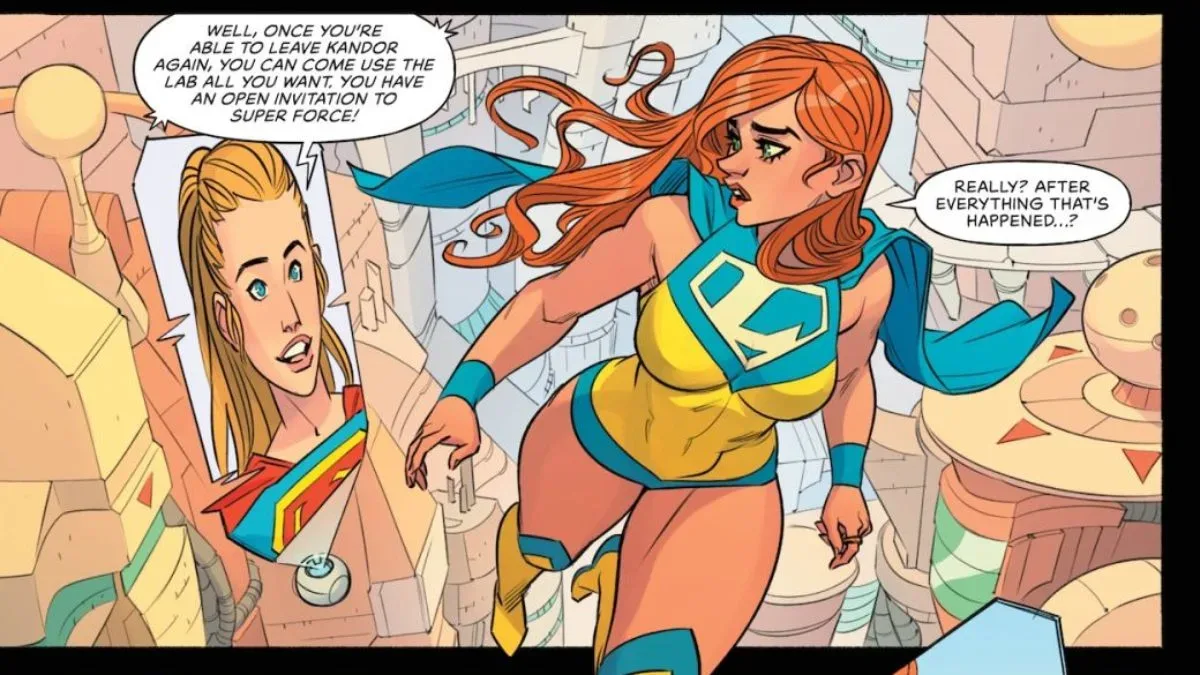
The current DC landscape has already included Superman and Creature Commandos as part of the rebooted universe. Readers following DC’s wider character activity can also see how individual heroes continue to generate distinct stories, such as this look at a new Supergirl comic storyline. The broader point is not that every project must connect directly to Christopher Smith, but that DC leadership is working across a deep bench of characters and formats.
For Peacemaker, that could be both a complication and an opportunity. The complication is obvious: Gunn has more competing obligations than he did when the series was conceived. The opportunity is that a character who started in The Suicide Squad now exists amid a much larger set of potential story spaces. Cena’s comments, however, do not identify which of those possibilities—if any—will be used.
Cena’s commitment is the concrete news
Fans hoping for clarity on Christopher Smith’s next appearance may find Cena’s response cautious. Still, it is direct about the part he can control. He remains committed to the character and to Gunn’s creative lead.
That attitude tracks with the practical reasoning Cena gave about DC Studios’ priorities. In his view, the person who once had a limited group of characters to explore now has “the whole box of toys.” If the studio’s most central heroes come first, Cena sees that as understandable rather than as a slight to Peacemaker.
For now, that leaves the antihero in a state of open possibility: not actively confirmed for a next step in Cena’s comments, but with its star explicitly ready to step back into the helmet when needed. Cena is currently appearing in Matchbox: The Movie, which reached theaters Friday.