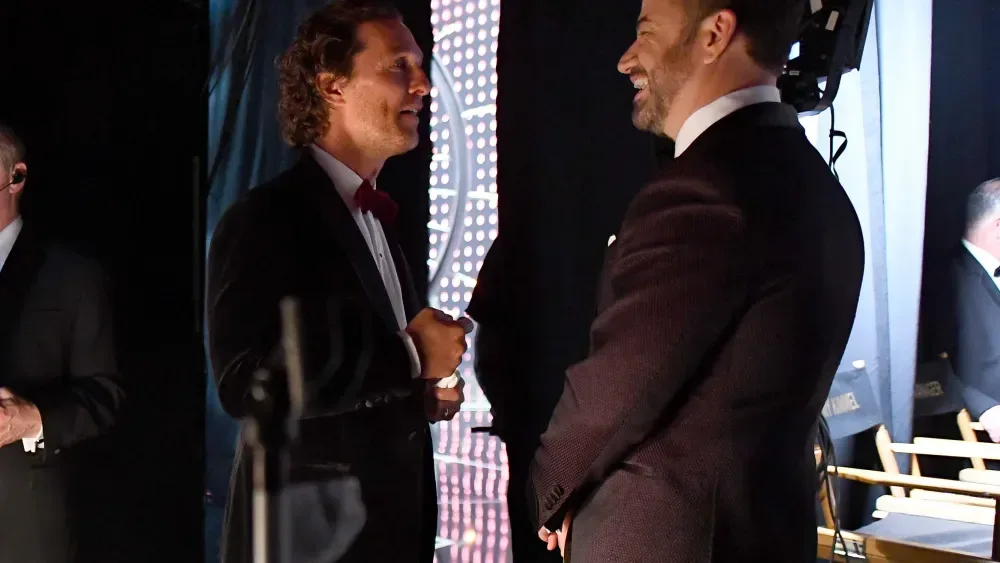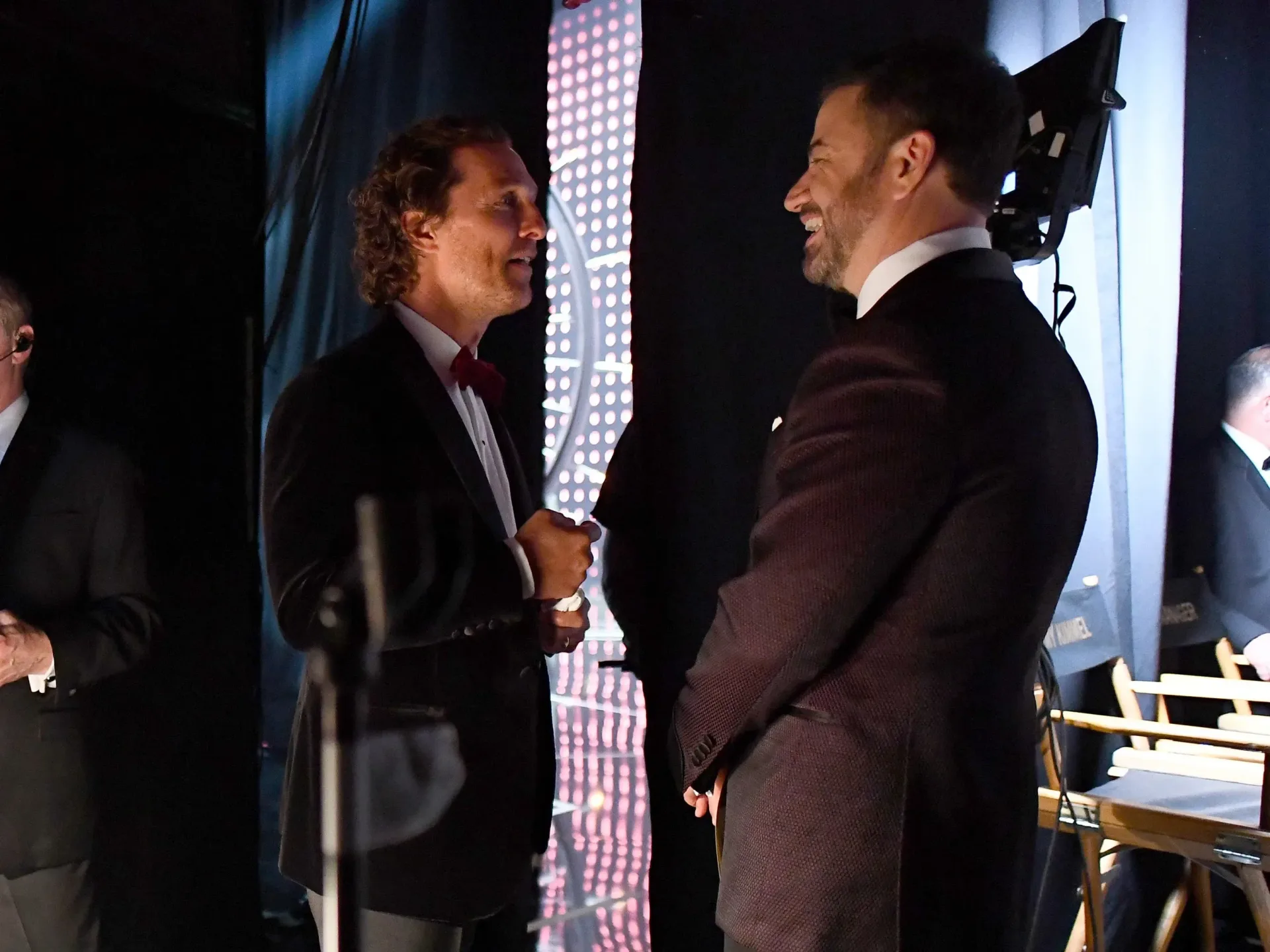
Jimmy Kimmel shared an unusually personal—and characteristically unruly—awards-show story during a conversation with Woody Harrelson: after becoming emotional at the Emmys, Kimmel says he found himself receiving a consoling hug from Matthew McConaughey at precisely the wrong possible moment.
The memory began with something sincerely sad. Kimmel said he was affected by the In Memoriam segment’s tribute to Cleto Escobedo III, his childhood friend and the longtime bandleader on Jimmy Kimmel Live. Seeking a moment to compose himself, Kimmel went to the bathroom. There, he said, McConaughey was standing at a urinal beside him.
McConaughey noticed Kimmel was upset and asked if he was all right, Kimmel recalled. After Kimmel explained why he was emotional, the actor offered a warm hug. The punchline, delivered by Kimmel as part of a story told for laughs, was that McConaughey had not finished using the urinal before turning to embrace him.
Kimmel said he asked McConaughey whether he was still exposed. McConaughey’s answer, as Kimmel recounted it, confirmed the situation and added an intentionally outrageous joke. Kimmel’s response on the show was not outrage but gratitude: the sheer absurdity helped interrupt the grief-heavy moment.
Woody Harrelson had an unexpected front-row seat
The story became even more awkwardly comic because Harrelson emerged from a bathroom stall during the embrace. Harrelson, appearing with Kimmel while promoting Apple TV’s Brothers, played along with the account rather than treating the incident as a scandal. He joked that he did not want to police whatever he believed his two friends were doing in an Emmys restroom.
But Harrelson also returned the conversation to its real foundation: Kimmel’s sadness over Escobedo. He said he had heard Kimmel explain what was wrong, and remembered that the group later shared a hug outside the bathroom.
That contrast is what gives the anecdote its odd emotional shape. It is not simply a celebrity bathroom story engineered for shock value. In Kimmel’s telling, it was a badly timed but affectionate attempt to comfort a friend, with the bizarre timing becoming the mechanism that broke through an intensely sad spell.
“That did lighten the moment considerably,” Kimmel said, adding that Escobedo would have appreciated it.
Related coverage includes Jimmy Kimmel Recalls Matthew McConaughey’s Unexpected Emmys Bathroom Hug.
A late-night story with grief at its center
Late-night interviews often rely on a neat escalation: a guest gives a host an unusual present, a story begins innocently, then each added detail makes it more ridiculous. This conversation had that structure. Harrelson brought Kimmel an enormous joint from The Woods, Harrelson’s West Hollywood cannabis lounge and dispensary, before Kimmel launched into the Emmys recollection involving McConaughey.
Yet the detail that prevents the anecdote from being merely crass is Kimmel’s stated reason for leaving his seat. The In Memoriam montage had reminded him of a formative personal and professional relationship. Escobedo was not a distant acquaintance in Kimmel’s account; he was both a childhood friend and a central musical collaborator on Kimmel’s program.
In that context, McConaughey’s question—asking whether Kimmel was okay—matters more than the bathroom punchline. The hug was prompted by a person seeing that someone nearby was struggling. The fact that it happened in an extraordinarily unsuitable setting is what turned a private gesture into a public story.
There is also an important distinction between the reported event and the way it was presented. Kimmel and Harrelson told the story as a humorous exchange on a comedy-oriented television program. Harrelson’s comments were plainly joking, and Kimmel framed McConaughey’s behavior as consoling rather than hostile or unwanted. Nothing in the account suggests a dispute among the three men; the comedy comes from Kimmel’s retelling of a supportive moment that went spectacularly off-script.
Why the story landed
Awkward celebrity stories tend to travel when they offer a sharply human version of people usually encountered through premieres, prestige projects, award speeches, and carefully polished interviews. Here, three major actors and television personalities were reduced to a situation many viewers would recognize in principle—one person notices another is upset and offers comfort—then elevated into something no etiquette guide could possibly anticipate.
Kimmel’s account also gave Harrelson a useful role in the scene. He was neither the person who needed support nor the person providing it. He was the accidental witness, positioned to react the way an audience might: stunned at first, then amused once he understood that Kimmel was grieving and the embrace was meant kindly.
That is why Harrelson’s follow-up mattered. Rather than only extending the restroom gag, he mentioned the later group hug and expressed sympathy for Kimmel’s loss. It acknowledged that the encounter had a real emotional cause, even as the segment leaned fully into its comic potential.
McConaughey was not present for the discussion, so the available account is Kimmel’s recollection, reinforced in part by Harrelson’s acknowledgment that he witnessed the aftermath of the unusual hug. The details were shared as an anecdote, not as a formal account of the Emmys evening. Still, Kimmel’s conclusion was unmistakable: the unexpected gesture made him feel better, and he believed Escobedo would have laughed at it.
What it says about the trio behind Brothers
Harrelson and McConaughey’s public rapport is central to why the story could be told so freely. Harrelson appeared to promote Brothers, an Apple TV series he shares with McConaughey. Their friendship is already part of the project’s broader public framing, including the two men’s playful discussion of whether they could be half-brothers.
Kimmel’s story folded him into that same loose, teasing dynamic. Harrelson could make a deadpan joke about walking in on the pair; Kimmel could describe McConaughey’s decision-making in increasingly absurd terms; and the emotional trigger could still be treated respectfully. It is an example of how established friendships can support comedy that would read far differently if it were presented as an allegation or a conflict.
For entertainment viewers, the episode is also a reminder that the strangest backstage stories are not always about professional rivalry or awards campaigning. Sometimes the memorable detail is simply an act of sympathy delivered with remarkably poor restroom timing.
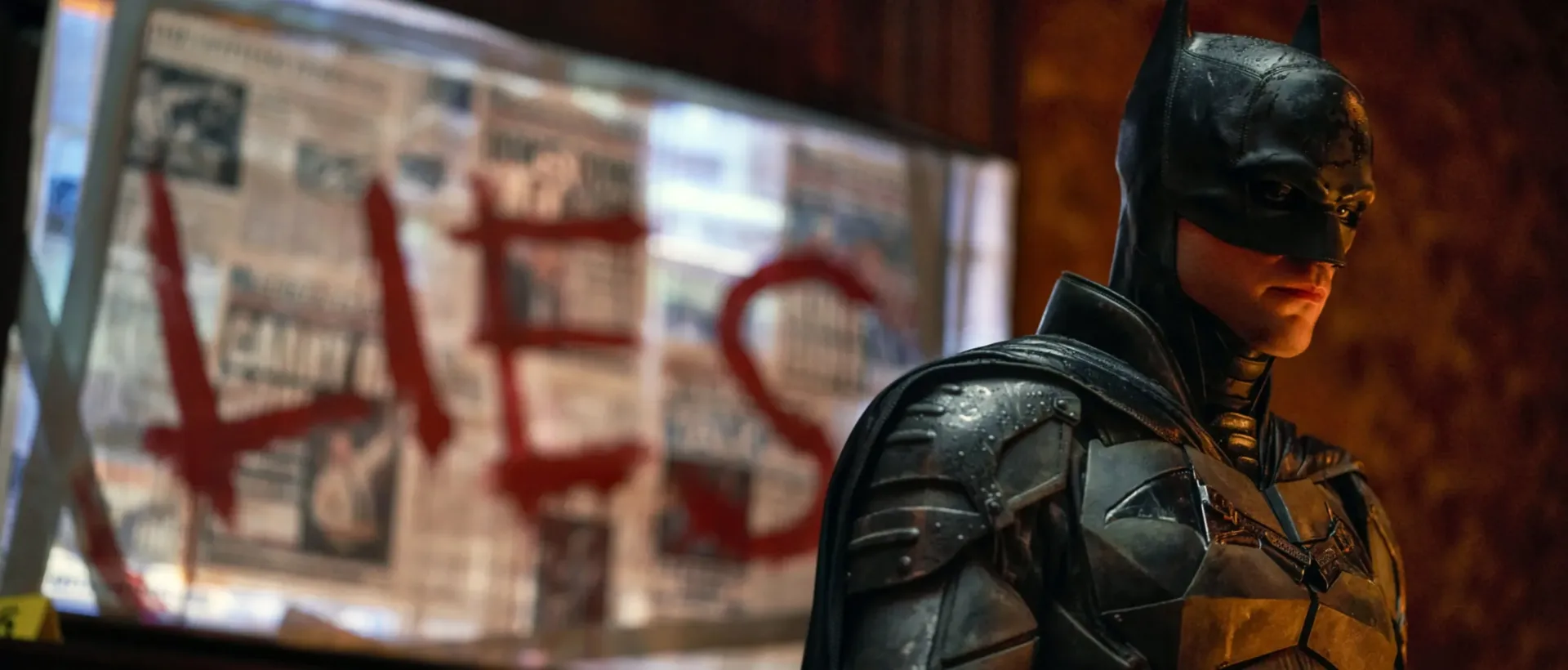
For more coverage of screen-world news and celebrity projects, see our look at Robert Pattinson’s description of The Batman: Part II as an ambitious turn.