The 78th Emmy Awards drew 6.7 million viewers for NBC’s Monday-night telecast, a number that can look disappointing or encouraging depending on the comparison point. It was 9% below the 7.4 million viewers for the preceding year’s CBS ceremony, but that earlier show aired on a Sunday and represented the awards’ strongest viewership since 2021.
Look instead at recent Monday editions and the picture changes. The 2026 broadcast was up 41% from Fox’s 2024 telecast, which reached 4.4 million viewers. It was also 10% above NBC’s 2022 Monday Emmys, which brought in 5.9 million. Those figures do not turn ratings analysis into a simple victory lap, but they make a useful point: an awards-show audience is shaped by scheduling, competition and viewing habits as much as by the show’s raw year-over-year change.
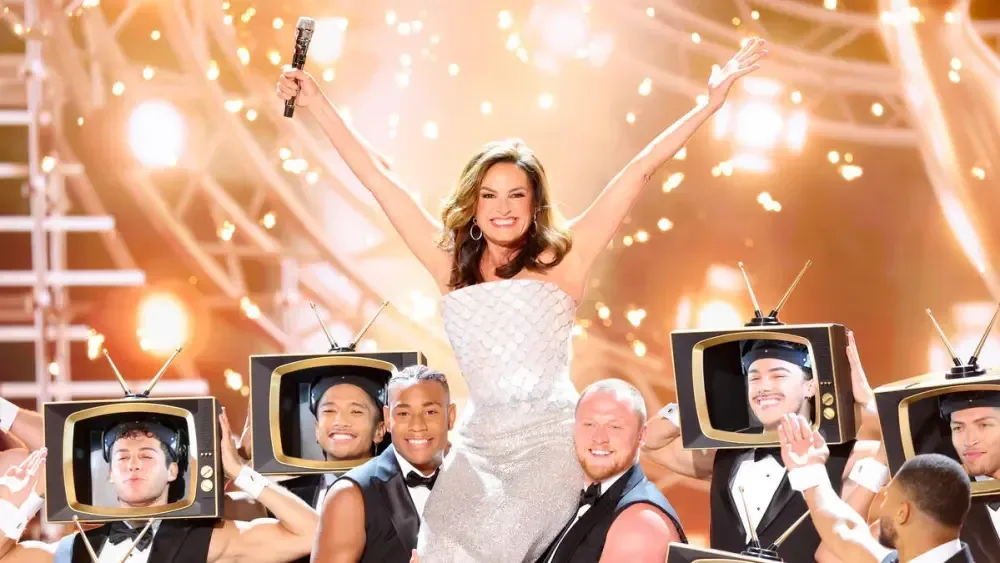
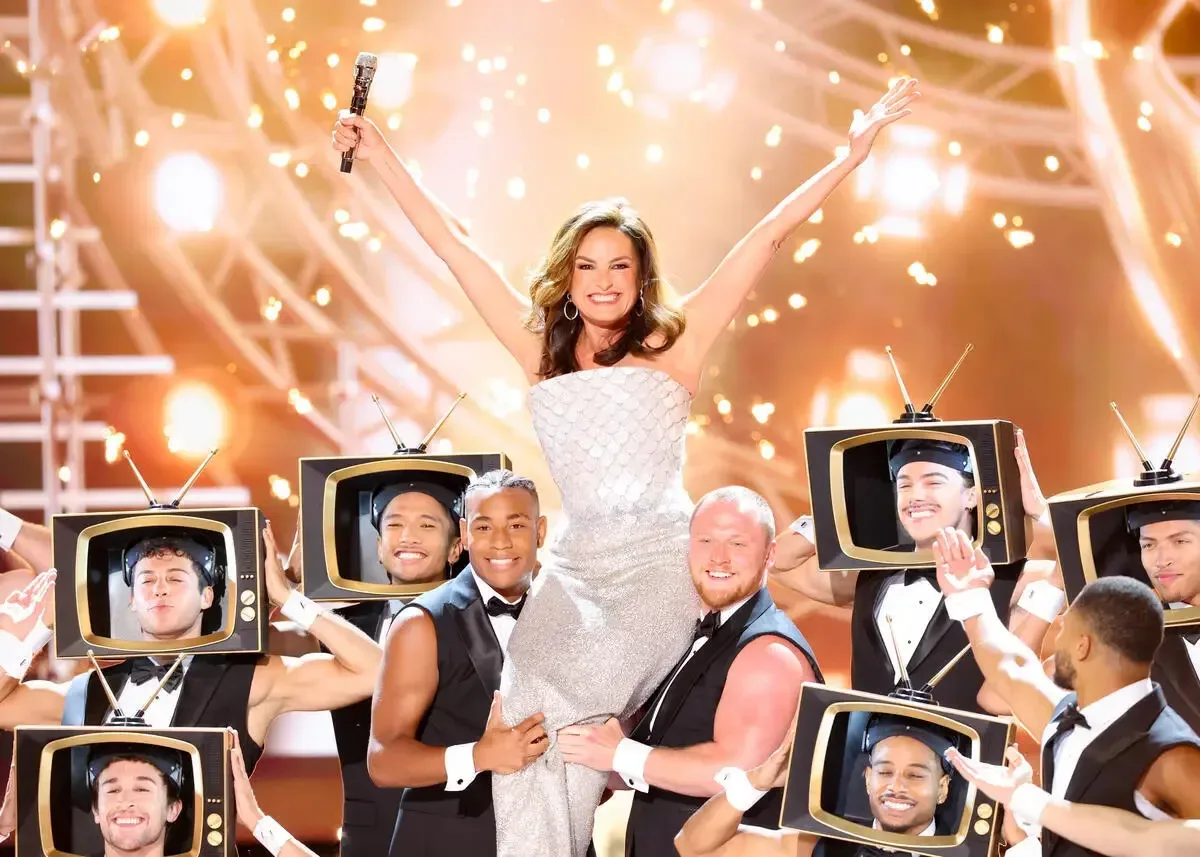
Hosted by Law & Order: Special Victims Unit star Mariska Hargitay, the Emmys also went up against an NFL game between the Kansas City Chiefs and Denver Broncos. Despite that, it ranked as 2026’s most-watched non-sports, non-news Monday telecast both in total audience and among adults 18–49.
The 6.7 million figure is real, but it is not the entire story
“Viewers” here refers to the Nielsen-measured television audience reported for the broadcast. It is the cleanest headline metric because it provides a single, comparable total. It is also easy to misuse when its surrounding conditions are ignored.
A 9% decline from the previous ceremony is the straightforward comparison: 6.7 million versus 7.4 million. Yet the two broadcasts did not occupy the same part of the week. Sunday is traditionally more hospitable to an extended awards show, while a Monday telecast asks viewers to commit to a three-hour program at the beginning of the work and school week. That does not prove every difference is caused by scheduling, but it does mean the calendar is not background noise. It is central context.
The 2024 Monday comparison needs care, too. Fox’s 4.4 million-viewer result came against an NFL playoff game, described as the first time the Emmys had faced that level of postseason football competition. The 41% increase from that unusually tough night is mathematically accurate, but it should not be treated as a like-for-like baseline for ordinary Monday television.
NBC’s own 2022 Monday presentation is therefore a more grounded point of reference. The rise from 5.9 million to 6.7 million is an increase of roughly 800,000 viewers, or 10%. It still cannot isolate every variable—hosts, nominated shows, promotional strategies and the broader TV environment all change—but it compares two Monday Emmys on the same network.
A quick guide to the competing comparisons
- Against 2025: 6.7 million is down from 7.4 million, a 9% drop, with Sunday versus Monday as a major scheduling distinction.
- Against 2024: 6.7 million is up from 4.4 million, a 41% increase, though the earlier Monday faced NFL playoff competition.
- Against NBC’s 2022 Monday telecast: 6.7 million is up from 5.9 million, a 10% improvement and the closest supplied schedule-and-network comparison.
This is why “down year over year” and “better than comparable Monday telecasts” can both be true. The figures are not contradictory; they answer different questions.
Related coverage includes 2026 Emmys Draw 6.7 Million Viewers on NBC Monday Telecast.
Football was the obvious competing screen
The Chiefs-Broncos NFL game was the most direct challenge for the Emmys on the night. Sports broadcasts command a live audience in a way that many entertainment programs increasingly do not, especially when viewers can expect scripted series and films to remain available later. Awards shows retain a live-event quality because winners, speeches, performances and surprises are part of the immediate conversation, but they still have to fight for the same evening’s attention.
The telecast acknowledged that contest for viewers in a pre-recorded sketch. Hargitay mused that Taylor Swift could not attend because she would be supporting Chiefs player Travis Kelce. The bit made the parallel programming part of the show’s own framing rather than pretending the football game was absent.
That self-awareness matters less as a ratings solution than as a sign of how live television is now packaged. A major telecast can be both an event and a participant in the wider entertainment conversation. Referencing an attention-grabbing game, pop star and athlete creates material designed to travel beyond the linear broadcast itself.
For audiences, this is a reminder that a broadcast’s overnight cultural footprint and its TV-viewer total are different measurements. One asks how many people watched the telecast; the other can include people encountering clips, posts and discussion afterward. Both have value, but neither should be quietly substituted for the other.
133 million social views measure reach, not television ratings
NBCUniversal said the Emmys generated 133 million social views across Facebook, Instagram, X and YouTube, a claimed 90% increase from 2025. That is a substantial promotional result, but the term social views needs a plain-English distinction: it counts consumption of social content across several platforms, not 133 million people sitting through the Emmys broadcast.
A social-view total may encompass short video clips, recirculated posts and users who watched more than one piece of content. It reveals the degree to which Emmy moments were distributed across feeds and video services. It does not function as a direct replacement for a Nielsen telecast audience, and it should not be added to the 6.7 million figure as though they represented separate groups of people.
Still, the 90% increase is meaningful as an indicator of digital interest. An awards show no longer exists solely during its scheduled window. Its most shareable moments can be discovered in fragments: a host’s sketch, a winner’s speech, a reaction shot or a celebrity appearance. That fragmented consumption can amplify the event’s visibility even when linear viewership remains constrained by a Monday start time and formidable sports competition.
The practical implication for broadcasters and the TV Academy is not that social activity makes ratings irrelevant. Television audience totals remain important for evaluating the broadcast and its advertising appeal. Rather, the two measurements describe separate parts of the same project: live viewing provides a communal appointment, while social circulation extends the program’s life and gives people reasons to engage even if they did not watch every minute live.
The Emmys may be approaching a distribution change
The 2026 NBC edition appears to be the last Emmys carried by a traditional broadcast network for now. After 31 years rotating among NBC, CBS, Fox and ABC, the TV Academy is in discussions with Amazon Prime Video.
That wording is important. Talks are not a completed agreement, and there is no supplied confirmation of a finalized deal, future air date or streaming format. But the prospect alone puts the 2026 ratings in a transitional light. A move from a rotating broadcast arrangement to a streaming platform would change more than where viewers find the show.
Broadcast television makes a program available through a conventional network schedule. Streaming is organized around a platform and its own ecosystem, potentially changing how an event is promoted, measured and experienced. A live awards show could remain a major appointment on either kind of service, but direct comparisons may become harder if future reporting uses different audience methodologies or emphasizes different metrics.
For that reason, the 6.7 million NBC figure may become a useful final benchmark for this particular era of Emmy distribution—not necessarily because it is an all-time high or low, but because it arrives at the end of a 31-year rotation among the four broadcasters. Any future platform arrangement should be judged on its own disclosed audience information rather than forcing unlike measurements into a single trend line.
The wider media business is already accustomed to that measurement puzzle. Gaming and entertainment companies similarly weigh traditional reach against engagement across platforms; coverage of studio and platform decisions often turns on the difference between a headline metric and the conditions behind it. For an adjacent industry example, see the discussion around VS Studio’s first game and audience expectations.
What the ratings result actually says
The most defensible reading is measured rather than absolute. NBC’s Emmys fell short of the unusually strong 2025 Sunday broadcast, yet exceeded NBC’s prior Monday edition and comfortably outperformed the most recent Monday telecast on Fox. It did so while facing an NFL game and finished as the year’s top non-sports, non-news Monday broadcast in overall viewers and the adults 18–49 demographic.
That adults 18–49 result deserves mention because it is a core advertising demographic. The supplied figures do not provide a rating or audience count within that age range, so it would be wrong to invent one. What is established is the show’s first-place Monday ranking in that group, alongside its overall non-sports, non-news standing.
Meanwhile, the claimed 133 million social views underline that the ceremony had a much larger digital circulation than one TV-viewer number can express—without turning those social impressions into a substitute for broadcast audience. The Emmy telecast remains a live TV event, but its performance is increasingly understood through several lenses at once: who watched it live, what else was on, what night it aired, and how widely its moments traveled online.
In short, 6.7 million is neither an uncomplicated decline nor an uncomplicated rebound. It is a credible Monday result with a lower year-over-year comparison, a stronger schedule-matched comparison, and a potentially significant place at the close of the Emmys’ long broadcast-network rotation.