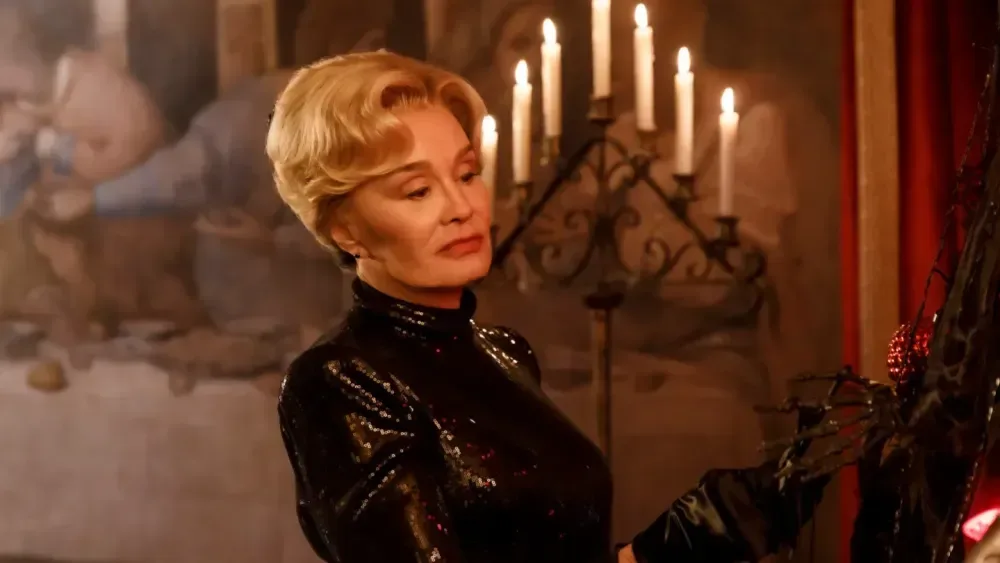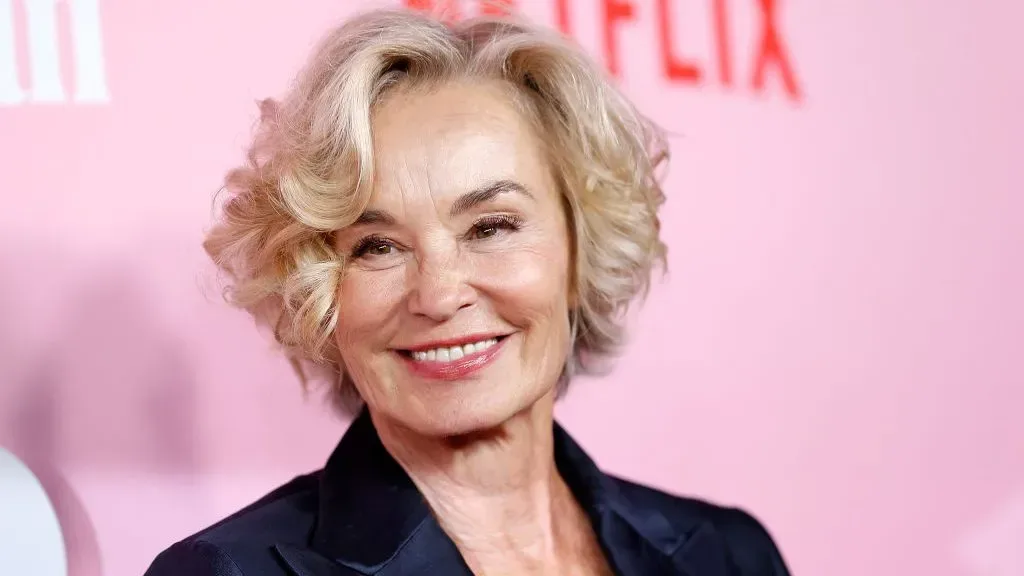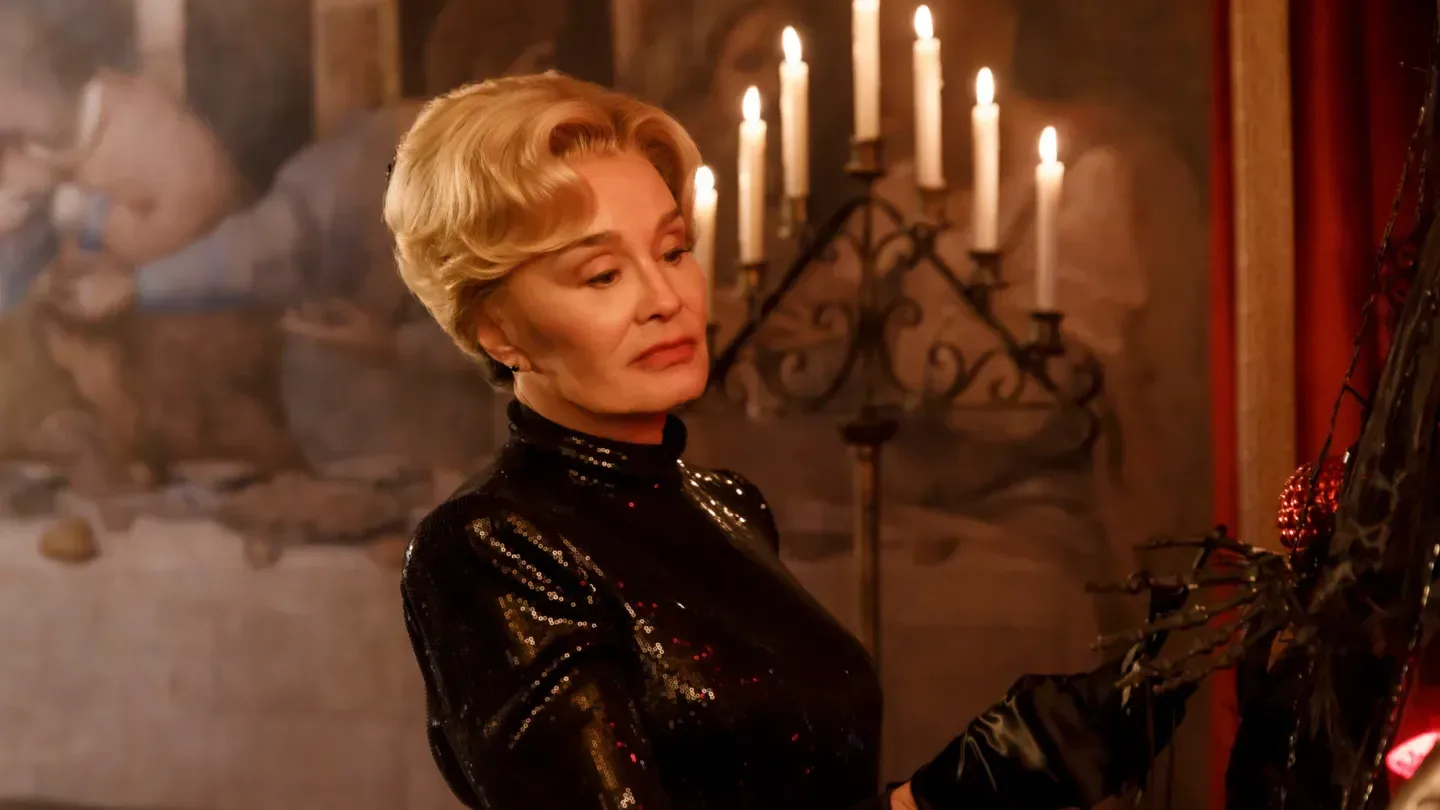
Jessica Lange has revisited an unglamorous memory from her earlier American Horror Story years: getting behind the wheel herself after the cameras stopped rolling.
Speaking during a PaleyFest panel with fellow franchise performer Sarah Paulson, Lange said the production did not provide cars or drivers for the cast during those earlier seasons. Her recollection was specific: workdays could end at four or five in the morning, leaving performers to drive, park on a street in New Orleans’ French Quarter, and make their own way home.
It is a sharply ordinary detail attached to a series known for elaborate characters, heightened horror and big theatrical performances. Lange’s response was not merely a nostalgic anecdote, either. She said the issue remains a “bone of contention,” and described FX in blunt terms as being too cheap to arrange transportation at the time. Paulson laughed in agreement beside her.
An overnight commute is not a minor footnote
There is an important distinction between an actor traveling to work and an actor making a solo drive after an overnight shoot. Lange was talking about the latter: a commute after a day that had apparently stretched into the predawn hours.
Film and television production often works on schedules that do not resemble a conventional office day. A scene can require repeated takes, technical changes, lighting adjustments, wardrobe resets and other work that affects when a performer wraps. “Wrap” is industry shorthand for the point at which a person’s scheduled work is finished. It does not automatically mean that the journey home is easy, short or appropriately supported.
Lange’s story therefore puts the emphasis on an operational part of production that audiences rarely see. The finished episode gives viewers costumes, sets, music and performance. The work behind it includes logistics: how people arrive, when they leave and what happens after a difficult call time. Her frustration is directed at the lack of a car service or driver, not at the fictional world of the show itself.
The French Quarter detail also anchors the story in the production of the third season, Coven, which was filmed in New Orleans. Lange recalled parking on a street in that neighborhood after the late drives. The account does not establish every transportation arrangement used across every season or by every department. It does, however, clearly describe Lange’s experience and why it still bothers her.
Why this memory carries weight in the franchise
Lange was central to the identity of American Horror Story during its opening run. Across the first four seasons, she led the ensemble as Constance Langdon in season one, Sister Jude Martin in season two, Cordelia Goode in season three and Elsa Mars in season four. She won Emmy awards for her work in the first and third seasons.
Related coverage includes Jessica Lange Recalls Driving Home From Early American Horror Story Shoots.
Those roles are notably different from one another. Constance is tied to the first season’s family at the center of its haunted-house story. Sister Jude is associated with the second season’s institutional setting. Cordelia belongs to Coven, while Elsa Mars leads the fourth season’s world. The anthology format is crucial here: rather than playing one continuous protagonist in a single ongoing plot, Lange inhabited major characters designed for distinct seasonal stories.
An anthology series tells separate stories in separate installments, even when it may later revisit people, places or ideas from earlier entries. For an actor, that format can mean returning to the same production environment while taking on a substantially new character. Lange’s first four American Horror Story parts illustrate that flexibility particularly well.
That history gives her transportation complaint an unusual contrast. These are performances remembered as large-scale, carefully constructed television characters, but the memory she chose to share is intensely practical: no ride home after a punishing night. The anecdote serves as a reminder that prestigious awards and demanding production conditions can coexist. Recognition for a role does not say much on its own about the routine arrangements surrounding the work.
A return shaped by four old roles
Lange is now back in AHS 13, her first appearance in the franchise since 2018’s AHS: Apocalypse. Her decision to return was linked directly to the chance to revisit the quartet of characters from the show’s first four seasons.
Before the new season began, Lange said that the appeal was bringing back those four figures, along with a fifth character she declined to reveal. She also explained that Ryan Murphy initially approached her about playing Constance, a role Lange said he regarded as a favorite among her work on the series. Lange’s condition for coming back was that she be able to play all four earlier characters.
That is a meaningful creative distinction. A single-character return can be a cameo or a narrow revival of a familiar role. Lange’s arrangement is broader: it reconnects her with four separate performances that span the foundational seasons of the series. The additional mystery character introduces a further element that has not been identified.
For viewers, the setup suggests that the return is built around recognition and contrast. Each of the four roles carries a different place in the show’s history, and their presence places AHS 13 in conversation with the early seasons. It is not necessary to assume how the season connects them, because the available details do not explain that. What is confirmed is the scale of Lange’s reprise and her own stated reason for accepting it.
The practical issue behind the joke
Lange delivered the recollection with a degree of humor, and Paulson’s reaction gave the panel moment a sense of shared recognition. But the complaint has a serious underlying point. Late-night transportation is more than a luxury when work ends near dawn. It concerns the basic transition from a demanding set to home, particularly when someone is expected to drive after an extended shift.
Nothing in Lange’s comments establishes a wider policy, identifies a contractual dispute or says whether practices changed later. It would be an overreach to turn one performer’s recollection into a definitive account of every production condition on the series. Still, her wording leaves little ambiguity about how she viewed the arrangement: she believed the network should have supplied cars or drivers.
That clarity is part of what makes the anecdote resonate. In entertainment coverage, logistics are often hidden beneath a polished public image. A star can appear in a major hit, collect awards and become inseparable from a franchise’s early legacy, yet still remember a basic end-of-day problem years later. The friction between those two realities is what Lange’s story exposes.
It also supplies a different lens for revisiting the early seasons. Fans may remember Constance, Sister Jude, Cordelia and Elsa as the headline material. Lange remembers, among other things, the roads home after filming. Both perspectives belong to the history of a long-running series, but only one tends to be visible on screen.
What is known—and what remains undisclosed
The confirmed pieces are straightforward. Lange said she and others drove themselves home after previous American Horror Story shoots, including late or early-morning finishes. She placed one recollection in the French Quarter while discussing Coven’s New Orleans production. She said she remains upset about the lack of cars or drivers. Paulson was present and reacted positively to the complaint.
It is also confirmed that Lange has returned for AHS 13; that she is reprising Constance Langdon, Sister Jude Martin, Cordelia Goode and Elsa Mars; and that she has teased an additional undisclosed character. Her return follows an absence from the series after Apocalypse in 2018.
What has not been detailed is equally worth keeping in view. There is no explanation here of how the four roles appear in the new season, no identity for the mystery character, and no account of the present transportation arrangements on the production. Lange’s comments look back at past work rather than offering a complete report on how the current season operates.
For broader coverage of television franchises revisiting familiar characters and their legacies, see our VisionQuest review.
For now, Lange’s PaleyFest recollection adds a candid behind-the-scenes footnote to her long connection with American Horror Story. Her return to its best-known early characters is the headline; the drive home is the detail that makes the story feel considerably less fictional.