Jasmine Guy’s return to the world of A Different World has prompted plenty of nostalgia for Whitley Gilbert, the sharply drawn character who made her a television fixture. It has also revived an uglier, more familiar kind of online discussion: commentary about how a woman looks decades after becoming famous. Guy, now 64, addressed the response to her appearance with a pointed observation that the internet can be particularly cruel to women as they age.
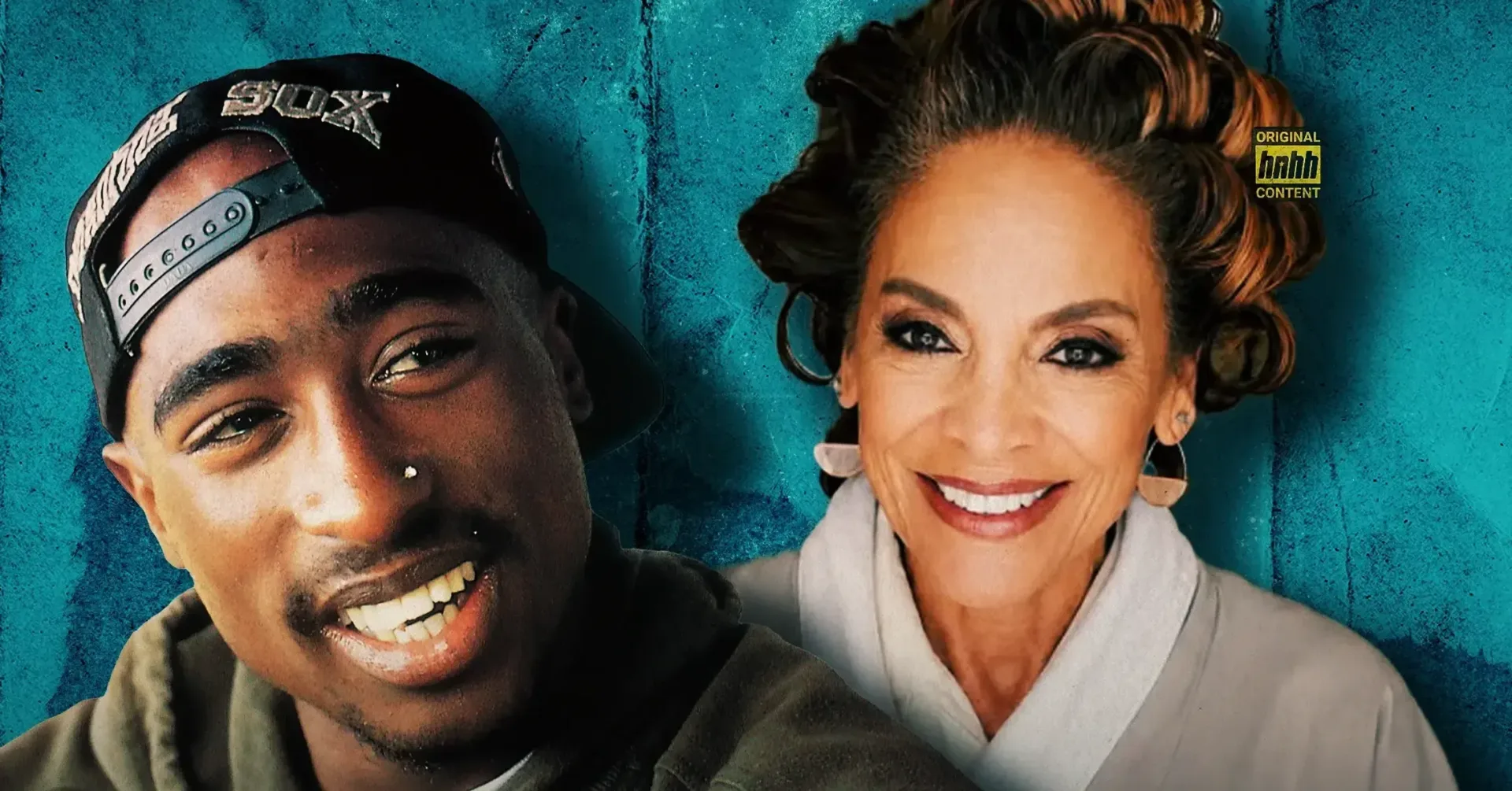
But the renewed attention around Guy has also brought forward a far more meaningful piece of her history. Long before social media could turn every old clip into a debate, Guy was part of Tupac Shakur’s trusted circle. Their friendship began through the people around A Different World, became crucial after Shakur was shot in New York in 1994, and continued through his incarceration and after his death through Guy’s relationship with his mother, Afeni Shakur.
This is not simply a celebrity-crossing-paths story. The account Guy has shared over the years centers on privacy, practical help, and a friendship that was deliberately kept out of public view at the time. That distinction matters. The most consequential thing she did for Shakur was not a public appearance or a tribute. It was opening her home when he felt exposed and unsafe.
A sitcom connection led to a real friendship
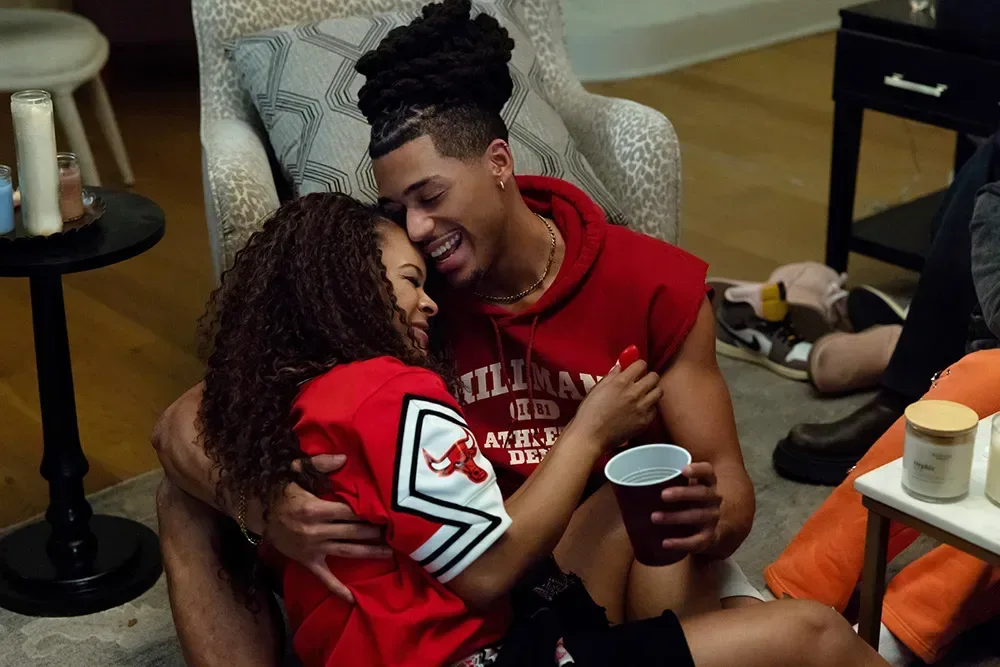
Shakur entered Guy’s professional orbit through A Different World in 1993. He guest-starred as Piccolo, the former boyfriend of Lena James, a character played by Jada Pinkett Smith. The episode, “Homey, Don’t Ya Know Me?,” sends Lena into an uneasy reunion with people from her past and underlines the changes that came with her life at Hillman College.
Off camera, Pinkett Smith was the link between Guy and Shakur. Shakur and Pinkett Smith had known each other since their Baltimore years, and Guy has explained that their own bond grew through spending time in the same circle after the show. That ordinary beginning is worth noting because it makes clear why the friendship later had substance. It was not created by a single cameo or an industry introduction engineered for publicity.
For viewers, Shakur’s television appearance remains a notable pop-culture overlap: a major rap figure briefly appearing on a sitcom that still holds a distinct place in Black television history. For Guy, though, the show mattered less as a curiosity than as the setting that introduced her to someone who would eventually trust her in a crisis.
Why Guy’s home became a refuge after the Quad Studios shooting
On November 30, 1994, Shakur was in Manhattan while a criminal trial involving allegations from the previous year was underway. Shortly after midnight, he was shot five times during a robbery at Quad Recording Studios. He sustained wounds to his head, hand, and groin, underwent surgery at Bellevue Hospital, and left the hospital later that day against medical advice.
His trial had not paused for the shooting. Less than a day later, Shakur returned to court in a wheelchair, with a heavy head bandage and a bulletproof vest. Guy and Pinkett Smith went to the courthouse so he would know they were present. Afeni Shakur and Guy were beside him as he arrived. Shakur departed before the jury returned its verdict. He was convicted of first-degree sexual abuse and acquitted of the more serious sodomy and weapons charges.
The courtroom appearance was visible. The period immediately afterward was not. Guy has said Shakur first went to his girlfriend’s home after leaving the hospital, but felt vulnerable there because too many people knew the location. His fear was that he remained an easy target. Guy’s home offered an unusual form of safety precisely because the friendship itself was not widely known.
That is the central fact that gives the story its weight. Celebrity can make privacy difficult: familiar addresses, regular entourages, and professional obligations can all turn a recovery into an event. Guy’s apartment was not obvious to those who might have been looking for Shakur. In her telling, it was one place where he could disappear.
He stayed there for roughly two weeks while recovering. Guy later recalled worrying that he had left medical care too soon and needed additional antibiotics. A doctor told a New York judge on December 14 that Shakur was recovering at an unnamed private residence and receiving daily medical attention, a timeline that is consistent with Guy’s later recollections. The court report did not identify the home.
Secrecy was part of the help
Guy has described trying to preserve a calm, confidential household while Shakur’s family gathered around him. Her memory of attempting to set a 10 p.m. boundary, only for the household to become a de facto Shakur family headquarters, brings some warmth to an otherwise frightening moment. Yet the lighter detail should not obscure the seriousness of the arrangement. She instructed people not to disclose where he was staying.
She also did not turn the assistance into a public anecdote at the time. The story remained private for years, even though Shakur’s family wanted to publicly thank her. Guy’s position has been that she did not provide shelter in expectation of recognition. That is a useful reminder of the difference between a famous story and an exploitative one: her silence was part of the protection she offered.
Terms such as “safe house” can sound dramatic, especially in retrospective accounts involving a global music figure. In this case, the practical meaning is simpler. It was a private home whose connection to Shakur was not known, where he could recover away from a location people associated with him. Guy’s account does not need embellishment to show why that mattered.
Afeni Shakur became a friend and collaborator
The recovery period changed Guy’s relationship with Afeni Shakur as well. While her son was healing, Guy and Afeni began having late-night conversations that extended beyond Tupac’s immediate needs. Afeni discussed her own life, including her experience with the Black Panther Party in New York.
Guy recognized that Afeni’s perspective deserved attention separate from the mythology surrounding her son. Those conversations eventually led to a long-term project documenting Afeni’s story, Afeni Shakur: Evolution of a Revolutionary. The book emerged much later, but the foundation was laid in those talks during Tupac’s recovery.
That development helps explain why Guy’s ties to the Shakur family cannot be reduced to a single act in 1994. Her friendship with Afeni became its own relationship, formed in an intimate and difficult setting and sustained well beyond Tupac’s lifetime. It also shifted the focus toward Afeni as a historical figure in her own right, rather than solely as the mother of a famous rapper.
For readers interested in how musical legacies and public narratives evolve around major artists, the wider conversation around rap history remains active; recent debate over standout rap performances shows how quickly artists, peers, and audiences can build competing ideas of a career’s defining moments. Guy’s account belongs to a different category: not an argument about artistic ranking, but a personal record of trust during a dangerous period.
Support did not end when Shakur left her apartment
Shakur’s own words indicate that Guy remained in his support system after his stay with her ended. In a 1995 prison interview, he included Guy among the people looking out for him, alongside Pinkett Smith and others. The mention is brief, but it confirms that the bond did not exist only in a single emergency.
Later that year, Guy also appeared in the music video for “Temptations.” Because Shakur was incarcerated, the video was made without him on set. Friends and fellow entertainers participated in an act of visible support, with some reportedly contacted through letters from Shakur. Guy’s contribution was brief, but its significance lies in its continuity with the more private help she had already provided.
There is an important contrast between those moments. The video appearance was public, collaborative, and clearly connected to Shakur’s artistic life. Letting him recover at her home was private, personal, and connected to immediate safety. Together, they illustrate the two forms support often takes around a public figure: people can stand beside someone where audiences can see them, and they can do necessary work that audiences never see at all.
The final meeting Guy remembers
Guy has said the last time she saw Shakur was after his release from prison, at Afeni’s home in Stone Mountain, Georgia. She had not seen him for some time when he came by. He told her that he was strong now and displayed the physical effects of his prison workout routine, including darkened knuckles from exercising on the floor. Guy reassured him that he looked good. He later left with friends while she stayed with Afeni, unaware that the visit would be their last.
That memory became more painful after Shakur was fatally wounded in Las Vegas in September 1996. He died six days later at 25. Guy has described carrying hope during his recovery at her home that he was reaching a safer next chapter, one beyond the violence and instability around him. Instead, he faced prison and then another shooting.
She also remembered that Shakur had told her he did not expect to live beyond 25. At the time, she dismissed it as youthful, dramatic talk from someone she regarded with the affectionate skepticism of an older cousin. After he died at that age, the recollection acquired a devastating meaning she could not have anticipated.
Guy’s return as Whitley Gilbert may invite audiences to revisit a beloved TV character. But the renewed focus on her life also offers a reason to move beyond the shallowest kind of nostalgia. Her connection to Tupac Shakur was built through mutual friends, tested by crisis, extended through family, and guarded from the public when privacy was most necessary. It is a fuller and more human story than any online judgment about whether an actor resembles a decades-old image of herself.