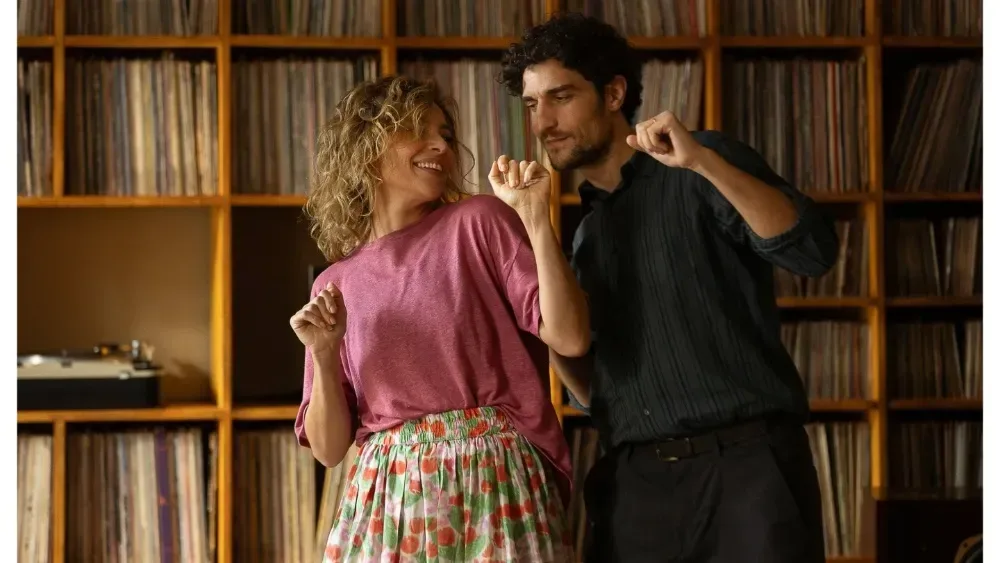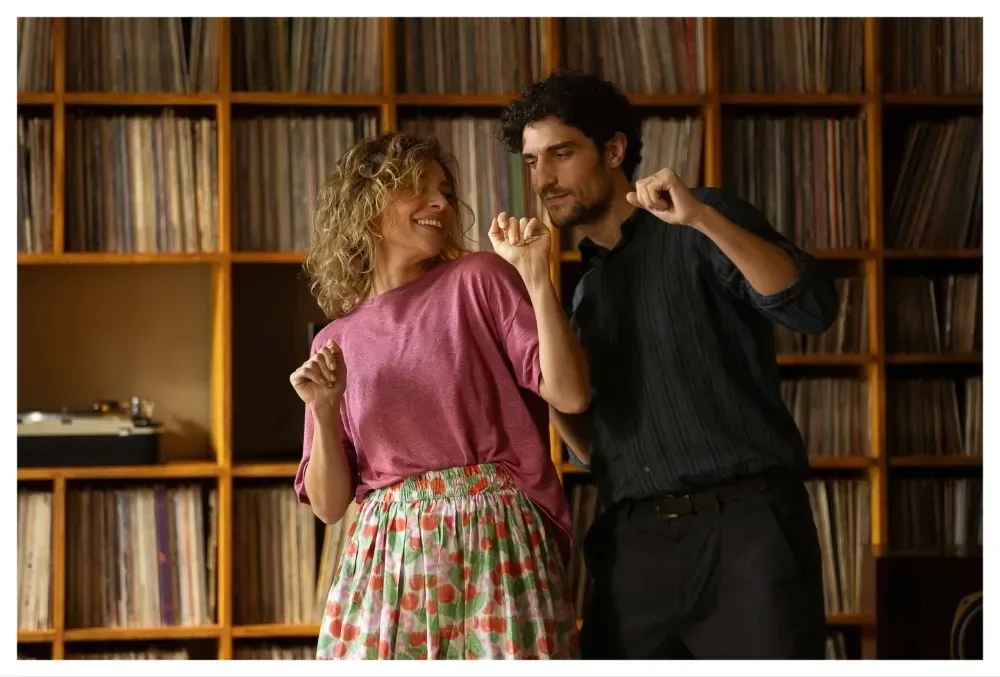
Nanni Moretti’s It Will Happen Tonight has the ingredients of a grand, grown-up romantic drama: missed chances, partners left behind, parents who complicate everything, and two people who keep reappearing in one another’s orbit across the years. Louis Garrel and Jasmine Trinca play Matteo and Greta, the central pair whose connection becomes the story’s persistent question. Is their bond fate, unfinished business, or simply the kind of fantasy that becomes more attractive the longer ordinary life gets in the way?
The film, which screened in Venice competition on September 5, 2026, runs 103 minutes and comes from an Italy-France-Spain production. Moretti directs and co-wrote the screenplay with Federica Pontremoli and Valia Santella. It adapts ideas from Hungry Heart, a short-story collection by Israeli novelist Eshkol Nevo, but its personality is presented as distinctly Moretti’s: attentive to the decisive turns in adult lives, while also leaning into a deliberately traditional strain of screen romance.
That traditionalism is both the film’s calling card and its biggest hurdle. It reaches for an old-school sweep through lush musical cues, romantic close-ups, major pop songs and situations that announce their significance well before the characters have fully earned them. Alberto Iglesias provides the score, while the film also makes room for Bruce Springsteen and the Rolling Stones. The result is a picture with no shortage of signals telling viewers when to feel yearning, nostalgia or release. The trouble is that those signals can feel stronger than the emotions on the screen.
A romance built on missed timing
Matteo begins the story with Thea, his Norwegian girlfriend, played by Melina Åkerman. They are expecting a child, Gregorio, but their lives are already shaped by a difficult decision: Thea does not want to relocate from Oslo to Rome. Matteo’s mother, Agnese, played by Angela Finocchiaro, compounds that tension by judging Thea’s fitness as a parent. When Matteo and Thea later travel to Rome with their baby, the family dynamic turns cold enough that Thea reverses course at the airport and leaves Matteo with Gregorio.
Elsewhere, Greta is living a different version of romantic uncertainty. Her boyfriend Carlo, played by Edoardo Purgatori, proposes to her publicly while they are in Mumbai. Rather than accept, she calls her father for help escaping the moment. Moretti appears as Greta’s father, adding another family figure to a plot that frequently uses parents as engines of embarrassment, pressure and emotional interference.
The narrative then makes one of several substantial time jumps. Seven years later, Matteo is playing tennis with his brother Antonio, played by Andrea Lattanzi, when Greta appears in white, removes her shoes and joins the match. Matteo is instantly transfixed. Yet Greta is about to marry Federico, played by Antonio De Matteo, and already has a daughter, Anna, played by Elena-Marie Cicone. The scene is built as a big romantic-image moment, complete with heightened music and slow motion, but it also reveals the film’s tendency to choose visual shorthand over more complicated emotional groundwork.
Matteo’s life is not uncomplicated either. His father Olivier, played by Hippolyte Girardot, is dying. Before that loss, father and son take a trip to San Sebastián for a Springsteen concert. The concert material gives the movie a notable musical centerpiece, including extended passages set to “Hungry Heart” and “Because the Night.” But the lengthy stadium interlude appears to pause the forward movement of the drama rather than deepen it. Olivier’s comic detour with a hotel receptionist also lands in an awkward zone, using his sexual behavior as broad humor at a point when the character’s impending death is already clear.
Years pass, but the film’s ideas do not deepen enough
San Sebastián also brings Matteo and Greta back into the same place. Greta is there for an acting job, wearing convincing age makeup for a role, which initially prevents Matteo from recognizing her. A sequence involving Anna, who has wandered away and is later found talking with a young girl presented as Roma, becomes one of the film’s most troubling passages. The image of the other child, shown amid flies while her mother seems unconcerned, relies on a demeaning visual stereotype. More importantly for the story, the moment does not receive meaningful development later. It seems intended to indicate that Anna is wrestling with something emotionally difficult, but the film neither explains the encounter nor connects it cleanly to Anna’s later portrayal as a depressed teenager.
Related coverage includes It Will Happen Tonight Brings Nanni Moretti’s Romantic Crossroads to Venice.
After another seven-year leap, Matteo and Greta finally meet properly in a café. By then, Greta has three children, while Matteo is married to Cristina, Olivier’s former doctor, played by Elena Lietti. Matteo tells Greta that he has remained preoccupied with her since the tennis-court glimpse years earlier. She initially rejects the possibility of an affair, but the two eventually begin one in Olivier’s old apartment, an unusually convenient empty space that has waited in the background for the screenplay to need it.
From there, the question is straightforward: will Matteo and Greta walk away from their existing families and choose the relationship they believe they should have pursued years ago? The film gives itself another three-year jump before answering. The architecture of that story is clear enough to be accessible, but it can also make the eventual direction feel overly visible. There is little mystery in where the couple’s longing is meant to lead, and the story’s secondary characters are not always allowed enough dimension to make the consequences feel truly messy.
Garrel and Trinca carry the central pull
Garrel and Trinca are the clearest reasons to engage with It Will Happen Tonight. Matteo is portrayed as fundamentally likable even when his fixation on a near-stranger becomes difficult to accept at face value. Garrel gives him enough warmth that the character’s romantic idealism remains plausible, if not always persuasive. Trinca gives Greta poise and presence, helping the film make its case that she has become an enduring image in Matteo’s mind as well as a real person making her own imperfect decisions.
Still, the leads are tasked with supporting a romance that is more often described through cinematic gestures than explored through conversation or contradiction. The movie wants to be about adults confronting the roads not taken, a subject that can yield piercing drama when it allows regret to sit alongside responsibility. Here, the story favors a lighter, more predetermined romantic trajectory. Intrusive mothers, fathers used for sexual punchlines and the mechanics that keep Matteo and Greta separated can feel inherited from an earlier era of relationship comedy.
That does not mean the film lacks an audience. Its melodic, unabashedly sentimental approach may connect particularly well with viewers who want a polished European romance unconcerned with irony. Francesco Di Giacomo’s camera work, Clelio Benevento’s editing and Iglesias’ music support that accessible, emotionally signposted style. For moviegoers who enjoy thinking about the craft behind large-format presentation and how a cinema setting changes the feeling of an image, our guide to why IMAX feels different offers useful context, though nothing here establishes any specific premium-format release for Moretti’s film.
Yet visual polish and familiar songs cannot by themselves solve a thinly drawn structure. It Will Happen Tonight is at its best when Garrel and Trinca are allowed to suggest the accumulated weight of time: the uncertainty of seeing someone again, the temptation to imagine a cleaner life somewhere else, and the fear that a decision delayed can become a decision made. At its weakest, it treats those feelings as a sequence of ready-made cues, with swelling music and narrative leaps doing the work that richer characterization might have done.
Key details
- Title: It Will Happen Tonight
- Director: Nanni Moretti
- Screenplay: Nanni Moretti, Federica Pontremoli and Valia Santella
- Lead cast: Louis Garrel, Jasmine Trinca, Hippolyte Girardot, Angela Finocchiaro, Melina Åkerman and Elena Lietti
- Music: Alberto Iglesias
- Running time: 103 minutes
- Languages: Italian, English and French
- Festival status: Venice competition screening on September 5, 2026
Moretti’s film ultimately presents a clean, sentimental fantasy of romantic destiny at a time when its best material calls for greater complication. There is real appeal in its stars and in its willingness to take adult longing seriously. But the frequent time jumps, predictable plotting and dated comic instincts leave its strongest premise—what people owe both to their past desires and their present lives—less resonant than it could be.