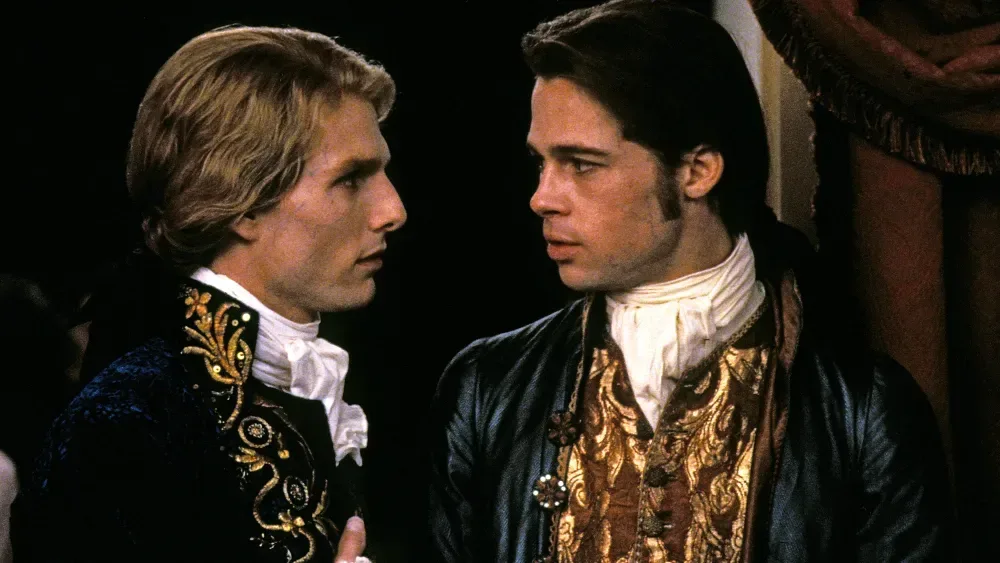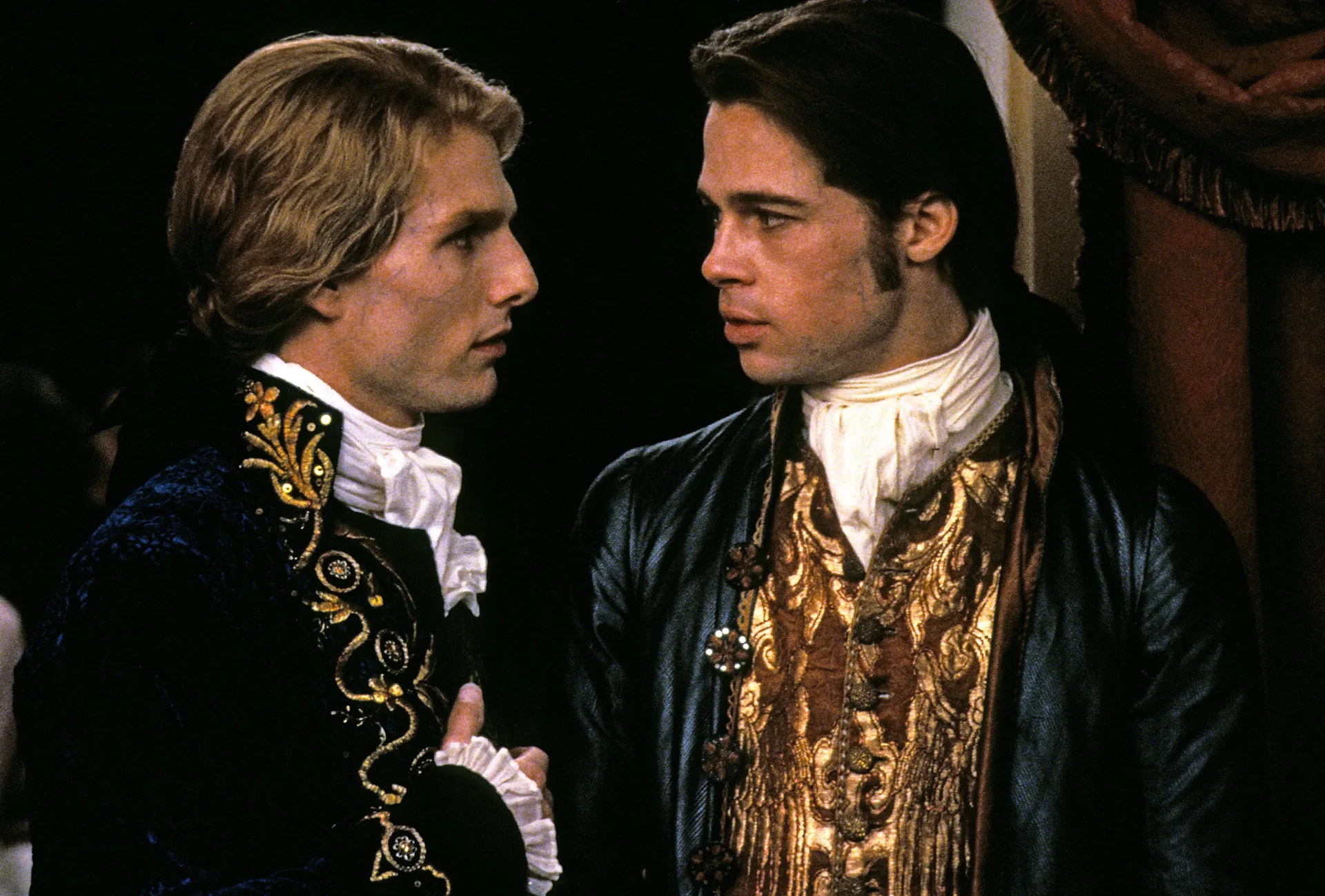
Neil Jordan’s Interview with the Vampire, the gothic vampire film led by Tom Cruise, Brad Pitt and Kirsten Dunst, has returned in 4K and on 4K UHD Blu-ray more than three decades after its original release. The edition does more than put a higher-resolution label on an old favorite: it offers Jordan the chance to revisit the film’s intended visual character, while giving viewers previously unseen deleted scenes and two behind-the-scenes features focused on its image-making and production design.
For a film so dependent on shadows, candlelight, period interiors and the unnerving intimacy of immortal characters, that visual restoration is the central story. Jordan recalled seeking out a 35mm print for the film’s 25th anniversary and finding the screening too dark to properly see. Whether the issue came from a degraded print, dim projection or both, the experience underlined a basic problem facing film preservation: a movie can physically survive while its carefully made images become hard to read in exhibition.
The 4K work, Jordan explained, involved scanning the film frame by frame, with the aim of bringing it back toward the way it had originally been photographed. That distinction matters. A restoration is not automatically a reinvention. At its best, it is an effort to preserve choices already present in the original photography: texture in dark areas, the shape of faces within low light, production detail, contrast and color relationships that may be obscured by older or poorly presented elements.
A restoration built for a film of darkness
Interview with the Vampire is an especially fitting candidate for that kind of treatment because its horror is not built primarily around the sudden shock of a monster appearing in frame. Jordan describes its terror as dread: a sustained feeling created by characters, ideas and atmosphere. He framed the challenge bluntly. Vampires are difficult to frighten in conventional horror-movie terms because they cannot be easily killed. They can be wounded, burned or exposed to daylight, but their near-invulnerability changes the source of suspense.
That is why the movie’s visual language carries so much narrative weight. The new bonus feature Eternal Night and Deadly Light brings Jordan together with editor Mick Audsley to discuss the cinematography and the gothic romanticism created with director of photography Philippe Rousselot. “Visual language” here means the storytelling performed through framing, movement, lighting, editing and color rather than dialogue alone. In a story where the central figures are monsters but also the emotional center, those tools help turn immortality from a fantasy of power into a space of confinement.
Jordan’s account of the film also makes clear that darkness is not merely decorative. The characters’ inability to escape time, their damaging attachment to one another and their moral unease are the actual engines of the horror. The gothic look supports that emotional design; it does not substitute for it.
For Jordan, the movie’s fear comes less from jump scares than from the inner lives of its vampires and what eternity does to them.
That approach helps explain why a cleaner, more faithful presentation could be meaningful even to viewers who know the film well. In a movie organized around mood, losing subtle shadow detail or flattening the photography can weaken not only the visuals but the tension of a scene. The stated goal is not to make the film look newly made; it is to make its original craft easier to perceive.
Deleted scenes offer a different angle on Louis and Lestat
The release includes deleted scenes that had not been seen before. Among them is a church-and-confessional sequence involving Louis and a priest’s discussion of forgiveness. Jordan revisited the material with Audsley and expressed surprise that it had not made the finished film, noting that it contains the drama, blood and torment associated with the larger work. He could not identify a definitive reason for its omission, suggesting it may have come down to length or to a concern that Louis’s suffering was becoming too emphatic.
That uncertainty is useful context for anyone treating deleted footage as a lost “better version” of a movie. A removed scene may be compelling on its own and still work against pace, proportion or characterization in a finished cut. Jordan recalled that an early audience response was that the film was too long, and he had already identified areas to compress. The availability of deleted scenes is therefore less an argument that the existing edit was incomplete than a chance to see creative possibilities that were considered and set aside.
Another deleted moment features Lestat rising with a bullet hole through his hand. Jordan speculated that the scene may have felt slightly theatrical, while also saying he no longer remembered the precise reason it was cut. It is a reminder of how editing functions: filmmakers are not only deciding whether a moment is interesting, but whether its tone, rhythm and placement serve the whole.
The scenes may be particularly valuable for viewers interested in the balance between Louis and Lestat. Jordan describes the film as being told emotionally from the monster’s perspective, principally Louis’s and, in another sense, Lestat’s. That is a difficult balance in any horror story. Asking an audience to inhabit the viewpoint of immortal predators removes the ordinary safety of a human protagonist, so the film instead leans into guilt, obsession and the slow realization of what the characters are.
The doomed-family reading at the film’s center
Jordan’s most revealing description of the movie is that he saw it as a story about a doomed family. In that reading, the significance of Claudia is not simply that she adds another vampire to the cast. She makes the bond between Louis and Lestat inescapable, while she herself must live with a condition she did not choose and cannot fully understand.
Jordan noted that the character was younger in Anne Rice’s book, but the film’s version placed her at a different stage of development. His emphasis is on the tragic structure: two men fixated on each other, one attempting to leave, and a child created out of that relationship. The family is bound together by love, manipulation, dependency and violence. The result is not traditional domestic drama, of course, but it uses the pressures of family drama to make its supernatural premise emotionally legible.
This reading also clarifies what Jordan means by the “punishment of time.” Eternal life is not portrayed simply as endless opportunity. It creates the possibility of endless repetition, deteriorating relationships and the burden of watching one’s identity stop matching one’s experience. The question is not only whether a vampire can survive forever, but whether any relationship can survive forever unchanged.
Jordan credits Rice with reshaping the vampire archetype by moving the emphasis toward that question of eternity, placing it amid the glamour of French Louisiana in the 18th and 19th centuries. He sees her work as a major influence on later vampire fiction, while maintaining that Rice’s material has a danger that should not be softened away. The new release arrives in a media landscape where the property has also been revisited for television, part of a wider pattern of audiences returning to established genre worlds; the desire to see characters evolve across formats also appears in discussion around the continuing conversation around Agents of S.H.I.E.L.D. and Daisy Johnson.
What the extras say about practical filmmaking
The second major featurette, Interview with the Vampire: Creating the World, pairs Jordan with production designer Dante Ferretti and focuses on the film’s sets, augmented locations and costumes. That focus aligns with Jordan’s recollection that the production came before CGI dominated filmmaking. He said that what appeared in the film had to be photographed, including a New Orleans set that was built and burned, with cameras positioned across the Mississippi.
“Practical” filmmaking does not mean a movie contains no effects work. It means that important physical components—sets, props, costumes, makeup, controlled destruction and in-camera imagery—exist in front of the camera rather than being created entirely later through computer-generated imagery. Jordan also credited special-effects supervisor Rob Legato, noting that CGI was still in its infancy during the production. The important point is not nostalgia for one method over another. It is that the film’s material environments were integral to the way its images were captured, which gives a production-design featurette real relevance to the restoration.
Jordan singled out a difficult sequence involving Lestat, Louis and a prostitute who slowly realizes she is in the room with two vampires. He said the work took roughly eight days and regarded it as the essence of the film: Lestat forcing Louis to confront and accept the monster within himself. The scene’s challenge was not simply technical. It had to hold together performance, moral pressure and the viewer’s understanding of the relationship between the two vampires.
His comments also point to a recurring misconception about ambitious physical filmmaking: the largest spectacle is not always the hardest part. Burning a constructed street can be logistically vast, but a contained room scene may demand more precision because every gesture, cut and reaction has to build psychological tension. In this case, the difficult sequence had to express the film’s central conflict without reducing it to a simple confrontation between hero and villain.
35mm, IMAX and the scale of an image
Jordan still speaks warmly of 35mm film, including the physical sound of film moving through a camera gate, while expressing reservations about handling the size of IMAX cameras. He said he would consider IMAX if he made another large studio movie, but he also values being able to put a camera on his shoulder.
Those comments are a helpful corrective to the idea that a bigger format is automatically the right artistic answer. IMAX, including IMAX 70mm, can offer extraordinary image scale and detail, but the equipment and workflow can shape how a director works. A lighter, more mobile setup may better suit a filmmaker who wants immediacy and physical flexibility. The relevant question is not whether one format is universally superior, but what the production and story need.
For Interview with the Vampire, the appeal of the new edition lies in a different form of scale: the chance to revisit the texture of a 35mm-shot gothic world with more of its intended image information intact. The release also supplies a clearer window into decisions that viewers normally only infer—what was cut, how the world was built, and why its terror is rooted in enduring intimacy rather than a simple fear of the dark.
For newcomers, Jordan offers a compact point of entry, calling the film a companion piece to his earlier The Company of Wolves. For returning viewers, the 4K presentation and supplementary material make a case for looking again: not merely at the vampires, but at the photography, sets, editing choices and emotional dread that made their long night last.